Choosing among China’s best refrigerated container manufacturers requires more than comparing prices. Buyers should examine temperature-control performance, insulation quality, component availability, factory testing, and after-sales support. Small details matter. A clear service plan can be as important as a polished specification sheet.
For transparency, the quotation below is an original illustrative remark, not a verified statement from a real person. Fictional refrigerated-container specialist Alex Morgan puts the buyer’s challenge this way: “A reliable Refrigerated Container must protect cargo through changing conditions, not just look efficient on a factory test.” That principle points to practical questions: What temperature range can the unit maintain? How are alarms, data logging, and power interruptions handled? Can the manufacturer provide test records and replacement parts?
This overview introduces Chinese manufacturers through criteria that readers can check, rather than unsupported claims of superiority. It considers product range, manufacturing experience, customization, certifications, and customer support. Ask for evidence, including test procedures, warranty terms, and examples of comparable installations. Check the details. A brochure may not reveal how quickly a supplier responds when a controller fails or a door seal needs replacement. No single manufacturer suits every route or cargo type. The right choice depends on operating conditions, service access, and the buyer’s tolerance for downtime. Some comparisons will remain incomplete when public information is limited; that uncertainty deserves attention, not a confident guess.
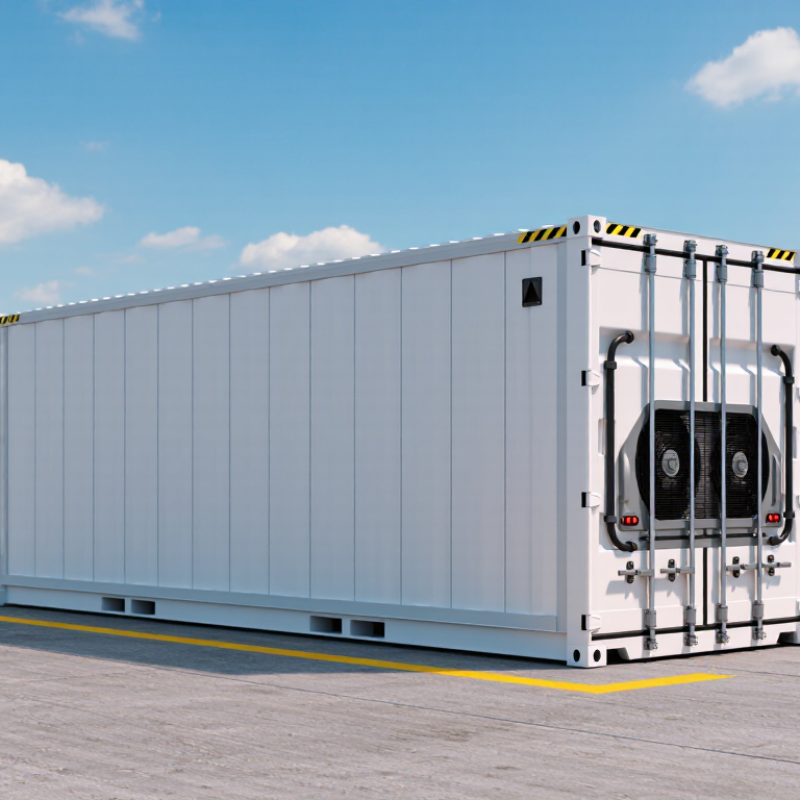
A refrigerated container, or reefer, is an insulated cargo box with a powered cooling unit. It keeps pre-cooled goods within a chosen temperature range; it is not designed to rapidly chill warm cargo. Fans circulate air beneath the load, pushing it through floor channels and back toward the refrigeration unit. This airflow helps limit temperature differences across the cargo. Many units can operate at setpoints roughly between -30°C and +30°C, though the right setting depends on the product and its journey. That detail matters.
Temperature control also depends on packing, airflow, and monitoring. Produce may require fresh-air exchange, while frozen goods usually need stable temperatures and clear airflow paths. FAO’s The State of Food and Agriculture 2019 estimated that 14% of food is lost between post-harvest and retail. That figure has many causes; refrigeration alone cannot prevent all losses. Before loading, operators should check the cargo temperature, inspect door seals, and avoid blocking floor channels. Data loggers can record conditions during transit. One imperfect reality: a correct display reading does not prove every carton stayed equally cold. Good reefer selection means checking insulation, cooling capacity, airflow design, and service records—not just the stated temperature range.
China’s refrigerated-container manufacturing landscape is a connected supply chain, not simply a ranking of factories. Production typically combines steel fabrication, insulated-panel foaming, door sealing, refrigeration-unit installation, and electrical testing. Details matter: a small gap around a door can undermine temperature stability during a long journey. So can inconsistent insulation thickness.
UNCTAD’s Review of Maritime Transport 2024 projected containerized trade growth of 3.5% for 2024. That is a trade forecast, not a count of refrigerated containers. The Global Cold Chain Alliance’s 2023 capacity report estimated 719 million cubic metres of cold-storage space worldwide in 2020. That figure describes warehouses, not container output. It signals the scale of cold-chain infrastructure, but should not be used to rank Chinese producers. Still, data gaps remain.
For a practical assessment, buyers can request insulation-thickness records, temperature-uniformity test results, and documentation of refrigeration-unit performance. Inspect door gaskets and internal corners; poor finishing can become a maintenance issue. A polished test report is useful, but it cannot replace checking how a unit performs under realistic loading and ambient conditions. Factory capacity alone tells only part of the story.
Typical cargo volume illustrates the capacity difference between common refrigerated container formats.
Typical nominal cargo volumes are approximately 28 m³ for a 20-foot reefer and 67 m³ for a 40-foot high-cube reefer. Actual usable volume varies by container design and insulation thickness.
Chinese refrigerated-container manufacturers rely on several technologies to protect temperature-sensitive cargo during long journeys. Insulated sandwich panels form the container’s thermal shell. Their foam cores slow heat transfer, while carefully sealed joints help reduce air leakage. Panel thickness alone is not enough. Small details matter. Door gaskets, corners, and floor channels can all create weak points if poorly fitted.
Refrigeration systems use compressors, condensers, evaporators, and fans to remove heat and circulate cooled air. Airflow design matters because cold air must reach cargo near the doors and floor, not just the return-air sensor. Digital controllers monitor temperature and trigger alarms when readings move beyond set limits. Some systems also support remote data logging, helping operators review temperature changes during transit. Still, sensors can drift, and a clean display does not prove every cargo space stayed uniform. In production, technicians can check insulation joints, run cooling tests, and simulate vibration. These checks provide useful evidence, though real-world loading patterns remain difficult to reproduce perfectly.
Choosing a refrigerated container manufacturer in China requires more than comparing prices. Check whether the company can explain its insulation materials, refrigeration system, and temperature-control range in practical terms. Ask for test records showing how units perform under different ambient conditions. A clear answer should include operating limits, not just an attractive specification sheet. Numbers matter.
Tips: Request photos or videos of production and quality checks, then ask how temperature sensors are calibrated. Confirm that welds, door seals, and insulation panels are inspected before delivery. Ask for sample maintenance schedules, spare-parts information, and written warranty terms. Ask for evidence. If possible, speak with customers who use similar container sizes and operating conditions.
A factory visit can reveal useful details: clean assembly areas, labeled components, and technicians who can explain their checks. Review sample inspection reports and compare them with the finished unit. Also ask how the supplier handles faults after shipment, including response times and parts availability. A polished brochure can still leave gaps. Even a careful audit may miss something, so record agreed specifications and acceptance checks before placing an order.
| Evaluation dimension | What to verify | Useful evidence or benchmark | Questions to ask the manufacturer |
|---|---|---|---|
| Container size and configuration | Confirm the container type, nominal length, door opening, internal dimensions, payload, and usable volume for the specific model. | Common ISO-series reefer formats include 20-foot and 40-foot units; a 40-foot high-cube unit is commonly about 12.19 m long and 2.90 m high externally. Exact dimensions and payload vary by design. | Can you provide a model-specific dimension drawing, tare weight, maximum gross weight, and payload calculation? |
| Temperature capability | Check the controlled temperature range, control accuracy, pull-down performance, and suitability for the intended cargo and ambient conditions. | Reefer operating ranges depend on the refrigeration unit and configuration. Compare the stated range and test conditions for the exact model rather than relying on a generic range. | What temperature range and control tolerance are guaranteed, and under what ambient temperature and loading conditions? |
| Refrigeration performance | Review cooling capacity, airflow design, fresh-air ventilation, defrost control, and temperature uniformity throughout the cargo space. | Performance figures should identify the test point and conditions. Airflow and correct cargo loading are important to temperature distribution and should be covered in operating guidance. | Can you supply test results, airflow information, and the recommended loading pattern for the intended cargo? |
| Power requirements | Confirm supply voltage, frequency, phase, plug specification, starting current, and any site-specific electrical requirements. | Many transport refrigeration units use three-phase AC power, but electrical specifications differ by unit and market. The equipment nameplate and installation manual are the controlling references. | What are the electrical ratings and connector requirements for the exact refrigeration unit supplied? |
| Insulation and thermal integrity | Assess insulation construction, door seals, floor condition, thermal bridges, and evidence of insulation or air-leak testing. | ISO 1496-2 covers thermal containers. Ask for the applicable test documentation and clarify whether it applies to the offered container configuration. | Which thermal tests have been completed, and can the reports be linked to the offered model or production batch? |
| Structural and safety compliance | Verify the intended transport use, structural approvals, safety markings, and documentation required for the destination and operating environment. | For containers used in international transport, check applicable CSC safety approval and valid inspection or examination status. Requirements depend on the unit and its use. | Can you provide the approval plate details and current supporting documents for the supplied unit? |
| Materials and corrosion protection | Inspect the floor, exterior panels, frame, fasteners, coatings, drainage, and resistance to the expected cleaning agents and operating environment. | Material grade and coating performance should be stated in the technical specification. Suitability depends on cargo hygiene needs, exposure, and maintenance practices. | What materials and coating system are used, and what cleaning and maintenance methods are recommended? |
| Monitoring and records | Check controller functions, alarm handling, temperature recording, data export, sensor calibration, and any remote-monitoring compatibility. | Data access and recording features vary by controller. Confirm the recording interval, retention method, export format, and calibration documentation before purchase. | Can you demonstrate an alarm and data-download workflow, and provide the sensor calibration procedure? |
| Quality control and inspection | Request inspection checkpoints for the shell, insulation, refrigeration installation, electrical system, and final functional testing. | A credible inspection file should identify the unit or batch, test items, results, date, and responsible inspector. Factory testing does not replace checks upon delivery. | What tests are performed before shipment, and may the buyer or an independent inspector witness them? |
| Warranty and after-sales support | Review warranty duration and exclusions, spare-parts availability, service coverage, response process, and support for the destination country. | Warranty terms are supplier-specific. Get coverage, claim procedures, parts responsibilities, and any travel or freight costs in writing. | Which components are covered, where are service parts stocked, and how are urgent breakdowns handled? |
| Delivery and documentation | Confirm production lead time, shipping condition, packing or lifting instructions, document set, and responsibility for export and destination requirements. | The final document list should match the contract and destination. Typical technical records include drawings, manuals, test reports, electrical information, and approval documents where applicable. | What is included in the shipment, and which party is responsible for each export, transport, and commissioning document? |
Note: Specifications and compliance requirements vary by model, refrigeration unit, cargo, and destination. Verify all claims against the model-specific technical documents and contract.
China Best Refrigerated Container Manufacturers?
Selecting a Manufacturer for Different Shipping Needs
A suitable refrigerated container starts with the cargo and route, not the lowest quotation. Fresh produce may need steady airflow, while frozen goods depend on consistent temperature control. Share the expected set point, trip length, ambient conditions, and loading pattern with potential manufacturers. Small details matter. For example, tightly stacked cartons can restrict airflow and create warm spots near the container doors.
Ask how each unit is tested before delivery. Request temperature-uniformity records, insulation details, and clear information about the refrigeration system’s power requirements. A short factory demonstration can reveal practical issues, such as hard-to-read controls or awkward access to service panels. Check whether spare parts and technical support are available near your operating routes. A strong specification on paper is not enough.
Different operators need different trade-offs. Long inland journeys may call for dependable service access and robust components; short port-to-port trips may place greater value on energy use and straightforward monitoring. Compare written specifications line by line, and confirm what is included in the price. I have seen planning focus too heavily on the container itself. That can leave operators unprepared for plugs, backup procedures, or staff training. There is no perfect choice, and route assumptions should be reviewed when seasons or cargo mixes change.
Ask about insulation, refrigeration systems, and temperature-control limits. Request test records from different ambient conditions. Numbers matter.
Request production photos or videos. Check inspection records for welds, door seals, and insulation panels. Look for clear sensor calibration details.
Request maintenance schedules, spare-parts information, and written warranty terms. Ask how faults are handled after shipment and how quickly parts can arrive.
Share the cargo, target temperature, trip length, and expected weather. Produce may need steady airflow, while frozen goods need consistent temperature control.
Tightly stacked cartons can block airflow. This may create warm spots near the doors. Small details matter.
Check whether assembly areas are orderly and components are labeled. Ask technicians to explain their checks. A brochure cannot show everything.
Ask for temperature-uniformity records, insulation details, and power requirements. Compare written specifications line by line. Confirm what the price includes.
Plugs, backup procedures, and staff training can be missed. I may focus too much on the container itself. That deserves a second look.
This article explains how a Refrigerated Container maintains a controlled temperature during storage and transport, using insulation, refrigeration equipment, airflow, and monitoring systems. It also outlines China’s refrigerated container manufacturing landscape, where manufacturers may differ in production capacity, customization options, quality controls, and technical support. Key technologies to consider include temperature regulation, energy efficiency, insulation performance, and reliable monitoring.
To choose a suitable manufacturer, buyers should assess product specifications, manufacturing experience, quality assurance processes, service availability, and the ability to meet shipment requirements. The best choice depends on factors such as cargo type, required temperature range, journey duration, operating conditions, and budget. Comparing these needs with a manufacturer’s capabilities can help buyers select a practical container for their shipping operations.

