
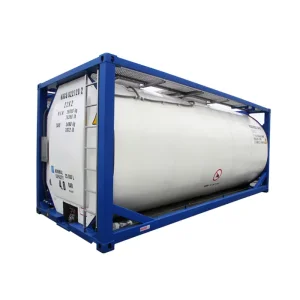
Certified high-payload containers designed for hazardous chemicals, cryogenic industrial liquids, potable spirits, and offshore deployment.
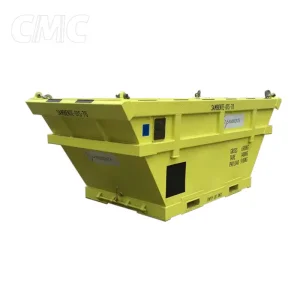
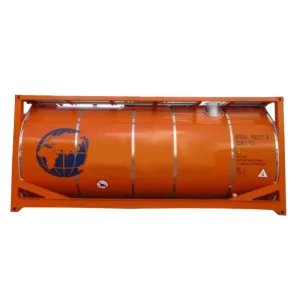

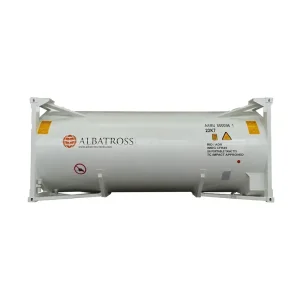
As chemical processing networks, renewable bio-fuels, and industrial energy supply chains decentralize, ISO tank containers are structurally replacing standard steel drums and chemical parcel tankers.
ISO tank containers transition across ocean container vessels, inland rail rolling stock, and highway chassis without intermediate transloading of the liquid cargo, completely mitigating cross-contamination risks and cargo loss during multi-leg international transit.
Governed by rigorous international standards—including the IMDG Code, ADR/RID, CFR 49, and US DOT—tank units feature engineered pressure-relief valves, burst discs, and remote-controlled emergency foot valves designed to withstand extreme dynamic acceleration and maritime collisions.
Compared to single-trip flexitanks or metal intermediate bulk containers (IBCs), stainless steel ISO tanks represent a circular packaging model. With an operational design lifespan exceeding 30 years and complete recyclability, enterprise Scope 3 logistics carbon footprints decrease by over 38%.
Delivering engineering superiority through automated submerged arc welding, specialized pickling passivation lines, and direct maritime berths in Tianjin and Suzhou.
Utilizing ultra-clean 316L/304 austenitic steel, carbon steel with PTFE/ECTFE linings, and high-nickel alloys. Robotic plasma and TIG/MIG long-seam welding systems guarantee structural weld integrity certified by 100% radiographic (RT) and dye-penetrant (PT) inspection.
Production bases located approximately 100 kilometers from Tianjin Port and Shanghai/Taicang waterways allow immediate transfer of finished containers via direct deepwater berths. Units can be certified and positioned with "one-way empty/cargo load" to drastically compress delivery charges.
Every tank vessel and framework undergoes physical witness tests by international classification societies—Bureau Veritas (BV), Lloyd’s Register (LR), or DNV. Production maintains full traceability from steel heat batch certifications to pressure-relief release tests.
Review structural configurations, working pressure thresholds, and typical medium containment properties engineered by our technical division.
| UN Tank Type | Shell Metallurgy | Design Pressure (bar) | Discharge Configuration | Target Chemical / Physical Media |
|---|---|---|---|---|
| T11 ISO Tank | Stainless 316L / 304 (Cold Rolled) | 1.77 – 2.65 bar | Bottom or Top Discharge (3-Closure) | Hazardous & Non-Hazardous Chemicals, Solvents, Detergents, Resins |
| T14 ISO Tank | Carbon Steel / Acid-Resistant Lining | 4.00 bar | Top Discharge Only (Zero Shell Penetrations) | Extremely Toxic & Corrosive Acids (HCl, HF), Highly Reactive Liquids |
| T50 Gas Tank | Fine-Grained Carbon Steel (Q370R / SA516) | 15.0 – 34.0 bar | Dedicated Liquid & Vapor Gas Valves | Liquefied Petroleum Gas (LPG), Propane, Butane, Refrigerant Gases |
| T75 Cryogenic | Austenitic Inner Shell / Structural Outer | 3.0 – 16.0 bar | Vacuum Super-Insulated Liquid Piping | Cryogenic Gases: LNG, Liquid Oxygen (LOX), Nitrogen (LIN), Argon (LAR) |
| Food-Grade / Baffled | 316L High-Polished Ra < 0.4µm | 2.65 bar | Clean-In-Place (CIP) Bottom Discharge | Spirits, Edible Oils, Fruit Concentrates, Liquid Sugar, Potable Water |
From offshore deepwater fields to specialized food-grade cold chains, our containment designs are tailored to extreme physical environments.
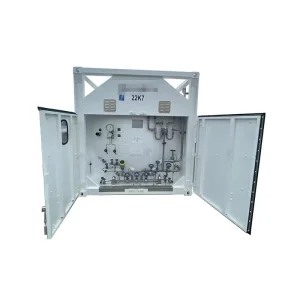
Certified strictly to DNV 2.7-1 and EN 12079 standards. Engineered with integrated padeyes, heavy structural corner posts, and crash-rated skid frames capable of withstanding rough sea vessel-to-rig dynamic crane hoisting in the North Sea, Gulf of Mexico, and West Africa offshore basins.
Equipped with internal stainless steel steam heating coils or high-efficiency longitudinal electric trace heating (ETH). Combined with rocker-wool or vacuum polyurethane foam thermal jackets, units maintain heavy asphalt, bitumen, and fatty acids at controlled temperatures up to 220°C throughout long-haul multimodal transit.
Precision internal surface electropolishing achieving Ra < 0.4µm eliminates microscopic crevices and bacterial entrapment points. Designed with rotary CIP (Clean-in-Place) spray nozzles and dedicated aseptic breathing filters, fully complying with international FDA and European food-contact legislation.
How digital transformation, telematics, and circular economies are altering corporate asset acquisition protocols across multinational operators.
Leading chemical conglomerates require built-in ATEX Zone 0 certified IoT telematics. These solar-powered sensors harvest real-time internal tank vessel pressure, liquid temperature profiles, electronic geofencing alerts, and kinetic shock impacts directly into logistics ERP software via satellite and cellular mesh networks.
Global logistics procurement heads are adopting bifurcated sourcing: purchasing dedicated fleets for steady-state specialized chemical and cryogenic corridors to extract maximum 25-year asset depreciation value, while leveraging near-port new and used certified tank inventories during cyclical trade surges.
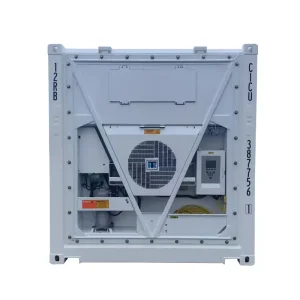
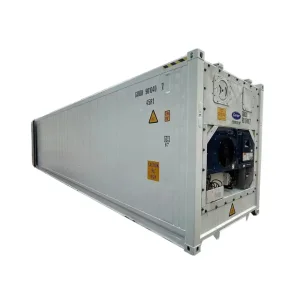
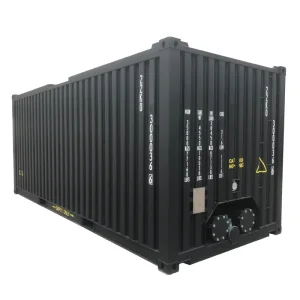
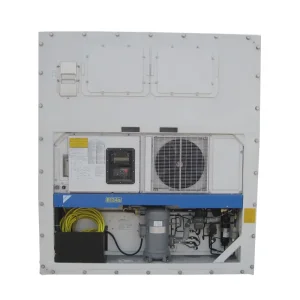
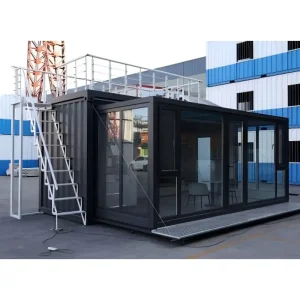
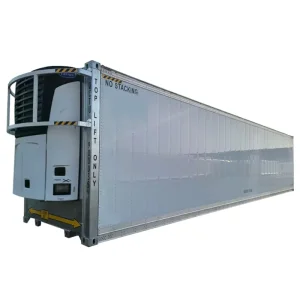
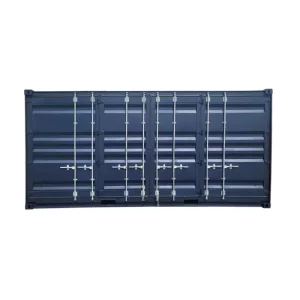
Intermodal containers engineered for bitumen transit, site accommodation, integrated machinery refrigeration, and railway routes.
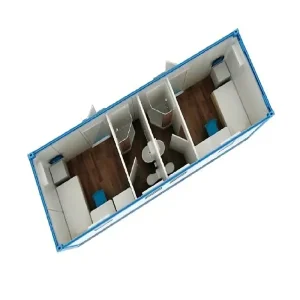
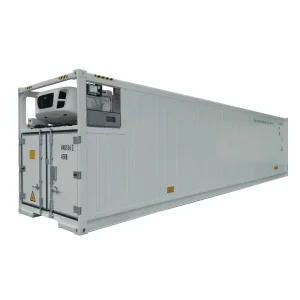
Answers provided directly by CIMIC senior pressure vessel engineers and international logistics directors.
T11 tanks operate between 1.77 and 2.65 bar test pressure and feature dual discharge designs (top discharge and standard 3-closure bottom discharge), ideal for general chemicals. T14 tanks are engineered for highly toxic, corrosive media at 4.0 bar design pressure with top-discharge only—completely eliminating openings below the liquid line to ensure zero spill risk during high-hazard transits.
Under the CSC and IMDG regulations, all intermodal ISO tank containers must undergo a rigorous 2.5-year intermediate inspection (air pressure test, relief valve verification, visual internal inspection) and a 5-year periodic hydrostatic witness test overseen by certified classification bodies (such as BV, LR, or DNV). Units must maintain pristine certification records to enter major maritime port terminals.
Yes. While stainless steel 316L easily corrodes under aggressive halide ions, we build specialized lined tank containers utilizing high-density carbon steel shells lined with ECTFE (Halar), PTFE, or natural high-grade vulcanized rubber (typically 3mm to 6mm uniform thickness) with spark testing verification up to 15,000V to ensure complete chemical isolation.
Standard ISO T11/T14 batches are typically manufactured and certified within 30 to 45 business days. Due to our manufacturing yards in Tianjin and Suzhou located roughly 100 kilometers from coastal deepwater quays, container units can be positioned to terminal gates within 24 hours of final inspection sign-off.