Engineered to precision standards for maritime transport, severe open-ocean lifting, dynamic loading, and temperature-controlled industrial field operations.
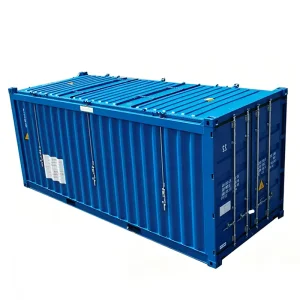
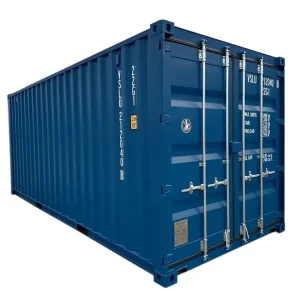
Understanding the critical boundary between standard ISO shipping freight boxes and heavy-duty, marine-certified dynamic offshore lift envelopes.
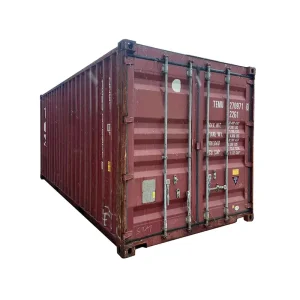
Unlike standard ISO 1496 freight containers subjected only to static dockside vertical gantry lifts, offshore containers routinely encounter aggressive sea-state dynamics. Open-ocean lifts from supply vessels to floating platforms experience wave-heave accelerations, sudden snatch loads, and violent torsional shock loads.
Our manufacturing protocols utilize structural Corten SPA-H and high-yield European standard S355J2/K2 structural steel plates. Critical load path members undergo standardized Charpy V-notch impact testing at -20°C and -40°C down to 27 Joules, preventing catastrophic brittle fracturing across Sub-Arctic conditions.
Every offshore container fabricated within our specialized manufacturing cells complies strictly with statutory global rules, including DNV 2.7-1 (Standard for Certification No. 2.7-1 Offshore Containers), EN 12079, ISO 10855, and IMO MSC/Circ.860.
Each unit features integrated corner castings, heavy-gauge roof header reinforcements, and precision-forged lifting pad-eyes welded with fully documented full-penetration robotic welds. Non-Destructive Testing (NDT), Magnetic Particle Inspection (MPI), and Radiographic examinations are executed by certified ASNT/PCN Level II technicians prior to class issuance.
The offshore marine splash zone represents the world's most aggressive atmospheric corrosion tier (ISO 12944 Category C5-M / CX). Untreated marine containers degrade rapidly when subjected to salt fog, constant humidity, sulfur deposits, and direct ultraviolet solar degradation.
Our surface finishing pipeline incorporates automatic abrasive grit-blasting to ISO 8501-1 SA 2.5 cleanliness, followed by an immediate three-tier epoxy-polyurethane system: Zinc-rich primer (75μm DFT), high-build epoxy intermediate (120μm DFT), and aliphatic acrylic polyurethane topcoat (60μm DFT) with total dry film thickness exceeding 260-320μm.
A standard ISO dry container cannot be hoisted offshore using slings without massive structural failure hazards. Standard ISO units rely strictly on top/bottom corner locks for straight vertical tension. Offshore containers incorporate custom pad-eyes welded directly to internal heavy perimeter framework beams designed to sustain angled multi-leg bridle sling hoists with dynamic design factors (G) ranging from 2.0 to 2.8 times the Maximum Gross Mass (RATING).
How concentrated metallurgical supply clusters, advanced automated fabrication, and deepwater port proximities provide unmatched capital and delivery efficiencies.
Direct supply contracts with domestic primary steel manufacturers (Baosteel, Shougang) assure direct traceability from certified melt batches, eliminating material counterfeiting and providing complete Mill Test Certificates (MTC) 3.1 / 3.2 per EN 10204.
Continuous robotic submerged arc welding (SAW) and laser-guided robotic welding cells guarantee exact weld penetration, uniform root geometry, and structural repeatability across corrugated side wall panels, sills, and heavy base frames.
Strategically situated dual production facilities in Tianjin Free Trade Pilot Area and Suzhou Industrial Corridor reside less than 100 kilometers from primary deepwater container ports, minimizing overland transport costs and reducing dispatch turnaround.
Dedicated in-house maritime CAD/FEA engineering departments evaluate localized load distribution, vibration resonance, and customized deck lashing setups before executing prototype shear tests, proof drop tests, and burst stress certifications.
Addressing the stringent asset lifecycle, documentation fidelity, and environmental durability demands of tier-one offshore procurement teams.
Global offshore operating majors (Shell, TotalEnergies, Equinor, Chevron) demand transparent, audit-ready Manufacturing Data Records (MDR). Every container is assigned a unique serialized registration plate and DNV Data Plate.
Our deliverable procurement dossier contains Certified Material Test Reports (CMTR), Welding Procedure Specifications (WPS), Procedure Qualification Records (PQR), Welder Performance Qualifications (WPQ), non-destructive testing reports (UT/RT/MPI/DPI), and sling assembly proof load certificates.
Procuring certified offshore containers based strictly on initial Capex often leads to catastrophic ongoing maintenance liabilities. Premature weld failure, floor deflection, door gasket leakage, and rapid galvanic corrosion drive massive platform re-certification downtime.
By engineering hot-dip galvanized internal structural sub-frames, extruded 6061-T6 aluminum marine flooring, and marine EPDM perimeter door seals with stainless steel lock-rod hardware, our containers reduce operational lifecycle repair costs by over 42% over a 15-year service life.
Modern offshore projects no longer utilize containers solely for static tool transport. Global EPCs demand custom-configured containerized housings for hazardous area mud-logging cabins, offshore wireline workshops, Zone 1 / Zone 2 ATEX pressurized laboratories, and high-voltage transformer substations.
Our engineering team provides comprehensive architectural integration including A60 fire-rated structural thermal insulation, certified blast-proof louvers, escape hatches, and custom heavy-equipment tie-down rails.
A rigorous engineering breakdown illustrating structural load parameters, metallurgical differences, and safety testing benchmarks.
| Evaluation Parameter | Standard ISO Dry Container (ISO 1496-1) | Certified Offshore Container (DNV 2.7-1 / ISO 10855) | Engineering Impact & Compliance Requirement |
|---|---|---|---|
| Primary Design Governing Standard | ISO 668, ISO 1496-1, CSC Convention | DNVGL-ST-E271, EN 12079, ISO 10855-1, IMO MSC/Circ.860 | Offshore containers require mandatory third-party surveyor witness during proof drop and tilt tests. |
| Lifting Configuration & Dynamics | Vertical 4-point straight lift via spreader twist locks | Angled 4-leg wire rope sling set with top master link (45° max angle) | Massive diagonal tension and bending moment exerted on corner posts and pad-eyes. |
| Material Impact Toughness | Generic Corten steel, no low-temperature Charpy mandate | Fully killed, fine grain structural steel (SPA-H / S355J2/K2) with Charpy test at -20°C/-40°C | Prevents brittle shear failure under instant ocean dynamic wave snatch forces in arctic or harsh waters. |
| Design Acceleration & Load Factor | Static 1.0G design with standard 1.8G rail shunting allowance | Dynamic Design Factor (G) up to 2.5× to 3.0× Rating | Guarantees structural integrity when a supply vessel suddenly drops in a heavy wave trough while hooked to rig crane. |
| Lifting Pad-Eye Integration | None (relies exclusively on standard ISO corner castings) | Heavy plate structural pad-eyes welded directly to primary framing members | 100% MPI (Magnetic Particle Inspection) and Ultrasonic testing of full-penetration pad-eye welds. |
| Protective Coating Longevity | Standard industrial Alkyd / Epoxy paint (100–120μm DFT) | C5-M Ultra High Durability Marine Epoxy / Polyurethane (260–320μm DFT) | Sustains years of direct oceanic saltwater washing and salt-spray atmospheric exposure without blistering. |
From deep-sea drilling platforms to offshore wind substations, explore how certified container configurations solve critical harsh-environment logistics challenges.
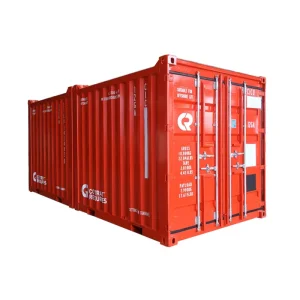
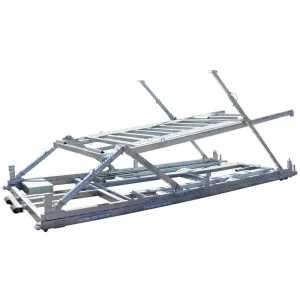
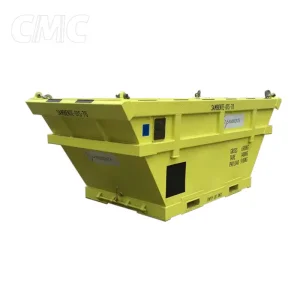
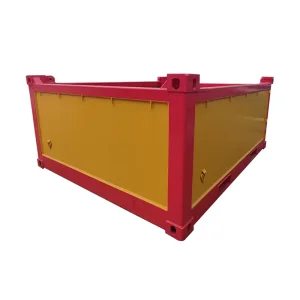
Subsea drilling operations require heavy-duty silt baskets, cargo baskets, and open-top half-height carriers to transport subsea blowout preventer (BOP) valves, drill collars, casing pipes, and umbilical reels. Equipped with internal recessed lashing D-rings, drainage ports, and external protective load-stops, our baskets safeguard sensitive multi-million dollar downhole tools during rough-sea transshipment.
In hazardous oilfield gas atmospheres, safety is paramount. Our offshore modular containers are engineered to integrate positive-pressure HVAC systems, automated fire dampers, gas detection sensors, and emergency shutdown (ESD) relays. These cabins serve as remote mud analysis laboratories, ROV command centers, and certified living quarters meeting NORSOK Z-015 and ATEX standards.
With the exponential expansion of global offshore wind farms across the North Sea, Taiwan Strait, and US East Coast, containerized battery energy storage systems (BESS) and converter modules require heavy-duty structural offshore protection. We engineer robust, anti-corrosive, thermal-insulated enclosures featuring integrated structural fire suppression manifolds and liquid-cooling piping.
The transformation of traditional passive steel maritime containers into intelligent, tracked, low-carbon industrial offshore assets.
Modern offshore fleets integrate intrinsically safe (Ex-proof) satellite IoT tracking units. These sensor arrays continuously monitor dynamic 3-axis G-force shocks, door openings, internal ambient temperature, humidity, and atmospheric gas build-up. Fleet managers gain real-time visibility into lifting trauma and location coordinates via global offshore mesh networks.
Global carbon border adjustment mechanisms (CBAM) are compelling offshore operators to monitor the embodied carbon footprint of their logistics hardware. Our manufacturing facilities are actively transitioning to electric arc furnace (EAF) recycled green steel grades and high-solid low-VOC coatings, drastically reducing cradle-to-gate carbon intensity per container produced.
By leveraging advanced computational FEA modeling, our engineers analyze stress concentration contours across corner joints, forklift pockets, and pad-eye fillets under simulated multi-axis dynamic loads. This precision design allows localized material gauge reduction without compromising safety factors, delivering higher net payload capacities for operators.
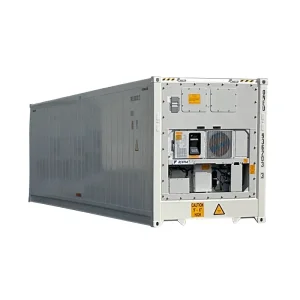
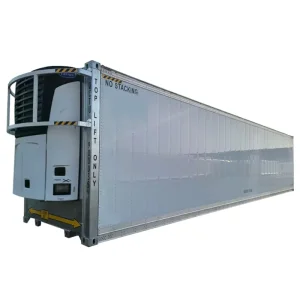
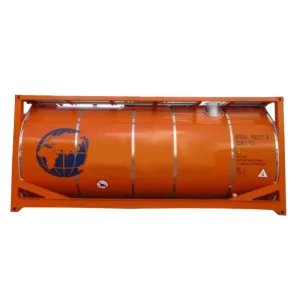
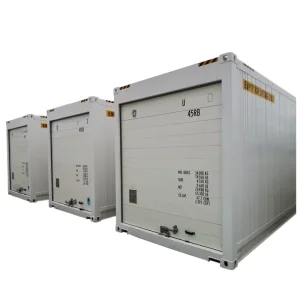
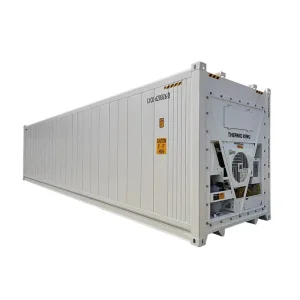
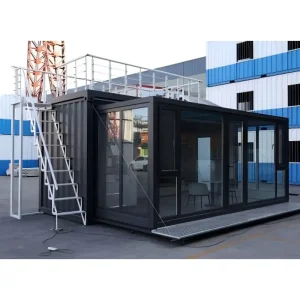
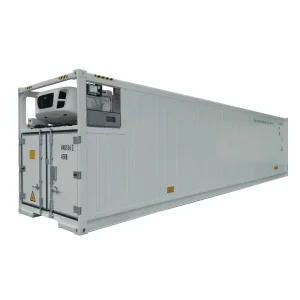
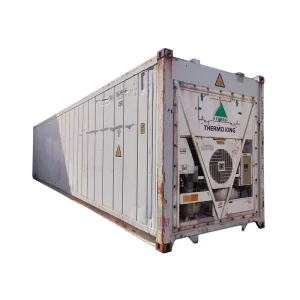
Comprehensive containment solutions ranging from ISO tank transport and roll-up reefer units to expandable modular structures.
Direct answers from our engineering compliance team on classification rules, testing protocols, lead times, and custom maritime specifications.
