Classification Society Certified Blast Reefer Containers for Costa Rica
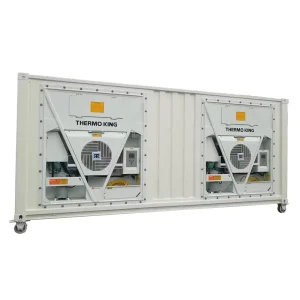
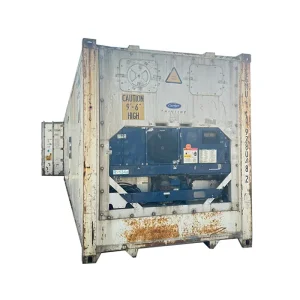
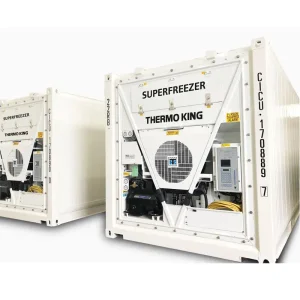
High-power active blast refrigeration container designed for rapid core pulldown in tropical ports like Limón and Caldera.
Specialized low-temperature cargo platforms built with high-velocity airflow and ISO structural integrity, certified by worldwide classification societies for cross-ocean transit.
High-power active blast refrigeration container designed for rapid core pulldown in tropical ports like Limón and Caldera.
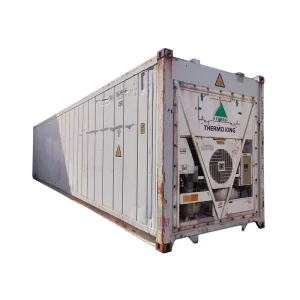
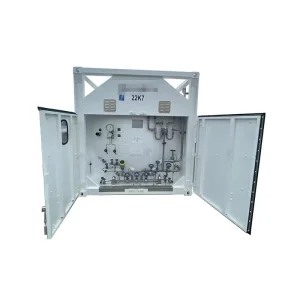
Heavy-duty commercial freezer container providing consistent -30°C thermal stability for Costa Rican pineapple, meat, and poultry processors.
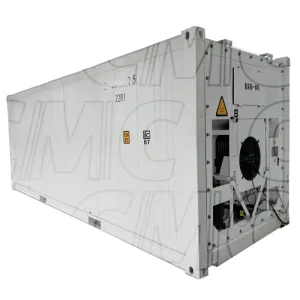
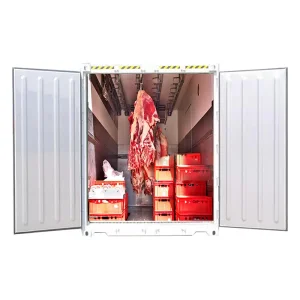
Equipped with DC inverter units, optimized for decentralized plantation packing stations in Guanacaste, Alajuela, and rural estates.
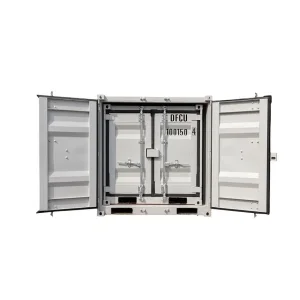
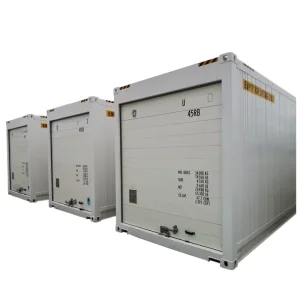
Space-saving nested storage modules ideal for field equipment shelter, chemical fertilizer control, and secondary farm logistics across Costa Rica.
Strategic overview of Costa Rica's export infrastructure, climatic hurdles in Central America, and why conventional reefer systems fail without specialized blast technology.
Costa Rica stands as one of the world's primary exporters of fresh pineapples (MD2 Golden Variety), premium bananas, roots, tubers, and high-value frozen fruits. With foreign sales regulated strictly under PROCOMER and international phytosanitary bodies, pulp degradation during initial post-harvest buffering accounts for severe financial yield reduction.
The dual-coast marine processing corridors—anchored by APM Terminals Moín on the Caribbean and Puerto Caldera / Puntarenas on the Pacific—require industrial-grade blast freezing for yellowfin tuna, mahi-mahi, snappers, and commercial aquaculture tilapia. Ultra-low temperature blast pulldown is vital to halt histamines and crystalline cell rupturing.
International freight dynamics dictate that containers cannot remain static assets. Importers, co-packers, and 3PLs in San José, Cartago, and Heredia require multipurpose, portable refrigeration platforms capable of operating as stationary blast freezers at packing yards, then transferring seamlessly onto chassis trailers for ocean vessel transport.
Why a true industrial Blast Reefer Container outperforms standard maritime transport reefers in tropical processing operations.
| Engineering Parameter | Standard Transport Reefer (Carrier/Thermo King) | CIMIC Industrial Heavy Blast Reefer Platform | Operational Impact in Costa Rica Climate |
|---|---|---|---|
| Primary Objective | Temperature maintenance for pre-frozen cargo | Active rapid heat extraction & flash deep freezing | Prevents cargo spoilage when loading unchilled freshly harvested produce or seafood. |
| Compressor Architecture | Single-stage semi-hermetic or scroll (5–9 kW) | Dual-stage multi-compressor semi-hermetic (15–30+ kW) | Multi-circuit redundancy prevents total batch loss during ambient peaks exceeding 38°C in Limón. |
| Airflow Velocity (CFM) | Approx. 2,800 to 3,500 m³/h through bottom T-floor | High-static pressure fans: 6,500 to 11,000+ m³/h | Penetrates dense pallet stacking, eliminating thermal dead zones in MD2 pineapples or frozen beef quarters. |
| Evaporator Fin Spacing | Dense fin spacing (approx. 4 mm) | Wide progressive fin pitch (7 mm to 9 mm) with hot gas defrost | Eliminates severe frost blinding caused by tropical 90%+ ambient relative humidity during cargo loading. |
| Pulldown Capability | Requires 24–48 hours for light cargo reduction | Rapid shock pulldown (+20°C to -35°C in <4 to 6 hrs) | Haults ice crystal expansion inside cell membranes; preserves seafood texture and farm weight. |
| Structural Shell & Floor | Standard extruded aluminum T-floor (MGPS spec) | Reinforced stainless checker plate or heavy reinforced T-bars (heavy forklift entry) | Withstands daily electric pallet jack loading cycles up to 4,500 kg axle loads in processing hubs. |
Customized application profiles tailored to regional export hubs, terrain challenges, and sector-specific hygiene requirements.
In San Carlos, Sarapiquí, and Guápiles, high harvest volumes of golden pineapples and papayas require pre-cooling or rapid blast freezing for IQF (Individually Quick Frozen) chunk lines. Stationary blast reefer containers serve as decentralized rapid chill hubs, buffering field production before final consolidation to Puerto Limón.
Target: +1°C Chill / -25°C IQFLongline fleets landing high-value Yellowfin Tuna, Swordfish, and Mahi-mahi need immediate flash freezing on the dock. CIMIC’s ultra-low -40°C blast containers drop core muscular temperatures past the critical enzymatic breakdown threshold within hours, preserving meat coloration and satisfying FDA/EU import quality marks.
Target: -38°C Shock PulldownModern meatpackers across Alajuela, Cartago, and San José face surging domestic and regional demand for fresh-frozen pork cuts and poultry. Our blast containers with custom overhead meat-hanging rails and anti-bacterial stainless interiors provide hygienic, high-throughput chilling directly adjacent to slaughter halls.
Target: -30°C Meat Shock FreezeCosta Rica’s booming Life Sciences Medical Device & Pharma ecosystem centered around El Coyol requires strict validation (Good Distribution Practice - GDP). Custom insulated containers with precise PID controls maintain critical biological media and reagents under strict, uncompromised thermal margins.
Target: -20°C to -60°C Pharma ValidatedRemote agricultural farms in Guanacaste cultivate seasonal dragon fruit (pitahaya), melons, and specialty organics. Solar PV inverter containers paired with battery microgrids allow producers to establish cold-chain buffering immediately without waiting for expensive three-phase utility substation buildouts.
Target: 0°C to +8°C Pre-Cooling BufferPort congestion, vessel delays, and customs physical inspections at Moín often present acute cold-chain risks. Containerized blast units act as emergency cold-bank capacity for maritime logistics handlers, preventing multi-container defrosting if terminal reefer plug racks experience brownouts.
Target: -25°C Holding ResilienceEnsuring zero operational downtime across Costa Rica's 60Hz power grid and harsh equatorial coastal environments.
Unlike standard European 50Hz equipment, Costa Rica operates on a 60Hz grid governed by ICE (Instituto Costarricense de Electricidad). All CIMIC blast reefer units for Costa Rica feature 60Hz variable frequency scroll or semi-hermetic reciprocating systems with dual-voltage transformers (380V–460V 3-phase and optional 208V–230V 3-phase stepped configurations) ensuring no compressor motor overheating.
The Caribbean coastline in Limón presents severe chloride atmospheric conditions that disintegrate conventional copper-aluminum coils within 18 months. CIMIC manufactures blast containers with electro-coated (e-coat) or Blygold-treated fin coils, zinc-rich epoxy primers, and outer Corten-A steel shells coated to minimum 120-micron DFT marine grade specifications.
Every reefer container built in our Tianjin and Suzhou production plants holds a full Bureau Veritas (BV) or Lloyd's Register CSC safety plate, ISO 9001 quality compliance, and food-grade USDA/FDA-approved interior sealing (non-toxic silicone, stainless 304 food contact surfaces). Equipment is pre-cleared for direct international intermodal line shipping.
Aligning with Costa Rica’s National Decarbonization Plan (Plan Nacional de Descarbonización 2018–2050) via smart engineering and zero-loss thermal design.
Phase-down mandates on R404A and R134a are progressing under the Kigali Amendment. CIMIC blast refrigeration architecture has advanced to support ultra-low Global Warming Potential refrigerants including R452A, R513A, and next-stage natural refrigerant CO2 (R744) transcend systems, reducing carbon tax liabilities for transnational food exporters shipping to Europe and North America.
Transporting cargo across mountain corridors from San José to Puerto Limón exposes refrigerated freight to route delays and microclimatic shifts. Our integrated telematics platform provides live GPS, remote setpoint tuning, supply/return air logging, humidity sensing, and instantaneous alerts for power interruptions via an encrypted industrial dashboard.
To maximize interior payload without expanding external ISO footprints, CIMIC is incorporating hybrid high-density polyurethane cores fortified with Vacuum Insulation Panels. This advancement reduces wall thermal conduction by up to 28%, significantly lowering compressor run times, reducing electricity costs, and increasing unit lifespan.
Authoritative answers addressing voltage specs, port logistics, blast pulldown calculations, and maintenance frameworks.
Complete containerized logistics portfolio—from certified used reefers and specialized roll-up units to cryogenic tanks and chemical bulk units.
Thoroughly inspected, pre-trip inspected (PTI passed) 40ft HC reefer containers offering cost-efficient cold storage for secondary packing hubs.
Engineered for safe bulk intermodal transport of food-grade neutral cane alcohol, rum extracts, and specialized food oils across Central American routes.
High-vacuum multi-layer insulation tank for transporting liquid nitrogen and medical oxygen to industrial gas facilities and healthcare networks.
Equipped with reinforced roof trusses and multi-lane stainless hanging hooks for beef quarters, pork carcasses, and cold-chain distribution.
Segmented roller-shutter design allowing quick loading access at crowded retail and supermarket distribution docks in San José.
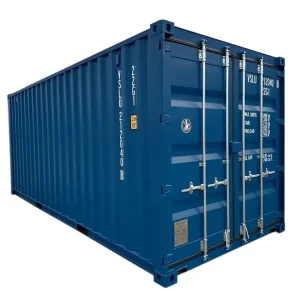
Heavy Corten steel dry container featuring operational swing doors at both ends, ideal for packaging materials and farm agro-chemicals.
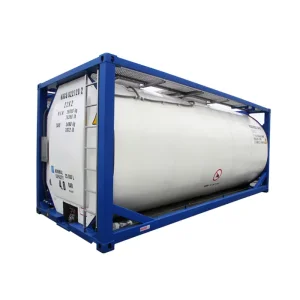
Engineered for hazardous and non-hazardous liquid chemicals, fertilizers, and industrial solvents entering Central American seaports.
Ultra-cold holding container engineered to sustain temperatures down to -40°C for deep-sea fishing operators and pharmaceutical stockpiles.