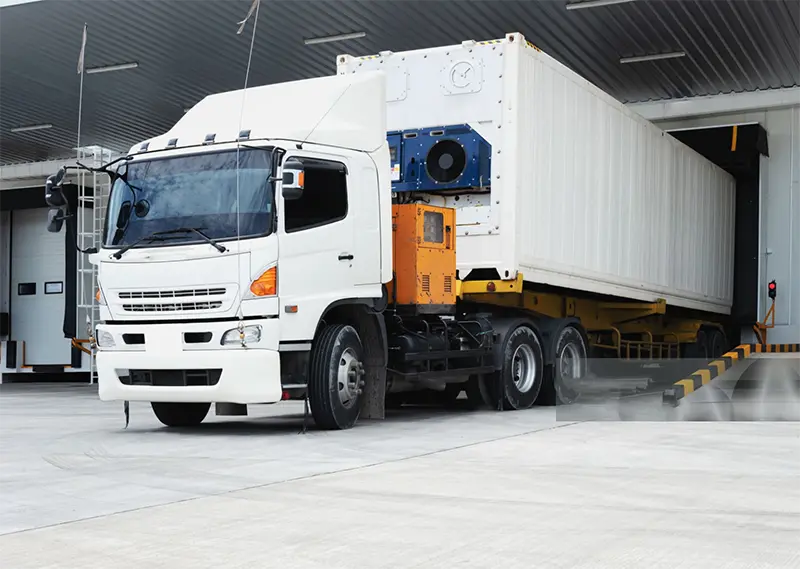
1 / 4
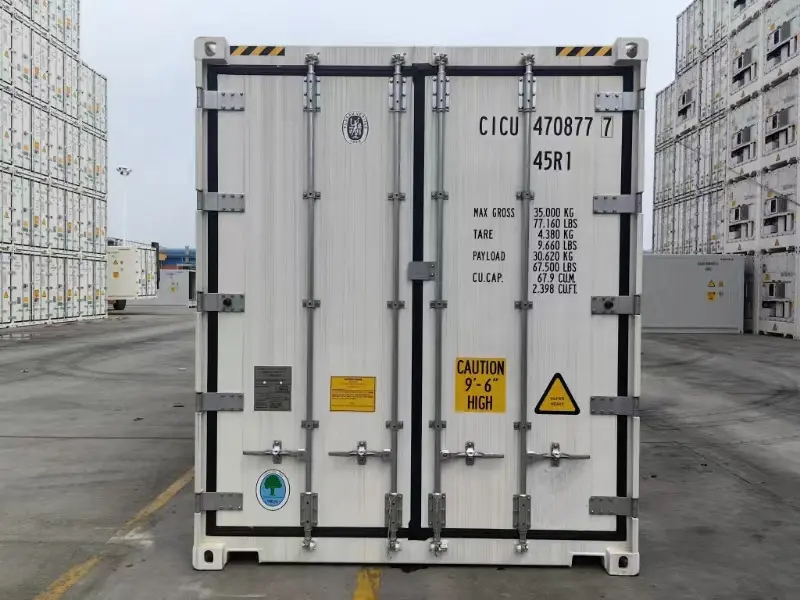
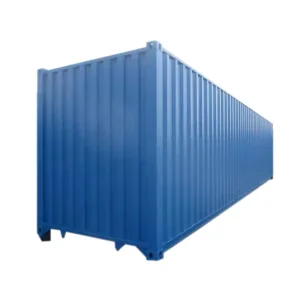
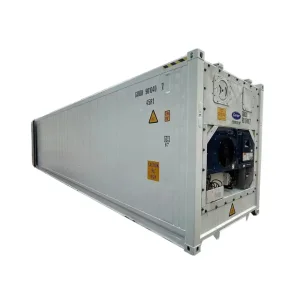
| External Dimension (MM) | 6058 × 2438 × 2896 |
| Internal Dimension (MM) | 5456 × 2284 × 2562 |
| Door Opening (Width) | 2290 mm |
| Door Opening (Height) | 2569 mm (Maximum cargo height: 2525 mm) |
| Maximum Gross Weight | 30,480 kg |
| Maximum Payload | 26,240 kg |
| Tare Weight (±2%) | 4,240 kg |
| Volume | 31.9 m³ |
| Internal Temperature Range | -40°C to 30°C (-40°F to 86°F) |
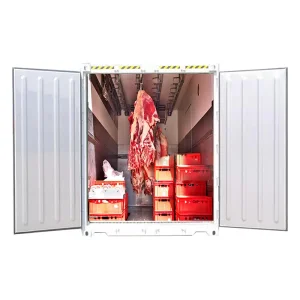
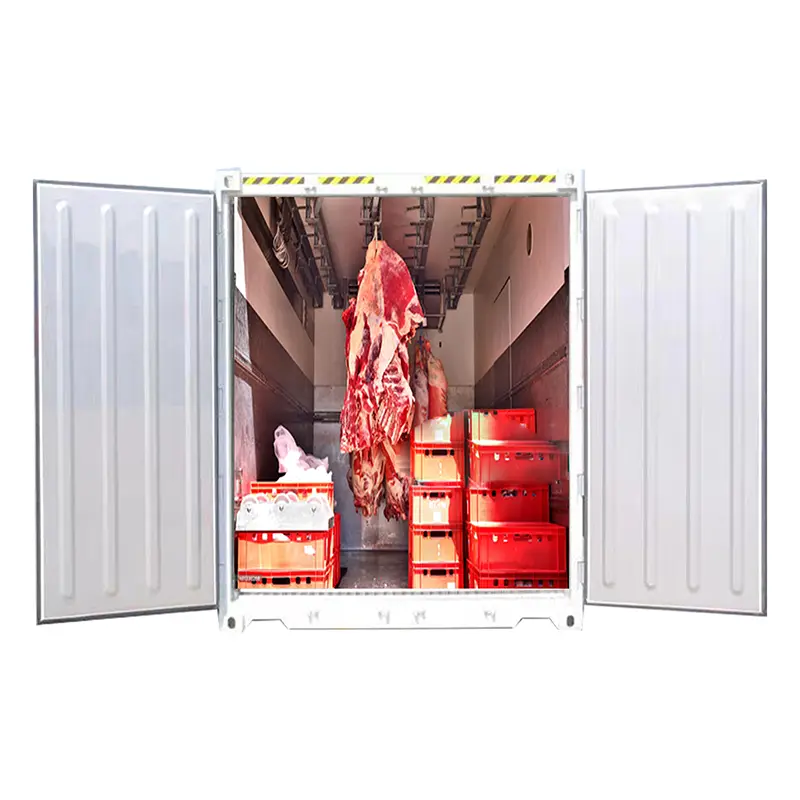
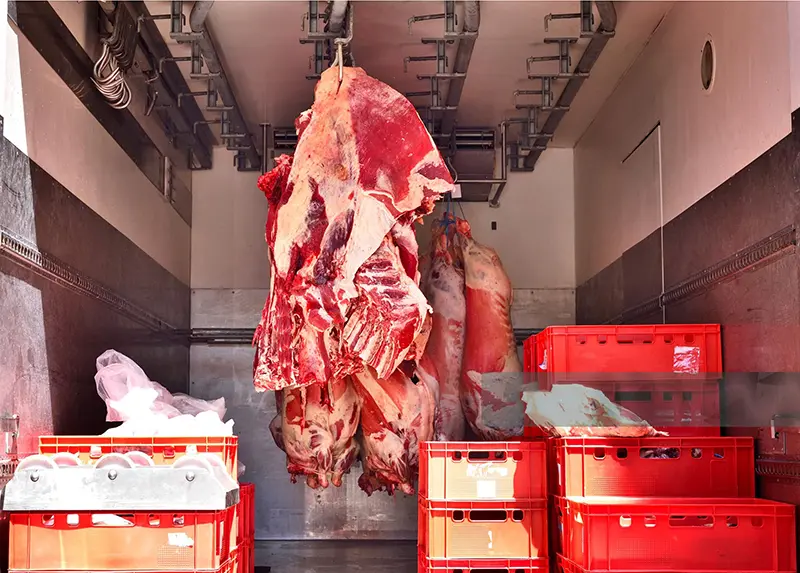
By hanging meat vertically, issues like compression, deformation, and uneven regional temperature caused by bottom stacking are eliminated. This preserves the texture, natural color, and nutritional value of the cargo.
Unlike conventional bottom-stacked transport, vertical hanging maximizes full cubic capacity, significantly increasing payload volume, logistical efficiency, and economic return.
Smooth track and hook mechanisms allow staff to slide and transfer meat carcasses in and out rapidly, avoiding strenuous physical lifting, reducing labor fatigue, and minimizing vessel or trailer dock turnaround times.
Fully compatible with standard road chassis, rail systems, and container vessels, offering continuous cold chain logistics across diverse long-haul shipping routes.
The tracks are manufactured from high-strength aluminum alloy or stainless steel to offer exceptional load capacity and corrosion resistance. Available in single-track or multi-track configurations, the hooks rotate freely for easy handling, with adjustable spacing (typically 30–50 cm) to accommodate various carcass sizes.
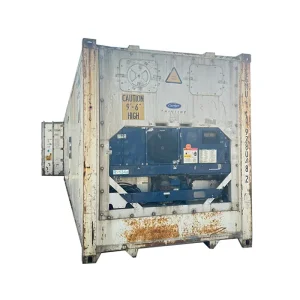
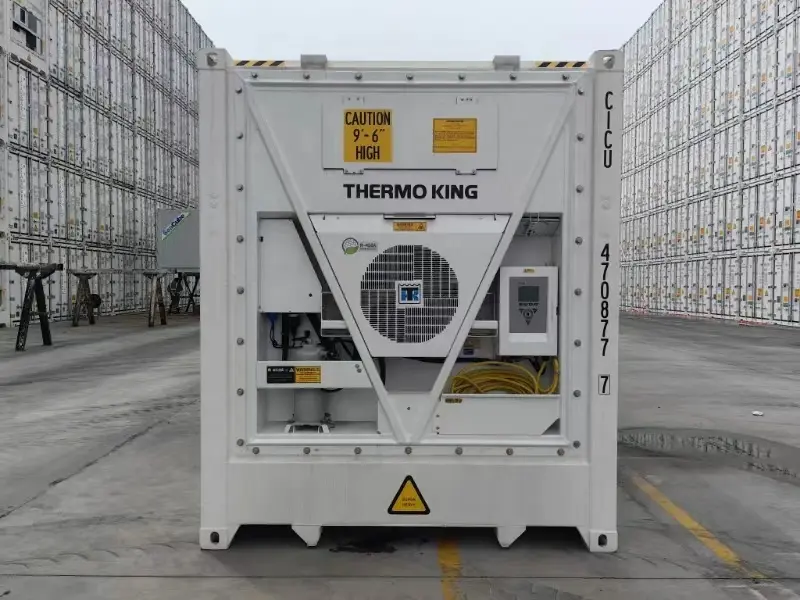
Regular maintenance involves checking refrigerant levels, cleaning condensers and evaporators to prevent dust accumulation, and inspecting electrical connections, wiring, and temperature sensors to guarantee continuous cooling performance.
The interior integrates reliable, heavy-duty locking hanging systems and safety hooks engineered to keep carcasses firmly anchored in position, preventing displacement or detachment caused by road vibration and marine motion.
The internal climate system can be calibrated across an operating range of -40°C to 30°C (-40°F to 86°F), while typical frozen meat transportation is consistently sustained between -18°C and -25°C backed by high-density polyurethane insulation.
The container is built with specialized ventilation channels and airflow equipment that constantly cycle air, expelling moisture, humidity, and metabolic respiration odors that would otherwise encourage bacterial proliferation.
Constructed with high-strength structural ribs along the roof, side walls, and subfloor, the container provides a maximum gross weight of 30,480 kg and a net payload rating of up to 26,240 kg, resisting heavy dynamic loads during transit.