Optimized for Trans-Siberian high-speed transit, dry-port container yards at Vorsino and Khovrino, and harsh continental temperature swings from -40°C to +40°C.

As the indisputable epicentre of the Eurasian logistics network, the Moscow Transportation Hub (MTH) handles over 60% of all containerized imports arriving from eastern frontiers. The structural realignment toward overland rail arteries demands unprecedented equipment durability.
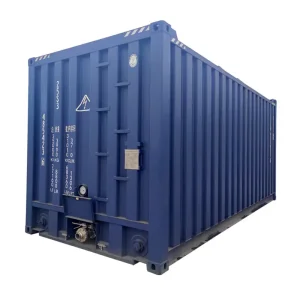
Moscow’s hinterland serves as the terminal core for trans-continental container express trains traversing the Trans-Siberian railway and Kazakhstan transit corridors. Key multi-modal terminals like Freight Village Vorsino, Bely Rast Terminal, and Khovrino dry port have reached peak operational throughput. Efficient handling across these facilities requires ISO/GOST certified road-and-rail containers designed for rapid gantry crane transfers, high-cycle reach stacker operations, and unyielding resistance to vertical corner-casting stress.
The expansion of the Central Ring Road (TsKAD) has bridged direct multi-modal transfer from heavy rail flatcars directly onto high-payload articulated container chassis. Freight operators require specialized equipment capable of enduring high-vibration rail shocks followed immediately by multi-axle heavy highway haulage across the Central Federal District.
With the reconfiguration of Eurasian supply chains, bilateral trade via Vladivostok, Zabaikalsk, Manzhouli, Dostyk, and Alashankou has skyrocketed. Moscow logistics enterprises face high structural requirements: traditional marine containers frequently experience thermal failures and steel embrittlement when routed through sub-zero Siberian corridors.
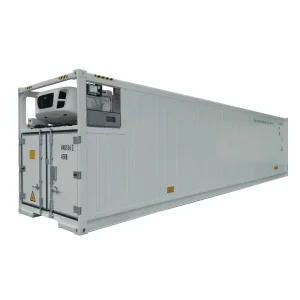
Modern rail operators demand next-generation rolling stock containment: 40ft High-Cube and 45ft pallet-wide models that optimize volume limits within Russian Railways (RZD) 1-T kinematic loading profiles. Precision-engineered intermodal units eliminate wasted spatial margins, delivering up to 33 standard Euro-pallets in a single haul without violating road bridge weight limits across Moscow Oblast.
Intermodal rail journeys traversing Northern Asia experience rapid thermal cycling from -45°C during Siberian winter nights to +35°C in summer transfer yards. Standard maritime carbon steels experience severe ductile-to-brittle transitions under these conditions.
Corner posts, bottom side rails, and load-bearing crossmembers are forged from premium SPA-H atmospheric corrosion-resistant Corten steel matched with micro-alloyed low-carbon 09G2S structural steel. This metallurgical profile guarantees Charpy V-notch impact toughness values exceeding 27 Joules at -40°C, completely mitigating brittle catastrophic rail-shunting fracture.
Equipped with 6-axis laser-guided robotic welding gantries, every external seam attains 100% full-penetration welding. The corrugated side walls and roof panels receive uninterrupted non-porous welds tested via ultrasonic flaw detection, preventing moisture infiltration that leads to structural ice-jacking and interior delamination during freeze-thaw cycles.
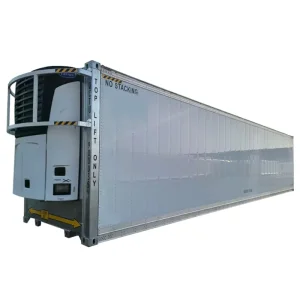
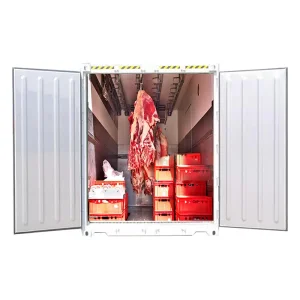
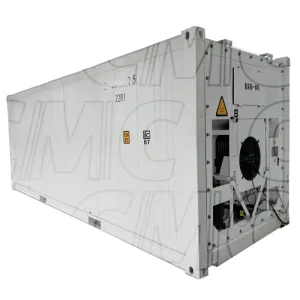
Refrigerated and insulated modules utilize 75mm to 100mm high-density, eco-friendly cyclopentane polyurethane foam injected at high pressure (42 kg/m³ density). Thermal bridging is eliminated using thermal breaks between inner food-grade stainless steel linings (SUS304) and outer Corten shells, achieving an industry-leading overall heat transfer coefficient (K-value) below 0.38 W/m²K.
| Technical Metric | 40ft High Cube Intermodal | 45ft Pallet-Wide Reefer | 20ft Heavy Liquid / Bulk ISO | Compliance Standards |
|---|---|---|---|---|
| External Dimensions (L x W x H) | 12,192 x 2,438 x 2,896 mm | 13,716 x 2,550 x 2,896 mm | 6,058 x 2,438 x 2,591 mm | ISO 668 / GOST R 53350 |
| Max Gross Weight (Rating) | 35,000 kg (77,160 lbs) | 34,000 kg (74,950 lbs) | 36,000 kg (79,360 lbs) | CSC Certified / RZD Approved |
| Base Frame Metallurgy | SPA-H Corten Steel / Q355ND | SPA-H + Low-Temp 09G2S | Corten-A / Stainless 316L | EN 10025-9 / GOST 19281 |
| Operating Temperature Range | -40°C to +70°C | -50°C to +50°C (Active) | -40°C to +80°C | ATP Certified (Class FRC) |
| Pallet Capacity (Euro 1200x800) | 25–26 Pallets | 33 Pallets (Full Width) | 11 Pallets / Direct Tank | European / Russian Standard |
| Anti-Corrosion Surface Finish | Zinc-Rich Primer + Epoxy + PU | E-Coating + Heavy Polyurethane | Marine Epoxies (240µm DFT) | ISO 12944 (C5-M High Durability) |
Leveraging dual manufacturing megabases in Tianjin and Suzhou, CIMIC unites advanced Industry 4.0 automated stamping and automated shot blasting lines with direct rail spur connectivity. Finished equipment transitions seamlessly from production line to cross-border freight trains bound for Moscow.
Every road and rail container manufactured in our smart factories undergoes an automated 8-stage surface treatment protocol. Heavy automated shot-blasting strips raw steel to SA 2.5 cleanliness, followed immediately by cathodic electrodeposition (KTL) and multi-coat high-build polyurethane topcoats with a total dry film thickness exceeding 240 microns.
This barrier withstands intense road de-icing salts used on the Moscow MKAD and regional highways, passing 3,000-hour neutral salt spray tests under ISO 12944 C5-M extreme industrial/marine environmental classifications.
A persistent friction point for Russian freight forwarders is paying high empty repositioning freight costs. CIMIC circumvents this bottleneck by offering Shippers Owned Container (SOC) programs loaded with contracted high-density export dry cargo directly out of Tianjin and Suzhou rail hubs.
Units arrive at Moscow Vorsino, Khovrino, or Silikatnaya laden with commercial goods, fully amortizing initial transit freight costs. The buyer takes delivery of brand-new, duty-paid or transit-bonded rolling stock at destination terminals, ready for immediate integration into domestic road or rail operations.
Deploying intermodal equipment on Russian rail lines and domestic highways demands strict adherence to interstate GOST frameworks, Customs Union technical regulations (TR CU), and international CSC conventions.
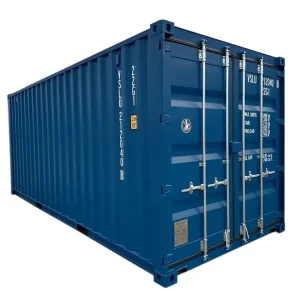
All dry, open-top, and specialized containers comply with GOST R 53350-2009 (ISO 668 series 1 freight containers). Floor transverse beams, chassis bolster pockets, and side rail profiles conform to the Russian Railways (RZD) 1-T kinematic envelope, preventing overhead wire conflicts and trackside platform collisions during shunting.
Manufactured with documentation ready for Eurasian Conformity (EAC) certification under TR CU 010/2011 "On safety of machinery and equipment". Dual certification via the Russian Maritime Register of Shipping (RS) or Bureau Veritas (BV) certifies dynamic strength under 2G longitudinal rail coupling impacts.
Refrigerated container builds are engineered in full alignment with the Agreement on the International Carriage of Perishable Foodstuffs (ATP). Classified under Class FRC (reinforced insulation with mechanically refrigerated unit maintaining internal temperature down to -20°C in +30°C ambients), ensuring full customs clearance for pharmaceuticals and foodstuffs.
Autonomous freight across thousands of kilometers of remote Siberian rail infrastructure requires self-sufficient telematics and power generation systems to prevent catastrophic cold-chain thawing.
Our active intermodal units come equipped with ruggedized IP69K telematics modules supporting dual GLONASS and GPS satellite constellations with L-band fallback. Logistics teams in Moscow monitor cargo latitude, internal setpoint deviations, supply/return air temperatures, ambient humidity, door opening triggers, and 3-axis G-force impact events in real-time via REST API cloud dashboards.
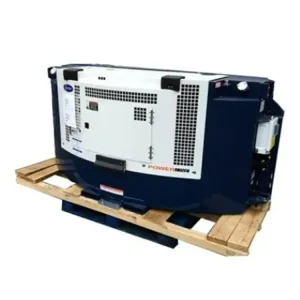
Because electric flatcars are unavailable across non-electrified rail spurs in remote transit regions, CIMIC provides factory-engineered undermount and clip-on diesel generator sets (gensets). Powered by cold-start Perkins, Kubota, or Yanmar diesel engines paired with 400L extended fuel tanks, they provide continuous, autonomous operation for over 120 hours without refueling.
Detailed engineering and contractual clarifications regarding container acquisitions, customs logistics, and regional operational compatibility.
We use specialized 09G2S and Corten SPA-H structural steel grades that resist cold embrittlement down to -50°C. In refrigerated models, we install heated door gaskets to prevent seal freezing, low-temperature synthetic refrigerants, and crankcase oil sump heaters for reliable cooling unit restarts in sub-zero freight yards.
Custom manufacturing runs require approximately 20 to 30 days depending on component availability. Rail transit via direct overland container trains from our Tianjin or Suzhou hubs to Moscow freight terminals (Vorsino, Bely Rast, or Khovrino) typically takes 14 to 18 days, providing an end-to-end turnaround of around 40 to 45 days.
Yes. We provide complete OEM corporate identity application, including custom RAL color matches, anti-graffiti protective overcoats, multi-color corporate vinyl transfers, and unique serialized laser-etched stainless steel CSC approval data plates.
A standard 40ft HC holds up to 25 Euro-pallets (1200x800mm). The 45ft Pallet-Wide model has an expanded internal width of 2,440mm, allowing two Euro-pallets side-by-side with zero wasted clearance, accommodating a total of 33 pallets. This provides a 32% increase in pallet capacity while remaining compliant with road trailer limits.
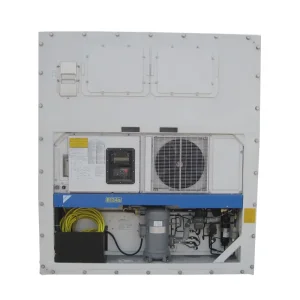
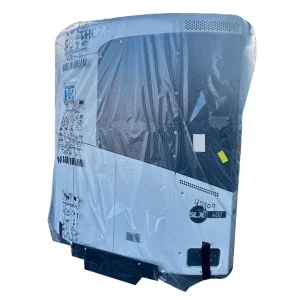
We integrate Carrier Transicold (e.g., ThinLINE, PrimeLINE), Thermo King (Magnum Plus), and Daikin (LXE series) machines, along with compatible Chinese digital scroll compressor systems. This ensures broad spare-parts availability across authorized Eurasian service centers.
Every container is delivered with comprehensive export documentation, including CSC Safety Approval certificates, ISO conformity documentation, factory acceptance inspection test certificates, fumigation certificates for timber flooring, and EAC conformity declarations where applicable.
Explore our certified equipment lineup, engineered to maintain uptime across Russian transport networks, regional warehouses, and remote industrial project sites.
Contact our engineering and procurement team for custom technical drawings, volume pricing tiers, and scheduled production capacity from our Tianjin and Suzhou manufacturing plants.
