Precision-engineered refrigerated containers designed specifically for severe equatorial ambient temperatures, heavy multi-drop routes, and intermodal East African freight handling.
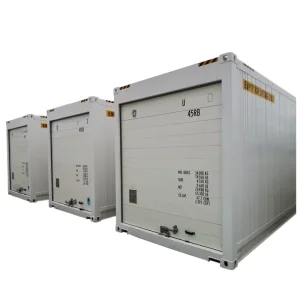 Flagship Roll-Up
Engineered for Naivasha floriculture and Nairobi urban distribution with automated high-speed thermal insulated roller shutter.
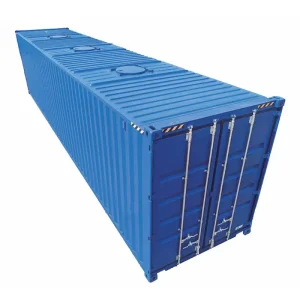 Intermodal Heavy
Reinforced Corten-A steel architecture suited for high-density agricultural produce and multi-modal SGR corridor transit.
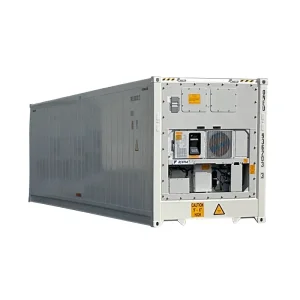 Ultra-Low Temp
Precision temperature control down to -30°C for avocado exports, meat packing, and Mombasa marine catch staging.
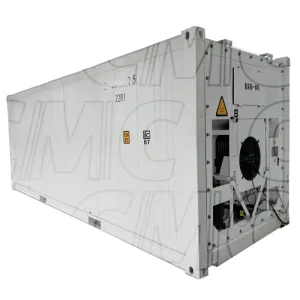 Off-Grid Solar PV
Self-sustaining, solar-integrated cold chain terminal engineered for remote rural farms without reliable grid connection.
Kenya represents the economic and logistical engine of East Africa, commanding an export-driven agricultural framework where horticultural, floricultural, and perishable food logistics form the backbone of national GDP. The Great Rift Valley basin—anchored by Lake Naivasha, Nakuru, and Mount Kenya production hubs—produces over 35% of the cut flowers imported into the European Union, notably fresh-cut roses and carnations. Concurrently, the explosive growth of Kenya’s Hass avocado production across Murang’a, Kiambu, and Meru counties, combined with green beans and mango exports, demands an unbroken, rigorously stabilized refrigerated cold supply corridor.
However, commercial operators encounter severe systemic bottlenecks along the primary logistical artery: the Mombasa-to-Nairobi Northern Corridor and the Standard Gauge Railway (SGR) intermodal freight line. Traditional cold storage logistics in Kenya suffer from high post-harvest losses—exceeding 32% in fresh produce value chains—largely attributable to thermal breakage during loading, poor infrastructure at rural farm-gate packhouses, and extended clearance dwells under equatorial ambient conditions.
Mombasa ambient temperatures consistently exceed 34°C with 85%+ relative humidity. Opening double end-swing doors for 15 minutes causes instant thermal equilibrium loss, taking up to 3.5 hours for reefer pulldown to recover setpoints.
Nairobi's bustling commercial districts and retail supermarkets require rapid pallet drops. Conventional swing doors require 2.5 meters of rear swing clearance, creating severe loading dock constraints in dense trading hubs like Industrial Area, Embakasi, and Westlands.
High electricity tariffs from Kenya Power (KPLC) coupled with frequent rural microgrid voltage sags make standard constant-frequency compressor reefers economically prohibitive without intelligent DC inverter and solar PV backup integration.
In typical cold chain logistics across Kenya, temperature spikes during loading and unloading are the single greatest cause of export consignments failing strict European Phytosanitary and MRL (Maximum Residue Limit) inspections. Conventional refrigerated containers utilize massive, dual-leaf swing doors sealed with heavy mechanical cam-locks. Opening these doors exposes the complete cross-sectional internal envelope (approx. 2.44m × 2.59m) to hot, humid ambient air, creating immediate condensation, ceiling icing, and cargo shelf-life degradation.
CIMIC's purpose-engineered Roll-Up Door Refrigerated Containers incorporate sectional, high-density polyurethane-insulated aluminum/composite roller shutter curtains. By lifting vertically on high-tensile stainless steel track systems, the operator can expose only the exact vertical height required for forklift tines or hand pallet jacks, cutting convective heat exchange by up to 68% during partial loading cycles.
| Performance / Engineering Metric | CIMIC Roll-Up Shutter Reefer (40ft HC) | Standard Rear Swing Door Reefer (40ft HC) | Impact on Kenyan Operations |
|---|---|---|---|
| Convective Heat Infiltration Rate | 0.42 kW / min open aperture (metered) | 1.38 kW / min open aperture (full open) | Reduces compressor load by 41% during urban retail offloading |
| Door Actuation Cycle Time | 4 to 8 Seconds (Motorized / Torsion Spring) | 45 to 90 Seconds (Manual dual-cam unlocking) | Saves 35+ minutes across a typical 6-stop Nairobi distribution run |
| Dock Clearance Footprint Required | 0.00 Meters (Vertical Roll-Up Travel) | 2.60 Meters (Radial Leaf Sweep Arc) | Enables operations in compact Mombasa freight stations and tight farm packs |
| Perimeter Sealing Technology | Dual-Lip Quad-EPDM Sweepers + Thermal Break | Single/Double Perimeter Compression Gasket | Prevents marine salt encrustation and air leaks along coast |
| Internal Air Distribution Floor | Deep T-Bar Airflow Aluminum Extrusion (75mm) | Standard ISO Extruded Floor | Guarantees continuous bottom-up cold air wash over packed flower boxes |
Sourced directly from our state-of-the-art production centers in Tianjin and Suzhou, CIMIC containers meet the most uncompromising international maritime safety, structural, and thermodynamic criteria.
Every refrigerated container destined for the East African market undergoes rigorous finite element structural analysis (FEA) and extreme thermal modeling. Outer skins are forged from SPA-H Corten-A weathering steel treated with marine-grade epoxy zinc-rich priming and polyurethane topcoats (120μm minimum dry film thickness) to withstand the aggressive saline marine atmosphere of the Port of Mombasa (Kilindini Harbour).
Thermal insulation utilizes computerized, high-pressure cyclopenthane-blown polyurethane foam (PU) injected at a density of 42–45 kg/m³. This zero-ODP (Ozone Depletion Potential), low-GWP (Global Warming Potential) thermal core completely eliminates structural bridging, ensuring exceptional thermal preservation even when containers stand under direct equatorial solar radiation in open holding yards along the Nairobi Inland Container Depot (ICD).
Delivering full-spectrum logistical resilience through off-grid power, intelligent multi-temperature zoning, and telematics telemetry.
Integrated rooftop photovoltaic modules connected directly to variable-speed DC inverter refrigeration units. Automatically switches between solar, local grid (220V/380V/440V), and integrated diesel clip-on gensets, reducing operational diesel consumption by up to 55%.
Movable internal insulated bulkheads allow simultaneous transit of incompatible produce—such as cut flowers at +2°C and French beans at +6°C—within a single 40ft High Cube container, maximizing backhaul economics between Eldoret and Mombasa.
Equipped with dual-mode IoT tracking modules providing real-time data loggers for core temperature, humidity levels, O2/CO2 levels (Controlled Atmosphere), GPS location across the Northern Corridor, and immediate alert triggers for door actuation events.
Importing industrial cold-chain equipment into Kenya requires stringent adherence to statutory quality and electrical mandates enforced by the Kenya Bureau of Standards (KEBS) and the Kenya Revenue Authority (KRA). Sourcing directly from CIMIC eliminates non-compliance risks through documented adherence to Kenya Standard KS ISO specifications.
As the East African Community (EAC) deepens intra-regional trade under the African Continental Free Trade Area (AfCFTA), the demand for decentralized, hyper-efficient cold-chain infrastructure will accelerate exponentially. CIMIC’s ongoing R&D engineering pipelines focus on three transformative technological pillars:
1. Phase Change Material (PCM) Thermal Buffering: We are integrating passive eutectic salt and organic PCM panels within container side-walls and roll-up shutter slats. These thermal reservoirs absorb latent heat, holding internal temperatures below +4°C for up to 14 hours during prolonged SGR rail transit power dropouts or border delays at Malaba and Namanga without consuming external fuel.
2. AI Edge Predictive Diagnostic Units: Future units incorporate micro-edge computing nodes connected to compressor vibration transducers and refrigerant cycle pressure transducers. Machine learning algorithms predict unit failure, filter blockages, or gas leakages 72 hours before catastrophic thermal collapse occurs, alerting local maintenance hubs in Nairobi and Eldoret in advance.
3. Carbon-Neutral Ultra-Micro Cold Hubs: Standardized 20ft roll-up containers deployed as solar-powered community micro-packhouses, empowering smallholder farmers across Nyandarua and Meru to aggregate and pre-cool produce at the farm level, completely transforming traditional rural cold chains.
Straightforward answers from CIMIC’s marine and cold-chain engineering teams regarding specifications, local deployment, maintenance, and ordering.
Roll-up doors eliminate the 2.6-meter clearance arc necessary to open heavy container doors, making them ideal for urban loading docks in Nairobi and tight farm packing sheds. More crucially, opening a roll-up shutter only partially prevents massive warm-air drafts, conserving internal cold air and dramatically reducing compressor energy consumption.
Our reefer containers integrate industry-standard refrigeration machinery from Carrier, Thermo King, and Daikin. These platforms have authorized regional servicing centers, certified technicians, and off-the-shelf consumable spare parts readily available across Mombasa, Nairobi, and regional hub networks.
Yes. Our patented solar-integrated hybrid series pairs high-efficiency monocrystalline solar arrays with smart DC inverter units. While continuous deep-freeze (-20°C) operations in heavy tropical environments generally require a hybrid battery/grid/diesel configuration, standard horticultural chilling (+2°C to +8°C) can operate with exceptionally high solar autonomy.
Every shipment is backed by a full Bureau Veritas (BV) or ISO inspection docket, factory thermal leakage certifications (ATP-equivalent testing), and an authentic Certificate of Conformity (CoC) issued prior to departure, guaranteeing zero administrative holdups at the Port of Mombasa.
Production cycles for customized OEM/ODM roll-up reefer orders typically range between 20 to 30 business days. Ocean transit from Tianjin or Shanghai seaport to Kilindini Harbour in Mombasa averages 22 to 28 days depending on direct or transshipment maritime routing.
Absolutely. We offer heavy-duty aluminum flat-floor or reinforced duct-type T-flooring rated for axle weights exceeding 5,460 kg (in accordance with ISO 1496-1 forklift wheel requirements), allowing smooth pallet truck and motorized forklift maneuvering.
Explore CIMIC's comprehensive portfolio of certified intermodal equipment, cryogenic transport vessels, and custom accommodation systems engineered for global supply chains.
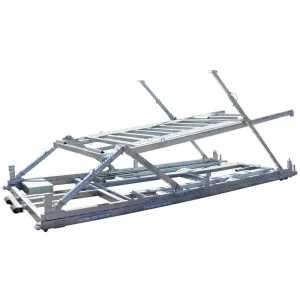 Automotive Logistics
Engineered for dense automotive transshipment through the Mombasa-Nairobi-Kampala logistics route.
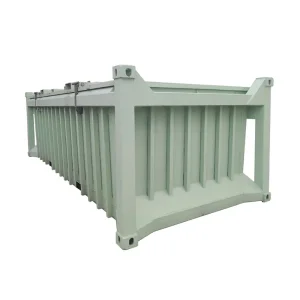 Mining & Bulk
Structural reinforcement specifically designed for high-density mineral transport and East African mining projects.
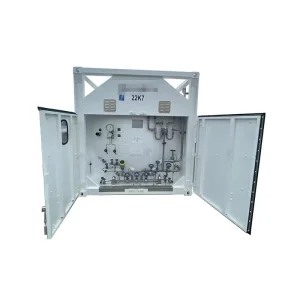 Cryogenic Energy
ASME and IMDG-certified multi-layer vacuum insulated tank container for LIN, LOX, LAR, and LNG transport.
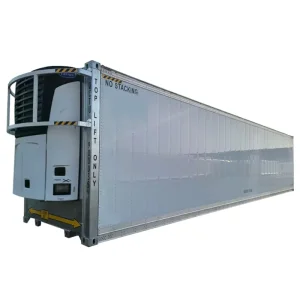 Carrier Integrated
Integrated diesel genset and electric refrigeration container ensuring non-stop cooling throughout transit.
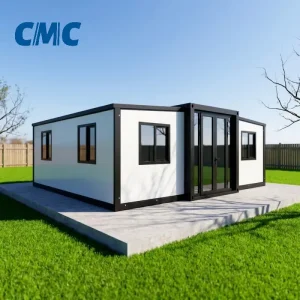 Modular Building
High thermal-barrier expandable steel container systems for agricultural estates and project sites.
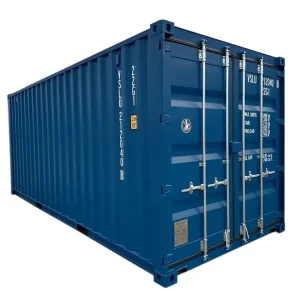 Dual End Access
Dual swing doors at both ends enabling efficient through-loading without reversing handling vehicles.
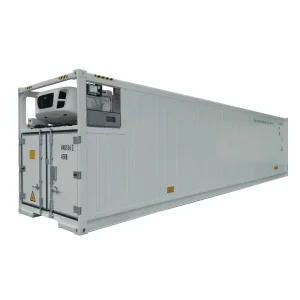 Intermodal Rail
Reinforced chassis structural frames optimized for high-impact standard gauge rail connections.
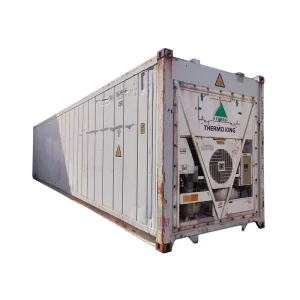 Deep Freeze Export
Industry standard marine shipping reefer delivering high COP efficiency and stable cold storage performance.
Whether you need custom-dimensioned roll-up door reefers for urban multi-drop distribution in Nairobi, high-cube cold storage rooms for Lake Naivasha floriculture, or off-grid solar refrigerated units for regional avocado collection centers, CIMIC delivers direct-from-factory pricing and turnkey compliance.
