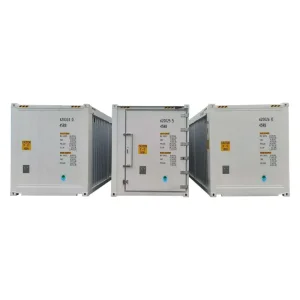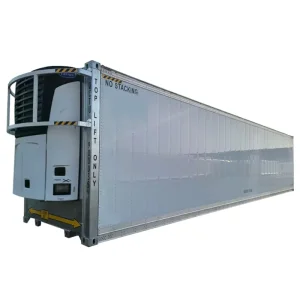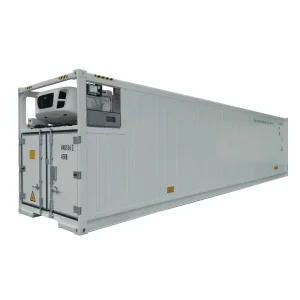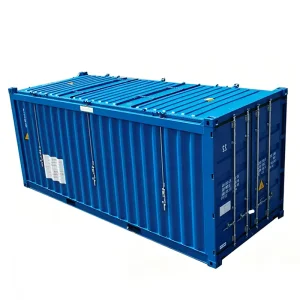
Hard-Top Open-Top
Procure certified intermodal containers straight from Chinese coastal production hubs. Optimized for overhead gantry loading, high concentrated payloads, and harsh marine environments.
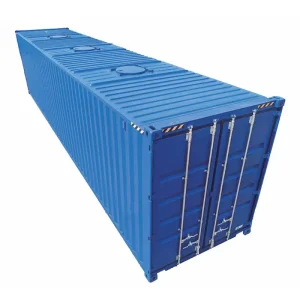
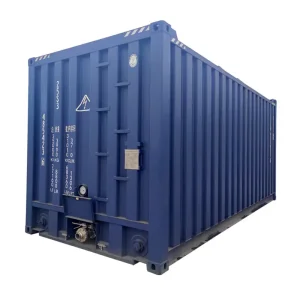
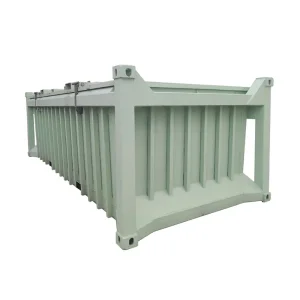
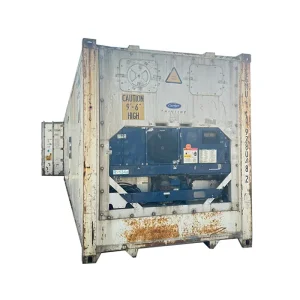
How the structural limitations of conventional canvas open-top containers catalyzed the global rise of high-tensile steel removable hard-top units in heavy intermodal trade.
For decades, conventional open-top containers utilized soft polyvinyl chloride (PVC) tarpaulins stretched over arched roof bows (TIR cords). While suitable for general cargo with marginal height deviations, tarpaulin systems presented catastrophic engineering and operational vulnerabilities in high-value, heavy-industrial intermodal lines. Flexible tarpaulins are prone to puncture by shifting oversized machinery, water pooling during severe open-sea transits, and intentional slicing during port dwell periods, exposing multi-million-dollar turbine rotors, stone slabs, and CNC machinery to moisture, salt spray, and pilferage.
The introduction of the Hard-Top Open-Top (HTOT) container bridged this critical technical gap. Built with an all-steel, fully detachable, corrugated roof panel, the HTOT functions simultaneously as an open-top container for vertical overhead loading and as a secure, rigid general cargo container. By utilizing high-yield atmospheric corrosion-resistant Corten steel (SPA-H) combined with reinforced corner blocks, specialized perimeter lever locks, and swing-out rear header beams, modern HTOT factories provide cargo underwriters and heavy-lift logistics engineers with uncompromised structural integrity.
Unlike vinyl soft tops that can be slashed with a utility blade in container depots, the rigid pressed-corrugated Corten roof locks onto the upper side rails with interior tamper-evident cam levers, preventing unauthorized cargo access.
Engineered perimeter EPDM lip seals, clamped under mechanical compression, prevent water retention and eliminate leakage during heavy typhoon conditions, preserving sensitive electric transformers and precision metals.
When the hard-top roof is secured, the box retains the full torsional rigidity and top-rail compression load profile of standard ISO dry boxes, allowing safe deep-hold vessel stacking without requiring under-deck dead space allocation.
From fluctuating regional container imbalances to demanding crane load-path specs, global buyers face rigorous procurement decisions.
Global Engineering, Procurement, and Construction (EPC) contractors, offshore oil and gas modules suppliers, and mining plant operators face recurring logistical deadlocks when moving non-standard machinery. When cargo exceeds standard 2,280mm door entrance heights, standard front-loading dry containers are immediately ruled out. Flat-rack containers, while capable of carrying over-dimensional loads, leave cargo entirely exposed to ocean wave slosh and atmospheric condensation, requiring costly industrial shrink-wrapping, anti-corrosion preservation oils, and premium breakbulk freight surcharges.
The Hard-Top Open-Top container eliminates these compromises by serving as a dual-purpose solution: top-loaded via overhead gantry cranes or mobile crane spreaders, yet securely enclosed once the steel lid is mechanically locked down. Nevertheless, enterprise procurement managers must navigate major factory-level hurdles:
The detachable steel roof requires dedicated lifting eyes or fork pockets. Incorrect rigging geometry during port site lifts can bend top side guide pins, preventing proper re-engagement onto perimeter channels.
To roll or slide heavy cargo into the container horizontally, the upper rear door header swings out 180° or detaches completely. Factories must calculate beam yield strength to avoid sagging under corner-post rack tests.
Heavy generators and stone billets exert immense point pressure. Standard 28mm tropical hardwood floorboards require factory-engineered reinforcements, such as integrated longitudinal omega-steel stiffeners or 4.5mm checkered steel plate.
Every customized hard-top must pass stringent high-pressure water nozzle penetration tests (ISO 1496-1) across the full perimeter sealing line to obtain official CSC safety plating for unrestricted ocean liner bookings.
Direct mechanical and physical comparison for naval architects, freight forwarders, and structural procurement teams.
| Technical Metric / Specification | 20ft High-Cube Hard-Top (HTOT) | 40ft High-Cube Hard-Top (HTOT) | Standard Soft-Top Open-Top | Standard Dry Van (GP) |
|---|---|---|---|---|
| Structural Steel Grade | Corten SPA-H / Q345D | Corten SPA-H / Q345D | Corten-A / SS400 | Corten-A / SPA-H |
| Roof Structure Mechanism | Detachable Pressed Corrugated Steel | 2-Piece or Single Steel Lid | TIR PVC Tarpaulin + Roof Bows | Permanently Welded Corrugated Steel |
| Rear Door Header Assembly | 180° Swing-Out / Fully Detachable | 180° Swing-Out / Fully Detachable | Removable Steel Bow Header | Fixed Welded Rear Crossmember |
| Maximum Gross Weight (M.G.W.) | 30,480 kg – 32,500 kg | 32,500 kg – 35,000 kg | 30,480 kg | 30,480 kg – 32,500 kg |
| Floor Structure & Payload Rating | 28mm Keruing / 4.5mm Steel Plate | 28mm Plywood / Heavy Channel Ribs | 28mm Marine Plywood | 28mm Hardwood Floor |
| Roof Removability Equipment | Forklift Pockets / Corner Shackle Eyes | 4-Point Spreader Crane Slings | Manual Unlacing TIR Cable | Non-Removable |
| Pilferage & Customs Security Risk | Ultra-Low (Internal Clamping Bolts) | Ultra-Low (Interlock Steel Dog-Clamps) | Moderate to High (Tarp Cutting) | Ultra-Low (Locked Rear Cam Doors) |
| Vessel Under-Deck Stacking Priority | Full 9-High Stacking Approved | Full 9-High Stacking Approved | Restricted (Top-Tier Only or Deck) | Standard ISO Full Stacking |
Factory Engineering Note: CIMIC container manufacturing facilities engineer removable hard-tops with specialized zinc-chromate primed perimeter troughs and counterbalanced lock levers. The complete roof structure can be lifted via a forklift truck using built-in fork pockets or hoisted utilizing 4 integrated overhead lifting eye brackets, allowing rapid conversion between open-top loading and enclosed transport in under 12 minutes.
Engineered for industries where cargo profile, weight distribution, and handling equipment preclude conventional shipping methods.
High-voltage transformers, power plant turbine casings, and diesel skid assemblies require vertical crane drops directly onto heavy-duty floor cross-members. Once lowered, internal recessed lashing D-rings rated at 4,000 kg each lock the equipment into zero-movement stasis.
Remote mining operations in Western Australia, Chile, and Central Africa depend on HTOTs to move ball mill liners, cone crushers, and hydraulic excavators. The rigid steel roof resists aggressive boulder scraping and high dust storms throughout intermodal rail and rough road transfers.
Dense sheet commodities cannot be manually stuffed through front container doors without substantial risk of catastrophic shatter or pallet jack failure. Overhead overhead spreader beams drop crate A-frames directly into the center of the container, maximizing axle weight balance.
Manufactured to rigorous international maritime benchmarks with Bureau Veritas (BV), ABS, and DNV witness acceptance.
Every factory build passes transverse bending, end-wall stiffness, side-wall deflection, and 9-high corner post vertical compression stacking tests under registered classification surveyor supervision.
Containers are stamped with legitimate International Convention for Safe Containers (CSC) plates, ensuring instant clearance at ocean terminals, transshipment dry ports, and class rail lines without custom inspection stoppages.
Ultrasonic and magnetic particle non-destructive testing (NDT) is systematically conducted across all primary lifting corner block joins, swing header hinges, and lower bottom side-rail structural butt welds.
Blasted to ISO SA 2.5 cleanliness, steel components receive zinc-rich epoxy primers, high-build epoxy intermediate coats, and polyurethane topcoats engineered to survive continuous 3,000-hour cyclic salt fog exposure.
Understanding the cost composition of Hard-Top Open-Top container quotes from Chinese export manufacturing yards.
When procuring Hard-Top Open-Top containers directly from manufacturing facilities in Tianjin, Shanghai, or Suzhou, corporate procurement teams should evaluate unit pricing beyond standard dry freight box indices. A dedicated HTOT unit incurs approximately 35% to 50% higher production costs compared to a general GP dry van due to specialized tooling, extensive manual welding of interlocking roof channels, and precision hardware assembly.
HTOTs feature heavy steel roofs (380 kg - 520 kg per unit), reinforced top side rails with integrated drainage troughs, and thicker corner gussets. Global hot-rolled Corten-A steel spot quotes directly influence the base Bill of Materials (BOM).
Roof lock handles, interior dog-clamps, drop-forged corner casting pins, and heavy-duty greaseable swing-header door hinges require precision CNC milling and hot-dip galvanization to ensure frictionless field operation.
Custom open-top production shifts demand dedicated jigs and fixture adjustments along the automated conveyor assembly line. Batch orders of 10+ TEUs yield optimized economies of scale compared to single prototype builds.
Factory Procurement Advisory: Direct factory quotes are issued on FOB (Port of Loading: Tianjin, Qingdao, or Shanghai) or CIF destination port terms. To minimize ocean positioning freight costs, buyers can opt for "One-Way Cargo Load" delivery, where our factory coordinates with freight forwarders to load compatible dry cargo inside the new hard-top container for its maiden voyage, offsetting deep-sea transit expenses.
Next-generation innovations in telematics, automated roof actuation, and lightweight metallurgical structures.
Factory-integrated roof-seal pressure monitors, shock-acceleration sensors, and satellite telematics logging vertical lift cycles and unauthorized seal breaches in real time.
Integrated pneumatic and mechanical counterbalanced lifters allowing single-operator roof detachment without requiring heavy overhead 10-ton gantry cranes on remote job sites.
Implementation of 700 MPa ultra-high-yield light-gauge micro-alloy steels, cutting roof tare weight by 22% while increasing payload and retaining 9-high ISO stacking approval.
Transition to 100% waterborne epoxy-polyurethane robotic spray application lines, slashing lifecycle VOC emissions by 85% in line with European Green Deal shipping mandates.
Clear, engineering-grounded answers for corporate procurement specialists and intermodal fleet directors.
A standard open-top container uses flexible PVC tarpaulins supported by removable transverse steel roof bows. A Hard-Top Open-Top container features a fully rigid, all-steel detachable roof panel that locks into place with mechanical clamps. When installed, it provides identical security, weatherproofing, and structural strength to a dry freight container.
Our hard-top roofs are engineered with dual lifting capabilities: integrated fork pockets allow standard industrial forklifts to lift the roof panel cleanly from the container side, while corner pad-eyes enable standard 4-leg crane wire sling or overhead spreader hoisting.
Yes. If the cargo is over-height (Out-of-Gauge/OOG), the container can travel without the hard-top roof or with the roof stowed vertically along the interior side wall (subject to cargo clearance). Note that without the roof secured, vessel stowage is limited to top-tier container ship bays.
The rear door upper crossmember is mounted on heavy-duty hinges rather than welded rigidly. When loading tall machinery from ground level, the rear header swings open 180 degrees horizontally, removing the overhead height barrier and allowing cargo to slide in without catching the top door rail.
Standard production lead times range between 25 and 40 calendar days depending on current factory line schedules. Standard custom builds generally feature an MOQ of 2 to 5 units, while standard catalog 20ft and 40ft High Cube HTOT variants can be delivered from active yard batches.
All newly fabricated containers come certified with Bureau Veritas (BV), American Bureau of Shipping (ABS), Lloyd's Register (LR), or China Classification Society (CCS) documentation, complete with official CSC safety plaques registered in the international IICL/BIC registry.
Explore custom intermodal equipment manufactured to global DNV, ISO, and ATP international maritime transport standards.