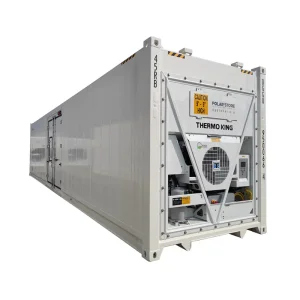
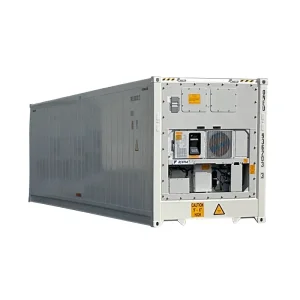
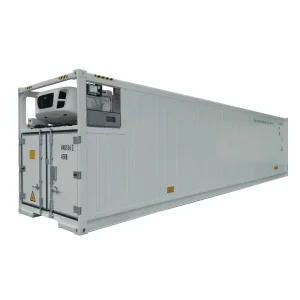
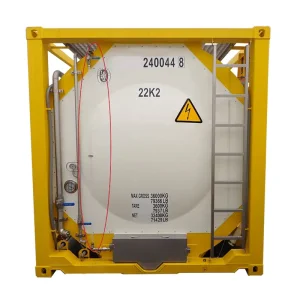
Engineered for hazardous liquid transfer, maritime cold chain, and high-density industrial cargo.
A technical assessment of metallurgy, pressure containment thermodynamics, and smart sensor integration across multimodal ISO operations.
Modern 20ft tank container manufacturing relies on 316L austenitic stainless steel shell designs, duplex steel (2205), and proprietary fluoropolymer linings (PTFE/PFA). These resist pitting and stress-corrosion cracking from aggressive halogen compounds and high-purity agrochemicals.
Modern tanks feature longitudinal steam heating channels, external glycol cooling jackets, and high-density polyurethane/rockwool insulation. This system controls high-viscosity resins and food-grade derivatives within +/-1.5°C over multi-week ocean crossings.
Next-generation tank containers use ATEX Zone 1 certified telematics modules. These provide real-time cloud data on ullage pressure, core product temperature, geo-fencing, and 3-axis shock impacts, helping risk officers and chemical logisticians prevent thermal runaway events.
Combining heavy-plate robotic plasma cutting, submerged arc longitudinal welding, and automated shot-blasting for defect-free ISO frame integration.
Custom ISO frames and tank shells engineered for specific transport environments and volatile chemicals.
| Tank Specification Class | UN Portable Tank Code | Target Chemical / Liquid Cargo | Core Engineering Configuration | Certified Safety Redundancy |
|---|---|---|---|---|
| Standard Chemical Intermodal | UN Portable T11 | Solvents, light acids, basic organics, base oils | 316L SS shell, 3.0 to 4.4mm wall thickness, steam heating channels | Super Spring Safety Relief Valve, rupture disc, burst indicator |
| Corrosive & Toxic Cargo | UN Portable T14 | Hydrochloric acid, chlorosulfonic acid, corrosive halides | PTFE/FEP fluoropolymer lining, top discharge only, heavy baffling | Zero-penetration bottom design, dry-break secondary coupling valves |
| Liquefied Gas & Refrigerants | UN Portable T50 | LPG, ammonia, propadiene, hydrofluorocarbons | High-tensile carbon/manganese steel, up to 22 bar working pressure | Dual internal shut-off valves, thermal safety fuses, sunshield |
| Sanitary & Food Grade | UN Portable T11 (Food) | Alcohol, spirits, fruit juices, edible oils, fructose | Electropolished internal mirror finish (<0.4μm Ra), clean-in-place spray balls | Sterile air filters, independent top/bottom temperature sensors |
| High-Temperature Asphalt/Bitumen | Specialized Heated Tank | Liquid asphalt, heavy fuel oil, molten sulfur | Direct diesel-burner tubes, ceramic fiber insulation, heavy reinforcement | Pressure release flaps, auto-shutoff temperature control system |
Every 20ft tank container meets international maritime and overland regulatory standards.
Units are inspected, stamped, and approved by Bureau Veritas (BV), DNV, Lloyd’s Register (LR), or the American Bureau of Shipping (ABS), including compliance with ISO 1496-3 pressure containment tests.
Fully compliant with IMDG (maritime), ADR/RID (European road and rail), US DOT, and UIC requirements, ensuring clear customs processing without transloading delays.
Every unit includes full documentation, certified weld maps, radiographic x-ray reports, and a 2.5/5-year re-testing dossier to support worldwide depot maintenance and recertification.
Key cost, lead time, and compliance considerations when purchasing 20ft tank containers directly from Chinese production lines.
Buying directly from Tier-1 Chinese manufacturers saves 18% to 32% compared to third-party leasing intermediaries, while allowing custom engineering for specific cargo viscosities and discharge setups.
Direct procurement provides full material test reports (MTRs) for raw plates (EN 10204 3.1 certification), weld filler wire batches, and gasket compliance, simplifying tier-one chemical audits.
Factories near Tianjin, Qingdao, and Shanghai can load new tank units with safe export cargo ("one-way cabotage"), lowering ocean repositioning costs to Europe, the Americas, and Southeast Asia.
Key information regarding international certifications, shell thicknesses, heating systems, and minimum orders.
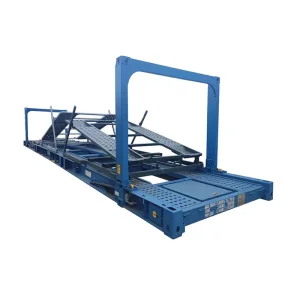
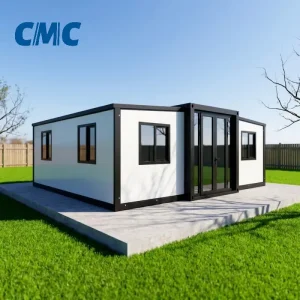
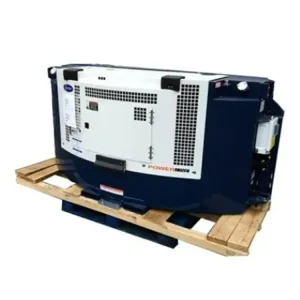
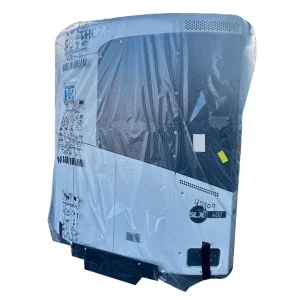
Explore heavy-duty bulk carriers, platforms, generator sets, and expandable modular shelters.