1 / 2
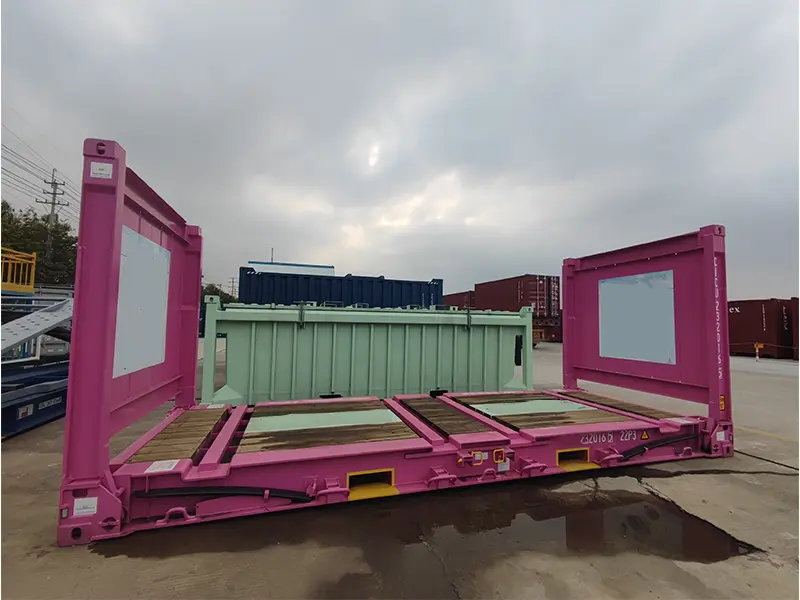
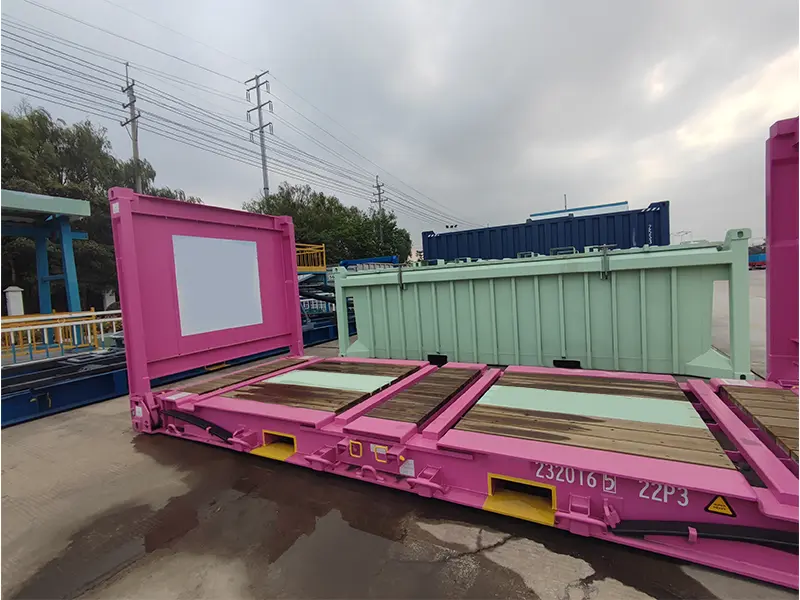
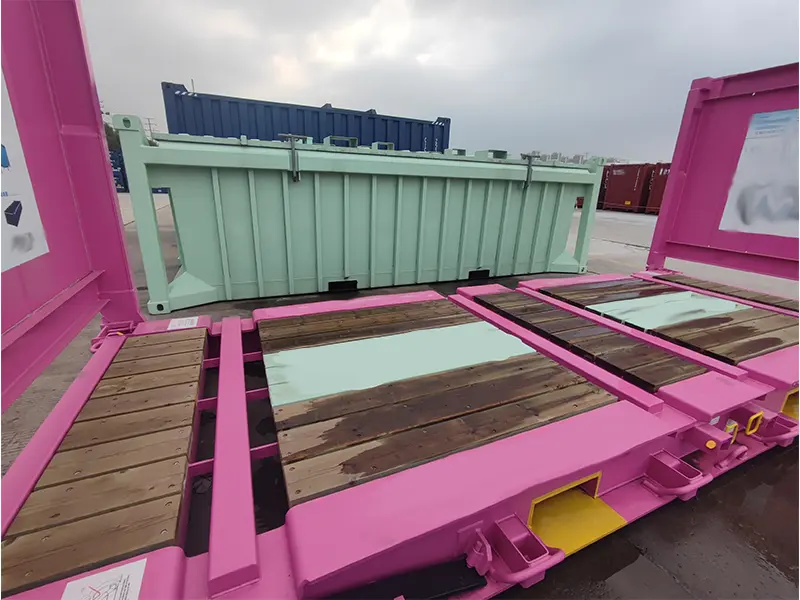
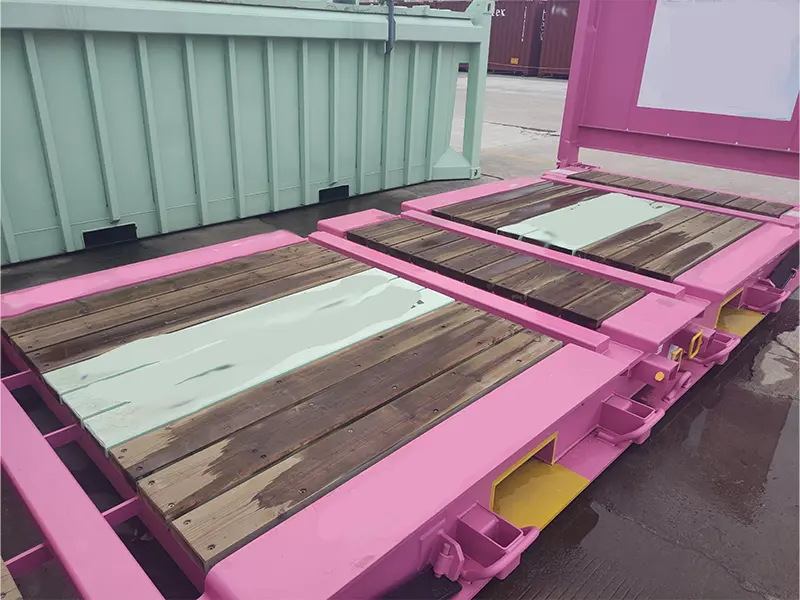
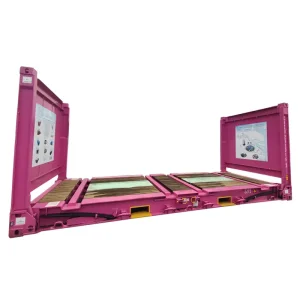
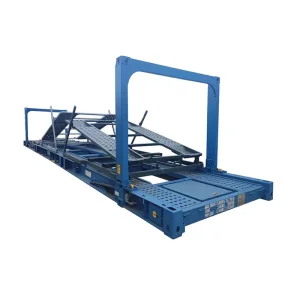
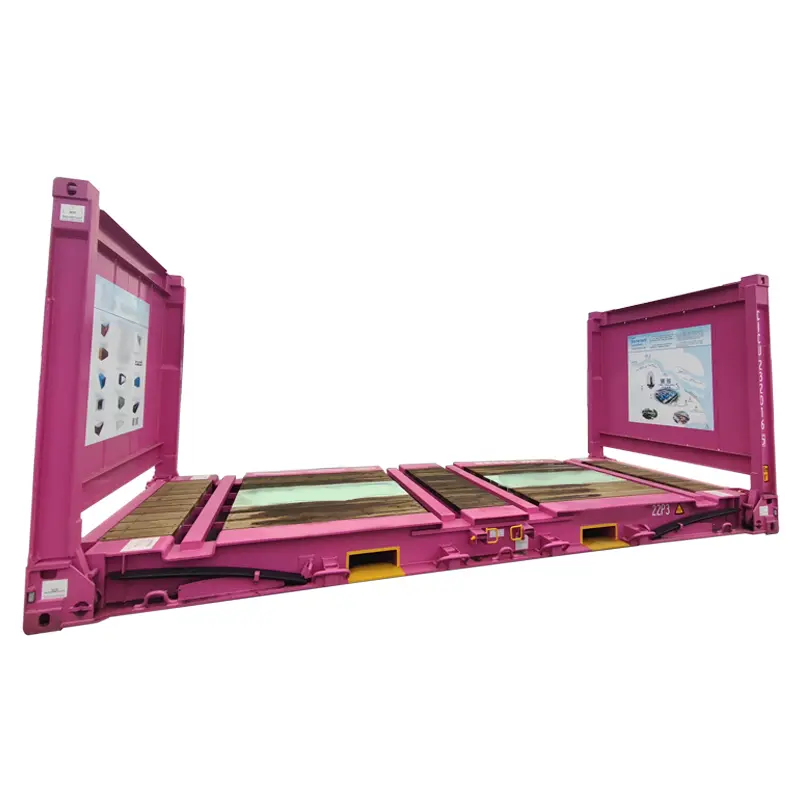
Free from enclosing side walls, platform frame containers effortlessly transport extra-wide, extra-long, or high-profile items. Ideal for massive industrial cargo like wind turbine blades spanning tens of meters that exceed regular dry container profiles.
Open framing allows convenient overhead and lateral crane lifting. Compatible with all lifting facilities, including port gantry cranes, marine quayside cranes, and mobile construction site truck cranes.
Maximizes deck footprint for irregular machinery without internal wall clearance limitations. Eliminates dead space common in traditional box configurations when packing large structural components.
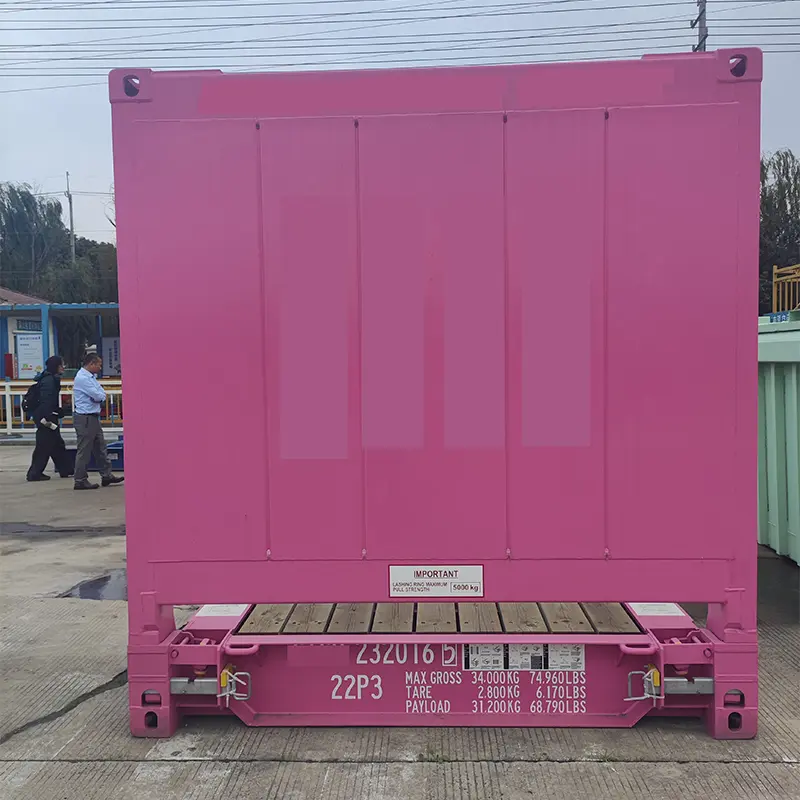
Built strictly in compliance with standard international intermodal dimensions, allowing rapid and reliable intermodal transfer across highway trailers, rail wagons, and ocean vessel slots.
It can load a wide variety of large, overweight, and irregularly shaped cargoes, such as heavy machinery, structural construction materials, energy equipment, and automotive components that exceed the dimensional or weight limits of ordinary containers.
First assess cargo shape, weight, and center of gravity. Regular, low-center items can be lashed via frame anchor points using high-tensile steel straps or chains. High-center or irregular loads require tailored chocks, brackets, or diagonal struts to prevent tipping or sliding in transit.
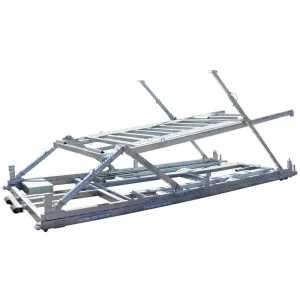
The frame utilizes heavy-gauge rectangular or square steel corner columns welded directly to massive upper and lower crossbeams. Side and end diagonal bracings enhance torsional rigidity and safeguard against shifting forces during handling and transport.
Because the container has no top or side wall restrictions, diverse crane types can be utilized, including quayside container cranes, terminal gantry cranes, and mobile mobile truck cranes on project sites.
Yes, it is designed according to ISO external dimensional standards, ensuring full interoperability and efficient transshipment between ocean shipping vessels, railway flatcars, and specialized highway chassis.
High-capacity lashing points, including welded steel loops and tie-down rings, are strategically distributed along the outer side rails and across the interior floor deck to ensure reliable securing angles for diverse configurations.