

Reefer Systems
Engineered for harsh maritime transit and rapid intermodal dispatch, backed by Bureau Veritas and ISO 9001 quality compliance.

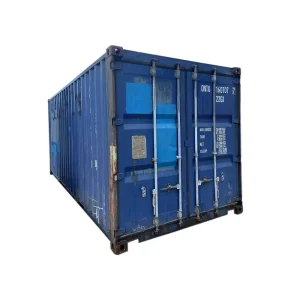
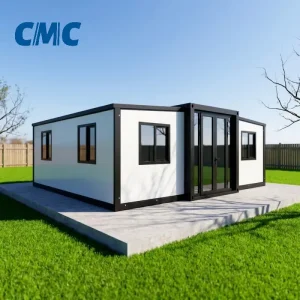
The intermodal landscape is undergoing an unprecedented technological shift driven by environmental mandates, extreme weather cycles, and the urgent need for end-to-end supply chain transparency.
Modern container fabrication utilizes SPA-H Corten steel alloyed with copper, chromium, and nickel. This yields a dense, self-healing oxide barrier that withstands aggressive saline chloride degradation, extreme sea surface spray, and multi-tier torsional forces during rough sea transit.
Next-gen refrigerated containers integrate satellite-linked micro-controllers, multi-sensor humidity arrays, and CO2 monitoring systems. Autonomous anomaly-detection algorithms proactively adjust variable-speed inverter compressors, drastically cutting fuel consumption and eliminating cargo spoilage.
The boundaries between intermodal sea freight, high-payload rail transport, and offshore platform engineering are merging. Equipment demands modular corner castings, reinforced floor crossmembers for concentrated heavy payloads, and blast-resistant offshore structural ratings under DNV standards.
Under international environmental regulations, active reefer shipping equipment is transitioning from high-GWP hydrofluorocarbons (such as R-134a and R-404A) to ultra-low global warming potential alternatives including R-513A and natural carbon dioxide (R-744) systems. As shipping lines commit to net-zero decarbonization timelines, container build specifications require enhanced thermal envelope barriers.
Our engineering division designs seamless dual-profile inner stainless steel lining (food-grade SUS 304) with extruded aluminum deep-channel T-floors. This guarantees consistent 3D laminar airflow throughout dense pallet arrangements, safeguarding pharmaceutical, fresh meat, and agricultural consignments against critical temperature deviation.
Vessels exceeding 24,000 TEU subject container stacks to complex multi-axial acceleration loads, racking forces, and torsional shear. Containers certified to ISO 1496-1 specifications must withstand compression tests exceeding 86,400 kg per post—equivalent to stacking nine fully laden 40ft High Cube containers in extreme sea states.
To overcome heavy-duty wear, high-tensile hot-rolled Corten corner posts, forged top and bottom corner castings (certified to ISO 1161), and continuous automatic submerged arc welding are utilized. Each batch undergoing BV certification is tested for diagonal transverse racking, floor payload deflection under 7,260 kg axle loads, and door gasket weather-tightness via high-pressure hydro-dynamic testing.
Such structural rigor guarantees that containers transition effortlessly from heavy sea vessel holds to dockside gantry cranes, flatbed railcars, and double-stack intermodal corridors without micro-fracturing or frame misalignment.
Operating dedicated manufacturing clusters in Tianjin and Suzhou, CIMIC combines robotic laser welding, digital QA traceability, and optimal access to major deep-water shipping terminals.
Digitally mapped fiber laser workstations achieve cutting tolerances within ±0.2mm on corrugated Corten panels. Multi-axis robotic seam welders deposit continuous, pore-free fillets that eliminate structural weak points and deliver unmatched fatigue strength under extreme sea loads.
Prior to coating, steel assemblies undergo automatic automated SA 2.5 shot blasting to remove mill scale and optimize surface profile. Eco-friendly waterborne epoxy primers, intermediate barrier layers, and polyurethane marine topcoats achieve superior corrosion resistance rating up to C5-M.
Strategic geographic positioning just ~100 km from Tianjin and Shanghai container terminals slashes domestic drayage costs and lead times. Units can be directly loaded with export goods (One-Way Cabotage) or repositioned empty onto mother vessels with minimal dispatch delay.
Engineered to adapt across international shipping corridors, specialized mineral logistics, deep-sea exploration, and agile infrastructure.
Certified to DNV 2.7-1 / EN 12079 criteria, our offshore dry cargo containers and heavy-duty cargo baskets feature certified lifting sling sets, impact-resistant corner posts, and fail-safe latching designed for dynamic offshore vessel loading and high-swell operations.
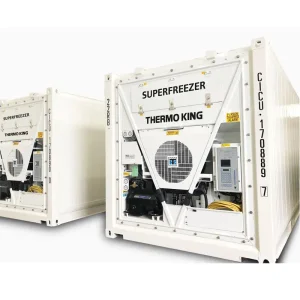
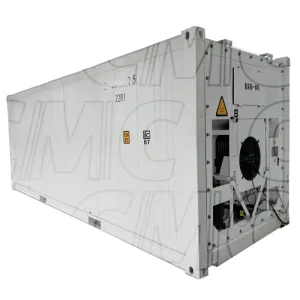
Utilizing Carrier Transicold, Thermo King, and Daikin active refrigeration machinery, our blast freezer and high-cube reefer containers achieve precise temperature stability down to -40°C or -70°C, safeguarding seafood, vaccines, blood plasma, and temperature-sensitive biological goods.
High-thermal-insulation expandable modules provide durable, weather-tight structures for remote mining quarters, forward operations facilities, emergency aid clinics, and containerized energy storage units (BESS) requiring integrated fire suppression and structural rigidity.
A systematic evaluation checklist engineered to help procurement directors assess metallurgy, thermal metrics, class society certification, and Total Cost of Ownership (TCO).
Always verify CSC (International Convention for Safe Containers) safety approval plates, Bureau Veritas or Lloyd's Register stamping, and ISO 668 dimensional adherence. For marine offshore exploration, require explicit DNV 2.7-1 dynamic hoist testing certification.
Analyze the overall heat transfer coefficient (K-value). Top-tier insulated and reefer containers must achieve K-values under 0.38 W/m²K. Ensure variable frequency drives (VFD) are specified for compressor motors to protect against inland supply power fluctuation.
Request dry film thickness (DFT) reports certifying at least 120-150 microns of three-coat zinc/epoxy/polyurethane systems. Double-lip EPDM perimeter door gaskets should retain high elasticity from -40°C to +80°C to prevent water ingress and thermal bridging.
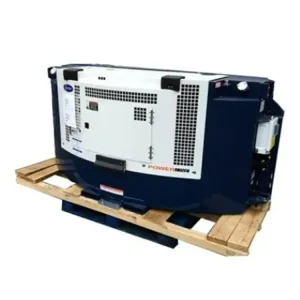
Explore heavy-duty offshore equipment, portable cold generators, and versatile nested shipping storage configurations ready for direct port departure.

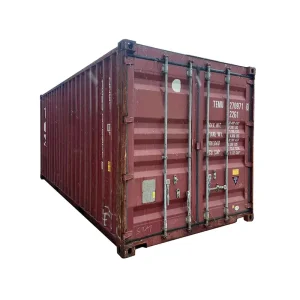

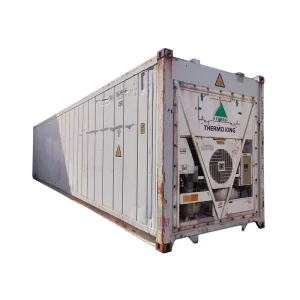



Comprehensive engineering insights address technical configurations, certifications, and global freight logistical logistics.
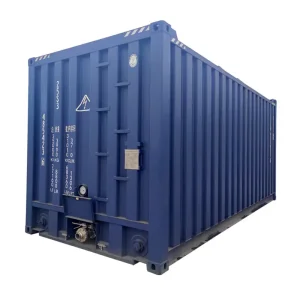
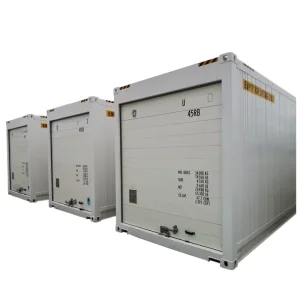
We fabricate the entire standard ISO range: 10ft, 20ft Standard, 20ft High Cube, 40ft Standard, and 40ft High Cube. Beyond standard dimensions, our engineering line specializes in tailored architectures including roll-up shutter access, side-opening access doors, open-top tarpaulins, half-height mineral containers, and custom-length mini-storage units (4ft to 12ft) designed to nest inside larger dry boxes for freight-efficient positioning.
Our reefer solutions are engineered to integrate seamlessly with tier-one active cooling equipment: Thermo King (Magnum Plus), Daikin (LXE series), and Carrier Transicold (ThinLINE / PrimeLINE). This ensures buyers enjoy worldwide field support, plug-and-play spare component sourcing, and certified global warranty coverage at every principal international seaport.
All marine containers are manufactured under documented ISO 9001 Quality Management Systems and hold Bureau Veritas (BV) or Lloyd's Register (LR) Type Approval Certificates, fully complying with ISO 1496-1, CSC (Convention for Safe Containers), and TIR customs requirements. Offshore units are engineered, tested, and certified according to DNV 2.7-1 and EN 12079 criteria for dynamic marine hoisting.
OEM/ODM workflows start with our in-house structural engineering department. We evaluate customer load footprints, climate factors, and transport interfaces to produce detailed 2D/3D CAD technical drawings, finite element structural analysis (FEA), floor strength ratings, and electrical diagrams. Production begins only after formal engineering sign-off, accompanied by full mill test certificates (MTC).
New containers are produced at our state-of-the-art bases in Tianjin and Suzhou, situated roughly 100 km from Tianjin Port and Shanghai Port respectively. Buyers can dispatch units empty on container vessels, opt for flat-rack consolidation, or utilize "One-Way Cargo" programs (SOC - Shipper Owned Containers) to transport export cargo directly, substantially lowering transoceanic repositioning expenses.
For standard 20ft and 40ft dry ISO or reefer units in active production runs, our MOQ is flexible (as low as 1 to 2 units). Bespoke engineering builds, custom-dimensioned offshore skids, or customized corporate color matching generally require batches of 4 to 10 units to optimize production tooling. Lead times range from 15 to 35 calendar days from drawing confirmation.