Explore our flagship production batches engineered for extreme oceanic environments, heavy industrial bulk transit, and mission-critical smart temperature chains.
Analyzing structural supply dynamics, intermodal logistics expansion, and why custom Original Design Manufacturing (ODM) has replaced generic off-the-shelf procurement.
Standard carbon steel succumbs swiftly to the aggressive chloride-laden atmosphere of transoceanic transit. Our direct factory builds utilize certified SPA-H Corten atmospheric weathering steel, yielding a minimum yield point of 345 MPa and creating a natural, self-regenerating oxide passivation layer that halts subsurface corrosion for over 25 years.
Modern shipping demands extreme 9-high container stack ratings (exceeding 216,000 kg stacking limit per corner post). By deploying proprietary Finite Element Analysis (FEA) modeling, our structural engineering team optimizes corner castings, front corner posts, and side sill profiles to surpass ISO 1496-1 testing thresholds by a verified 18% safety factor.
Offshore marine containers require dynamic impact validation that standard dry cargo containers cannot survive. Our certified offshore line undergoes sub-zero Charpy V-notch impact toughness tests (-20°C to -40°C), pad eye non-destructive testing (NDT), and specialized multipoint sling geometry verification to guarantee zero catastrophic structural failure on high-seas platforms.
Direct factory manufacturing price estimations based on standard production runs, Corten steel market benchmarks, and unit customization levels (FOB Tianjin/Suzhou Port).
| Classification & Model | Standard Dimensions (L×W×H) | Structural Material | Tare / Max Payload | Target Temperature / Duty | Benchmark Price (USD / Unit) |
|---|---|---|---|---|---|
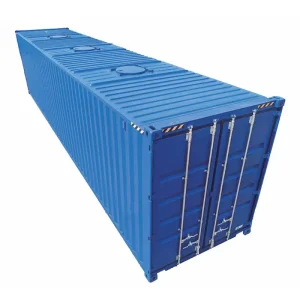
| 20ft Standard Dry ISO | 6,058 × 2,438 × 2,591 mm | Corten-A / SPA-H Steel | 2,200 kg / 28,280 kg | Ambient (-40°C to +80°C) | $1,850 - $2,350 |
| 40ft High Cube Dry ISO | 12,192 × 2,438 × 2,896 mm | Corten-A / SPA-H Steel | 3,900 kg / 28,600 kg | Ambient (-40°C to +80°C) | $2,950 - $3,650 |
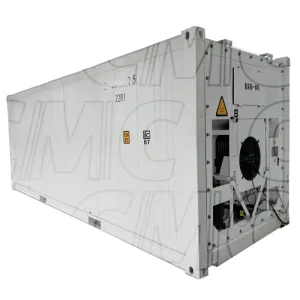
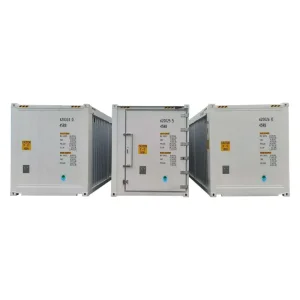
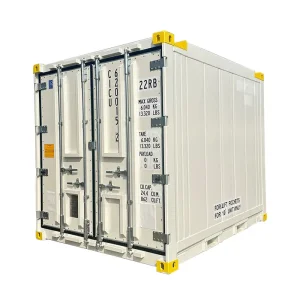
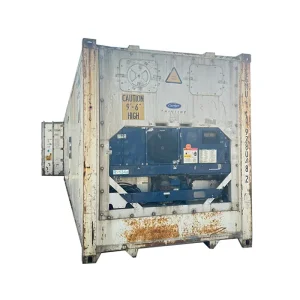
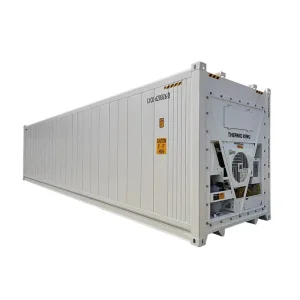
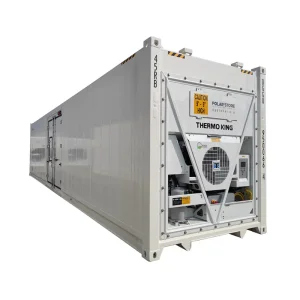
| 40ft HC Reefer (Carrier/Thermo King) | 12,192 × 2,438 × 2,896 mm | SUS304 / MGX Aluminum | 4,580 kg / 29,420 kg | -30°C to +30°C Precise Control | $12,800 - $17,500 |
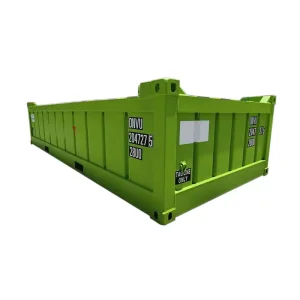
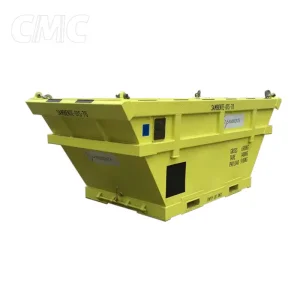
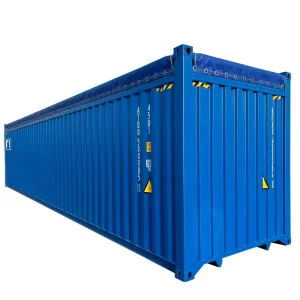
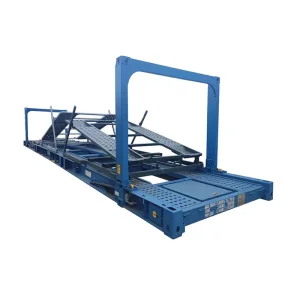
| 20ft DNV Offshore Half-Height | 6,058 × 2,438 × 1,280 mm | Normalized High-Yield Steel | 2,800 kg / 19,200 kg | Offshore Heavy Slurry / Pipes | $4,800 - $6,400 |
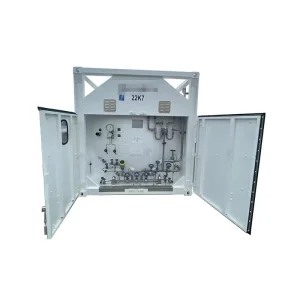
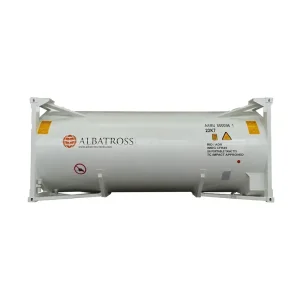
| T75 20ft Cryogenic Tank Container | 6,058 × 2,438 × 2,591 mm | 304/316L Vacuum Insulated | 7,800 kg / 24,000 kg | -196°C LNG / LIN / LOX / LAR | $36,000 - $48,000 |
| Solar DC Inverter Reefer Unit | 6,058 or 12,192 mm (Modular) | Sandwich PUF + PV Array | Variable by Spec | Autonomous Off-Grid -25°C | $14,500 - $22,000 |
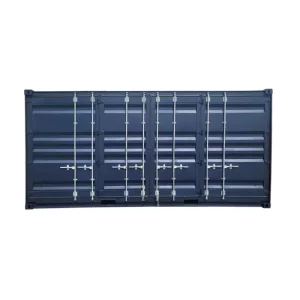
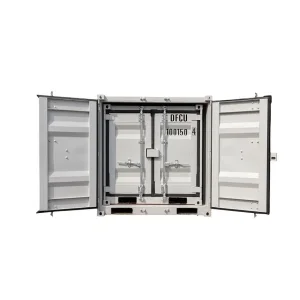
| 20ft Multi-Door / Side-Access | 6,058 × 2,438 × 2,591 mm | Reinforced Header Corten | 3,100 kg / 27,380 kg | Rapid Side Bulk & Pallet Load | $3,200 - $4,100 |
* Note: Prices reflect raw-material-indexed volume estimates for standard batch quantities. Final contract pricing varies based on custom modifications, internal stainless linings, explosion-proof units (ATEX/IECEx), door layouts, and seaport delivery terms.
From deep-sub-zero Nordic arctic crossings to corrosive Arabian Gulf offshore operations, ODM container design requires targeted contextual engineering.
Navigating northern sea routes requires low-temperature steel resilience (S355NL / S355ML) tested for brittle fracture suppression at -40°C. Our specialized cold-climate containers integrate silicone heated door gaskets, high-efficiency closed-cell cyclopentane insulation foams, and dual-redundant heating traces to prevent valve seizure and seal failure.
Extreme solar radiation indices in desert territories demand UV-reflective polyurethane topcoats with high Solar Reflectance Index (SRI > 82). Our tropicalized reefer containers incorporate high-ambient condenser coils, dual-stage sand filtration louvers, and auxiliary photovoltaic off-grid power canopies for uninterrupted agricultural and vaccine storage.
Offshore oil rigs in the North Sea and Gulf of Guinea require specialized high-density silt baskets, half-height pipe carriers, and hazardous chemical totes. Built strictly compliant with EN 12079 / DNVGL-ST-E271, our units withstand heavy marine wave slamming loads, equipped with four-point integrated rigging slings certified for high dynamic g-forces.
Addressing decarbonization mandates, the rise of modular distributed architecture, and the digital sensor revolution driving container fleet optimization.
Global ocean alliances are subject to stringent IMO 2030 and 2050 carbon intensity indicators (CII). Our factory leads the transition toward low-carbon manufacturing by adopting waterborne zinc-rich primers, robotic plasma welding minimizing material waste, and vacuum insulated panel (VIP) reefer construction that reduces compressor electrical draw by up to 28%.
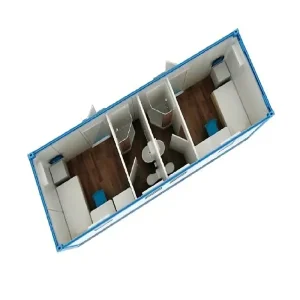
The convergence of intermodal container standardization with modular building tech has created exponential demand for pre-engineered accommodation pods, mobile BESS (Battery Energy Storage Systems), and offshore laboratory modules. CIMIC’s Suzhou and Tianjin facilities execute turn-key electrical pre-wiring, thermal acoustic lining, and ISO standard container corner-post locking systems for global deployment.
High-value pharmaceutical and perishable food supply chains require real-time visibility. Our next-generation ODM reefers are delivered ready for integrated IoT sensor pods, monitoring O2/CO2 concentrations, interior relative humidity, vibration shock metrics, and GPS geo-fenced temperature variances via satellite-mesh backhaul networks.
A rigorous four-phase quality assurance cycle paired with advanced materials research to maintain leadership in maritime logistics equipment.
Raw Corten coil uncoiling, automated laser cutting, and full-plate high-velocity centrifugal shot blasting to SA 2.5 surface cleanliness standard, stripping mill scale prior to prime coating.
Precision hydraulic clamping and multi-axis submerged arc welding ensuring high-precision tolerance within 2mm squareness across corner casting diagonals, tested via ultrasonic weld flaw detectors.
Every dry, insulated, and reefer unit passes through a dedicated continuous torrential spray booth at 2 bar nozzle pressure (ISO 1496-1 weatherproofing standard) verifying 100% sealant integrity.
2025-2027 Engineering Target: Implementing carbon-fiber composite reinforced cross-members and aerogel-infused insulation panels to reduce tare weight by 14% while enhancing internal payload volume.
Engineered for hazardous liquid cargo, multi-vehicle logistics, and customized architectural site operations under global certification protocols.
In-depth responses from our chief marine structural engineers regarding international certifications, factory inspection protocols, and price stability factors.
Every raw coil batch purchased from certified state mills comes accompanied by Mill Test Certificates (MTC) verifying chemical compositions conforming to ASTM A588 or JIS G3125 (SPA-H). Our in-house QA laboratories execute independent spectrometer assays to guarantee exact copper (0.25-0.55%), chromium (0.30-1.25%), and nickel concentrations, alongside yield tensile tests and impact bending tests before panel roll forming.
Additional side or roll-up door apertures naturally present thermal bridge vulnerabilities. Our engineering team counters thermal leakage by deploying reinforced thermal barrier framing, double-lipped EPDM multi-cavity gaskets, and high-density high-pressure injected polyurethane foam (42 kg/m³ density). Units undergo rigorous heat leakage coefficient tests (K-value validation < 0.4 W/m²K) before export clearance.
Standard ISO dry units hold a flexible MOQ (often as low as 1 to 5 units for sample verification or project trials). For fully custom architectural conversions, specialized offshore baskets, or solar hybrid DC reefers, our optimal production run starts at 10-20 units to amortize tool-setting and classification society survey fees. Prototyping and drawing approvals take 7-10 days, with complete batch production running in 20-30 calendar days.
Yes. Depending on client asset management strategies and vessel classification requirements, dual certification or design appraisal can be arranged. BV conducts primary survey approvals for ISO 1496-1 marine transport compliance and CSC safety plates, while DNV surveyors inspect weld radiographies and Charpy impact data sheets for offshore duty under DNV 2.7-1 / EN 12079 guidelines.
Container manufacturing price schedules correlate directly with hot-rolled coil (HRC) Corten steel spot prices, the international price of zinc-rich primers, marine plywood flooring supply (such as certified Apitong or sustainable bamboo composite floorboards), and the specific refrigeration condensing unit selected (Carrier Transicold, Thermo King, Daikin, or DC Inverter solar-ready drives).
Our strategic locations in Tianjin and Suzhou—both situated within 100 kilometers of major seaport container berths—enable immediate delivery into carrier terminals. Furthermore, we actively coordinate "One-Way Cargo Load" agreements with leading shipping lines, allowing new empty containers to transport cargo to your destination port, significantly offsetting positioning and sea freight expenditures.
