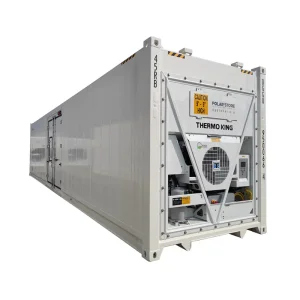
Engineered to withstand rigorous intermodal rail, maritime, and specialized industrial parameters. Every unit undergoes structural shear validation and anti-corrosive priming.


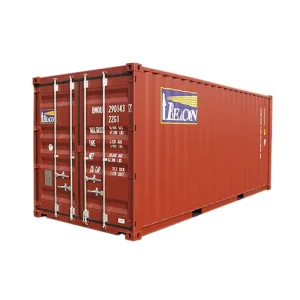
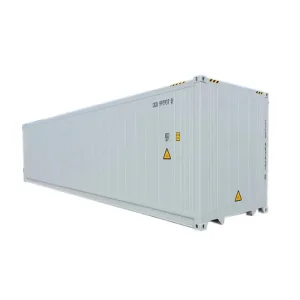
As the canonical baseline for global intermodal capacity (1 Twenty-Foot Equivalent Unit, or TEU), the 20ft container remains the fundamental structural brick of international commerce, energy storage, and industrial remote assets.
While 40ft units dominate volumetric retail freight (such as apparel and electronics), the 20ft standard frame is structurally superior for high-density goods. Heavy commodities such as base metals, concentrated ores, industrial machinery, grain, and chemical liquids require maximum weight capacity within a concentrated center of gravity.
Global supply chains increasingly prioritize multi-modal flexibility. A 20ft chassis can navigate congested metropolitan arteries, rugged mining access tracks, and restrictive alpine railway tunnels where 40ft or 53ft trailers encounter severe turning radius and overhead clearance constraints.
For decentralized storage, offshore energy extraction, and micro-grid energy storage (BESS), 20ft enclosures offer optimized Capex deployment. Procuring specialized 20-foot units allows enterprises to isolate mission-critical equipment, reduce localized fire hazards, and relocate assets rapidly without oversized cranes.
Tianjin Cimic Imp&Exp Co., Ltd. leverages comprehensive coastal industrial clusters, highly automated welding lines, and rigorous metallurgy testing to produce international-grade ISO containers at peak cost-efficiency.
Our strategic manufacturing hubs in Tianjin and Suzhou are embedded directly within China's primary high-strength steel belts. We procure certified SPA-H weathering steel directly from top-tier rolling mills. This vertical integration guarantees uniform tensile strength (yield strength ≥ 355 MPa), consistent grain orientation, and predictable ductile resistance against brittle marine fractures.
CIMIC production facilities employ high-precision robotic metal inert gas (MIG) welding systems. Continuous automated welding profiles eliminate human inconsistency along critical corner post intersections, cross-members, and roof bows. Every corrugation is cold-rolled under digital tolerance feedback systems, maintaining diagonal variance within ≤ 3mm across all corner castings.
Every dry, reefer, and offshore container undergoes automated shot-blasting to Swedish Standard Sa 2.5, clearing mill scale and atmospheric oxidation. We immediately apply a high-solids zinc-rich epoxy primer (30μm), followed by a high-build epoxy intermediate barrier (40μm), and an aliphatic acrylic polyurethane topcoat (50μm), delivering comprehensive salt-fog defense over 1,500 continuous hours.
| Container Model Class | Structural Metallurgy | Maximum Gross Weight (MGW) | Thermal / Insulation Rating | Class Society Certification | Primary Industrial Use Case |
|---|---|---|---|---|---|
| 20ft Standard Dry ISO (8'6") | Corten SPA-H (1.6 - 2.0mm corrugation) | 30,480 kg (67,200 lbs) | Standard Passive Marine Vents | BV, ISO 1496-1, CSC Approved | General freight, high-density bulk cargo, dry transit |
| 20ft High-Cube Dry (9'6") | Corten SPA-H + Reinforced Sills | 30,480 kg (67,200 lbs) | Passive Multi-Point Aeration | BV, ISO, CSC Certified | High-cube palletized storage, plant integration |
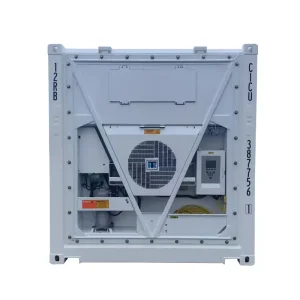
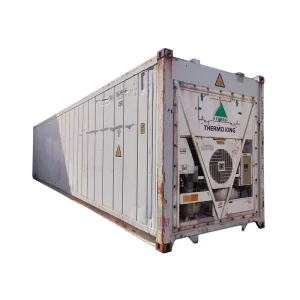
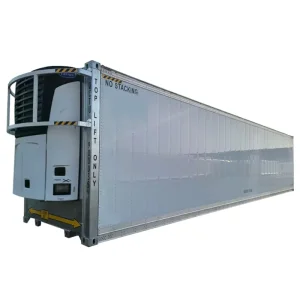
| 20ft Active Reefer (Cold Chain) | SUS304 Stainless Interior / MGX Outer | 32,500 kg (71,650 lbs) | Polyurethane Cyclopentane (U ≤ 0.33 W/m²K) | ISO, ATP, TIR, BV Certified | Pharma vaccines, cold chain produce, meats (-30°C to +30°C) |
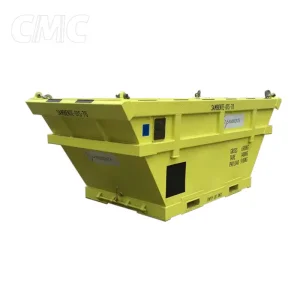
| 20ft DNV Offshore Cargo Basket | High-Tensile Grade St52-3 / S355J2 | 14,000 - 18,000 kg Dynamic | Open Heavy Tubular Architecture | DNV GL 2.7-1 / EN 12079 | Offshore oil rigs, rough seas subsea tool transport |
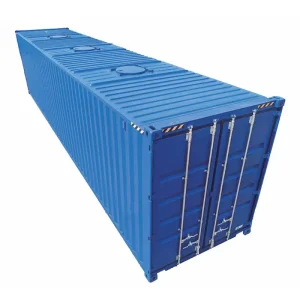
| 20ft Side-Open Intermodal | Double-Beam Frame, Welded Corten | 28,000 kg (61,730 lbs) | Optional 50mm PU Foam Panel | ISO 9001, CSC Certified | Rapid lateral fork-loading, project equipment drops |
Containers are no longer just passive shipping boxes. They have evolved into deployable structural modules engineered to operate in the world's most hostile environmental conditions.
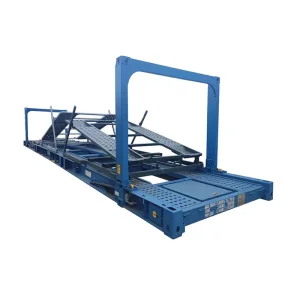
Designed for dynamic wave action and extreme vessel-to-rig crane transfers. Certified under DNV 2.7-1/EN 12079, our offshore silt baskets, half-height tool bins, and offshore reefers incorporate pad-eyes forged from low-temperature impact-resistant steel rated to -20°C, paired with four-leg wire rope sling assemblies.
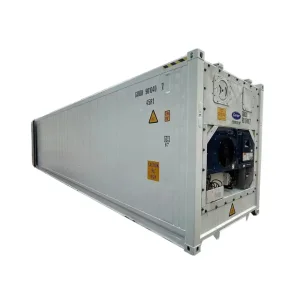
Equipped with elite refrigeration powerhouses (Thermo King, Carrier Transicold, or Daikin), our active 20ft and 40ft reefer boxes maintain precise micro-climates (±0.25°C). High-efficiency variable-speed compressors and T-bar aluminum subfloors maintain continuous, laminar cold-air circulation for temperature-critical pharmaceutical payloads.
Transporting raw bauxite, copper concentrates, and lithium carbonate requires specialized structural integrity. Our heavy-duty half-height ore carrier containers feature low sidewalls for overhead grab-crane access, tapered interior angles for complete material discharge, and anti-scuff linings to withstand abrasive ores.
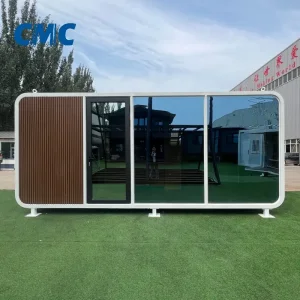
The rigid structural envelope of our 20ft Corten shells provides the ultimate foundation for off-grid battery energy storage systems (BESS), water filtration stations, mobile laboratories, and luxury flat-pack modular cabins. Structural framing handles repeated relocation without warping or seal deterioration.
The global shipping container market is rapidly integrating digital telemetry, composite materials, and bespoke structural tailoring to meet strict ESG mandates and real-time cargo tracking standards.
Modern reefer and dry container fleets are evolving into smart sensor networks. CIMIC offers factory-fitted satellite and 5G IoT telemetry hubs that monitor real-time compressor discharge pressure, interior relative humidity, CO2 levels, door-breach incidents, and geographic geofencing coordinates with direct API integration into enterprise ERP systems.
In response to international F-gas regulations, our reefer production lines support next-generation ultra-low Global Warming Potential (GWP) refrigerants such as R-513A and R-744 (natural CO2 systems). Combined with non-ozone-depleting cyclopentane-blown polyurethane foam insulation, we reduce lifecycle operational emissions significantly.
Global procurement teams often require non-standard geometries: 10ft short-wheelbase units, 20ft High-Cubes with full lateral side doors, curtain-sided intermodal bodies, or reinforced tarpaulin soft-open-tops for oversized machinery. CIMIC's engineering division models each custom blueprint via Finite Element Analysis (FEA) prior to serial metal stamping.
Evaluating an OEM container manufacturer requires moving beyond nominal unit quotes to assess factory weld precision, international classification society verification, and logistical positioning advantages.
Every commercial container intended for intermodal transport must carry a valid CSC (International Convention for Safe Containers) safety approval plate. Verify that the manufacturing partner provides Bureau Veritas (BV), ABS, Lloyd's Register, or DNV certificates showing adherence to ISO 668 (classification, dimensions, and ratings) and ISO 1496-1 (cargo container testing protocols).
Insist on certified weathering steel (JIS G3125 SPA-H or equivalent). Non-standard structural mild steel degrades rapidly under maritime salt spray, causing premature sidewall oxidation and frame failure within 24 to 36 months. High-spec Corten steel forms a dense protective patina that limits rust propagation even if paint surfaces are scratched.
Inland transportation costs in manufacturing nations can substantially inflate landed container costs. Facilities located roughly 100 kilometers from tier-one international ocean terminals (such as CIMIC's facilities in Tianjin and Suzhou) offer rapid transfer to ship, one-way lease positioning arrangements, and low-cost export container consolidation.
Technical guidance from our senior engineering and shipping export division covering specifications, testing methods, and ordering logistics.
Under the ISO 1496-1 standard, the Maximum Gross Weight (MGW) is typically certified at 30,480 kg (67,200 lbs). Given an average tare weight of 2,150 kg to 2,280 kg for standard Corten dry steel boxes, the net payload rating is approximately 28,200 kg (62,170 lbs), making it ideal for dense freight like machinery, minerals, and grains.
We employ a 3-layer anti-corrosive coating system over automated Sa 2.5 grit-blasted steel: a zinc-rich epoxy primer (30μm), an epoxy intermediate barrier layer (40μm), and an aliphatic acrylic polyurethane topcoat (50μm). Total dry film thickness exceeds 120μm, providing over 1,500 hours of continuous salt-spray protection under ASTM B117 standards.
Standard ISO containers are designed for steady quayside crane lifts and cell-guide stacking on merchant ships. DNV 2.7-1 (or EN 12079) offshore units are built for harsh open-ocean crane handling, featuring thicker structural hollow sections, pad-eyes forged for cold-weather impact (-20°C), certified 4-leg sling assemblies, and dynamic drop testing.
Yes. As a certified OEM factory, our reefer production lines directly integrate genuine Carrier Transicold (such as PrimeLINE or X4), Thermo King (Magnum Plus), and Daikin (Zestia) refrigeration units. Buyers can select their preferred brand to ensure easy spare parts access and maintenance within their local operating regions.
For standard ISO dry and reefer containers in stock at our Tianjin and Suzhou yards, our MOQ is 1 unit. For non-standard OEM/ODM builds requiring custom stamping dies, bespoke side-door frames, or non-standard dimensions, our typical production batch ranges from 2 to 5 TEUs to optimize engineering and tooling costs.
We offer "One-Way Cargo Service" (cabotage), matching your new containers with outbound shipping lines to carry commercial freight to your destination port. This approach significantly reduces or even eliminates transoceanic positioning freight costs, delivering your units directly to your destination depot ready for service.
Explore our heavy-duty platforms, thickened insulation configurations, and specialized modular units built for demanding applications across energy, construction, and global cold-chain markets.