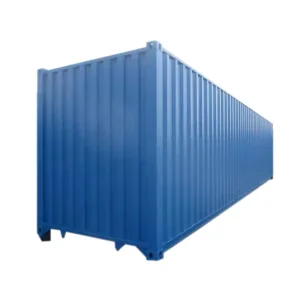
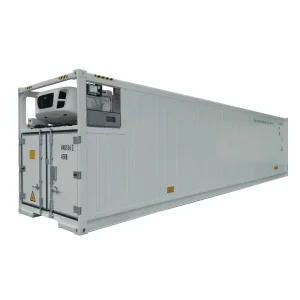
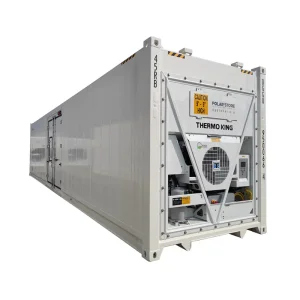
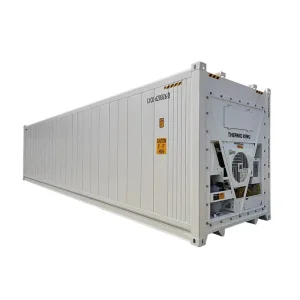
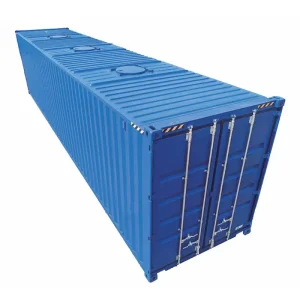
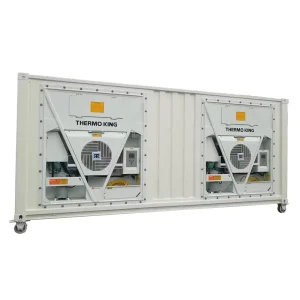
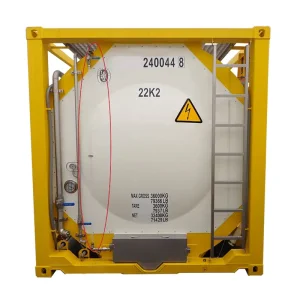
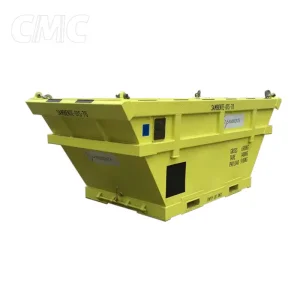
Explore specialized offshore cold storage units, mud/silt baskets, and high-cube configurations custom engineered to withstand dynamic offshore lifting and offshore platform duty cycles across Saudi Aramco concessions.
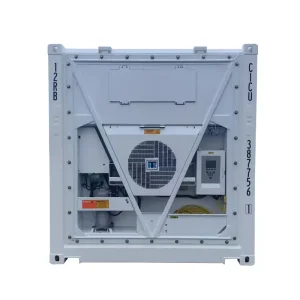
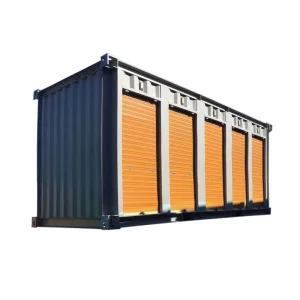
As the Kingdom of Saudi Arabia accelerates the integration of Vision 2030, the offshore energy infrastructure spanning the Arabian Gulf (Safaniya, Marjan, Berri fields) and the pristine maritime ecosystems of the Red Sea (NEOM, The Red Sea Project, AMAALA) demands radical improvements in offshore cold-chain resilience.
The Arabian Gulf records surface sea temperatures surpassing 36°C with ambient humidity reaching 90% and air temps breaching +52°C. Standard ISO reefers suffer severe compressor tripping, condenser scaling, and galvanic decay. DNV 2.7-1 offshore reefers feature heavy-duty 316L stainless steel linings, polyurethane high-density vacuum insulation, and electro-coated fin coils.
Dynamic lifting from Offshore Supply Vessels (OSV) to fixed jackets or jack-up rigs in rough sea conditions requires certified lifting pad eyes, proof load testing at 2.5× Max Gross Weight, and specialized 4-point wire rope slings with master links conforming to EN 12079 and DNV Standard for Certification 2.7-1.
Serving drilling crews stationed weeks at sea necessitates uninterrupted holding ranges from -30°C for blast-frozen seafood and meats to +4°C for fresh agricultural produce. For platforms with volatile gas pockets, Zone 1 or Zone 2 ATEX/IECEx explosion-proof reefer machinery is indispensable to prevent ignition risks.
Procurement Insight for KSA EPC Contractors: Standard maritime reefer units designed for container vessel decks will fail inspection when manifested for Saudi Aramco or ADNOC marine facilities. Always verify that manufacturing records contain DNV GL or Bureau Veritas offshore lifting type approvals and third-party NDT (Non-Destructive Testing) weld records.
The international offshore modular container market is witnessing a technological paradigm shift. Environmental mandates, remote monitoring capabilities, and structural metallurgy are driving innovations across deepwater exploration and marine aquaculture.
In alignment with the Kigali Amendment and regional Middle Eastern green energy commitments, manufacturers are moving rapidly from legacy hydrofluorocarbons (such as R-134a and R-404A) toward eco-friendly refrigerants like R-513A and carbon dioxide (CO2 R-744) units. These systems sustain high cooling coefficient of performance (COP) even when ambient cooling fans face intense Gulf desert sand exposure.
Offshore supply chains suffer from connectivity blackouts once vessels leave coastal LTE boundaries. Leading manufacturers now embed satellite-capable IoT modules. Rig logistics superintendents in Dammam or Yanbu can remotely monitor evaporator return air, relative humidity, compressor running amps, and door-open events in real time via cloud SCADA integrations.
Dynamic shock loading during crane vessel transfers produces violent G-force impacts. Structural offshore reefer skeletons utilize high-yield structural steel with high Charpy V-notch impact values at -20°C. This avoids catastrophic brittle fractures during abrupt crane stops in heavy swell sea states.
Deck space on OSVs is at an extreme premium. The modern industry trend favors dual-zone 20ft units configured with movable insulated internal bulkheads and dual evaporator loops. This architecture facilitates concurrent transit of deep-frozen rations (-20°C) and fresh culinary provisions (+4°C) in a single crane lift.
Engineered specifically for the demanding supply networks of Saudi Arabia, our offshore containers fulfill mission-critical functions across varied industrial landscapes.
Continuous resupply of drill ships, pipe-laying barges, and wellhead platforms operated by global oil majors across Ras Tanura, Jubail, and Khafji. Units endure continuous salt spray and volatile hydrocarbon vapors.
Ultra-luxury remote archipelago developments require zero environmental footprint. Specialized low-noise, energy-efficient reefer containers provide cold logistics hubs on floating hotels and pristine island construction stations.
Safekeeping deep-sea drilling rock cores, specialized polymer mud additives, and hazardous temperature-critical catalytic chemicals that degrade if temperature oscillates beyond ±0.5°C during onshore-to-offshore transfer.
How offshore reefer container architecture will evolve between 2025 and 2030 to meet carbon neutrality milestones and autonomous platform requirements.
Equipping reefers with integrated LiFePO4 battery banks and flexible solar panel roof arrays. Units can operate autonomously for up to 48 hours during vessel transit without relying on diesel genset power or shipboard umbilical cables.
Transitioning from standard polyurethane foams to ultra-thin aerogel vacuum insulation panels (VIP). This delivers a 28% increase in usable interior cubic capacity while slashing external thermal conductivity (U-factor < 0.28 W/m²K).
Implanting piezoelectric stress sensors in lifting pad-eyes and corners to record cumulative fatigue load cycles. Offshore safety managers receive automated warnings prior to weld micro-cracking during deep-sea rough lifts.
Sourcing specialized containers from international production hubs to Saudi ports requires rigorous QA/QC alignment and logistics synchronization.
Our manufacturing facilities in Tianjin and Suzhou are positioned within 100 km of deepwater marine container terminals. For project orders bound for Dammam (King Abdulaziz Port) or Jeddah Islamic Port, units are fully load-tested, pre-commissioned, pre-slung with DNV certified slings, and shipped under Class certification to reduce dockside dwell times.
Exporting industrial refrigeration machinery to Saudi Arabia demands strict conformity with SASO (Saudi Standards, Metrology and Quality Organization) technical regulations and active registration on the SABER portal. We furnish complete documentation packs: CoC (Certificate of Conformity), machinery directives, electrical wiring schematics, and factory acceptance test (FAT) certs.
Clear answers on certification, ambient performance, refrigerant selection, and logistics protocols.
An ISO container is engineered primarily for cellular container ship holds and rail/road transport with static corner-casting locks. A DNV 2.7-1 / ISO 10855 offshore container is designed for dynamic open-sea crane lifting between supply vessels and rigs in adverse weather. It incorporates high-grade structural steel corners, certified permanent pad eyes, enhanced weld inspections (NDT), and can endure massive dynamic acceleration forces without structural failure.
Yes. Our offshore reefers integrate tropicalized refrigeration systems engineered with oversized dual microchannel condensers, enhanced fan motors, and smart thermal throttling algorithms. Units maintain continuous set points down to -30°C even when baking under direct solar radiation in the Arabian Gulf.
We provide custom configurations engineered specifically for ATEX Zone 1 and Zone 2 hazardous areas. These include intrinsically safe control panels, flameproof electrical enclosures, non-sparking copper-alloy blower fans, and armored marine cabling compliant with offshore safety protocols.
We operate an established export documentation division well versed in Saudi trade compliance. We provide complete technical data sheets, SASO product compliance certificates, mill test certs, and DNV manufacturing data books. Cargo can be delivered on CIF or DDP terms to major Saudi ports.
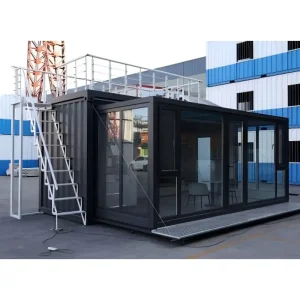
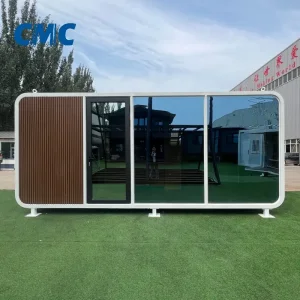
In addition to offshore reefers, explore our comprehensive range of high-cube freight units, modular living pods, bulk cargo units, and ISO tank containers built to international standards.