Pre-inspected, CSC-plated, and wind-and-water-tight (WWT) certified units positioned for immediate transfer across Elbe container terminals, Altenwerder, and rail freight junctions.
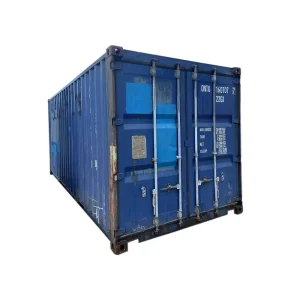 IICL-5 / CW
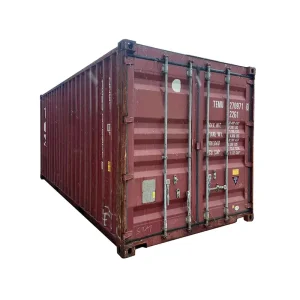 Factory Audited
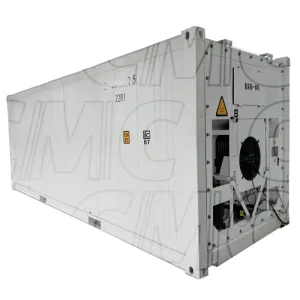 Hybrid Cold Chain
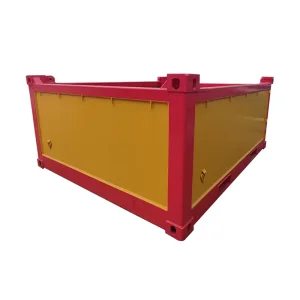 DNV 2.7-1 / EN 12079
As Germany's largest universal port and Europe's third busiest container gateway, the Port of Hamburg (HHLA) operates as the primary intermodal crossroad connecting transatlantic lanes, Scandinavian feeder routes, and Central-Eastern European (CEE) rail corridors. Spanning terminals such as Container Terminal Altenwerder (CTA), Burchardkai (CTB), and Tollerort (CTT), the regional flow of containerized cargo exceeds 7.7 million TEUs annually.
However, macroeconomic shifts, fluctuating freight indices, and prolonged turnaround schedules have precipitated distinct operational pressures throughout the Elbe river logistics corridor. Hamburg-based forwarders, freight consolidators, construction firms, and industrial exporters face persistent equipment imbalances. New container purchasing often ties up substantial working capital under high borrowing rates, leading enterprises to transition towards high-grade, structurally validated used dry shipping containers (20ft, 40ft, and 40ft High Cube).
These secondary intermodal units serve not only ocean-borne export circuits but act as vital regional storage infrastructure across Waltershof, Billbrook, and the extended metropolitan logistics parks of Lower Saxony and Schleswig-Holstein. A certified Cargo-Worthy (CW) container purchased at depot-level parity offers identical functional integrity to new factory assets at a 40% to 65% capex reduction.
Tidal draught limitations on the Elbe necessitate meticulous deadweight planning. Second-hand dry containers engineered from lightweight, high-yield Corten steel minimize deadweight, optimizing intermodal payload capacity for feeder vessels transit to the Baltic Sea and rail departures via METRANS directly into Bavaria, Austria, the Czech Republic, and Poland.
From Airbus aerospace operations in Finkenwerder to heavy industrial machinery clusters in Harburg, regional manufacturing requires dry, secure, and weather-proof storage that bypasses commercial real estate warehousing premiums. Factory-reconditioned used containers solve the square-footage challenge immediately.
Procurement directors and maritime asset managers must distinguish between cosmetic deterioration and structural compliance. Our manufacturing and refurbishment facilities grade every chassis under standardized international protocols before dispatch to European buyers.
| Classification Grade | Structural Profile | Door & Gasket Tolerance | Understructure & Floor | CSC Plate Status | Primary Industrial Use Case |
|---|---|---|---|---|---|
| IICL-5 / IICL-6 (Premium Refurbished) | Negligible deflection (<10mm) on corner posts, header, and sills; zero structural fracturing. | Factory-grade hermetic EPDM seals; effortless cam-lock engagement with zero play. | Hardwood planks sanded, treated; zero rot; exceeds 5,460 kg axle load test. | Re-certified 12 to 30 months by Bureau Veritas or DNV. | International multi-modal marine transport, dangerous goods storage, high-value mechanical exports. |
| Cargo Worthy (CW) | Permissible minor localized denting within ISO 1496 tolerances; no compromised welds. | Wind and water tight; minimal wear on gasket lips; dual-locking rods fully aligned. | Sound crossmembers; minimal oil staining; intact load-bearing capability. | Eligible for instant CSC re-survey and validation. | One-way intermodal export freight, logistics fleet replenishment, regional rail haulage. |
| Wind & Water Tight (WWT) | Superficial oxidation and patch repairs; frame geometry fully square and sound. | Light-proof interior under high noon inspection; operational locking mechanisms. | Stable flooring with minor surface gouges; dry interior guaranteed. | Typically expired for ocean freight; valid for domestic storage. | Job-site tooling lockup, modular agricultural buffering, permanent ground-level storage. |
| As-Is / Salvage (Not Shipped) | Racked frames, ruptured side sheets, rusted-through crossmembers. | Compromised or misaligned locking gear; air/water infiltration present. | Delaminated floor boards or severe load fatigue. | Revoked / Non-certifiable. | Scrap recycling, structural cannibalization for spare parts. |
Investing in verified IICL-5 refurbished containers reduces 5-year maintenance expenditures by 73% relative to unverified used units sourced from arbitrary secondary auctioneers.
Corten-A dry shipping containers retain robust secondary asset value in northern Europe, depreciating at under 4% annually following initial factory-to-used price correction.
We deploy ultrasonic non-destructive testing (NDT) across high-stress corner castings and corner posts to verify wall-thickness consistency before shipping from factory grounds to Hamburg.
A high-quality used container is not merely cleaned—it is metallurgically restored. Discover our rigorous standard manufacturing processes deployed to turn sea-weary boxes into heavy-duty industrial assets.
Authentic shipping containers rely on Corten steel—specifically atmospheric corrosion-resistant grade SPA-H under JIS G3125. The inclusion of alloying elements such as copper (0.25-0.55%), chromium (0.30-1.25%), and nickel (0.65% max) induces a dense, protective amorphous patina over steel interfaces when exposed to cyclical wet and dry North Sea saline atmospheres.
When sub-standard repair shops patch containers with standard mild steel (Q235), galvanic corrosion rapidly triggers at the boundary lines. CIMIC ensures that 100% of all inserts, corrugation patch panels, and door structural frames utilize high-grade Corten-A steel, welded via automated CO2 gas shielded arc welding (GMAW) using ER50-6 matching wire.
Standard 20ft and 40ft ISO dry containers utilize 28mm multi-ply tropical hardwood flooring—traditionally apitong or keruing. In our factory reconditioning lines, floors are systematically evaluated for ply delamination, rot, or chemical contamination. Planks are sanded, high-pressure washed, heat-treated under Australian quarantine standard (AQIS) compliance, and sealed with marine polyurethane barrier coatings to resist oils, acids, and pallet abrasion.
Every reconditioned unit undergoes high-pressure centrifugal steel-grit blasting to Swedish Standard SA 2.5, eradicating micro-fractured rust, mill scale, and failing paint coatings down to bare white metal.
Directly following shot blasting, an electrostatic zinc-rich epoxy primer is deposited to yield sacrificial galvanic protection against electrolytic maritime salt spray.
A heavy-duty polyurethane or acrylic copolymer finish is applied in industrial RAL shades (e.g., RAL 7035 Light Grey, RAL 5010 Gentian Blue), forming a resilient UV-resistant shield.
Aged or brittle perimeter rubber seals are detached and swapped with virgin triple-lip EPDM elastomeric extrusions, ensuring airtight containment under -40°C to +80°C thermal cycles.
How refurbished secondary containers assist European logistics operators in hitting ambitious Scope 3 emission targets while alleviating container dwell times at major terminals.
Forging new primary steel for a standard 40ft High Cube container consumes substantial energy, releasing roughly 3.8 to 4.2 metric tons of carbon dioxide. Procuring certified refurbished used containers circulates existing heavy industrial steel, achieving immediate Scope 3 emissions curtailment verified under ESG logistics frameworks.
Empty container dwell times at Hamburg storage yards frequently spike during trade route adjustments. By collaborating directly with manufacturers and repositioning specialists, enterprise buyers extract secondary containers directly into operational trade lanes or localized industrial storage, relieving depot congestion.
Modernized used containers need not remain passive metal boxes. Our factory refits support low-power solar IoT telematics (GPS, door-open optical sensors, internal cargo accelerometer) capable of integrating directly into German logistics ERPs (SAP Logistics, Navis N4) via 4G-LTE-M and satellite uplinks.
Operating intermodal equipment across the Federal Republic of Germany and broader EU transport corridors demands strict adherence to rigorous engineering safety mandates. Deploying an uncertified or expired container risks severe administrative penalties, customs holds via the German ATLAS system, or refusal of crane handling by terminal stevedores.
Every used dry container supplied by CIMIC undergoes rigorous static load and structural deflection tests in compliance with ISO 1496-1. The CSC safety approval plate is validated under an Approved Continuous Examination Program (ACEP) or affixed with an updated inspection sticker verified by recognized notified bodies (Bureau Veritas, DNV, or Germanischer Lloyd). This certifies racking resistance to 150 kN and stacking capacity up to 192,000 kg.
For rail and roadway chassis haulage across German motorways (Autobahn A1, A7 corridors converging on Hamburg), containers must conform to Berufsgenossenschaft Verkehr (BG Verkehr) cargo security guidelines. Twistlock apertures, bottom corner castings, and floor deflection metrics are scrutinized to eliminate failure risks under heavy dynamic braking.
Our streamlined procurement methodology guarantees engineering transparency, eliminates hidden freight surcharges, and ensures fast turnaround from factory yard inspection to Hanseatic depot gate-in.
Initial engineering audit verifying corner casting dimensional tolerances, diagonal squarings, floor integrity, and Corten steel thickness.
Targeted grit blasting to SA 2.5, anti-corrosive primer re-coating, seal renewal, and laser alignment of door cam-lock systems.
Independent surveyor validation under IICL / ISO criteria with issuance of signed inspection certificates and updated CSC plate stamping.
Ocean freight booking directly into Hamburg terminals (CTA/CTB) or multi-modal feeder transport to inland hubs throughout Germany.
Beyond standard dry freight, our production bases engineer and supply specialized containerized equipment, custom automotive carriers, chemical ISO tanks, and heavy-duty offshore boxes.
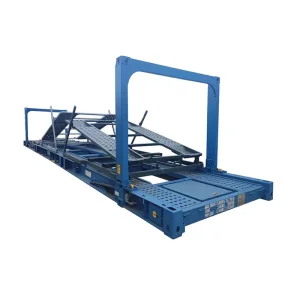 Automotive Spec
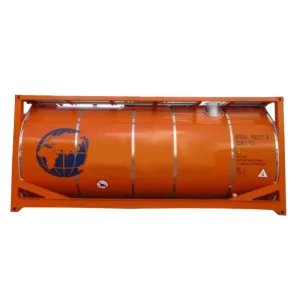 Food / Liquid Grade
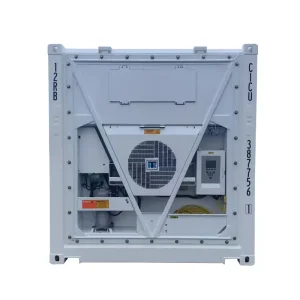 DNV 2.7-1 Certified
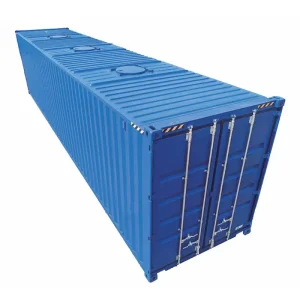 Dry Bulk Transport
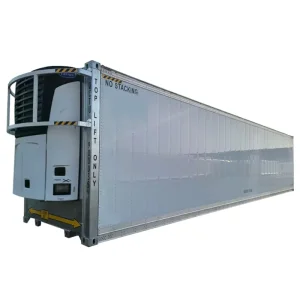 High Capacity Cold
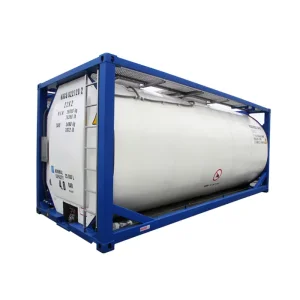 Hazardous Approved
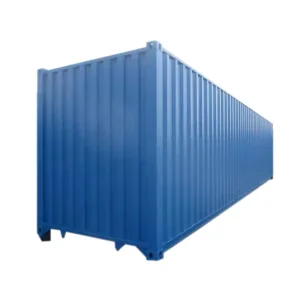 Volumetric High Cube
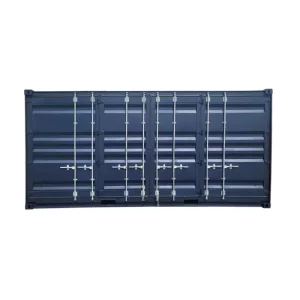 Full Side Access
Comprehensive engineering, regulatory, and commercial clarifications to streamline decision-making for Hamburg logistics directors and industrial purchasers.
While "Cargo Worthy" simply guarantees that a container complies with minimum maritime criteria for international transit, the IICL-5 standard (formulated by the Institute of International Container Lessors) imposes significantly stricter structural tolerances. Under IICL-5, allowable roof panel bowing cannot exceed 20mm, side-wall deflection must stay below 15mm, and floor gouges deeper than 5mm are prohibited.
Furthermore, CIMIC's factory-refurbished IICL units undergo full mechanical restoration: rust spots are shot-blasted to SA 2.5, treated with two-pack zinc epoxy primers, and fitted with fresh elastomeric EPDM seals. This ensures long-term operational durability for domestic storage or intensive European rail loops without premature structural failure.
Every used container prepped for export to Hamburg is inspected by authorized marine surveyors under the International Convention for Safe Containers (CSC 1972). Depending on buyer requirements, units are surveyed under an Approved Continuous Examination Programme (ACEP) or validated through periodic surveys, resulting in an updated stainless-steel CSC plate certifying stacking, racking, and gross weight capacities. Classification certificates from recognized notified bodies (such as Bureau Veritas or DNV) accompany the shipping dossier.
Our manufacturing and dispatch hubs in Tianjin and Suzhou are located within 100km of primary departure ports. For volume fleet orders, containers can be loaded with export cargo (one-way freight positioning) to substantially subsidize repositioning costs to Hamburg terminals (Altenwerder or Burchardkai). Direct ocean transit typically ranges from 28 to 36 days. For urgent German requirements, buffer stocks maintained at our coastal consolidation depots can be dispatched within 48 to 72 hours following commercial sign-off.
Yes. CIMIC operates comprehensive OEM/ODM engineering facilities. Before departure, used dry boxes can be customized with high-security lockboxes, custom bifold side doors, roll-up shutter access, internal electrical sub-panels, insulation packages (rockwool or thickened PIR panels), and ventilation louvers. All engineering modifications maintain structural equilibrium in accordance with ISO 1496 guidelines.
Our refurbishment process focuses heavily on atmospheric durability. Given that Hamburg experiences high relative humidity and marine salinity from the Elbe and nearby North Sea, all repaired steel corrugations are constructed strictly from SPA-H Corten steel. Following surface preparation to SA 2.5, we apply a two-pack zinc-rich epoxy primer (30-40µm DFT) followed by a high-build chlorinated rubber or acrylic topcoat (40-50µm DFT). This composite coating system provides exceptional resistance to UV degradation, chemical salt wash, and temperature swings.
The German Supply Chain Act (Lieferkettensorgfaltspflichtengesetz - LkSG) and European CSRD directives mandate transparent lifecycle resource stewardship. By extending the operational life of heavy steel intermodal assets through certified refurbishment, enterprises avoid the high virgin resource extraction emissions of new steelmaking (saving ~3.8t CO₂ per 40ft TEU equivalent). CIMIC supplies documented chain-of-custody certificates, ISO 9001/14001 factory verification, and material compliance sheets for carbon accounting reporting.
Whether you require single-unit storage in Waltershof or block-fleet replenishment of 500+ IICL-5 certified 40ft High Cube containers for trans-European rail freight, our bilingual sales engineers provide complete technical drawings, pricing matrices, and delivery schedules within 24 hours.
