Precision-manufactured off-site volumetric units deployed for Dutch commercial business parks, institutional student housing, and turnkey site accommodation.
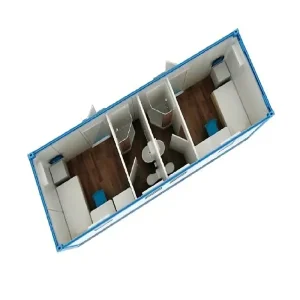
Standardized volumetric modules engineered with high-density mineral wool core for stringent Dutch residential fire resistance and thermal criteria.
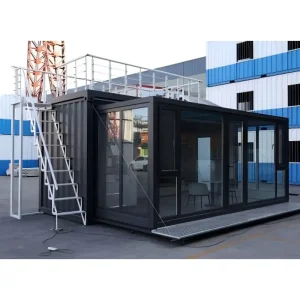
Double-wing unfolding architecture maximizing usable floor space up to 3x, factory-fitted with pre-plumbed European water and sanitary couplings.
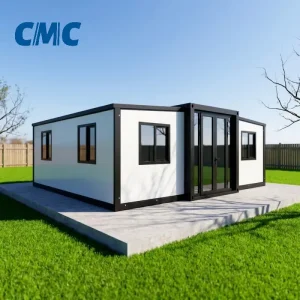
Designed specifically for low-temperature heating matrices (heat pump ready) featuring thermal-bridge-free seals and high airtightness rating (qv;10).
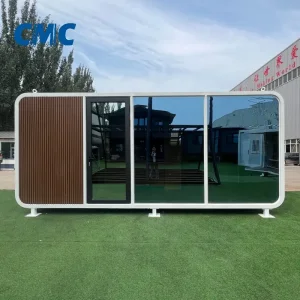
Versatile flat-pack containers allowing up to 4 units bundled per standard shipping slot, drastically reducing maritime freight emissions into Rotterdam.
The Dutch construction and built environment sectors operate under some of the most rigorous ecological and regulatory parameters globally. Driven by the landmark Council of State rulings on nitrogen emissions—the Stikstofcrisis—traditional in-situ concrete pouring and heavy diesel-driven site construction have faced unprecedented permitting throttles. Modular container structures prefabricated offsite represent an indispensable technical antidote: by relocating up to 90% of construction operations to controlled manufacturing yards, site-based nitrogen deposition (calculated via the AERIUS model) drops near the absolute zero threshold.
Simultaneously, the acute structural housing deficit within the Randstad agglomeration—encompassing Amsterdam, Rotterdam, The Hague, and Utrecht—demands uncompromising delivery velocity. Dutch national housing covenants require the delivery of roughly 100,000 net new dwelling units annually through 2030. Modular container architecture provides institutional developers, municipal housing corporations (woningcorporaties), and commercial operators with an industrialized pathway that halves project completion horizons while strictly complying with the newly minted Besluit bouwwerken leefomgeving (BBL).
Reduction in on-site construction truck movements across Dutch arterial corridors.
Target Milieuprestatie Gebouwen (MPG) environmental score achievable via reusable steel chassis.
Thermal resistance (m²K/W) integrated into wall envelopes satisfying BBL residential thresholds.
Certified structural fire resistance (WBDBO) conforming to NEN 6069 / EN 13501-1 standards.
Bridging large-scale marine-grade container metallurgical fabrication with the exact execution requirements of European and Dutch building authorities.
Chassis fabricated from copper-chromium-nickel alloyed atmospheric corrosion-resistant steel (SPA-H / Corten-A). Yield strengths up to 355 MPa withstand continuous high-humidity marine exposure typical of the Dutch North Sea coastline and polder microclimates.
Automated robotic GMAW welding sequences inspected under non-destructive testing (NDT) regimens. Compliant with CE marking Execution Class EXC2 and EXC3 under Eurocode 3 (EN 1993-1-1), validating structural safety for multi-tier stackable modular configurations.
Surface preparation conforming to ISO 8501-1 Sa 2.5 blast profile, followed by a multi-tier epoxy zinc-rich primer, polyamine intermediate, and aliphatic polyurethane topcoat. Guaranteed defense against severe salinity across Europoort, IJmuiden, and Vlissingen port environments.
Every modular unit delivered to Dutch general contractors is engineered through parametric IFC-compliant BIM platforms. From structural hard points and crane pick attachments (ISO 1161 corner castings) to internal MEP (Mechanical, Electrical, and Plumbing) pathways, digital twins ensure clash-free site consolidation with plug-and-play interfaces.
Entering the Dutch construction ecosystem requires deep technical fluency with the Besluit bouwwerken leefomgeving (BBL), which governs life safety, acoustic isolation, health metrics, and usable floor plan efficiency. Our export-grade volumetric container housing units incorporate advanced thermal insulation systems engineered to satisfy BENG (Bijna Energieneutrale Gebouwen) requirements:
Acoustic compliance under NEN 5077 is achieved using decoupled floating floor cassettes and double-skin gypsum fiberboard partition walls with cavity absorption dampeners, guaranteeing an airborne sound insulation index of Dn,T,A ≥ 52 dB between modular residential living cells.
| Building Decree | BBL 2024 / NEN-EN 1990 |
| Wall Insulation (Rc) | ≥ 4.7 m²K/W (PIR/Stone wool) |
| Roof Insulation (Rc) | ≥ 6.3 m²K/W |
| Floor Insulation (Rc) | ≥ 3.7 m²K/W |
| Fire Resistance | 30 to 60+ min (EN 13501-1) |
| Acoustic Damping | NEN 5077 / Il,k ≤ +54 dB |
Engineered modular solutions optimized for the unique logistical, agricultural, and demographic challenges of the Netherlands.
Rapid assembly of modular studio apartments across university cities including Leiden, Delft, Groningen, and Utrecht. Fully factory-finished with compact kitchenette, private wet-cell sanitary room, and ventilation heat recovery (WTW units) conforming to municipal zoning permits for temporary living quarters (up to 15 years duration).
Controlled-atmosphere modular laboratory units and bioclimatic field workstations for the greenhouse horticulture hub in Westland. Sealed hygienic wall paneling, ISO 14644-1 cleanroom compatibility, and integrated climate micro-controllers for automated seed breeding and plant research.
Heavy-duty, stackable site management offices, security gates, and crew briefing complexes deployed along the Maasvlakte logistics corridor. Structural rigidity enables dynamic repositioning via reach stackers without compromising structural alignment or envelope weather sealing.
Aligning Chinese offsite industrial capacity with the Netherlands' legally binding transition to a 100% circular economy by 2050.
Full digital inventory tagging of all raw steel, fasteners, insulation cores, and glass components to register residual value and enable automated circular tax rebates.
Patented dry-joint bolted connections replacing continuous structural fillet welds at modular assembly nodes, enabling complete single-cell extraction and reuse.
Substituting synthetic petroleum-derived PIR panels with Dutch-grown industrial hemp and mycelium acoustic barriers to drive net negative embodied carbon scores.
Solid-state battery modules and localized hydrogen fuel cell auxiliary loops pre-installed in specialized utility container bays for off-grid Dutch construction sites.
Detailed engineering, compliance, and logistical clarifications for project developers, municipal purchasers, and general contractors.
Broadening beyond modular housing to support the Netherlands' vast agro-logistics, deep freeze, chemical, and intermodal transport corridors.
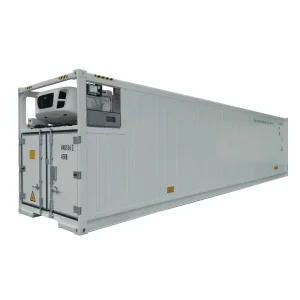
Extended-capacity temperature-controlled reefers engineered for cross-continental Eurasian and Rhine corridor transport.
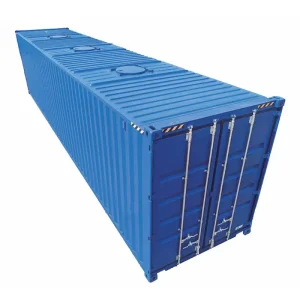
Reinforced steel walls designed with integrated discharge hatches for grain, agricultural pellets, and dense industrial minerals.
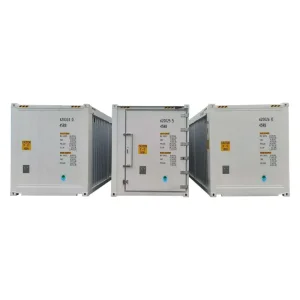
Partitioned thermal chambers supporting multiple concurrent temperature zones for perishable Dutch horticultural export.
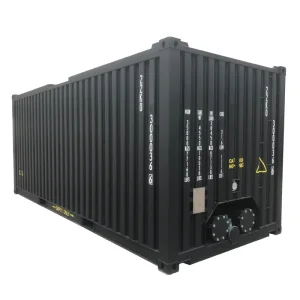
Direct flame-tube and electric heating elements ensuring hot-mix liquid bitumen remains at operational pouring temperatures.
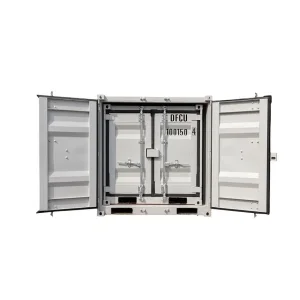
Engineered for nested transport to minimize shipping volumes, deployed rapidly across Dutch urban micro-depots.
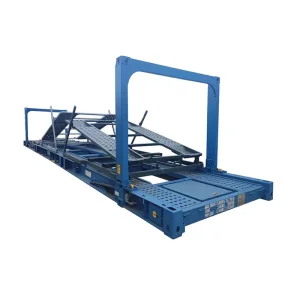
Equipped with heavy internal wheel-chock track mechanisms to securely ship passenger cars and electric vehicles across maritime lanes.
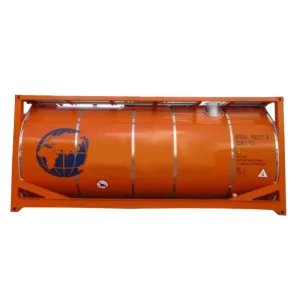
Stainless steel 316L pressure tank housed within an ISO frame for safe chemical, beverage, or emergency potable water storage.
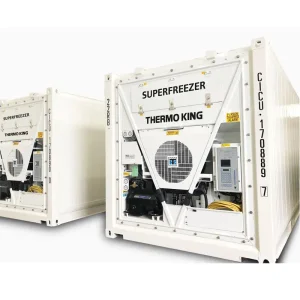
Ultra-low temperature cooling unit suitable for life science laboratories and biological cold storage across the Leiden Bio Science Park.
