Directly addressing low-dock clearance, rapid-unloading transit stops, and inland intermodal operations across Ethiopian industrial nodes.
A synthesis of domestic supply chain bottlenecks, landlocked transit dynamics, and evolving global maritime engineering standards.
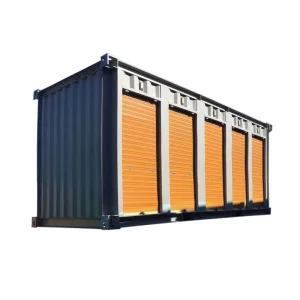
As a landlocked sovereign state relying heavily on the Port of Djibouti, Ethiopia routes billions in freight through intermediate customs yards, notably the Modjo Dry Port, alongside dry terminals at Gelan, Dire Dawa, Kombolcha, and Hawassa. Traditional swing doors create hazardous clearance issues and severe terminal bottlenecks in congested holding yards. Heavy-duty roll-up doors, designed with precision torsion springs and anti-jam track geometry, drastically streamline multi-side stuffing and unstuffing in confined industrial parks.
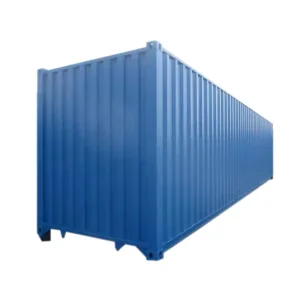
Worldwide intermodal freight is undergoing a structural paradigm shift toward higher turnover velocities and micro-fulfillment adaptability. Roll-up door containers—once predominantly confined to North American municipal storage—are now aggressively procured by global logistics integrators. By integrating Corten structural framing (SPA-H) with heavy-duty overhead rolling shutters, manufacturers eliminate the standard 2.5-meter rear swing door clearance, enabling flush curb positioning and high-density yard layouts.
Ethiopian transit runs across extreme geographic and atmospheric variations: from sea-level maritime humidity in Djibouti to high-altitude cold in Addis Ababa (2,355m), punctuated by extreme thermal spikes across the Afar depression. Premium roll-up door containers utilize marine-grade zinc-rich epoxy primers, specialized polyurethane paint systems, and industrial EPDM brush seals to resist windblown volcanic dust, torrential seasonal rains (Kiremt), and excessive ultraviolet degradation.
Engineered for direct deployment across industrial parks, agro-commodity hubs, construction corridors, and humanitarian relief lines.
In industrial parks such as Hawassa, Bole Lemi, and Kilinto, garment manufacturers need swift materials feeding without parking full trailer rigs inside buildings. Side-installed or dual-end roll-up container boxes act as flush, roll-in storage docks. Textile rolls, machinery components, and finished apparel can be unlatched in seconds with forklift-friendly pallet heights.
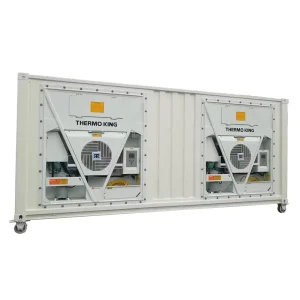
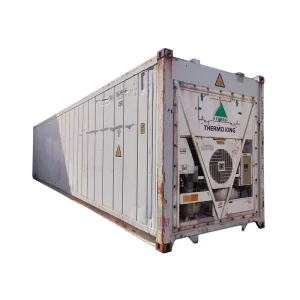
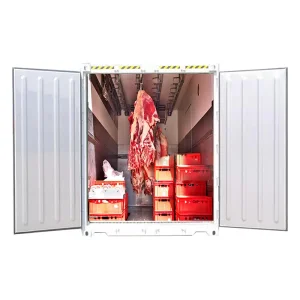
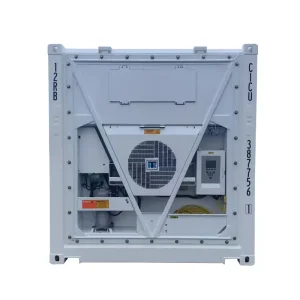
Coffee Arabica (from Sidama, Yirgacheffe, and Kaffa) and fresh cut roses from the Rift Valley require secure, temperature-monitored pre-cooling nodes before consolidated trucking. ODM Roll-Up Reefer units maintain internal temperatures from -25°C to +25°C, ensuring rapid loading access while reducing thermal exposure time compared to conventional swinging double doors.
Major railway expansions, dam civil engineering sites (GERD), and remote supply lines managed by international logistics missions demand deployable on-site toolrooms, generators, and medicine reserves. Secure multi-latch roll-up containers deliver vandalism-resistant, weather-sealed field stations that offload safely onto uneven ground.
Detailed mechanical evaluation demonstrating payload integrity, seal durability, and operational longevity under harsh inland African conditions.
| Design Parameter | Standard Rear ISO Swing Door | Industrial Multi-Roll-Up Door (CIMIC) | Field Impact on Ethiopian Inland Route |
|---|---|---|---|
| Operating Clearance Required | 2,400 mm – 2,700 mm rear swing radius | 0 mm (Vertical roll-up coil mechanism) | Eliminates docking deadspace at overcrowded Modjo Dry Port yards. |
| Door Curtain / Panel Alloy | 2.0 mm Corrugated Corten Steel | Extruded Aluminum 6063-T5 or Galvanealed Steel | High strength-to-weight ratio; prevents door sagging over corrugated dirt feeder roads. |
| Weather Sealing System | Dual-lip EPDM boundary gasket | Heavy-duty bottom bulb seal & side brush liners | Complete resistance against fine Afar Rift dust and monsoon rain infiltration. |
| Door Access Ergonomics | Dual cam-locking gear with breaker bars | Balanced counterweight torsion barrel system | One-person rapid manual or motorized operation; minimizes driver fatigue. |
| Structural Integrity Certification | ISO 1496-1, CSC Nine-High Stacking | Reinforced Corner Post Design with CSC Compliance | Maintains full intermodal rail flatcar compatibility along Addis-Djibouti line. |
Mitigating commercial procurement friction through comprehensive factory QA, multi-modal container transport, and flexible project finance arrangements.
Manufactured in our coastal Chinese production hubs (Tianjin & Suzhou), each batch of roll-up units undergoes rigorous weather-tightness water spraying tests, floor deflection assessments under maximum payload, and dynamic roll-door cycle trials. All builds conform to international shipping classification rules (Bureau Veritas and ISO 9001 standards).
High detention charges and demurrage fees at Djibouti and Modjo represent massive capital drains for Ethiopian importers. By procuring brand-new CIMIC containers as Shipper Owned Containers (SOC), clients eliminate recurring carrier detention fees, repurposing the containers into permanent, secure warehouse assets upon delivery.
Every logistics ecosystem is unique. CIMIC offers tailored builds featuring customized side-wall shutter configurations, reinforced bamboo or steel chequer plate flooring, passive high-cube ventilations, secondary padlock enclosures, and specialized insulated foam infills for regional distributor fleets.
Expert responses addressing customs handling, structural integrity, delivery timeframes, and reefer unit maintenance.
Yes. When engineered by CIMIC, our roll-up containers incorporate specialized reinforced perimeter header lintels and heavy corner castings that preserve standard ISO structural integrity, maintaining CSC (Convention for Safe Containers) stackability and full compliance with the Ethio-Djibouti Railway standard-gauge flatcar parameters.
Our specialized export containers utilize heavy-duty perimeter brush seals along vertical guide channels and a dual-fin synthetic EPDM rubber seal at the floor threshold. This configuration prevents fine sand particles, windblown grit, and driving moisture from breaching the cargo hold during transit through harsh semi-arid terrain.
Production typically takes 15 to 25 days depending on customization complexity and batch volume. Ocean transit from Tianjin or Shanghai to the Port of Djibouti ranges from 20 to 28 days. Customs clearing and rail forwarding directly to Modjo or Kaliti Dry Port generally takes an additional 5 to 10 days.
Yes. For reefer configurations, we employ specialized polyurethane-injected insulated roller curtain panels featuring thermal breaks and compression perimeter gaskets. When paired with high-performance Carrier, Thermo King, or Daikin machines, internal temperatures remain rock-solid even in 45°C ambient temperatures.
We provide full commercial documentation required for Ethiopian bank Letters of Credit (LC), pre-shipment inspections (PSI/ESCA), and Customs validation, including Bills of Lading, Certificate of Origin, Packing Lists, and Bureau Veritas certification dossiers.
We accommodate project-scale orders starting from individual single units up to multi-hundred unit commercial fleets. For customized roll-up configurations, batch runs of 2 to 4 units significantly optimize per-unit shipping and manufacturing costs.
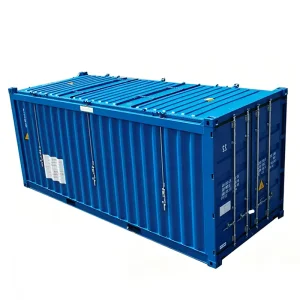
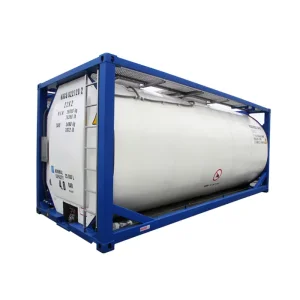
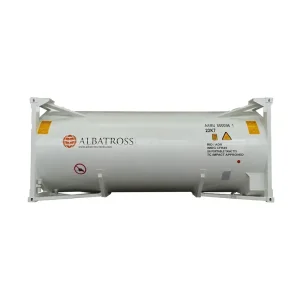
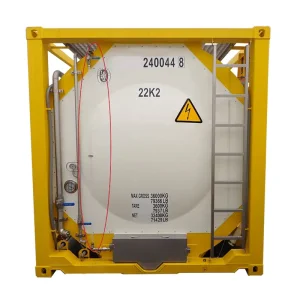
Explore our full line of open-top, tank, reefer, and dry intermodal container solutions engineered for heavy-duty industrial and agricultural transport.