Pre-engineered, factory-tested cold chain units configured for Hamad Port intermodal freight and high-ambient Arabian Gulf distribution hubs.
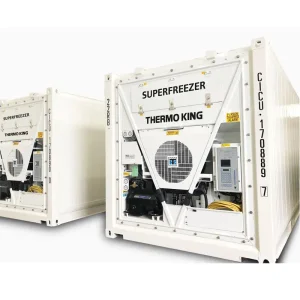
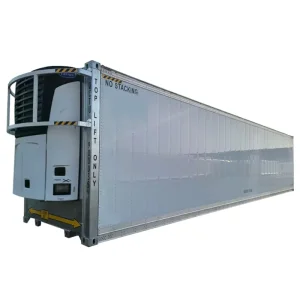
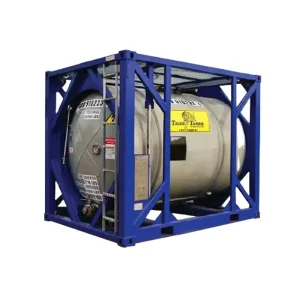
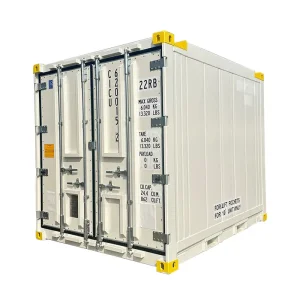
The State of Qatar's rapid industrialization under the framework of Qatar National Vision 2030 (QNV 2030) has catalyzed an unprecedented infrastructure expansion across logistics parks, deep-water port ecosystems, petrochemical hubs, and sovereign healthcare stockpiles. Central to this strategic transformation is the logistical conduit connecting Hamad Port (Umm Al Houl), the Manateq Special Economic Zones (specifically Al Wakra, Birkat Al Awamer, and Aba Saleel), and the heavy industrial enclaves of Ras Laffan and Mesaieed. While standard refrigerated shipping containers (reefers) operating between -20°C and -25°C serve conventional perishable transit, advanced industrial sectors require deep-freeze and super-freezer intermodal infrastructure capable of sustaining steady thermal profiles from -40°C down to -70°C without thermal hysteresis.
The geographical environment of the Arabian Peninsula introduces extreme engineering constraints. In Greater Doha, summer daytime ambient temperatures systematically exceed +50°C (+122°F), coupled with coastal relative humidity levels soaring above 90% and intense ultraviolet radiation indices. This reality creates a continuous thermodynamic heat differential (ΔT) of more than 115°C to 125°C between the outer Corten steel envelope and the internal insulated chamber. Standard commercial reefer machinery subjected to this thermal strain regularly suffers from compressor cycle-shortening, high head-pressure cutouts, oil breakdown, and excessive energy consumption. CIMIC’s bespoke super freezer container manufacturing platform bridges this technological gap, delivering specialized cascade-cooling architectures, heavy-duty polyurethane/vacuum insulation barriers, and marine-grade anti-corrosive coatings tailored precisely for the Doha procurement landscape.
Preserving sashimi-grade bluefin tuna, high-value pelagics, and Gulf crustaceans requires instant flash-freezing to below -60°C to halt enzymatic decomposition, cellular structure rupture, and lipid autoxidation.
Full adherence to Qatar Ministry of Public Health (MoPH) and WHO GDP regulations for mRNA therapies, blood plasma fractions, enzymes, and temperature-critical biological reference materials.
Supporting QatarEnergy and offshore operations across the North Field expansion with DNV 2.7-1 certified refrigerated containers designed for dynamic ocean lift and continuous saline fog exposure.
Comparative thermal thermodynamics, materials metallurgy, and factory fabrication benchmarks.
| Component / Parameter | Standard Commercial Reefer | CIMIC Doha-Grade Super Freezer | Field Operational Advantage |
|---|---|---|---|
| Operating Temperature | -25°C to +25°C | -60°C to -80°C | Enzymatic Arrest Zero cellular degradation for pelagics and active biologicals. |
| Refrigeration Circuit | Single-stage Scroll / Reciprocating | Dual-Stage Cascade (R404A / R23 or R508B) | Zero Thermal Saturation Operates efficiently without high discharge-pressure trips at 50°C ambient. |
| Thermal Core Insulation | 65mm - 75mm Polyurethane Foam | 100mm-120mm PUR + Vacuum Panels (VIP) | Ultra-Low U-Factor Prevents thermal bridge leakage; saves up to 34% electricity in Doha summer. |
| Internal Liners & Floor | Aluminum / Standard SS 409 | Food-Grade Stainless Steel SUS 316 / 304 | Resistant to sanitizers, blood, saltwater washdowns, and chemical vapors. |
| External Shell Metallurgy | Standard Mild Steel (Q235) | SPA-H Corten Anti-Corrosive Alloy | Resists intense atmospheric salinity across Doha Port and Ras Laffan coastline. |
| Grid Compatibility | 380V/460V 60Hz default | 380V - 415V / 50Hz (Kahramaa Compliant) | 100% plug-and-play with Qatar utility substations without voltage phase converters. |
In conventional single-stage refrigeration units, achieving temperatures lower than -35°C in high ambient environments causes compression ratios to skyrocket, driving discharge temperatures past lubricating oil breakdown thresholds. To defeat Doha’s hostile summer heat, our specialized manufacturing plants employ an advanced two-stage cascade cooling system. The high-stage circuit (utilizing eco-engineered R404A or low-GWP equivalents) condenses heat into the ambient air, while simultaneously acting as the condenser for the ultra-low low-stage circuit (utilizing specialized R23 or R508B refrigerants). This engineering decoupling prevents excessive discharge temperatures, eliminates evaporator icing under heavy moisture loads, and guarantees pull-down cycles from +25°C to -60°C within 120 to 180 minutes.
Complementing this machinery is our structural cabinet engineering. Factory assemblies integrate high-density cyclopentane-blown polyurethane foam core (45 kg/m³) combined with strategically positioned Vacuum Insulation Panels (VIP) embedded along roof corners and floor-to-wall interfaces. These thermal breaks suppress conductive bridge transfer. Precision door seals with multi-lip silicone and dual-circuit internal heating cables prevent condensation freeze-lock, ensuring rapid dock unloading at Doha cold hubs without compromising interior temperature stabilization.
Navigating municipal, energy, and maritime requirements for seamless industrial deployment.
Every super freezer unit destined for Qatar is assembled with wiring, heavy-duty contactors, and tropicalized compressor motors rated for 380V-415V, 3-Phase, 50Hz, adhering strictly to Qatar General Electricity & Water Corporation (Kahramaa) specifications and GCC standardization guidelines.
Built strictly to ISO 1496-2 and CSC (Convention for Safe Containers) benchmarks. High-tensile structural corner posts and full-penetration robotic welding allow 9-high container yard stacking under extreme dynamic wind forces characteristic of Qatar's coastal plains.
For operations servicing the North Field Expansion, Ras Laffan, or Halul Island loading buoys, our custom offshore container variants feature DNVGL-ST-E271 certification, load-tested 4-point pad eyes, and marine epoxy coatings resistant to continuous C5-M extreme marine corrosive categories.
Anticipating next-generation cold-chain standards aligned with the Qatar National Vision decarbonization priorities.
Integration of satellite-linked 5G micro-sensors monitoring vibration, compressor bearing temperatures, and sub-second heat fluxes across Qatar's transit corridors with automated cloud alarms.
Direct integration of rooftop ultra-thin monocrystalline photovoltaic (PV) skin generating up to 3.2 kW of localized power to offset condenser fan loads in sunny Arabian Gulf climates.
Phasing in R744 (Carbon Dioxide) cascade systems to achieve GWP=1 compliance, meeting Qatar's impending zero-fluorinated hydrocarbon mandates without sacrificing -65°C stability.
Next-gen eutectic PCM wall cavities capable of maintaining -50°C for over 24 hours during catastrophic utility grid failures or remote intermodal transit delays between ports.
Clear engineering guidance for procurement directors, logistics engineers, and cold chain managers in Qatar.
Because our units utilize dual-stage cascade compressors paired with vacuum insulation panels, pulldown from ambient +45°C/+50°C down to -60°C occurs within 150 to 210 minutes under clean condenser conditions. Regular washing of condenser coils at Hamad Port or desert terminals is advised to prevent sand dust buildup from impairing heat rejection.
During initial pull-down under 45°C ambient conditions, continuous power consumption averages 14 to 18 kW. Once stabilized at setpoint (-60°C), energy modulating electronic expansion valves (EEV) and variable-speed fan controls throttle consumption down to 7.5 to 11 kW/hour, matching Kahramaa grid parameters (380-415V/50Hz).
Yes. Our factory OEM/ODM engineering teams configure custom internal floor tracks, stainless steel SUS 304 biological shelf racking, quick-release roll-up partitions, and separate dual-temperature zones (e.g., -60°C super freeze in front, -20°C standard freeze in rear) for multi-temperature logistics operators in Birkat Al Awamer.
Refrigeration assemblies are constructed using globally recognized components (Thermo King, Carrier Transicold, or Daikin cores) that share universal parts interchangeability with established marine service centers at Hamad Port. Factory spare kits—including extra fan motors, defrost heaters, sensors, and gaskets—can be shipped directly in-container.
We apply a four-tier surface treatment: abrasive grit blasting to SA 2.5 standard, an inorganic zinc-rich epoxy primer (75 microns), an intermediate polyamide epoxy barrier (100 microns), and an exterior aliphatic polyurethane topcoat (50 microns). This 225+ micron marine system delivers extreme protection against humidity and saltwater aerosols.
Standard specification units in 10ft, 20ft, and 40ft High Cube profiles are dispatched directly from our production base adjacent to the coastal container terminals, with ocean transit times to Hamad Port (Doha) typically taking between 18 and 26 calendar days depending on feeder schedules.
Engineered shipping containers, offshore baskets, dangerous goods units, and specialized dry boxes built to rigorous international certifications.
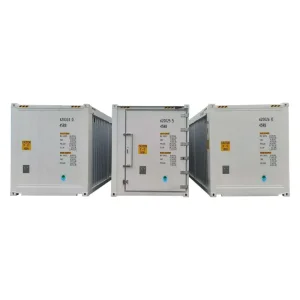
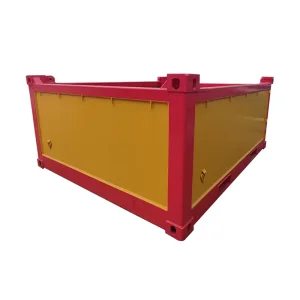
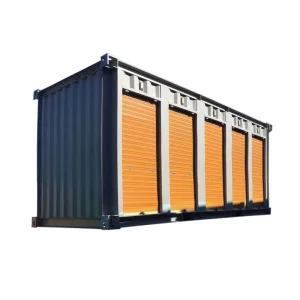
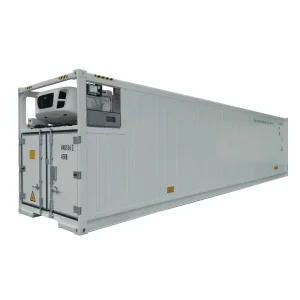
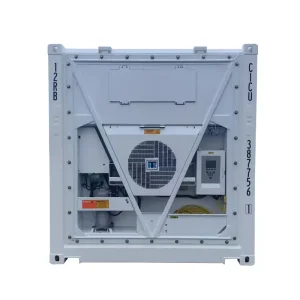
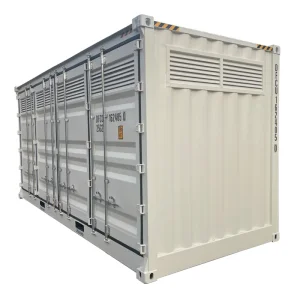
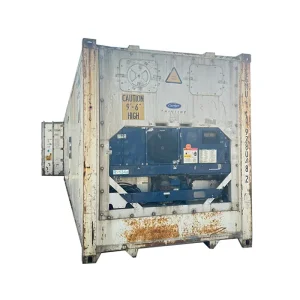
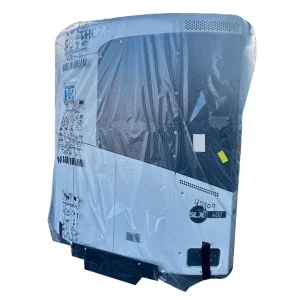
Whether you require standard 20ft/40ft super freezers for seafood logistics, DNV 2.7-1 offshore units for the North Field expansion, or custom mobile cold boxes for clinical trials in Doha, our factory engineers deliver tailored calculations, complete CAD drawings, and transparent CIF Hamad Port quotations.
Send Inquiry Now