Ultra-Deep Blast Freezing Range
High-Duty Refrigeration Capacity
High-Density Cyclopentane U-Value
Classification Society Certified (BV/CCS)
Factory-direct classification certified reefer units, specialized bulk intermodal vessels, and temperature-controlled machinery configured for ultra-fast thermal extraction.
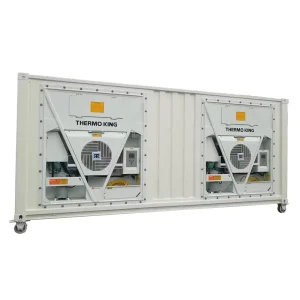
Buy The new blast reefer containers are certified by classification societies Product, Exporters
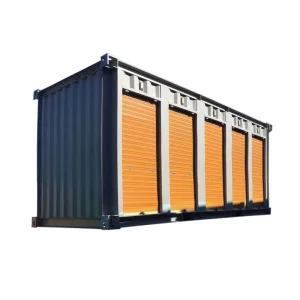
China New 20ft Storage Roll-Up Door Dry Cargo Container Pricelist, Product
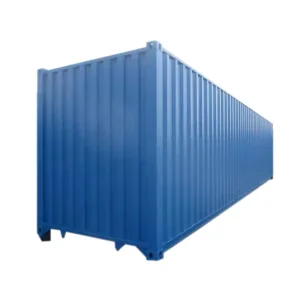
High-Quality 40ft High Cube Certified Dry Cargo Shipping Container contaoner Products, Exporters
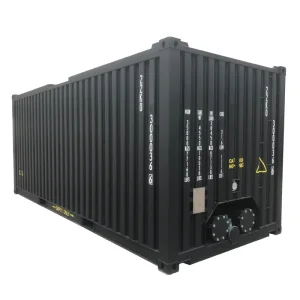
ODM 20 Feet Heated Shipping Asphalt Container Product, Manufacturers
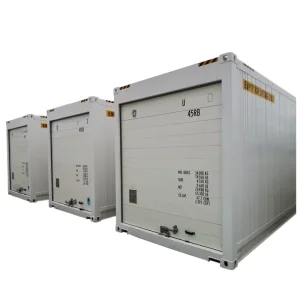
ODM 40ft High-Cube Roll Up Reefer Container Customized Shipping Containers Pricelist, Factories
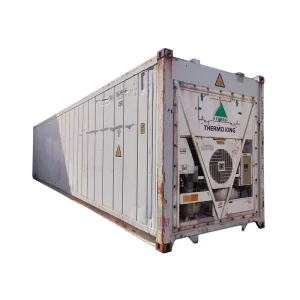
Buy New 40ft Refrigerated Freezer Container for Sale Manufacturer, Quotes
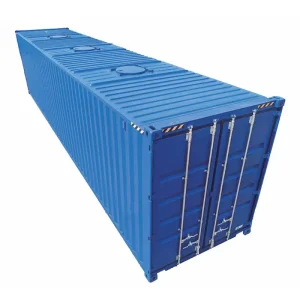
High-Quality 20 Feet Shipping Bulk Container Factories, Exporters
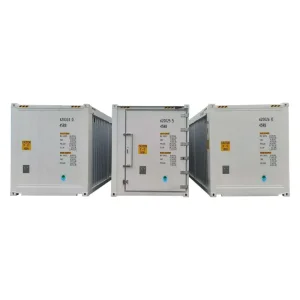
OEM OEM 40ft High-Cube Customized Three-in-One Combination Reefer Storage Container Manufacturer, Factory
Understanding the critical engineering shift from static temperature maintenance to dynamic high-enthalpy thermal shock freezing across modern supply chains.
Unlike standard ISO refrigerated containers designed strictly to maintain the set temperature of pre-cooled cargo (-20°C to +10°C), a dedicated Blast Reefer Container (Quick-Freezer Reefer) is an industrial thermodynamic machine. Its core objective is to pull down ambient internal core temperatures across fresh seafood, raw meats, biological plasma, or agro-produce through the critical water crystallization zone (-1°C to -5°C) within hours, halting cellular rupture.
Reaching deep freeze (-40°C down to -60°C or -70°C) demands aerodynamic airflow velocities surpassing 8 to 12 meters per second across cargo pallets. High-static-pressure centrifugal and axial fans cycle volumetric airflow through deep T-bar aluminum floor tracks, generating upwards of 10,000 to 14,000 cubic feet per minute (CFM) to eliminate heat envelopes surrounding densely packed commodities.
Blast reefer units deployed in offshore marine conditions or intermodal freight require rigorous validation from international classification societies such as Bureau Veritas (BV), China Classification Society (CCS), American Bureau of Shipping (ABS), and Det Norske Veritas (DNV). Structural framing must absorb high dynamic acceleration without micro-fracturing polyurethane thermal barriers.
An overview of integrated steel supply chains, automated cyclopentane foam injection, and port-adjacent assembly efficiency in Tianjin and Suzhou.
Direct supply line integration with primary metallurgical mills yields high-yield SPA-H Corten atmospheric corrosion-resistant steel. This structural backbone mitigates maritime saline corrosion while maintaining high strength-to-tare weight ratios.
Automated robotic injection fixtures distribute ultra-fine microcellular polyurethane insulation blown with cyclopentane. This achieves void-free panel encapsulation at densities greater than 48 kg/m³, preserving internal cold without thermal bridging.
Proximity to world-leading refrigeration compressor plants—including specialized industrial Bitzer, Dorin, Carrier Transicold, and Daikin production plants—allows custom dual-stage cascade engineering with near-zero logistics lead times.
Operating plants situated within 100 kilometers of Tianjin Xingang port minimizes drayage, transit handling hazards, and marshalling expenses. Buyers gain immediate FOB/CIF vessel loading with streamlined pre-trip inspections (PTI).
CAPEX benchmarks, thermodynamic compressor selections, structural variants, and optional cold chain instrumentation for corporate industrial buyers.
| Model Specification | Temp. Capability | Cooling Capacity / Compressor Type | Floor & Airflow Structure | Classification | Indicative Price Range (USD)* |
|---|---|---|---|---|---|
| 10ft Mini Blast Freezer Reefer | -40°C to +10°C | 15 kW / Scroll / Semi-Hermetic Carrier/Thermo King | Heavy-Duty T-Floor, 4,500 CFM | ISO / BV | $14,500 – $21,000 |
| 20ft Deep-Sea Blast Reefer (Standard) | -45°C to +15°C | 32 kW / Dual-Stage Bitzer/Dorin Semi-Hermetic | Extruded Aluminum T-Bar, 8,200 CFM | ISO / CCS / BV | $22,000 – $34,500 |
| 20ft Ultra-Low Tuna Freezer (-60°C) | -60°C to -40°C | 45 kW Cascade / R404A+R23 or R449A/R170 Eco | Slotted High-Flow Deck, 9,800 CFM | DNV / BV | $38,000 – $52,000 |
| 40ft High-Cube Industrial Shock Freezer | -40°C to +10°C | 55 kW / Dual-Circuit Semi-Hermetic Dorin / Bitzer | Reinforced 70mm T-Floor, 13,500 CFM | ISO 1496-2 / BV | $35,000 – $48,000 |
| 40ft HC Roll-Up Door Distribution Blast Reefer | -35°C to +5°C | 40 kW / High-Torque Multi-Evaporator System | Insulated Roll-Up Thermal Curtain + T-Floor | ISO / CE | $39,500 – $54,000 |
| 40ft Multi-Zone Combination Blast/Chiller | Zone 1: -40°C / Zone 2: +4°C | 50 kW Dual Evaporator Dual Microprocessor Control | Dual T-Floor with Movable Partition Bulkhead | BV / ISO | $44,000 – $61,000 |
| Offshore DNV 2.7-1 Blast Reefer Container | -45°C to +20°C | 35 kW Explosion-Proof ATEX Zone 2 Compliant | Stainless 304 Welded Anti-Slip Pan, High CFM | DNV 2.7-1 / EN 12079 | $58,000 – $85,000 |
*Note: Indicative pricelist ranges reflect standard export configurations on FOB Tianjin/Qingdao terms. Final quotations vary based on refrigerant choices (e.g., low-GWP R452A, R448A), auxiliary diesel generator set (Genset) inclusions, internal meat hanging rail modifications, and classification surveyor witness testing requirements.
From open-ocean pelagic fisheries to remote biopharmaceutical storage, explore how blast containers perform across mission-critical environments.
Pelagic tuna species like bluefin and bigeye oxidize rapidly after harvest. Blast reefers operating at ultra-low -60°C arrest enzymatic breakdown and myoglobin discoloration immediately at port docks, preserving sashimi-grade translucence and commanding top international fish market prices.
Equipped with overhead stainless steel rolling-hook track mechanisms, specialized blast reefers absorb the latent biological heat of freshly dressed beef, pork, or mutton quarters. Core meat temperatures are pulled down to -18°C within hours, inhibiting bacterial colonies while minimizing carcass drip weight loss.
Modern pharmaceutical protocols demand hyper-stable, ultra-cold holding environments. Engineered blast units provide continuous temperature-traceable cold, automated dual-redundancy compressor changeover, and remote telemetry modules monitoring vaccine stock in remote deployment regions.
Seasonal soft fruits (berries, cherries, figs) and high-value fungi (truffles, matsutake) spoil within 48 hours without immediate field chilling. Mobile containerized blast chambers can be moved by semi-trailer directly to farm orchards, mitigating field heat before long-distance air or rail intermodal transport.
Offshore oil rigs and arctic mining settlements encounter severe climatic conditions. DNV 2.7-1 certified blast reefers with heavy structural lifting lugs endure ocean roll, wave impact, and harsh ambient swings (-30°C to +50°C), securing perishable provisions for months of isolated operations.
Temporary cold supply hubs can be established in less than an hour. With integrated shore-power adapters and clip-on diesel generator sets, these turnkey units provide self-sufficient modular refrigeration without permanent brick-and-mortar facility investment.
How international corporate buyers navigate decarbonization mandates, low-GWP refrigerants, IoT cloud monitoring, and total lifecycle OPEX.
The Montreal Protocol Kigali Amendment and EU F-Gas regulations mandate rapid reduction of legacy high-GWP refrigerants like R404A. Global buyers now specify drop-in synthetics with low global warming potential (such as R452A and R449A) or natural refrigerants like CO2 (R744) across newly commissioned blast container fleets.
Traditional timer-based electric defrost cycles waste significant electrical energy and introduce thermal spikes inside the cargo hold. Next-generation blast reefer controllers leverage artificial intelligence algorithms to evaluate evaporator delta-P and air temperature curves, initiating on-demand defrost only when ice formation is detected.
Procurement directors are shifting emphasis away from raw purchase price toward comprehensive life-cycle calculations. Higher upfront insulation densities (sub-0.24 W/m²·K thermal conductivity) and variable-speed inverter compressors yield 28% to 35% electrical power reductions over a 15-year marine deployment lifecycle.
Discover hanging meat blast reefers, chemical tank vessels, modular houses, and DNV-rated offshore transport containers manufactured to rigorous global standards.
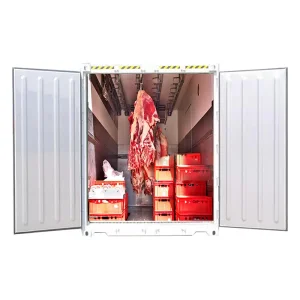
OEM Brand new hanging meat container for low temperature fresh transportation Product, Quotes
Buy The new blast reefer containers are certified by classification societies Product, Exporters
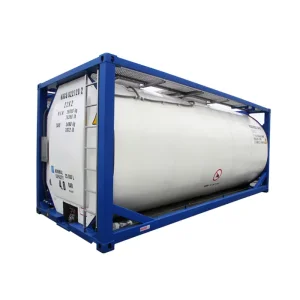
High-Quality ISO Standard 20ft Versatile Tank Container for Transport Chemicals Product, Products
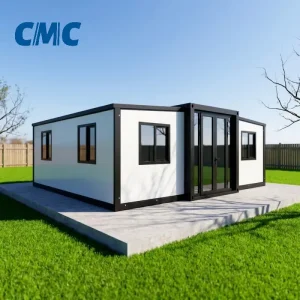
High-Quality 20ft Modular Container Houses Expandable Steel Container House Excellent Thermal Insulation and Sealing Performance Factory, Quotes
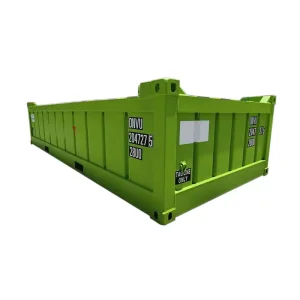
High-Quality New DNV Certification Offshore Half-Height Open Top Container Exporter, Factories
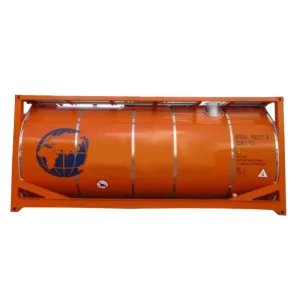
ODM 20 Foot ISO Liquid Tank Container for Water Products, Manufacturers
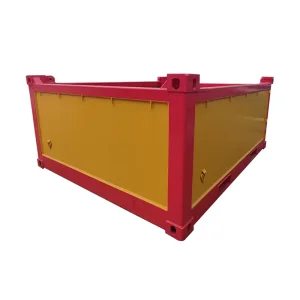
Famous New Offshore Basket Container for Offshore Operations Manufacturer, Manufacturers
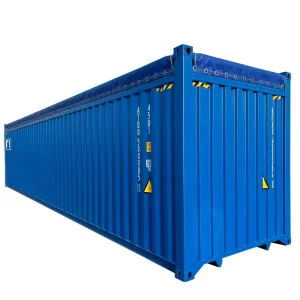
OEM 40ft High-Cube New Soft Open Top Shipping Container with Tarpaulin Cover Product, Exporters
Direct answers from our senior refrigeration engineering and global marine export documentation teams.
A standard ISO reefer maintains cargo that is already pre-frozen or pre-chilled, utilizing modest refrigeration compressors (usually 5 kW to 9 kW) and moderate airflow (approx. 3,000 to 5,000 CFM). In contrast, a Blast Reefer Container integrates high-duty dual-stage or cascade compressors (15 kW to 55+ kW) combined with high-velocity blowers (surpassing 10,000 CFM) specifically engineered to rapidly extract latent thermal energy and freeze warm product down to -40°C or -60°C within hours.
Due to the high starting torque and continuous high-duty draw of semi-hermetic blast compressors, these units require a 380V/440V 3-phase 50/60Hz industrial or marine power supply. Total power draw ranges from 18 kW up to 45 kW depending on load and phase pull-down stage. When operating offshore or in transit without shore grid connectivity, heavy-duty clip-on or underslung diesel generators (Gensets) rated at 30kVA to 60kVA are required.
Our containers are engineered and manufactured under strict ISO 9001 and ISO 1496-2 standards. Prior to factory gate dispatch, units undergo rigorous functional validation witnessed by international third-party classification societies including Bureau Veritas (BV), China Classification Society (CCS), and Det Norske Veritas (DNV). Certificates verify structural stack integrity, CSC safety plate compliance, and refrigeration system pull-down capacity.
Airflow distribution is engineered utilizing computational fluid dynamics (CFD). Cold air is forced downward through a high-static pressure delivery chamber, routed along high-profile extruded aluminum T-bar floor profiles, forced vertically upward through pallet openings, and returned via ceiling ducts. This bottom-up airflow architecture eliminates stagnant hot spots and ensures identical thermal exchange whether pallets are located near the doors or against the machinery bulkhead.
Yes. We specialize in comprehensive OEM and ODM structural customization. Options include ceiling-integrated food-grade SS304 hanging meat rail systems with cross-transfer switches, heavy-duty roller conveyors, anti-slip checkered stainless steel flooring, interior LED emergency panic release systems, and insulated movable partition bulkheads for multi-temperature (dual-zone) applications.
Standard catalogue reefer and blast models typically ship within 3 to 4 weeks from order confirmation. Fully customized OEM builds (e.g., cascade -60°C units or explosion-proof ATEX offshore containers) require approximately 5 to 7 weeks for structural engineering, classification society surveyor inspection, and PTI testing. Located 100km from Tianjin Port, completed containers are loaded directly as SOC (Shipper Owned Containers) on global liner vessels.
