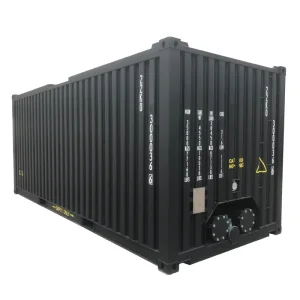
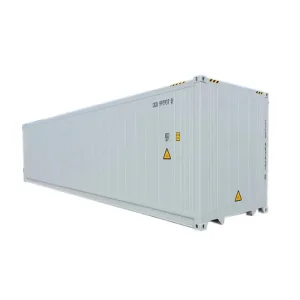
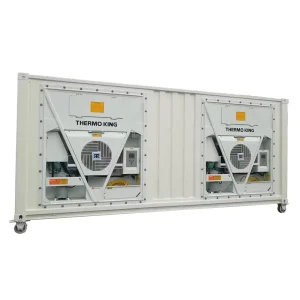
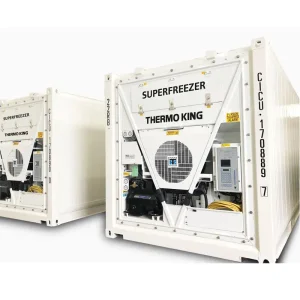
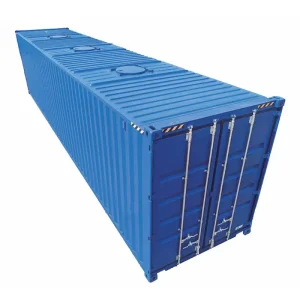
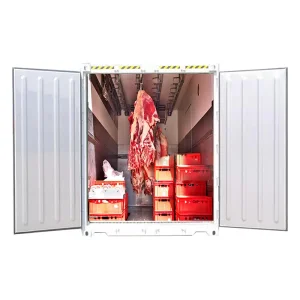
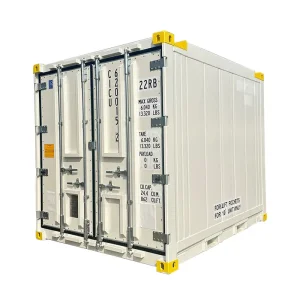
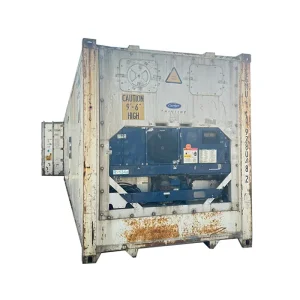
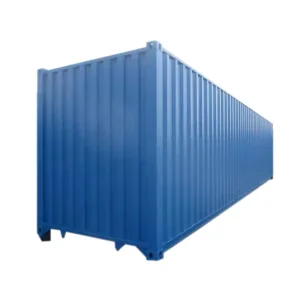
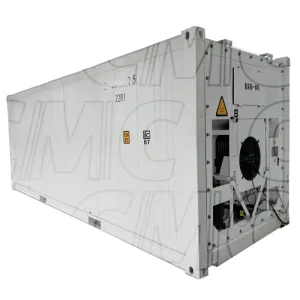
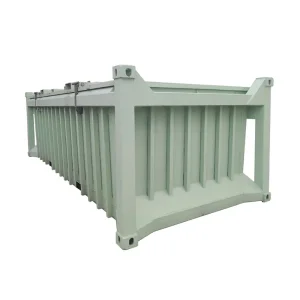
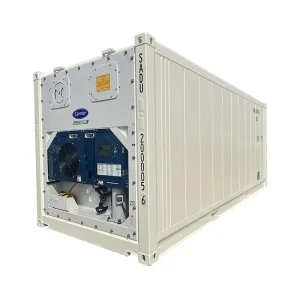
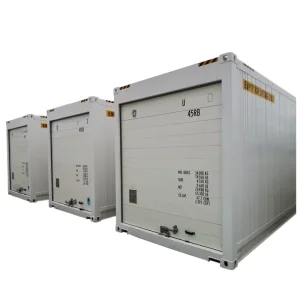
Explore heavy-payload thermal vessels, blast freeze reefers, bulk commodity carriers, and classification society-approved equipment precision-built for harsh oceanic, arctic, and industrial terrains.
An exhaustive architectural examination of China's container manufacturing dominance, metallurgical supply chains, and the engineering economics behind Twenty-Foot Equivalent Units.
While 40-foot High-Cube units dominate consumer goods and apparel transit due to superior cubic volume (approx. 76.4 m³), the 20-foot container (1 TEU) remains the undisputed heavy-cargo backbone for mining concentrates, dense agricultural staples, machinery parts, chemical drums, and bulk liquids.
With an ISO gross payload threshold operating up to 30,480 kg against a tare weight averaging just 2,150–2,280 kg, the 20 Cntr delivers unmatched mass efficiency, minimizing chassis fatigue and marine stacking shear stresses under intense maritime accelerations.
China's container fabrication supremacy—anchored in industrial hubs surrounding Tianjin Port, the Yangtze River Delta (Suzhou, Shanghai), and Pearl River Delta—leverages unprecedented geographic integration. Raw hot-rolled atmospheric corrosion-resistant steel coils (Corten SPA-H) are smelted within short haulage corridors.
This geographic consolidation drastically lowers raw material procurement lead times and inland transit overheads, enabling synchronized build schedules capable of completing customized container runs within 14–21 business days from engineering signoff.
Global procurement teams operating cross-border logistics fleets continuously evaluate the arbitrage between container leasing and capital acquisitions. Sourcing directly from verified Chinese manufacturing plants establishes a substantial CAPEX advantage over secondary leasing syndicates.
Procuring pristine factory-built containers equipped with CSC safety certifications, custom ISO paint codes, and bespoke floor treatments avoids compounding lease extension penalties, unreturned container surcharges, and costly off-hire survey disputes.
A granular review of SPA-H Corten alloy chemistry, robotic welding automation, floor payload stress distribution, and C5-M marine anti-corrosion barrier specifications.
| Structural Element | Material Specification | Yield Strength (ReH) | Tensile Strength (Rm) | Engineering Tolerance & Protective Finish |
|---|---|---|---|---|
| Corner Posts (Front & Rear) | JIS G3125 SPA-H / Q345E Alloy | ≥ 345 MPa | 490 – 620 MPa | 6.0 mm cold-formed thickness; impact tested at -40°C |
| Corner Castings (8 Units) | Cast Steel SCW 480 / ISO 1161 | ≥ 280 MPa | 480 – 650 MPa | 100% magnetic particle & ultrasonic crack detection |
| Corrugated Side & Roof Panels | SPA-H Weathering Corten Steel | ≥ 345 MPa | 490 – 600 MPa | 1.6 mm / 2.0 mm deep-profile trapezoidal draw; shot-blast SA 2.5 |
| Cross Members & Outriggers | Structural Corten C-Section | ≥ 345 MPa | 490 – 620 MPa | 4.0 mm stamped channels spaced at 280 mm pitch center-to-center |
| Flooring System | 28mm Hardwood / Bamboo-Polymer | Modulus: ≥ 8,000 MPa | Bending: ≥ 65 MPa | Multi-ply boiling water resistant (BWR); AQIS Australian quarantine seal |
| Coating & Surface Shield | Zinc Silicate + Epoxy + Polyurethane | Adhesion: ISO 2409 Class 0 | DFT: 120–140 μm | ISO 12944 C5-M very high durability marine exposure rated |
Factory fabrication incorporates continuous multi-axis robotic gas metal arc welding (GMAW) under an argon-rich shield gas mixture (80% Ar / 20% CO2). This setup completely eliminates human torch wander, guarantees root penetration along 100% of floor-to-side-rail joints, and prevents micro-fissuring.
Finite element analysis (FEA) is deployed on critical stress nodes where the bottom side rail intersects the corner casting, distributing longitudinal dynamic shock loads incurred during rapid rail yard shunting and rough ocean swells.
Unprotected carbon steel deteriorates rapidly in oceanic atmospheres containing salt aerosol concentrations exceeding 300 mg/m²·day. The use of authentic SPA-H Corten steel promotes a dense, self-healing copper-chromium-phosphorus oxide patina that dramatically retards oxygen ingress.
Prior to automated paint application, steel undergoes centrifugal turbine wheel blasting to ISO 8501-1 Sa 2.5 profile depth (40–75 microns), ensuring uncompromising mechanical interlock for the primary zinc-rich silicate coating layer.
Quality assurance protocols require random pull-testing from every production heat, subjecting the 20-foot assembly to longitudinal racking forces of 150 kN and transverse forces of 75 kN to ensure distortion values remain strictly within ISO 1496/1 allowable limits.
Every unit leaving the line undergoes a high-velocity multi-nozzle water deluge test operating at 100 kPa (1 bar) continuous pressure across all door gasket seals, ventilation baffles, and roof seams to guarantee absolute hermetic integrity against maritime moisture ingress.
How customized 20-foot engineering addresses challenging operational envelopes across cold chain logistics, offshore exploration, hazardous chemical storage, and renewable energy infrastructure.
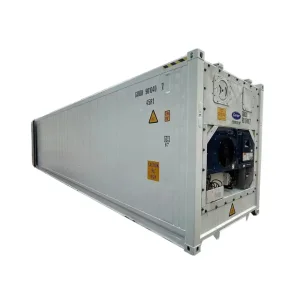
High-value pharmaceutical biologics, hanging carcass meat exports, and marine aquaculture demand unyielding thermal consistency. Custom 20-foot reefer designs integrate microprocessor-regulated units from Thermo King, Carrier, and Daikin with polyurethane insulated cores (k-value ≤ 0.038 W/m·K).
Engineered with stainless-steel interior cladding (grade 304 food-grade mirror finish) and extruded aluminum T-bar air-distribution flooring, these systems sustain accurate target setpoints from -35°C deep freeze up to +30°C ambient stabilization.
Transporting molten bitumen, coal tar, heavy paraffin waxes, and specialized lubricants requires dedicated thermal retention. Customized 20ft heated asphalt containers feature internal heating coils (steam or thermal oil conduits) coupled with high-efficiency ceramic wool thermal lagging.
The internal pressure vessel is fabricated from thick boiler-quality steel plates, thoroughly X-ray weld-inspected, and calibrated with pressure relief valves that conform strictly to IMDG Code Class 9 criteria for high-temperature liquid transit.
The global transition to utility-scale renewable power has established the 20-foot container as the premier global standard for Battery Energy Storage Systems (BESS). Factory customization includes structural integration for high-density lithium-iron-phosphate (LFP) battery racks.
Units feature built-in NFPA 855-compliant gaseous fire suppression (Novec 1230), liquid-cooling manifolds, heavy load floor beams, explosive vent pressure relief hatches, and localized electromagnetic shielding (EMC) protection for critical electrical components.
Discover next-generation connected telemetry, low-carbon steelmaking, non-toxic bio-composites, and low-GWP refrigerants redefining the container life cycle.
Modern shipping fleets are migrating rapidly from passive steel boxes toward dynamic, edge-computing assets. Factory-integrated IoT modules combine dual-mode 5G cellular and L-band low-earth-orbit (LEO) satellite transceivers recessed into exterior corrugation pockets to prevent crane hook collisions.
These self-powered, solar-harvesting sensor pods stream real-time three-axis G-force impact acceleration, continuous door breach detection via optical sensors, internal cargo humidity, and temperature profiles directly to cloud supply-chain management platforms.
Traditional marine container flooring heavily utilized tropical apitong and keruing hardwoods, placing severe ecological pressure on Southeast Asian rainforests. Chinese manufacturing lines now prioritize high-density strand-woven bamboo composites and recycled polymer sandwich panels.
These engineered bio-composites demonstrate flexural strength exceeding 95 MPa—significantly outperforming conventional hardwoods—while providing complete immunity to rot, termite infestation, and moisture absorption without toxic phenolic biocides.
As Scope 3 carbon auditing becomes mandatory across European and North American logistics chains, our upstream steel procurement roadmap includes transitioning to low-emission Corten steel manufactured via hydrogen direct reduction (H-DRI) in electric arc furnaces (EAF).
This progressive manufacturing evolution reduces embodied carbon from 2.1 tonnes of CO2 per tonne of steel down to less than 0.4 tonnes, furnishing procurement executives with certified Environmental Product Declarations (EPD) for every 20-foot serial run.
A procedural guide for enterprise procurement officers verifying CSC safety approval plates, classification society type approval, and factory quality management audits.
Under the International Convention for Safe Containers (1972), no container can be laden aboard commercial cellular vessels without a validated stainless-steel CSC plate riveted securely to the exterior left rear door. Our fabrication lines ensure complete certification compliance.
Each plate specifies country of approval, approval reference, manufacture date, identification number, maximum operating gross weight, allowable stacking weight for 1.8g (typically 192,000 kg for 9-high container vessel stacks), and transverse racking test force values.
Independent third-party inspection agencies maintain permanent resident surveyors at our Tianjin and Suzhou manufacturing plants. Structural types undergo independent verification from leading global maritime classification societies:
Quality management systems strictly mirror ISO 9001:2015 frameworks across all manufacturing checkpoints. Inbound steel shipments undergo optical emission spectroscopy to verify chemical balance before cold stamping.
Weld joints receive 100% visual inspection and non-destructive testing (NDT), dry film paint thickness is digitally mapped across a 24-point grid, and final pre-shipment inspections (PSI) verify zero dimensional variance via laser triangulation calipers.
Comprehensive engineering clarifications addressing dimensional tolerances, payload limits, chemical treatments, and shipping procedures for industrial container sourcing.
The core determining factor is cargo mass density versus volumetric displacement. Highway gross vehicle weight ratings (GVWR) and bridge formulas globally—such as the US Federal Bridge Gross Weight Formula or European Directive 96/53/EC—strictly limit the maximum permissible rolling weight of a truck chassis (typically between 40,000 to 44,000 kg total gross combination mass).
Because dense freight like mining concentrates, stone blocks, steel fasteners, heavy chemicals, and grains reaches legal highway weight limits before utilizing more than 30 cubic meters of volume, loading them into a 40-foot container (76.4 m³) would leave more than half the container empty while creating severe weight concentration hazards. A 20-foot container (approx. 33.2 m³) perfectly matches legal highway load limits with maximum container cubic capacity, minimizing deadweight tare and optimizing cargo restraint.
JIS G3125 SPA-H (and equivalent atmospheric corrosion-resistant Corten alloys) contains precise micro-alloy additions of copper (0.25–0.55%), chromium (0.30–1.25%), nickel (0.20–0.65%), and phosphorus (0.07–0.15%), balanced against low carbon content (≤ 0.12%).
When exposed to cyclical marine wet-dry conditions, these micro-alloy elements react with atmospheric moisture and oxygen to form an insoluble, dense crystalline sub-surface layer of amorphous iron oxyhydroxide (patina). Unlike conventional carbon steel (such as Q235 or SS400) which produces porous, flaking iron oxide (rust) that continuously accelerates corrosion inward, Corten SPA-H passivates its own outer boundary, reducing atmospheric corrosion rates by 400% to 800%.
Per ISO 1496-1 (Series 1 freight containers — Specification and testing), the standard internal timber or composite floor must withstand an axle load test of not less than 7,260 kg (16,000 lbs), typically imposed by a motorized industrial forklift truck laden with front-axle counterweights.
The test requires driving a test cart onto the container floor with a total wheel contact surface area of 284 cm² (142 cm² per wheel contact pad) spaced 760 mm center-to-center. The floor is inspected during and after full traversal for residual deflection, screw shear failure, or plywood ply delamination. For specialized mining and machinery transport, our factory offers reinforced sub-floor assemblies with cross-member spacing reduced from 280 mm to 150 mm, achieving heavy-duty axle certifications up to 9,500 kg.
Standard ISO containers are designed primarily for smooth shoreside gantry cranes and rigid container guide-slots aboard cellular container vessels. Conversely, DNV 2.7-1 / EN 12079 certified offshore containers are engineered to endure extreme, violent dynamic forces experienced during open-sea offshore crane transfers between supply vessels and floating rigs under rough sea states.
Key technical differences include: 1) Structural Metallurgy: Offshore units must utilize fine-grain structural steels with Charpy V-notch impact toughness certified to withstand -20°C or -40°C brittle fracture; 2) Pad Eyes: Standard corner castings are supplemented or replaced by heavy padeye lifting lugs welded directly into primary load-bearing corner pillars; 3) Lifting Slings: DNV containers require certified multi-leg wire rope or chain sling sets with master links; 4) Impact Bumpers: Primary frames feature reinforced side rails and kick-plates designed to absorb lateral collisions against vessel coamings.
The Department of Agriculture, Fisheries and Forestry (DAFF / formerly AQIS) in Australia and MPI in New Zealand enforce the world's most rigorous biosecurity controls to prevent the introduction of wood-boring insects, timber pests, and soil pathogens. All solid timber and plywood utilized in container flooring must undergo strict, documented biosecurity treatment prior to assembly.
Our manufacturing facilities apply either Heat Treatment (HT)—bringing the core wood temperature to a minimum of 56°C for at least 30 continuous minutes—or pressure-impregnation with approved micronized copper quaternary (ACQ) chemical preservatives. Every single container fitted with compliant flooring is stamped with an official, traceable AQIS quarantine treatment plaque detailing the treatment chemical, factory authorization code, and year of application, completely eliminating port fumigation holds upon arrival.
A factory-new container fabricated from certified SPA-H Corten steel, blasted to Sa 2.5 cleanliness, and coated with an ISO 12944 C5-M compliant three-coat system exhibits an active frontline ocean-going service life of 12 to 15 years with routine preventative maintenance.
Following commercial international retirement from maritime cellular vessel service, the structural frame retains approximately 80–85% of its structural design capacity. These units are typically repurposed into domestic rail intermodal logistics, static jobsite secure storage, or modular building pods for an additional 15 to 25 years of ground-based utility without catastrophic structural degradation.
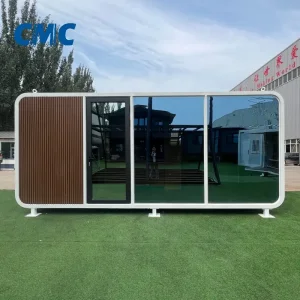
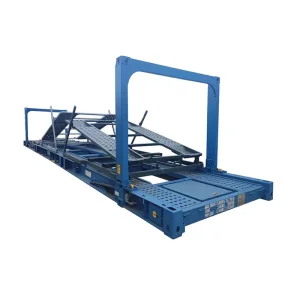
Explore high-cube dry cargo units, specialized open-side ore transport boxes, solar-powered refrigeration units, modular pods, and automotive carrier platforms built for immediate global export.