Explore factory-certified intermodal units, refrigerated high-cubes, specialized asphalt haulers, and modular enclosures available for volume FOB/CIF shipment directly from Tianjin and Suzhou manufacturing facilities.
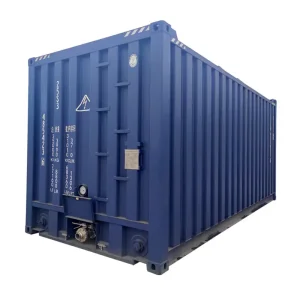
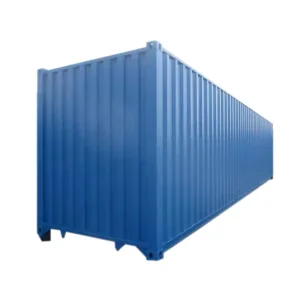
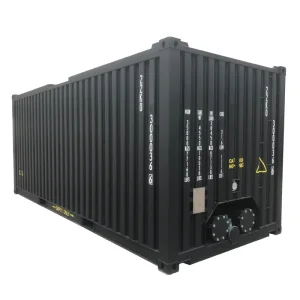
A rigorous macroeconomic assessment of modern intermodal assets, fluctuating fleet utilization dynamics, and how global shipping lines and tier-one EPC contractors manage container capital expenditures.
The intermodal ocean shipping ecosystem is transitioning from post-pandemic inventory rebalancing to long-term structural fleet modernization. With over 90% of global ISO shipping containers engineered and assembled in Chinese industrial clusters, procurement teams face volatile freight corridors that demand stringent container capital discipline. Standard dry freight boxes (20GP, 40GP, and 40HC) represent the baseline of bulk intermodal transport, yet high-cube refrigerated units and specialized dangerous-goods tanks increasingly command higher capital allocations due to stringent temperature compliance and cross-border hazardous regulatory frameworks.
Total Cost of Ownership (TCO) in maritime equipment procurement extends beyond initial factory gate pricing. A comprehensive lifecycle analysis accounts for structural corrosion degradation, Tare weight versus payload trade-offs, corner-casting fatigue ratings, and thermal insulation efficiency (specifically K-values measured in W/m²K for active reefers and passive insulated boxes). Sourcing containers fabricated with certified atmospheric corrosion-resistant SPA-H Corten steel directly reduces long-term depot maintenance overheads by upwards of 38% across rigorous ten-year coastal salt-spray exposures.
Decarbonization initiatives are transforming the functional role of shipping containers from passive ocean cargo boxes to advanced industrial modular enclosures. Battery Energy Storage Systems (BESS), offshore hydrogen conversion modules, mobile water filtration stations, and modular data center pods now require specialized manufacturing tolerances that exceed traditional ISO 1496-1 baselines. Chinese container manufacturing facilities have engineered specialized fabrication lines that incorporate DNV 2.7-1 / EN 12079 dynamic lifting pad-eyes, seismic structural reinforcements, and integrated explosion-relief blast hatches.
Inside the world's most concentrated logistics manufacturing ecosystem: automated roll-forming, robotic welding cells, eco-friendly waterborne coatings, and rapid port staging at Tianjin and Suzhou.
The indisputable efficiency advantage of China-based container manufacturers stems from zero-distance access to heavy domestic metallurgical infrastructure. Hot-rolled Corten-A / SPA-H coil stock from tier-one steel producers (such as Baowu and Ansteel) is staged directly adjacent to stamping and shearing centers. This co-location eliminates international freight volatility on base raw materials, stabilizes production lead times within 15–20 manufacturing days for standard volumes, and maintains rigid metallurgical traceability under Mill Test Certificate (MTC) standards.
Modern Chinese container fabrication plants utilize 6-axis robotic welding lines for continuous seam welds along roof panels, side corrugations, and heavy understructure crossmembers. To comply with rigorous volatile organic compound (VOC) standards and international environmental protocols, automated shot-blasting reaches Sa 2.5 cleanliness before applying zinc-rich primer and advanced waterborne epoxy/polyurethane topcoats. This coating protocol yields dry film thickness (DFT) exceeding 120 microns, safeguarding against extreme marine salinity.
Location is paramount in international equipment positioning. CIMIC manufacturing bases in Tianjin and Suzhou are positioned within roughly 100 kilometers of deep-water gateway terminals (Tianjin Xingang Port and Shanghai / Taicang Port). This proximity minimizes inland positioning drayage costs, enables direct "One-Way Cargo" repositioning schemes to lower ocean transport costs, and provides flexible depot yard storage capacity exceeding thousands of ready-to-load TEUs for emergency fleet expansions.
A reference procurement guide detailing approximate wholesale factory gate valuations, standard tare weights, structural volume capacities, and primary certification benchmarks for international buyers.
| Equipment Classification | Standard Dimensions (L×W×H) | Tare Weight / Max Payload | Indicative Price Range (USD FOB China) | Factory Certification Benchmarks | Primary Industrial Use Case |
|---|---|---|---|---|---|
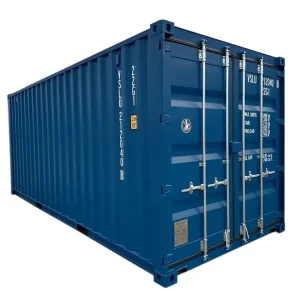
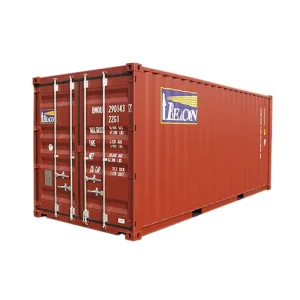
| 20ft Standard Dry Container (20GP) | 20' x 8' x 8'6" (6,058 x 2,438 x 2,591 mm) | 2,230 kg / 28,250 kg | $1,650 - $2,250 | ISO 1496-1, BV, ABS, CSC | Dense breakbulk, machinery, dry ocean freight |
| 40ft High-Cube Dry Container (40HC) | 40' x 8' x 9'6" (12,192 x 2,438 x 2,896 mm) | 3,850 kg / 28,650 kg | $2,800 - $3,750 | ISO 1496-1, CCS, Lloyd's Register | High-volume consumer goods, furniture, electronics |
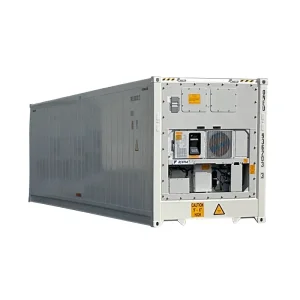
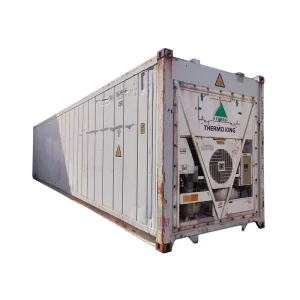
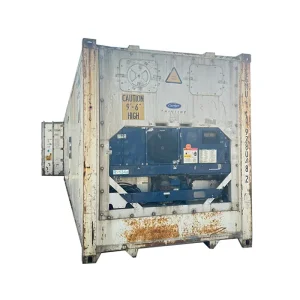
| 40ft High-Cube Active Reefer Container | 40' x 8' x 9'6" (Thermo King / Carrier / Daikin) | 4,480 kg / 29,520 kg | $12,800 - $17,500 | ATP, ISO 1496-2, BV, CE, USDA | Perishables, pharma cold-chain, temporary cold storage |
| 20ft ISO Intermodal Tank Container (T11/T14) | 20' x 8' x 8'6" (21,000L - 26,000L 316L SS) | 3,650 kg / 32,350 kg | $14,500 - $22,000 | IMDG, ASME U-Stamp, ADR, RID, US DOT | Hazardous chemicals, liquid food-grade, lubricants |
| 20ft Heated Liquid Asphalt Container | 20' x 8' x 8'6" (Thermal oil / Direct Flame) | 4,100 kg / 26,900 kg | $9,800 - $15,200 | ISO Tank Standard, BV Certified | Bitumen transport, road paving infrastructure |
| DNV 2.7-1 Offshore Silt Basket / Cargo Unit | Tailored / Project-Specific Dimensions | Varies / Dynamic Certified Load | $6,500 - $13,800 | DNV GL 2.7-1, EN 12079, ISO 10855 | Offshore drilling rigs, deep-sea exploration supply |
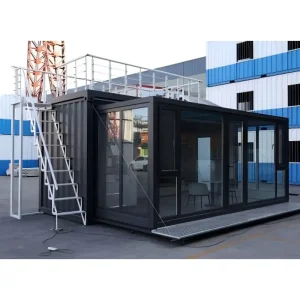
| 20ft / 40ft Modular Flat-Pack Pod / Cabin | Custom Height (High Insulation Rockwool/PU) | 1,800 kg - 3,200 kg | $2,400 - $6,500 | CE, ISO 9001, Structural Seismic Zone 8 | Remote workforce camps, site offices, relief shelters |
| 20ft Specialized Vehicle Carrier Rack Container | 20' x 8' x 8'6" (Dual-Ramp Mechanical Lift) | 3,200 kg / 27,280 kg | $4,200 - $6,800 | ISO Intermodal, CSC Approved | Automotive EV / SUV multimodal export corridors |
*Pricing Note: Indicative price ranges reflect raw material indices (hot-rolled steel at $580-$720/MT baseline). Final invoiced amounts depend on customized wall corrugation thickness, floor material (bamboo composite vs. 28mm hardwood apitong plywood), active refrigeration model, and port drayage arrangements. Volume tiers receive adjusted tiered factory rebates.
From deep-sea harsh offshore extraction platforms to land-locked agricultural corridors, understand how specialized container geometry solves complex logistical friction.
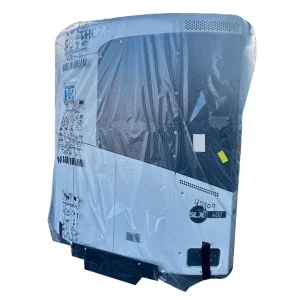
Standard cold storage fails when traversing temperature zones spanning -25°C to +45°C ambient. Our 40ft High-Cube reefer containers equipped with integrated Daikin LXE10E, Carrier PrimeLINE, or Thermo King Magnum Plus units maintain ultra-precise internal cargo temperatures ranging from -35°C to +30°C. Incorporating controlled atmosphere (CA) systems dampens ethylene gas and oxygen respiration rates, extending the maritime voyage window for fragile fruits, pharmaceutical vaccines, and premium seafood across trans-Pacific and trans-Atlantic trade lanes without product degradation.
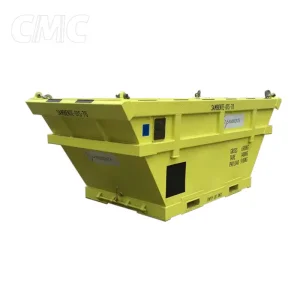
Marine logistics in the North Sea, Gulf of Mexico, and West African offshore oilfields demand structural integrity beyond ordinary ISO shipping boxes. Certified under DNV 2.7-1 / EN 12079, our offshore cargo baskets, silt containers, and half-height drill cutting containers are engineered with high-impact Charpy V-notch tested steel for sub-zero marine conditions (-20°C). Reinforced four-point sling sets, integral padeyes, and internal drain valves prevent spillage of drill cuttings and heavy offshore tools during rough-sea crane vessel transfers.
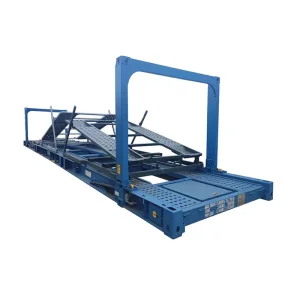
Global automotive supply chains face carrier ship shortages (PCTC capacity deficits). Specialized 20ft and 40ft car-carrier containers equipped with modular mechanical hoist ramps allow three to four complete passenger electric vehicles or SUVs to be safely secured within a single high-cube envelope. Internal lashing rings (rated to 5,000 kg each), wheel-chock locking fixtures, and oil-resistant galvanized floor linings ensure zero transit damage across multimodal rail and container ship networks.
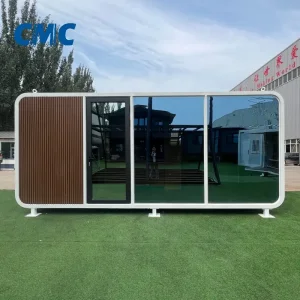
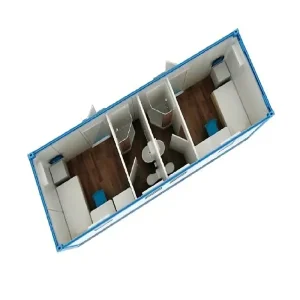
Mining exploration, railway construction, and disaster relief zones require immediate, turnkey housing. Our 20ft and 40ft accommodation modular containers, flat-pack office units, and Apple Cabin pods are pre-engineered with integrated thermal rockwool or polyurethane insulation, fire-rated MGO floorboards, pre-installed electrical circuits (UL/CE compliant), and internal plumbing. Units stack up to three stories, endure wind gusts up to 180 km/h, and unpack within hours on simple concrete pillar foundations.
Conventional drum shipping of asphalt results in heavy residual waste and dangerous reheating operations on site. Our 20ft heated bitumen tank containers feature internal high-efficiency thermal oil or diesel burner flue tube circuits. Cargo is safely solidified for long-distance intermodal transit and rapidly reheated to discharge viscosity (160°C) upon arrival at highway asphalt mixing stations, slashing handling overhead and eliminating empty barrel disposal.
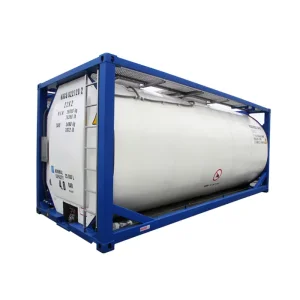
Transporting corrosive acids, solvents, and specialty chemicals requires compliance with ADR, RID, and IMDG Class 3-8 standards. Our 20ft square frame and cylindrical tank containers feature 316L stainless steel shells, PTFE lining options, top-discharge safety valves, and burst-disc relief mechanisms. Designed to withstand working pressures up to 4 bar and test pressures to 6 bar, these intermodal tanks deliver zero-leakage security on multi-leg sea-rail-road journeys.
The transition from passive steel structures to intelligent, telematics-enabled, net-zero logistical assets over the 2025–2035 development cycle.
Factory-integrated GSM/Satellite cellular transponders providing real-time GPS tracking, internal ambient humidity monitoring, reefer temperature deviations, and automated door-opening shock sensors linked to cloud asset dashboards.
Integration of 700MPa lightweight high-yield steel alloys and carbon-fiber composite sandwich floorings, reducing 40HC tare weight by up to 450 kg to maximize permissible cargo payload and slash per-TEU fuel emissions.
Phasing out conventional fluorinated hydrofluorocarbons (HFCs) in favor of trans-critical carbon dioxide (R-744) reefer compressors with near-zero Global Warming Potential (GWP=1), aligning with upcoming EU F-Gas regulations.
Turnkey engineering of fire-isolated, aerosol-suppressed ISO enclosures designed for utility-scale lithium-ion Battery Energy Storage Systems (BESS), including certified NFPA 69 explosion venting and thermal management.
Need custom door geometries, roll-up shutter access, reinforced heavy-duty mining floorings, or bespoke offshore lifting frame certifications? Our engineering team prepares full CAD and 3D SolidWorks structural finite element analyses (FEA) within 48 hours for your review.
Download Engineering Catalog & CAD DataEnsuring complete regulatory compliance across major classification societies for seamless international ocean, rail, and road transit.
Every batch of shipping containers rolling off our production line is certified under the surveillance of international classification bodies, including Bureau Veritas (BV), ABS, Lloyd's Register (LR), and China Classification Society (CCS). Physical CSC safety plates (International Convention for Safe Containers) are permanently riveted to door frames, guaranteeing stacking capability up to 9-high fully loaded (192,000 kg gross stack weight) for standard ocean vessel cell guides.
Quality assurance is embedded in our manufacturing protocol: (1) Raw steel spectral analysis and tensile yield verification; (2) Ultrasonic seam weld flaw detection on corner posts and top rails; (3) Shot-blasting surface roughness and coating mil-thickness testing; (4) High-pressure hydraulic spray booth testing at 2 bar to ensure total weather tightness (WWT); (5) Light-leak internal box examination; and (6) Floor deflection and lashing point load pull-tests.
Our containers conform to Customs Convention on Containers (CCC) and TIR customs transit approval, enabling cross-border intermodal transit without intermediary bonded warehouse re-inspections. Wood flooring components are heat-treated and certified according to Australian Quarantine and Inspection Service (AQIS) and IPPC ISPM-15 guidelines to eliminate any biological or pest risks during international arrivals.
In-depth responses to critical technical, contractual, pricing, and operational queries from worldwide logistics directors and project procurement teams.
SPA-H Corten steel contains specific alloying elements including copper, chromium, and nickel. When exposed to maritime atmospheric moisture, it develops a dense, self-healing protective oxide patina that prevents inward rust penetration. Standard carbon steel rusts continuously, causing structural wall thinning and premature failure within ocean marine salt-fog environments.
Instead of shipping brand-new containers empty ("dead-heading"), our operations team collaborates with Chinese freight forwarders and ocean carriers to load dry export cargo into your purchased containers for their maiden voyage to your destination port. This eliminates or substantially discounts ocean repositioning charges, saving between $1,200 and $2,800 per box.
Choice depends on cargo profile and regional spare parts availability. Carrier Transicold PrimeLINE units offer high energy efficiency and ubiquitous depot maintenance support worldwide. Thermo King Magnum Plus units excel in deep-frozen cargo applications down to -40°C. Daikin units are recognized for their low-vibration scroll compressors and fine temperature control precision.
DNV 2.7-1 compliance mandates strict 2.5x Maximum Gross Mass (R) all-point lifting tests, 1.5x two-point diagonal lifting tests, and horizontal impact collision testing to ensure structural survival in rough offshore supply vessel operations. All pad-eyes, structural welds, and sling assemblies undergo 100% Non-Destructive Testing (NDT) with full material traceability.
For standard catalog ISO dimensions (20ft, 40ft HC), production runs can accommodate orders from single trial units to hundreds of units. For highly customized engineering builds involving non-standard dies, bespoke side-door apertures, or custom chassis, the typical cost-effective batch MOQ ranges between 4 and 10 TEUs to offset roll-forming tooling adjustments and classification type-testing costs.
Every unit undergoes strict rain testing at 2 bar water pressure along all seals and gaskets. Wood flooring is composed of 19–21 ply boiling-water-proof (BWP) hardwood veneers or high-density bamboo composite, sealed with phenolic glue and anti-rot treatments, and secured with zinc-coated Torx screws to counter heavy forklift wheel axle loads up to 7,260 kg (ISO standard floor test).
Explore our certified automotive carriers, ISO chemical tanks, DNV offshore baskets, mini-storage systems, expandable mobile homes, double-door dry boxes, Daikin reefers, and prefabricated garden office pods.