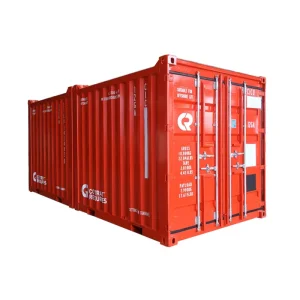
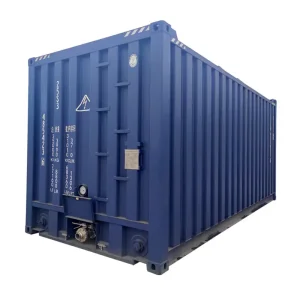
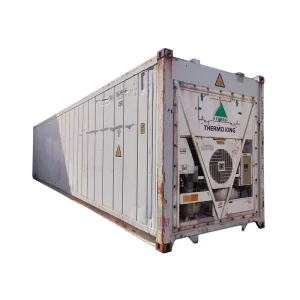
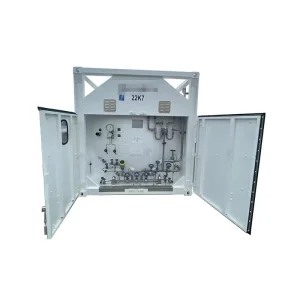
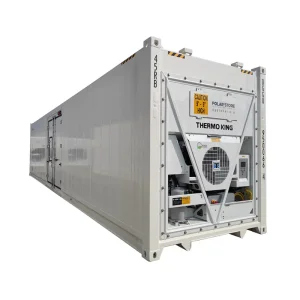
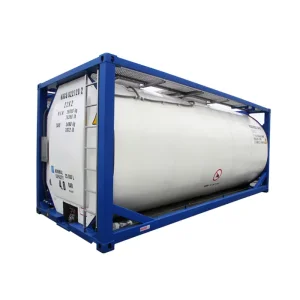
Factory-inspected inventory and custom builds engineered for maximum cubic efficiency, cryogenic liquids, offshore certification (DNV 2.7-1), and active reefer cold preservation.
Modern containerized freight dynamics have decisively shifted. Over 62% of all ocean container manufacturing output in China now centers on the 9-foot-6-inch High Cube (HC) footprint. Understanding the thermodynamic, structural, and stowage advantages is vital for global supply chain directors.
The additional foot (305 mm) in vertical height expands interior cubic capacity from 67.7 m³ (in a standard 8'6" dry container) to 76.4 m³. For lightweight, high-cube e-commerce goods, retail packaging, and modular furniture, this translates to a 12.3% volumetric freight enhancement without triggering weight-based deadweight surcharges on modern deep-sea container vessels.
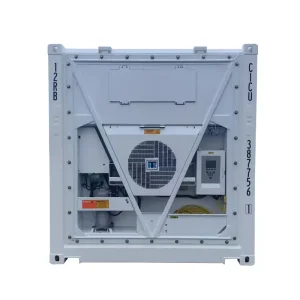
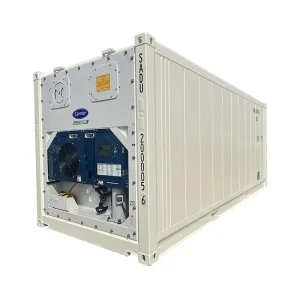
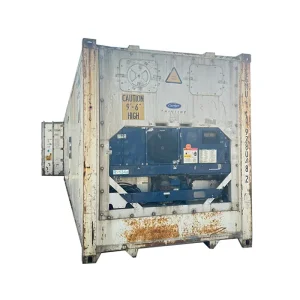
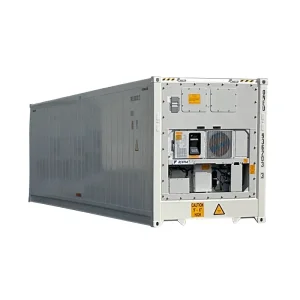
Reefer sea transport relies heavily on High Cube engineering. The floor air ducts (T-bar floor profiles) demand 75mm of floor plenum space. A 9'6" chassis ensures that full-height EUR-pallets (up to 1,800mm clear load) fit seamlessly beneath the ceiling red airflow marker line, preventing short-circuit airflow patterns and cargo spoilage on voyages extending 30+ ocean days.
Beyond sea transport, 40ft High Cube structures serve as the standardized envelope for Lithium Iron Phosphate (LiFePO4) Battery Energy Storage Systems (BESS) and high-density edge-computing pods. The 2,698mm internal clearance is the absolute baseline required for top-routed liquid cooling piping, electrical busways, and automated fire suppression manifolds.
A high cube container must endure a static corner post compressive stacking load of 86,400 kg per post (permitting a 9-high fully loaded stack on container vessels). Below is how our Chinese manufacturing facilities engineer every structural component to exceed ISO 1496-1 specifications.
Corrugated side (1.6mm) and roof (2.0mm) panels utilize weather-resistant SPA-H atmospheric steel with a minimum yield point of 345 MPa. When exposed to ocean salt spray, it develops a stable, protective iron-copper-phosphorus oxide layer (patina) preventing deep pit penetration.
Eight corner castings fabricated from weldable structural cast steel (SCW480) per ISO 1161 standards. Impact-tested at -40°C with Charpy V-notch values exceeding 27 Joules, guarding against brittle fractures during high-sea rolling or polar-route transit.
28mm 19-ply marine-grade Keruing/Apitong hardwood or specialized density-engineered bamboo composite flooring. Verified to withstand front axle fork truck wheel loads of 7,260 kg (16,000 lbs) per ISO test parameters without structural deflection or screw pulling.
Eco-compliant, zinc-rich waterborne primer (30μm DFT) topped with an epoxy tie-coat (40μm DFT) and polyurethane finish coat (40μm DFT). Exceeds 1,500 hours of continuous neutral salt-spray exposure (ASTM B117) without cross-hatch blister formation.
| Dimensional & Load Metric | 20ft High Cube (Custom) | 40ft High Cube (Standard HC) | 40ft High Cube Reefer (Active) | Testing & Compliance Protocol |
|---|---|---|---|---|
| External Dimensions (L x W x H) | 6,058 x 2,438 x 2,896 mm | 12,192 x 2,438 x 2,896 mm | 12,192 x 2,438 x 2,896 mm | ISO 668:2020 / Series 1 Freight |
| Internal Clear Dimensions | 5,898 x 2,352 x 2,698 mm | 12,032 x 2,352 x 2,698 mm | 11,583 x 2,290 x 2,544 mm | Thermal insulation subtracts 62mm/wall |
| Max Gross Weight (M.G.W.) | 30,480 kg (67,200 lbs) | 32,500 kg (71,650 lbs) | 34,000 kg (74,950 lbs) | CSC Safety Approval Plate |
| Tare Weight (Chassis Baseline) | 2,340 kg (5,158 lbs) | 3,900 kg (8,598 lbs) | 4,620 kg (with machinery) | Verified via four-point load cells |
| Cubic Capacity (CBM) | 37.4 m³ (1,320 cu ft) | 76.4 m³ (2,698 cu ft) | 67.5 m³ (effective load space) | Precise Laser-mapped interior scan |
| Stacking Test Capability | 86,400 kg / corner post | 86,400 kg / corner post | 86,400 kg / corner post | 9-Tier fully laden ocean stacking |
Accurate, uninflated direct factory pricing benchmarks. Sourcing from our Tianjin and coastal manufacturing centers removes multi-layer trading markups. The following matrix illustrates benchmark pricing based on hot-rolled Corten-A steel indexations ($750–$880/MT).
| Equipment Model & Architecture | Condition | Unit Price (MOQ 1-4) | Volume Fleet Price (50+ Units) | Lead Time (Tianjin Quay Delivery) | Standard Certification |
|---|---|---|---|---|---|
| 40ft High Cube Standard Dry Cargo (SPA-H Corten) | Brand New | $2,650 - $2,950 | $2,320 - $2,550 | 14 - 21 Days | CSC / BV / ISO 1496-1 |
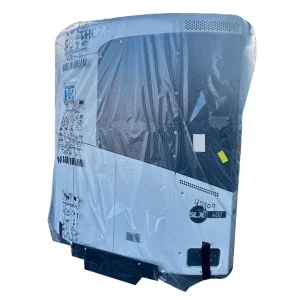
| 40ft High Cube Certified Reefer (Carrier Unit) | Brand New | $14,800 - $16,500 | $13,500 - $14,900 | 25 - 35 Days | BV / ISO / ATP / TIR |
| 40ft High Cube Reefer (Daikin / Thermo King) | Brand New | $15,200 - $17,200 | $14,100 - $15,600 | 25 - 35 Days | BV / ISO / ATP / CE |
| 40ft High Cube Reefer (Inspected / CSC Certified) | 85%-90% New | $5,200 - $6,800 | $4,700 - $5,900 | Stock (3-5 Days) | PTI Inspected / CW / CSC |
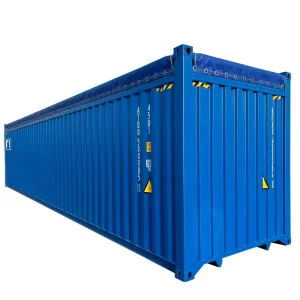
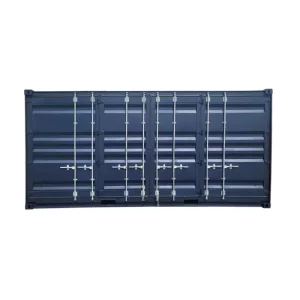
| 40ft High Cube Full Side Open (Pallet-Friendly Door) | Brand New | $5,100 - $5,800 | $4,650 - $5,100 | 20 - 28 Days | ISO 1496 / CSC / BV |
| 40ft High Cube Soft Open Top (Tarpaulin + Swing Header) | Brand New | $4,300 - $4,800 | $3,850 - $4,250 | 18 - 25 Days | ISO 1496-1 / TIR |
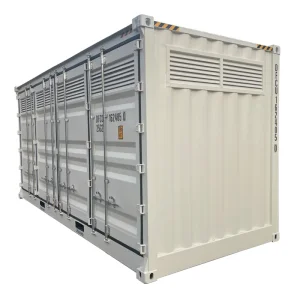
| 20ft High Cube Dangerous Goods (Sump Floor + Vents) | Brand New | $3,400 - $4,100 | $2,950 - $3,500 | 18 - 25 Days | IMDG / CSC / BV |
| 20ft Offshore Reefer / Cargo (DNV 2.7-1 / EN 12079) | Brand New | $11,500 - $14,200 | $10,200 - $12,600 | 30 - 45 Days | DNV-GL Type Approval / Slings |
Procurement teams must recognize that raw materials represent 60%–68% of total high cube manufacturing expenditure. Approximately 3.4 to 3.9 metric tons of Corten steel plate and cold-formed profiles are consumed per 40ft HC chassis. Flooring (Apitong/Bamboo) represents ~10%, paint/surface treatment systems consume ~8%, while energy and mechanized labor account for 14%. Sourcing when steel futures stabilize allows buyers to lock long-term index pricing with our engineering division.
How international forwarding consortiums, energy operators, and overseas logistics hubs optimize capital expenditure through Shipper-Owned Container (SOC) strategies originating from Tianjin, China.
Buying new high cube containers directly in China allows clients to load export cargo (SOC cargo load) from Chinese suppliers. This eliminates deadhead repositioning costs. The container arrives at your European, African, or American port destination at virtually zero net ocean freight cost, completely paid for by the initial cargo haul.
Carrier-Owned Containers (COC) expose importers to daily detention fees ranging from $120 to $280/day per container when port bottlenecks occur. By deploying factory-purchased High Cube SOC units, project engineers retain the freedom to hold containers on job sites, mining concessions, or remote agricultural cold rooms indefinitely without accruing penalty invoices.
Ordering at the factory gate allows customization impossible on the secondary leasing market: corporate RAL color palettes, silk-screened company liveries, anti-theft lockboxes, high-security puck-lock shrouds, integrated internal E-track lashing rails, and pre-punched HVAC connection collars for telecommunications shelter conversions.
High Cube sea containers are the versatile backbone of global infrastructure. Discover how our units deliver reliable operational performance under grueling environmental loads.
Engineered with specialized roof bows and bottom side rails capable of absorbing dynamic hull flexing, hogging, and sagging accelerations up to 2.0g. Approved for cellular container ship guide slots with twistlock lashing setups conforming to Lloyd’s Register and Bureau Veritas requirements.
The China-Europe freight railway corridor (Yiwu/Chongqing to Duisburg/Hamburg) subjected containers to intense shunting impacts and sub-zero Siberian conditions down to -45°C. Our cold-climate high cubes employ notch-tough low-temperature steel chemistry, preserving ductile performance without brittle failures.
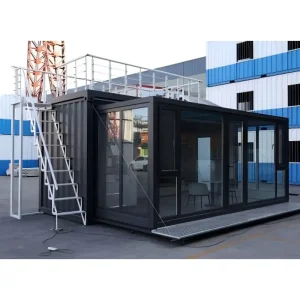
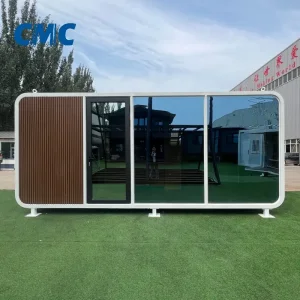
The architectural conversion sector mandates High Cube dimensions. Standard 8'6" boxes leave only 2.15m of ceiling height after internal studs, drywall, and subfloor insulation are installed. High Cubes guarantee a finished 2.45m luxury ceiling clearance, unlocking modern acoustic living pods, prefab clinics, and mobile executive field offices.
Every container manufactured in our facilities undergoes non-negotiable destructive and non-destructive quality tests under the surveillance of international classification societies before being stamped with the CSC safety plate.
Continuous high-pressure water jet testing at 2.0 bar (approx. 200 kPa) applied across all door gaskets, roof crimps, and weld seams from a 1.5-meter distance. Zero droplet penetration tolerance ensures absolute IP65-grade weather tightness.
A specialized wheeled cart loaded to 7,260 kg (16,000 lbs) per axle performs repeated dynamic runs across the Apitong plywood floor assembly. Measured residual deflection must not exceed 1.5mm, certifying complete integrity for port forklifts.
Hydraulic rams apply a 150 kN (approx. 15.3 tons) transverse compressive force to the top corner castings while bottom castings are locked. Corner post diagonal displacement is tracked with digital micrometers to guarantee oceanic anti-racking compliance.
For specialized offshore frames and offshore reefers, containers undergo certified 4-point lifting and 2-point sling snatch tests, followed by an offshore drop test from a specified height onto an unyielding floor at design temperatures (-20°C).
How Chinese state-of-the-art container fabrication lines are evolving to address global decarbonization goals and the smart digitalization demands of contemporary port logistics.
We now embed flush-mounted, ATEX-certified IoT solar transceivers directly into the door panel corrugations during production. These units autonomously transmit real-time GPS coordinates, shock/impact acceleration events, temperature variations, and door opening status via dual cellular (NB-IoT/LTE-M) and satellite protocols.
To assist maritime carriers in achieving Scope 3 carbon reduction metrics, our manufacturing facilities have initiated pilot batches using EAF-melted scrap steel processed via renewable green hydrogen energy, lowering the embodied carbon footprint per 40ft HC chassis by up to 42% compared to blast-furnace routes.
Anticipating future bans on hydrofluorocarbons (HFCs), our reefer engineering division works alongside Daikin and Carrier to deploy ultra-low GWP units running on carbon dioxide (R-744, GWP=1). These high cube units offer superior energy efficiency in deep-freeze operations down to -35°C without ozone depletion risks.
Complete high-specification line: side-door dry vans, hazardous cargo safety containers, cryogenic gas tanks, and modular prefab expandable dwellings.
Key technical, regulatory, and logistics answers compiled by our chief engineers to guide B2B buyers and shipping line purchasing managers through direct sourcing from China.