Verified ISO and BV compliant refrigeration and dry-cargo units engineered for marine transport, harsh climate survival, and turnkey on-site cold operations.
Macro analysis of supply chain decentralization, high-cube cold logistics, and China's dominance in turnkey refrigerated container engineering.
Global commerce has shifted from static, centralized distribution facilities toward modular, distributed cold hubs. The demand for OEM cold room containers for sale in international shipping corridors is driven by agricultural yields, deep-sea fisheries, biomedical vaccines, and quick-deployment food distribution hubs.
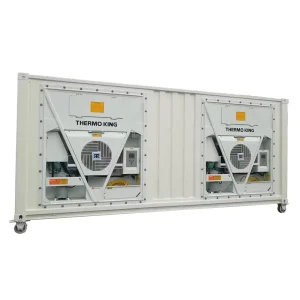
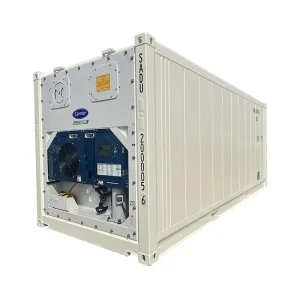
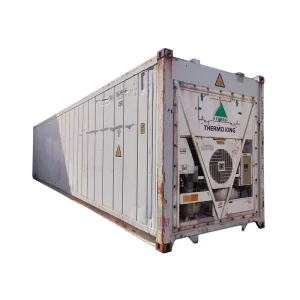
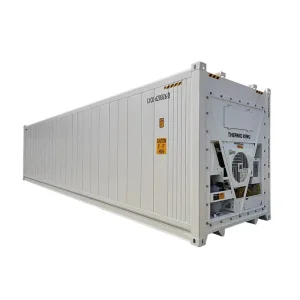
China supplies over 85% of standard and bespoke intermodal container architectures worldwide. Through vertical integration of high-tensile Corten weathering steel, automated high-density polyurethane (PU) foam injection, and strategic tie-ins with Carrier, Thermo King, and Daikin machinery, Chinese exporters deliver uncompromised value.
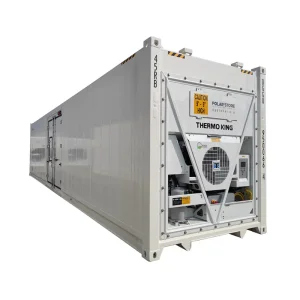
Quotes for industrial refrigerated containers vary based on thermodynamic insulation thickness (standard vs. thickened 100mm+ PU), integrated refrigeration machinery, internal T-bar floor alloys, anti-microbial stainless lining, and custom ingress engineering like side-opening doors and heavy-duty butcher curtains.
Advancing thermodynamics through artificial intelligence, phase-change passive cold retention, and atmospheric gas control.
Traditional on/off compressors cause high thermal variance and high electrical draw. Modern OEM units utilize scroll or screw inverter compressors that modulate speed in micro-increments, reducing power consumption by up to 35% while sustaining strict isothermal envelopes within ±0.25°C of setpoint.
Thermal bridge elimination is paramount. State-of-the-art modular reefers use high-density, zero-ODP cyclopentane-blown polyurethane core foam reinforced with vacuum insulation panels (VIP) or hydrophobic aerogel blankets, yielding an overall heat transmission rate (U-value) below 0.35 W/(m²·K).
Cold storage reefers incorporate smart telemetry relays tracking GPS coordinates, ambient temperature, core cargo flesh temperature, air circulation (CFM), defrost cycle frequency, and refrigerant pressure. Cloud algorithms flag compressor bearing wear or seal leaks before cargo spoilage can occur.
Regulatory mandates (Kigali Amendment, EU F-Gas) drive rapid adoption of alternative cooling media. OEM cold containers lead this transition by engineering piping circuits optimized for R-452A, low-GWP drop-ins, and next-generation transcritical CO2 (R-744) systems that reduce carbon footprint to near zero.
Engineered to adapt to extreme climate variations, specialized commercial regulations, and remote industrial setups.
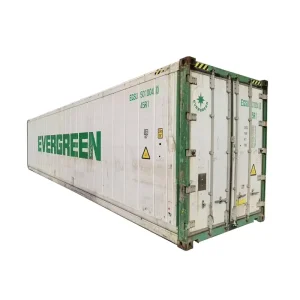
In regions like South America, Southeast Asia, and Sub-Saharan Africa, perishable produce degrades rapidly without immediate post-harvest heat extraction. Deploying 40ft High Cube mobile cold rooms directly at field boundaries preserves the cold chain, removing latent field heat within hours of harvest.
European and North American supply routes enforce strict Good Distribution Practice (GDP) protocols. Containers are equipped with triple-redundant RTD temperature probes, dual-zone partitions (+2°C to +8°C and -20°C to -70°C), internal safety releases, and anti-tamper door monitoring locks.
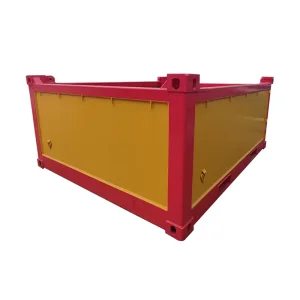
For high-salinity marine environments and isolated extraction sites in Northern Europe, Western Australia, or the Gulf of Guinea, containers are constructed in compliance with DNV 2.7-1 / EN 12079 offshore standards, featuring zinc-rich sacrificial primers, spark-proof electrical conduits, and dynamic pad-eye sling assemblies.
Cross-comparative technical parameters for standard, high-cube, and ultra-low freezer installations.
| Specification Metric | 20ft Standard Reefer | 40ft High Cube (HC) Reefer | -60°C Ultra-Deep Freezer |
|---|---|---|---|
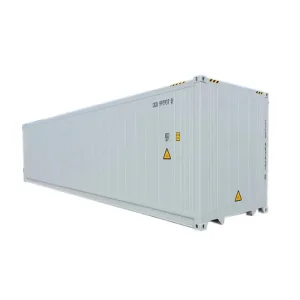
| External Dimensions (L x W x H) | 6,058 x 2,438 x 2,591 mm | 12,192 x 2,438 x 2,896 mm | 6,058 / 12,192 x 2,438 x 2,896 mm |
| Internal Usable Capacity | Approx. 28.3 m³ (1,000 cu ft) | Approx. 67.5 m³ (2,385 cu ft) | Approx. 25.5 - 61.2 m³ |
| Operating Temperature Band | -30°C to +30°C | -35°C to +30°C | -60°C to -10°C (Blast Capability) |
| Core Insulation Profile | 75mm High-Density PU Foam | 80-100mm PU + Aerogel Thermal Barrier | 120mm High-Pressure Injected PU Core |
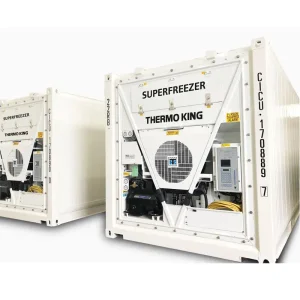
| Primary Machinery Integration | Carrier ThinLINE / Daikin LXE | Carrier PrimeLINE / Thermo King Magnum | Thermo King SuperFreezer Cascade Dual-Unit |
| Floor Construction | Heavy-Duty Extruded Al Alloy T-Floor | High-Airflow Heavy-Duty T-Floor | Reinforced Anti-Slip Flat / T-Bar Composite |
| Certifications & Conformity | ISO 1496-2, BV, CSC, TIR, ATP | ISO 1496-2, BV, CSC, TIR, ATP | DNV 2.7-1 (Optional), BV, CSC, ATP |
Essential guidance on electrical matching, structural longevity, power generation, and custom OEM manufacturing.
Standard marine reefer units operate on a dual-voltage framework: primary 3-phase 380V/460V AC at 50/60 Hz. For field setups with standard commercial electrical grids (such as 220V 3-phase), an OEM step-up power transformer or an integrated clip-on/underslung diesel genset is necessary to ensure stable operation.
Our OEM cold containers utilize closed-cell polyurethane foam with microcellular blowing agents that resist moisture permeation. Under rigorous marine operating conditions, thermal decay is less than 1.5% annually. The structural Corten steel frame and interior stainless steel lining deliver an operational lifecycle exceeding 15 to 20 years with routine maintenance.
OEM engineering accommodates custom structural dimensions, full-length side-opening double doors, internal butcher doors, interior explosion-proof LED illumination, secondary diesel backup gensets, dual-temperature multi-room partition bulkheads, automated shelving systems, and remote satellite telematics telemetry.
Every unit undergoes strict Factory Acceptance Testing (FAT), including a complete pre-trip inspection (PTI), helium or nitrogen pressure hold tests on refrigeration circuits, smoke-bomb leak detection on wall seals, automated electronic functional cycling from ambient to -25°C, and formal third-party certification by Bureau Veritas (BV) or classification societies.
Active units incorporate electrical refrigeration compressors (Carrier, Daikin, Thermo King) that actively remove heat and maintain continuous programmed temperatures indefinitely. Passive containers feature thickened insulation (100mm to 150mm PU/vacuum panels) without mechanical cooling, preserving pre-chilled freight on short-haul distribution routes with zero fuel or electricity costs.
Explore our complete catalog of specialized shipping containers, ISO intermodal tank systems, modular units, and commercial storage platforms.