Engineered to international marine standards, offering structural resilience, climate isolation, and multi-tier physical security for static and mobile industrial operations.

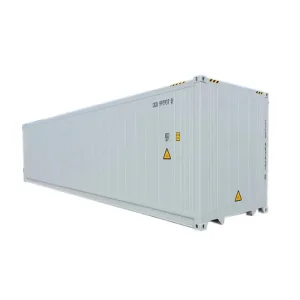
How Chinese industrial container manufacturing revolutionized global on-site logistics, secure containment, and static asset protection through standardized Corten steel engineering.
The global logistical landscape has experienced an unprecedented shift over the past decade. What was once viewed purely as an intermodal freight vessel has fundamentally evolved: modern enterprise asset protection, decentralized warehousing, cold-chain distribution, and remote modular work camps now routinely rely on the shipping container as storage. Originating from advanced metallurgical hubs in China—principally the coastal industrial corridors of Tianjin and Jiangsu—these rugged steel structures have transitioned from mobile sea cargo vessels into highly adaptable, secure, and permanent-grade on-site spatial infrastructure.
Modern enterprises face soaring industrial commercial real estate costs, protracted permitting cycles for brick-and-mortar structures, and fragile supply chains vulnerable to geopolitical and climatic disturbances. In response, Fortune 500 corporations, agricultural conglomerates, renewable energy developers, and defense contractors are turning to standardized modular containers from China to establish instant, turnkey storage reserves.
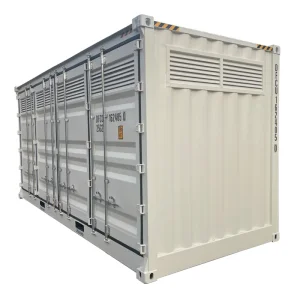
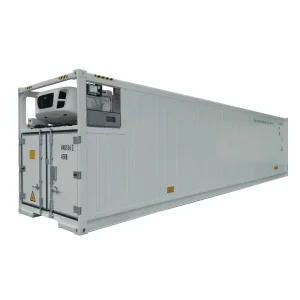
Whether deploying 20ft High-Cube Dangerous Goods Lockers with bunded floor sumps for chemical spill mitigation, or utilizing 40ft High-Cube Thickened Foam Passive Insulated Enclosures to store pharmaceutical inventories off-grid, industrial shipping container storage has bypassed the limitations of traditional warehouse construction. Its inherent intermodality—the ability to be lifted via twistlocks, transported via flatbed rail cars, or sea-freighted directly to deepwater ports—makes it the only structural storage format that preserves total asset mobility.
A deep dive into raw material selections, corrugation profiles, thermal envelopes, and load-bearing corner castings engineered at Chinese production facilities.
Fabricated using JIS G3125 SPA-H Corten steel plates (1.6mm–2.0mm side and roof panels) with elevated copper, chromium, and nickel content. Upon exposure to environmental cycles, it produces a self-sealing iron oxide patina that halts atmospheric deterioration.
Corner posts made of cold-formed 6.0mm structural steel welded directly to SCW480 cast steel ISO corner blocks. Each corner assembly is engineered to withstand vertical compression loads surpassing 86,400 kg per post under full CSC validation.
Heavy cross-members of high-tensile channel sections support 28mm keruing or apitong hardwood multi-ply flooring treated to Australian Quarantine inspection standards, or alternatively 4.5mm steel chequer-plate for heavy industrial plant storage.
| Dimensional Metric | 20ft Dry Cargo Storage | 40ft High Cube Dry Storage | 40ft High Cube Reefer Storage | 20ft Dangerous Goods (Hazmat) |
|---|---|---|---|---|
| External Length / Width | 6,058 mm / 2,438 mm | 12,192 mm / 2,438 mm | 12,192 mm / 2,438 mm | 6,058 mm / 2,438 mm |
| External Height | 2,591 mm (8ft 6in) | 2,896 mm (9ft 6in) | 2,896 mm (9ft 6in) | 2,896 mm (9ft 6in HC) |
| Internal Usable Volume | 33.2 m³ (1,172 cu ft) | 76.4 m³ (2,698 cu ft) | 67.5 m³ (2,385 cu ft) | 29.8 m³ + Sump Capacity |
| Tare Weight | 2,230 kg (4,916 lbs) | 3,900 kg (8,598 lbs) | 4,480 kg (9,876 lbs) | 3,120 kg (6,878 lbs) |
| Max Gross Weight (Rating) | 30,480 kg (67,200 lbs) | 32,500 kg (71,650 lbs) | 34,000 kg (74,950 lbs) | 24,000 kg (52,910 lbs) |
| Floor Load Capacity | 7,260 kg front axle wheel | 7,260 kg forklift axle | Heavy T-Bar aluminum floor | Hot-dip galvanized grated sump |
When uninsulated steel containers experience rapid ambient diurnal temperature swings, moisture in the internal air mass condenses against the colder corrugated ceiling, causing destructive "container rain". Chinese engineering centers have perfected three distinct architectural countermeasures for static storage:
Examining field deployments of purpose-built storage containers across agriculture, industrial manufacturing, offshore energy, and hazardous chemical sectors.
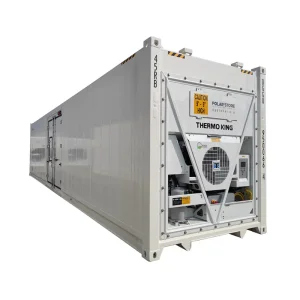
Utilizing high-cube refrigerated storage containers equipped with Carrier Transicold, Thermo King, or Daikin chillers. These active thermal units hold internal temperatures between -30°C and +30°C with digital precision of ±0.25°C. Used globally as decentralized walk-in freezers, seasonal crop storage, and deep-freeze marine seafood holding facilities.
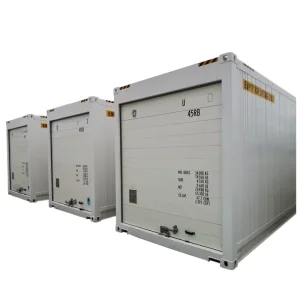
Engineered to international ADR, NFPA 30, and AS 1940 specifications. Incorporates integrated spill-containment bunding reservoirs capable of capturing 25% to 100% of internal drum liquids, explosion-proof ATEX-rated sparkless exhaust fans, safety push-bar escape escape hatches, and pressure-relief blowout top panels.
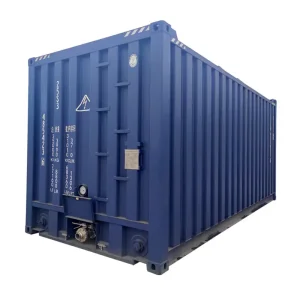
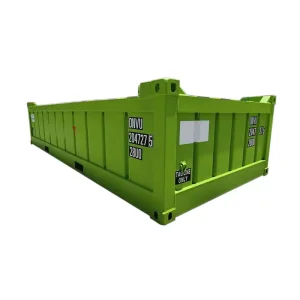
Certified under DNV GL 2.7-1 / EN 12079 standards for offshore rigging and rough open-ocean crane lifts. Built to endure constant salt-fog exposure with multi-coat marine epoxy coatings (DFT ≥ 200μm). Used to house explosives, core samples, heavy diamond drill bits, and critical machinery spare parts.
Specially modified structural containers serving as localized enclosures for Lithium Iron Phosphate (LiFePO4) battery racks, solar inverters, and high-voltage grid switchgear. Structural reinforcements support roof-mounted HVAC systems, integrated aerosol fire-suppression (Stat-X/Novec), and structural fire barriers (EI60/EI120 ratings).
Ensuring your imported storage assets satisfy strict local municipal, environmental, and maritime insurance mandates worldwide.
A common vulnerability in purchasing low-cost prefabricated steel shelters is non-compliance with domestic structural and maritime codes. Containers engineered by top-tier Chinese manufacturers undergo rigorous third-party design type approvals from world-renowned classification societies, verifying material provenance and safety compliance:
Every newly manufactured container undergoes tensile yield tests, dimensional checks (ISO 668), corner post compressive loading tests, and transverse/longitudinal racking tests under supervision of Bureau Veritas or the American Bureau of Shipping.
The International Convention for Safe Containers (CSC) plate affixed to the left door provides legal clearance for maritime transport, validating that the container can be shipped fully loaded overseas as freight, drastically reducing international delivery costs.
For specialized offshore storage enclosures, specialized lifting pad eyes undergo non-destructive testing (NDT), magnetic particle inspection (MPI), and Charpy impact testing at -20°C to ensure metallurgical integrity under dynamic sea-lift impacts.
When placing industrial shipping containers for long-term static storage within domestic jurisdictions (such as North America under IBC codes, Europe under Eurocode 3, or Australasia under AS/NZS 1170), the engineering characteristics of Corten containers provide distinct structural advantages. Their rated design wind speeds exceed 150 mph (240 km/h) when appropriately anchored to concrete pier footings via welded twistlock plates, and roof live load capacities easily manage severe regional snow accumulations without risk of structural buckling.
Integrating telemetry, phase-change passive cooling, automated access monitoring, and circular life-cycle asset tracking into storage container systems.
The standard shipping container is experiencing a digital transformation driven by Industry 4.0 integration. Future-proof storage solutions manufactured in China are increasingly incorporating smart technologies that provide real-time asset visibility and automated climate monitoring:
Solar-powered GPS micro-transponders integrated directly into the door header recess provide real-time geo-fencing, internal ambient temperature, relative humidity, door-opening alerts, and shock vibration diagnostics via LoRaWAN and 5G cellular arrays.
Passive storage vaults utilizing inorganic bio-based phase change thermal liners that absorb heat during peak daylight hours and release it during nighttime cooling, keeping temperature-sensitive inventories within a narrow ±3°C band without consuming any external electrical power.
Transitioning toward low-carbon "green steel" melted in electric arc furnaces (EAF) utilizing up to 85% recycled scrap metal. This significantly reduces Scope 3 embodied carbon for corporate buyers striving to meet rigorous carbon neutrality targets.
Authoritative technical guidance addressing critical inquiries from international logistics engineers, facility managers, and procurement officers.
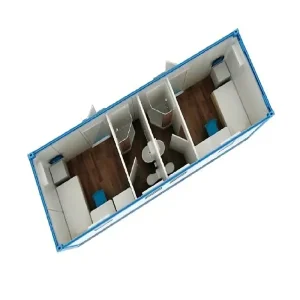
Specialized containerized architectures, versatile chemical transport tanks, and heavy-duty accommodation enclosures engineered for global export.

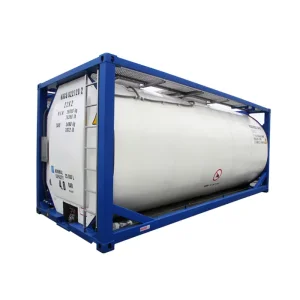
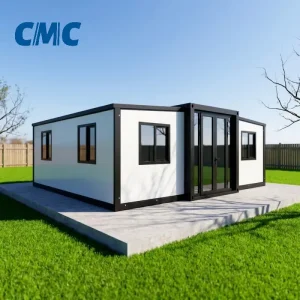
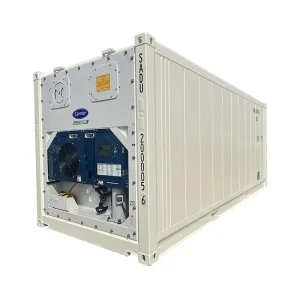
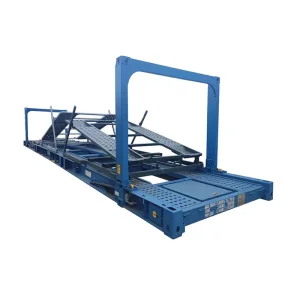
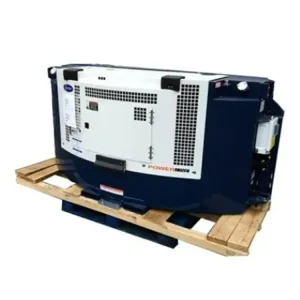
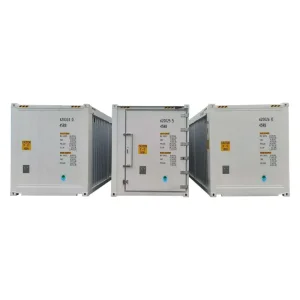
A comprehensive financial and operational comparison evaluating factory-direct Chinese ISO container procurement against traditional steel warehouse construction.
Corporate capital allocation decisions between permanent commercial warehouse facilities and modular shipping container storage arrays typically pivot on initial capital expenditure, build timelines, depreciable life, and site mutability. The financial comparison below demonstrates why leading enterprise asset managers consistently prioritize factory-direct containers sourced from specialized Chinese manufacturing clusters:
| Evaluation Parameter | Factory-Direct Storage Containers | Traditional Civil Steel Warehouse | Light Prefabricated Metal Sheds |
|---|---|---|---|
| CapEx Cost per Sq. Meter | $140 – $220 / m² (Turnkey) | $650 – $1,200 / m² (Excluding Land) | $90 – $150 / m² (Low Durability) |
| Site Commissioning Speed | Immediate: 24 to 48 Hours upon delivery | 6 to 14 Months (Civil works, permits) | 3 to 6 Weeks on-site assembly |
| Tax & Depreciation Schedule | Equipment Asset (Accelerated 5–7 yr MACRS) | Commercial Real Estate (39-year SL) | Improvement Asset (15-year schedule) |
| Relocatable Capital Asset | 100% Intermodal (Truck, Rail, Vessel) | 0% (Sunk fixed civil infrastructure) | Negligible (Demolition usually required) |
| Forced Entry / Ballistic Integrity | High: Heavy Corten steel, recessed lockboxes | Moderate: Dependent on door/window hardware | Very Low: Easily breached thin sheet metal |
| Resale Value (10 Years Out) | 60% – 75% of original purchase value | Bound to physical land sale | Scrap steel scrap value (< 15%) |
Operating manufacturing plants situated within 100 kilometers of the major deepwater ports of Tianjin and Shanghai/Taicang provides an exceptional geographical edge for global export. Bulk container vessel slot bookings, integrated customs bonded clearances, and immediate availability of both specialized "one-trip" units and custom-engineered ODM structures translate to rapid factory-to-ship cycles. Clients avoid domestic inland drayage markups and secure factory-direct pricing backed by the world's most sophisticated container engineering ecosystem.
