Factory-direct specialized units engineered to ISO 1496-2 and maritime standards. Explore our top engineered equipment ready for immediate technical review and production allocation.


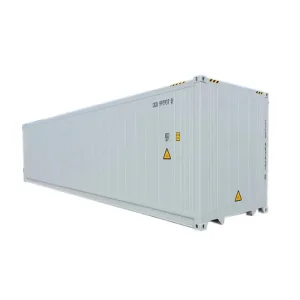

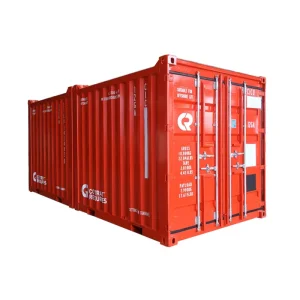
Navigating international trade corridors demands precision-engineered thermal resilience. High Cube (9ft 6in) refrigerated containers have transitioned from conventional cargo boxes into IoT-monitored, energy-optimized industrial cold preservation assets.
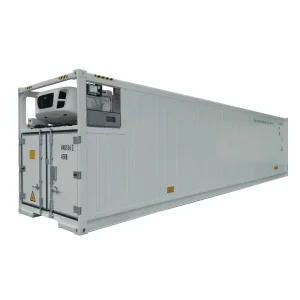
The refrigerated intermodal sector operates at the convergence of stringent global bio-security protocols, perishable food shelf-life preservation, and Good Distribution Practice (GDP) standards for biopharmaceuticals. Within this international trade ecosystem, the 40-foot High Cube (40' HC) Reefer has firmly established itself as the baseline standard across trans-oceanic lanes and multi-modal transit corridors. Offering an external height of 2,896 mm (9 ft 6 in)—a full 305 mm taller than standard ISO dry boxes—the High Cube configuration yields an internal loading volume exceeding 67.5 to 67.9 cubic meters. This supplementary vertical overhead volume is indispensable: it permits optimized aerodynamic top air ducting, accommodates standardized pallet stratification (Euro-pallets and ISO industrial pallets), and secures unimpeded circulation of conditioned air through heavy, tightly nested payloads.
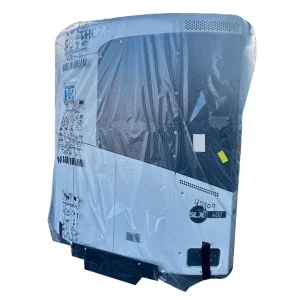
Concurrently, geopolitical shifts, cross-continental overland freight initiatives such as the Trans-Eurasian rail lines, and expanding cold-chain demands across Southeast Asia, Latin America, and Sub-Saharan Africa have fundamentally elevated build specifications. A high-cube reefer cannot merely function as a passive chilled locker; it must withstand extreme harmonic vibration stresses during rail shunting, corrosive maritime atmospheres with high salinity, and ambient fluctuations that range from -40°C in Siberian winter transits to +52°C across Arabian desert ports. Consequently, world-class reefer manufacturing is now defined by metallurgical durability, microcellular polyurethane foaming consistency, thermal bridge prevention, and seamless integration with sophisticated refrigeration machinery manufacturers like Thermo King, Carrier Transicold, Daikin, and Star Cool.
Utilizing cyclopentane high-pressure polyurethane foaming with automated multi-point high-density injection. Maintains insulation heat leakage rates (U-factor) below 0.36 W/(m²·K), ensuring minimal power draw from vessel grids and generator sets.
Structural framework engineered from specialized atmospheric corrosion-resistant SPA-H Corten alloy steel, paired with marine-grade 304 food-grade stainless steel interior lining and MGSS exterior cladding to ensure a 15+ year operational lifespan.
Extruded heavy-duty 6061-T6 aluminum deep T-bar flooring designed to sustain forklift wheel axle loadings exceeding 5,460 kg (12,037 lbs) in accordance with ISO 1496-2 requirements, guaranteeing unrestricted bottom-air delivery.
China accounts for over 90% of global intermodal container output. Our Tianjin and Suzhou industrial clusters synthesize raw metallurgy, advanced robotic fabrication, and deep maritime port access to deliver unmatched procurement economics.
The dominance of specialized Chinese manufacturing facilities in the global refrigerated equipment sector is not merely a consequence of labor capacity; it is the manifestation of an unparallelled, hyper-concentrated industrial ecosystem. Within a 100-kilometer radius of our manufacturing bases in Tianjin and Suzhou, the entire tier-one and tier-two industrial supply chains operate synchronously. Upstream steel rolling mills supply precision-gauge SPA-H Corten coils; specialized petrochemical plants supply zero-ODP, low-GWP chemical polyol blends; and ISO-certified robotic stamping units fabricate specialized corner castings, door locking gears, and elastomeric EPDM weather-stripping gaskets.
This integrated clustering delivers substantial economic, technical, and operational advantages to global shipping lines, container leasing enterprises, and private cold-chain operators:
Automated robotic GMAW (Gas Metal Arc Welding) processes eliminate micro-porosities along the side wall posts, corner columns, and header beams, securing airtight structural integrity and long-term fatigue resistance during heavy-sea hogging and sagging stresses.
Strategic factory positioning within immediate trucking distance of Tianjin Xingang Port and Shanghai/Taicang maritime berths dramatically reduces domestic repositioning costs and allows export units to be one-way loaded with dry cargo immediately upon rollout.
Every production batch undergoes type approval and verification by international classification societies including Bureau Veritas (BV), ABS, and DNV. Thermal testing, air leakage tests, and structural load assessments are certified directly at the factory test hall.
Precise geometric and performance metrics designed to empower naval architects, freight directors, and procurement analysts during project specification evaluations.
| Technical Parameter | 40' Standard ISO Reefer | 40' High Cube Reefer (Flagship Build) | Compliance & Material Standard |
|---|---|---|---|
| External Dimensions (L x W x H) | 12,192 x 2,438 x 2,591 mm (40' x 8' x 8'6") | 12,192 x 2,438 x 2,896 mm (40' x 8' x 9'6") | ISO 668 / ISO 1496-2 Series 1 |
| Internal Dimensions (L x W x H) | 11,578 x 2,290 x 2,260 mm | 11,583 x 2,290 x 2,557 mm | Maximized for standard pallet loading |
| Usable Internal Capacity | 59.8 m³ (2,112 cu.ft) | 67.9 m³ (2,398 cu.ft) [+13.5% Volume] | Optimized overhead return airflow channel |
| Tare Weight (Excl. Machine) | ~3,880 kg (8,553 lbs) | ~4,150 kg (9,149 lbs) | High strength-to-weight ratio |
| Maximum Payload Capacity | 28,620 kg (63,096 lbs) | 29,850 kg (65,807 lbs) | Heavy-haul rated structural floor assembly |
| Thermal Insulation Material | Rigid Polyurethane Foam (70-75 mm) | Cyclopentane Polyurethane (75-85 mm Wall) | Zero ODP, GWP < 1; Non-CFC certified |
| Overall Heat Leakage (U-Factor) | ≤ 0.38 W/(m²·K) | ≤ 0.34 W/(m²·K) | Tested per ISO 1496-2 / ATP Class FRC |
| Internal Lining Material | Stainless Steel 304 (0.7 mm) / Aluminum | Food-Grade Austenitic SS304 / HG finish | Direct sanitary contact approved (FDA/USDA) |
| Refrigeration Unit Compatibility | Carrier / Daikin / Thermo King | Thermo King Magnum Plus / Daikin LXE / Carrier PrimeLINE | Universal 380/460V 3-Phase 50/60Hz dual plug |
Modern high cube reefer containers are modular cold foundations adapted across complex intermodal rail, offshore marine energy, remote industrial processing, and biopharma hubs.
Outfitted with high-capacity underslung clip-on diesel generator sets (Gen-sets) carrying 1,000L fuel reservoirs. Engineered to sustain non-stop -25°C environments over 14-day rail journeys across Central Asian winter temperature drops.
Modified with heavy pad-eyes, DNV 2.7-1 / EN 12079 certified lifting sling sets, flame-retardant electrical conduits, and explosion-proof fan motors for hazardous and marine-supply applications on offshore drilling rigs and platforms.
Functioning as turn-key plug-and-play cold storage vaults for high-value horticulture, meat processing, and dairy aggregation. Eliminates high civil engineering building costs while providing relocation flexibility across harvest seasons.
Equipped with multi-point temperature data logging probes, digital door-opening audit trails, automated cold-air curtain systems, and redundant backup cooling circuits configured to maintain precise +2°C to +8°C vaccine thresholds.
Understanding the price structure of 40ft High Cube reefers enables procurement managers to formulate transparent technical RFPs, conduct accurate total cost of ownership (TCO) assessments, and negotiate optimal factory terms.
Factory quotes for industrial refrigerated containers are fundamentally bifurcated: the structural container shell (box) and the active refrigeration machinery. While commodity dry containers are predominantly driven by raw Corten steel spot prices, reefer procurement quotations reflect a sophisticated bill of materials (BOM) encompassing chemical foaming agents, food-grade austenitic stainless steel liners, micro-channel aluminum condenser coils, scroll compressor architectures, and digital telemetry modems.
The refrigeration machine accounts for 45% to 60% of total unit Capex. Choosing between Carrier PrimeLINE, Thermo King Magnum Plus, Daikin LXE, or Star Cool influences both the baseline invoice cost and life-cycle power consumption (kWh per TEU-mile).
Standard corrugated aluminum vs. mirror-finish SS304 lining; standard 50mm T-floor vs. heavy-load 75mm ventilated duct floor; roller-shutter door integrations; internal butcher hooks for hanging beef carcasses; and dual-temperature partition bulkheads.
Factory integration of wireless remote container management (RCM) sensors, cellular/satellite GPS tracking nodes, solar-rechargeable telematics packs, and automated real-time Pre-Trip Inspection (e-PTI) diagnostic transmitters.
Batch-level standard factory testing vs. third-party witness testing by Bureau Veritas (BV), ABS, Lloyds Register, or DNV. Certification for offshore lifting, CSC international container safety plates, and ATP certification for overland perishable transit.
The next decade of reefer manufacturing is defined by net-zero maritime mandates, ultra-low global warming potential (GWP) refrigerants, and intelligent autonomous monitoring.
Transitioning away from conventional R-134a towards transitional drop-ins like R-513A and non-synthetic, natural transcritical CO2 (R-744) systems. These zero-ODP, GWP=1 architectures insulate fleet owners from intensifying European F-Gas regulations and environmental tariffs.
Integrating advanced micro-porous silica Vacuum Insulation Panels within the sandwich sidewalls alongside polyurethane foam. Decreases wall thickness by 15% while enhancing overall thermal insulation resistance, opening critical internal width for multi-row pallet loading.
Embedded neural sensors monitor compressor discharge pressure, harmonic motor vibration, and expansion valve cycles in real-time. Cloud-connected algorithmic alerts warn fleet maintenance teams of potential coil fouling or refrigerant leakage well before cargo spoilage occurs.
Authoritative technical, commercial, and operational guidance addressing complex questions asked by international buyers, fleet operators, and logistics engineers.
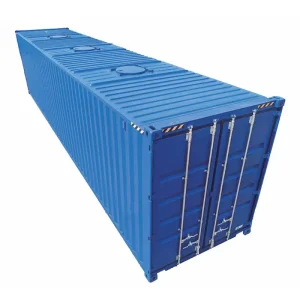
Engineered solutions spanning roll-up dry freight, bulk mineral transit, heavy platform frames, and high-cube intermodal rail reefers. Built to global regulatory benchmarks.
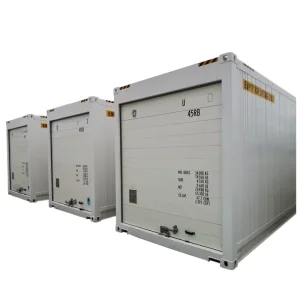

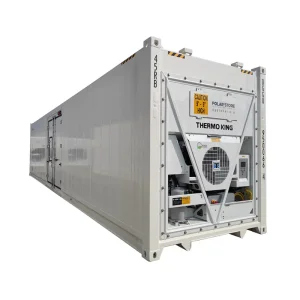
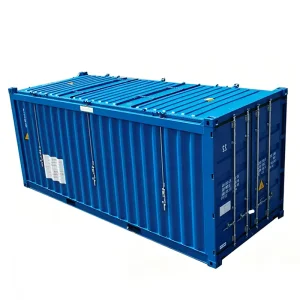

Connect directly with our engineering sales desk in Tianjin. Receive full 3D CAD models, structural calculations, classification certification dossiers, and transparent FOB/CIF mill-direct container quotations tailored to your fleet deployment requirements.
Consult With An Equipment Engineer