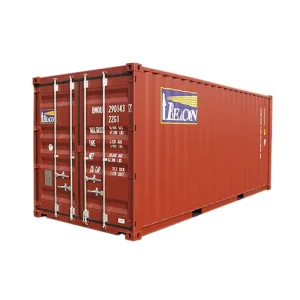
ODM 40ft New Certified Dry Shipping Container Pricelist, Manufacturers
View Specifications
Immediate export availability for ISO tank units, modified hazard reefers, cryogenic liquid systems, and temperature-controlled industrial containers direct from port bases.

Analyzing cross-border regulatory harmonization, supply-chain risk mitigation, and specialized ISO vessel architectures across worldwide trade lanes.
The global transport of Dangerous Goods (DG)—encompassing volatile organic solvents, corrosive industrial acids, compressed and liquefied technical gases, reactive organic peroxides, and hazardous energy precursors—represents the most rigorously regulated segment within modern multimodal freight. With an estimated global market valuation surpassing USD 34 billion in 2024, the dangerous cargo container manufacturing sector operates under strict cross-jurisdictional frameworks governed by the International Maritime Organization (IMO) International Maritime Dangerous Goods (IMDG) Code, the European Agreement concerning the International Carriage of Dangerous Goods by Road (ADR), the Regulations concerning the International Carriage of Dangerous Goods by Rail (RID), and Title 49 of the United States Code of Federal Regulations (49 CFR).
Modern petrochemical, specialty chemical, electronic manufacturing, and renewable battery ecosystems demand a paradigm shift from conventional dry cargo boxes toward hermetically engineered, structurally validated containment vessels. A catastrophic breach in dangerous goods containment incurs devastating ecological damage, operational liability, astronomical cleanup penalties, and maritime vessel confiscation. Consequently, international procurement teams and supply chain risk officers no longer evaluate dangerous containers merely as packaging units; they treat them as critical engineering assets subject to non-destructive testing (NDT), hydrostatic pressure validation, seismic lashing integrity, and certified metallurgic longevity.
Commodity container brokers often categorize tanks and reinforced boxes under generic dimensional codes (e.g., standard 20ft or 40ft ISO). However, high-tier export standards necessitate absolute alignment with specific UN Portable Tank Instructions (T1 through T75), exact baffle wave-damping ratios, bottom discharge triple-closure validation, and thermal dissipation matrices. As an authoritative exporter, CIMIC bridges the gap between mechanical metallurgical precision and regulatory shipping safety.
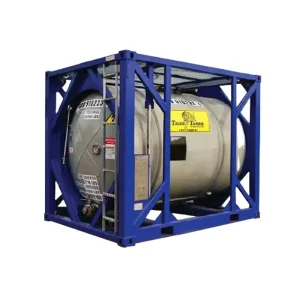
Comprehensive engineering specifications for corrosive, cryogenic, heated asphalt, and explosive containment apparatus.
Fabricated using ASTM A240 Grade 316L austenitic stainless steel or Hastelloy C-276 with electro-polished internal surfaces to resist aggressive pitting and chloride corrosion.
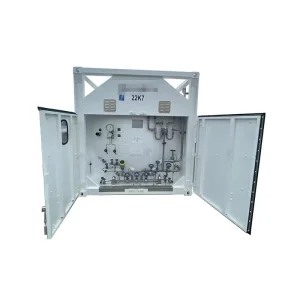
Double-walled, multi-layer vacuum insulated (MLI) pressure vessels with expanded perlite engineered for LNG, liquid nitrogen, liquid oxygen, and liquid argon at cryogenic conditions down to -196°C.
Equipped with thermal-efficient internal flame tubes, direct diesel burner systems, or heat-transfer oil coils to maintain viscous petro-derivatives between 160°C and 220°C in intermodal transit.
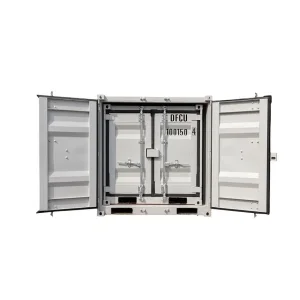
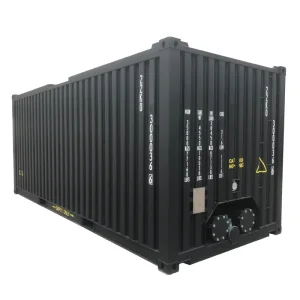
Specially reinforced offshore containers engineered to withstand severe marine dynamic loads, offshore rig crane impacts, and aggressive saline atmospheric environments.
| Containment Class | UN Portable Tank / CSC Category | Shell Metallurgy | Max Allowable Working Pressure (MAWP) | Thermal / Environmental Range | Primary Industrial Medium |
|---|---|---|---|---|---|
| Corrosive Dangerous Liquids | UN Portable Tank T11 / T14 | 316L Stainless Steel / FEP Lined | 4.0 bar to 6.0 bar | -40°C to +80°C Ambient | Sulfuric acid, chlorine precursors, toxic solvents |
| Cryogenic Dangerous Gas | UN Portable Tank T75 | Inner 304L / Outer Q345R Carbon | 8.0 bar to 22.0 bar | -196°C to +50°C Ambient | Liquid Nitrogen, Argon, LNG, Ethylene |
| Heated Hydrocarbons / DG 9 | IMO Type 4 / Specialized UN Code | Cort-Ten Steel / Marine Boiler Plate | Atmospheric / Low Pressure < 2.65 bar | +160°C to +220°C Operating | Modified bitumen, coal tar, heavy asphalt |
| Offshore Hazmat Transport | DNV 2.7-1 / BS EN 12079 | Normalized Structural Steel (S355) | Dependent on Inner Tank Unit | -20°C Sub-zero Marine Duty | Offshore drilling acids, mud additives, drill cuttings |
| Lithium Battery Storage (DG 9) | Modified ISO 1496-1 / Fire-Rated | Reinforced Corten-A + Ceramic Wool | Overpressure Explosion Venting | Passive Fire Endurance: Up to 1100°C | EV Battery packs, ESS energy storage modules |
Deploying certified containment fleets across maritime hubs, remote extraction sites, semiconductor fabs, and energy infrastructure.
High-end fabrication facilities require ultra-pure chemical transport with near-zero particulate contamination. Our electro-polished 316L and fluoropolymer-lined dangerous containers prevent metal ion leaching during transpacific transit, protecting semiconductor-grade hydrogen peroxide, etching acids, and high-purity solvents.
Addressing the urgent global issue of Class 9 lithium-ion battery logistics. We engineer explosion-proof, gas-scrubbed, and thermal-insulated container enclosures fitted with aerosol suppression systems and pressure-relief blowout panels to contain catastrophic thermal runaway propagation.
North Sea, Gulf of Mexico, and West African deepwater platforms demand chemical supply modules certified under DNV GL standards. Our 10ft and 20ft offshore chemical tank containers withstand dynamic wave slam, multi-axis crane snatching, and salt fog corrosion without stress corrosion cracking.
In municipal and mega-infrastructure projects, particularly cross-continental pipeline laying and highway construction across Central Asia and East Africa, logistics teams rely on our bitumen and heated asphalt containers. Traditional drum shipments yield excessive residue wastage (up to 4%) and incur elevated human handling risks. By transitioning to 20ft ISO bitumen containers equipped with high-efficiency heating tubes, operators eliminate drum disposal hazards, slash carbon emissions per delivered ton by 28%, and preserve material viscosity from factory gate directly to remote paving sites.
Telemetry, edge sensor integration, advanced composite shells, and the decarbonization of specialized industrial fleets.
Integrating intrinsic-safety rated satellite sensors directly inside the tank shell. Continuous real-time monitoring of ullage pressure, temperature gradients, liquid sloshing impact forces, and GPS geofencing prevents latent safety breaches on deep-sea trade routes.
Transitioning toward lightweight, ultra-high-pressure composite tank vessels. By reducing tare weight by up to 35% compared to conventional austenitic stainless steel, operators substantially increase effective dangerous payload capacity per rail or maritime slot.
As green energy transitions accelerate, hazardous logistics infrastructure pivots toward high-pressure and cryogenic hydrogen logistics. Our R&D engineering units are developing specialized Type IV pressure vessels capable of 500-bar intermodal distribution with zero hydrogen embrittlement.
In-depth responses by senior dangerous goods compliance engineers regarding certifications, inspection intervals, custom manufacturing, and global shipping.
Every dangerous goods container leaving our manufacturing and export facility must be backed by an uncompromised documentation dossier verifying international conformity, including:
Standard dry freight containers are engineered strictly for non-hazardous general cargo. Transforming or commissioning an engineered dangerous goods container requires structural and environmental safeguards:
For aggressive mineral acids (e.g., concentrated hydrochloric, hydrofluoric, or sulfuric acid), bare 316L stainless steel is insufficient. We apply high-grade fluoropolymer linings such as ECTFE (Halar), PTFE, or PFA with a minimum thickness of 2.5mm to 3.5mm, bonded through high-temperature sintering. Every lined vessel undergoes 100% 25,000-volt high-frequency spark testing to verify zero pinholes or dielectric breakdown before dispatch.
Under Chapter 6.7 of the IMDG Code and ADR regulations, dangerous portable tanks are subject to two strict periodic inspection cycles to retain international shipping validity:
All CIMIC export vessels are dispatched with brand-new 5-year initial survey validation stamped directly on the stainless steel calibration dataplate.
Because our manufacturing centers in Tianjin and Suzhou are located within 100 km of primary seaports, lead times are minimized. For standard catalog models (T11 ISO tanks, standard 20ft/40ft reefers, offshore skips), port dispatch can be executed within 7 to 14 days from inventory stock. Bespoke OEM/ODM builds—such as customized cryogenic T75 units, automated heated bitumen systems, or DNV-certified offshore platforms—typically require 30 to 45 production days, inclusive of finite element analysis (FEA), third-party witness inspection, and Class certification issuance.
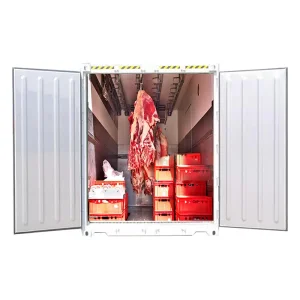
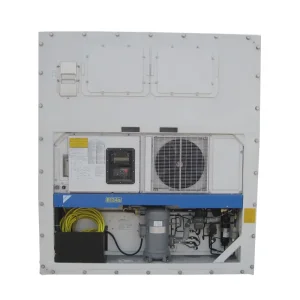
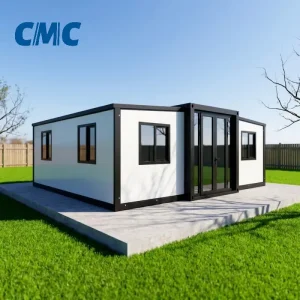
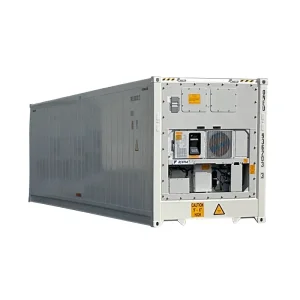
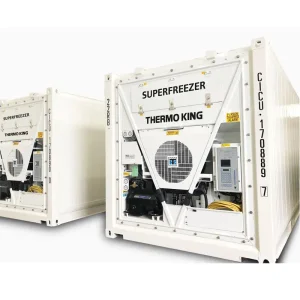
Complete product spectrum covering cold-chain reefer assets, offshore tank systems, modular facilities, and multi-modal mobile refrigeration machinery.