Explore our certified intermodal solutions engineered for heavy-duty marine, intercontinental rail, and dynamic open-sea logistics operations.
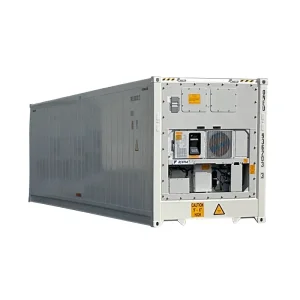
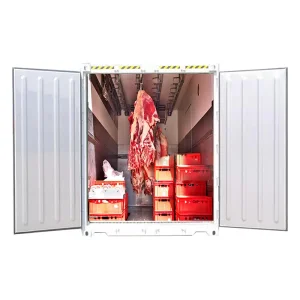
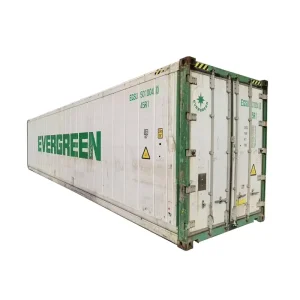
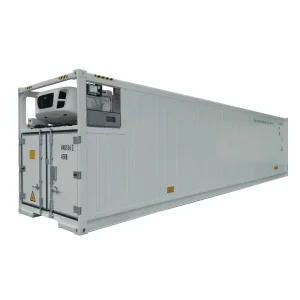
Unlike standard intermodal ISO containers that rely solely on corner castings and container-ship cell guides, offshore cargo carrying units (CCUs) manufactured to DNV 2.7-1 (Standard for Certification No. 2.7-1 Offshore Containers) and EN 12079 / ISO 10855 standards are engineered to survive catastrophic open-sea wave impacts, heavy side-sway accelerations, and dynamic snatch-lift forces on offshore support vessels (OSVs).
All primary load-bearing members utilize fine-grained structural micro-alloyed steels such as S355ML, S355J2W (Corten), or Grade 50D. They undergo stringent Charpy V-Notch impact testing at -20°C or -40°C down to 27–42 Joules, preventing brittle fracture under extreme Arctic or North Sea sea states.
When cranes hoist containers from choppy floating decks, snatch loads produce instantaneous vertical accelerations up to 2.5g. We incorporate calculated DAF curves based on gross mass ratings, ensuring padeye weldments, top headers, and lifting slings withstand complex multi-axial torsional stresses.
Our units conform directly with the tripartite compliance matrix: DNV 2.7-1, EN 12079, and ISO 10855 (Parts 1, 2, and 3). This enables cross-border vessel operations across international maritime waters without the need for structural re-certification or load re-rating.
| Evaluation Parameter | Standard ISO Shipping Container (ISO 1496-1) | Offshore Certified DNV Container (DNV 2.7-1 / ISO 10855) | CIMIC Industrial 4.0 Specification |
|---|---|---|---|
| Primary Structural Steel | SPA-H / Q235 Corten-grade cold rolled | S355ML / EN 10025-4 Normalized or TMCP Grade 50D | Certified S355ML with 3.1 Mill Test Certificates (MTC) |
| Lifting Configuration | Corner castings only (vertical 90° spreader lift) | Integrated top padeyes welded directly to frame (30°-45° sling angle) | Heavy-gauge certified padeyes with 100% NDT (MPI + Ultrasonic) |
| Operating Temperature | -20°C Ambient (untested Charpy V-notch) | Down to -20°C or -40°C with mandatory impact tests | Charpy impact tested to 42 Joules at -40°C for sub-arctic compliance |
| Dynamic Impact Load Factor | 1.0 (Static crane rail loading assumed) | 1.30 to 2.50 DAF (Dynamic Amplification Factor) | FEA modeled at 2.5x dynamic coefficient across all corner pillars |
| Drop Testing Protocol | Not mandatory for baseline certification | Mandatory 2.5x dynamic proof load test and rotational drop test | Type-approved witnessed drop testing via BV, DNV, or ABS surveyors |
Operating high-precision manufacturing clusters in Tianjin and Suzhou, CIMIC leverages Industry 4.0 automation alongside deep-water logistics access. Our plants combine automated submerged-arc welding, laser CNC cutting cells, and robotic blast booths to deliver exceptional dimensional repeatability, structural longevity, and cost efficiencies for EPC contractors globally.
Corrugated sidewalls and primary box headers are cut via multi-kilowatt fiber lasers and joined using continuous multi-axis robotic welding stations. This eliminates human fatigue errors, ensures penetration uniformity exceeding AWS D1.1 and ISO 15614-1, and prevents weld embrittlement.
To survive open-sea salt spray, each frame is shot-blasted to Sa 2.5 white-metal purity before entering a 3-coat thermal curing booth: zinc-rich epoxy primer (60μm), high-build epoxy intermediate (120μm), and UV-resistant aliphatic polyurethane topcoat (50μm), reaching ISO 12944 C5-M high marine endurance.
Located roughly 100 kilometers from the Port of Tianjin and Shanghai/Taicang maritime clusters, raw materials flow smoothly from nearby steel mills (Baosteel, Shougang). Completed offshore modules can be moved directly to berths or loaded aboard breakbulk carriers within hours of surveyor signoff.
DNV-certified containers serve critical roles beyond standard freight. As energy transitions accelerate and industrial projects enter harsher maritime zones, our custom enclosures act as secure, fire-rated, explosion-resistant shelters for high-value offshore equipment.
Floating offshore wind farms and High-Voltage Direct Current (HVDC) converter platforms require specialized subsea cable-pulling equipment houses, fiber-optic splicing cabins, and dynamic umbilical storage units capable of withstanding constant vibration, high humidity, and North Sea squalls.
Deepwater exploration requires certified Remotely Operated Vehicle (ROV) control shacks, mud-logging laboratories, and drill-cuttings skip boxes. We integrate A60 fire-rated thermal rockwool insulation, purge-air pressurization systems, and ATEX/IECEx Zone 1/Zone 2 certified electrical panels.
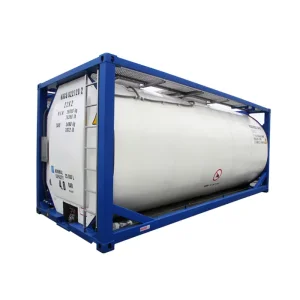
For international transport of liquid chemicals, LNG, and compressed industrial gases, our ISO frame tank and skid containers incorporate ASME Section VIII-stamped vacuum-insulated inner vessels with high-grade multi-layer super insulation (MLI) to minimize thermal boil-off during transit.
Achieving genuine global compliance requires deep collaboration with classification societies. Every production lot destined for offshore or intermodal deployment undergoes structured witness testing and comprehensive non-destructive testing (NDT), accompanied by verified material trace records.
Critical structural joints—particularly padeye-to-header, bottom rail-to-corner post, and fork-pocket seams—undergo comprehensive NDT testing according to ISO 9712 / ASNT SNT-TC-1A Level II/III certified inspectors:
Prototype containers are tested under surveyor supervision (Bureau Veritas, DNV, or ABS) across stringent structural proof-load scenarios:
The future of offshore and multimodal logistics equipment centers on structural intelligence, lightweight materials, and lifecycle circularity. Our R&D engineering divisions are actively deploying emerging technologies into current container architectures.
Next-generation DNV CCUs integrate ATEX Zone 1 certified sensor nodes featuring 3-axis triaxial accelerometers, piezoelectric strain gauges, and satellite uplinks. Fleet managers gain real-time structural health monitoring, logging shock loads over 3g and triggering predictive fatigue inspection alerts automatically.
By utilizing advanced high-strength, low-alloy (HSLA) steels with yield strengths exceeding 700 MPa in secondary bracing, paired with basalt-fiber reinforced polymer (BFRP) composite roof panels, tare weight is reduced by up to 18%, increasing payload capacities for deepwater crane limitations.
In alignment with IMO 2030 and 2050 decarbonization mandates, our factories are transitioning toward electric arc furnace (EAF) recycled green steel with verified Environmental Product Declarations (EPDs), paired with waterborne and solvent-free high-solid polysiloxane protective coatings.
For global logistics managers and procurement directors, evaluating container assets requires balancing immediate CapEx against long-term maintenance, recertification, and downtime risk. Choosing compliant, well-engineered units significantly lowers whole-life operational expenses.
Premature paint delamination in aggressive marine environments (C5-M) can necessitate sandblasting and repainting every 2–3 years, costing up to 35% of the original unit purchase price. Precision multi-coat epoxy systems provide 10-15 year design life, protecting corporate capital.
Non-compliant containers risk port-state detentions, platform rejection, and significant project delays. Our full Manufacturing Data Books (MDB)—complete with mill certificates, weld maps, NDT reports, and sling load test data—ensure rapid platform clearance and compliance signoff.
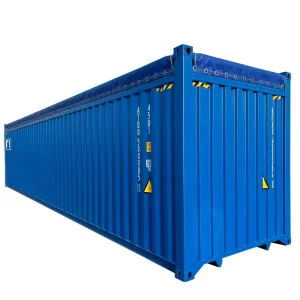
Whether requiring custom floor load spreaders for heavy industrial mining gear, side-opening configurations for rapid cargo handling, or specialized interior rack mountings, our modular engineering cuts prototyping lead times from months down to weeks.
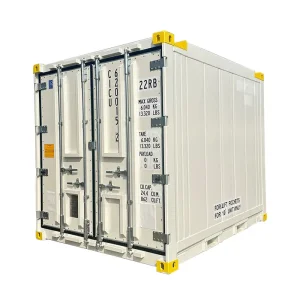
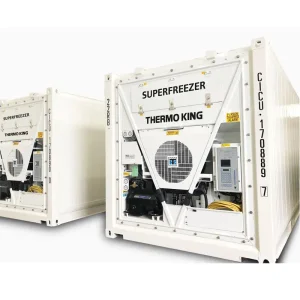
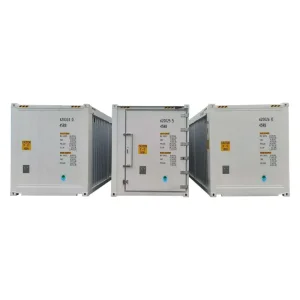
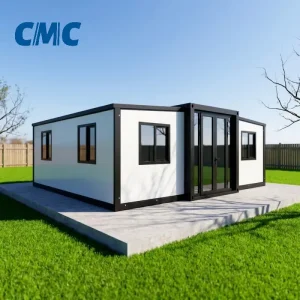
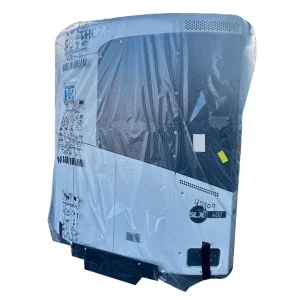
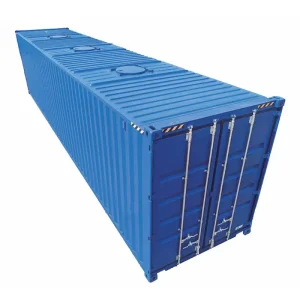
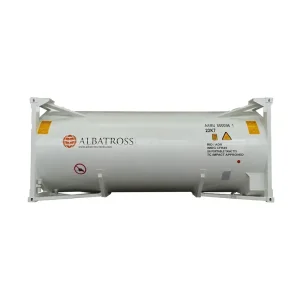
Explore specialized cold-chain systems, deep-freeze reefer storage, modular accommodation containers, and high-capacity pressure tank containers.
Detailed engineering answers covering certification boundaries, metallurgy, reefer machinery compatibility, and export logistics.
