Pre-engineered Corten-A steel containers optimized for localized site secure storage, mobile workspaces, and active thermal preservation.
Why modern enterprises are substituting permanent commercial real estate with hardened ISO intermodal assets.
The contemporary global supply chain requires rapid, decentralized asset deployment. Traditional brick-and-mortar warehousing is fundamentally encumbered by long permitting cycles, fixed spatial footprints, high capital commitments, and vulnerability to dynamic economic transitions. Consequently, the commercial utility of shipping containers as on-site storage solutions has transitioned from an informal makeshift alternative into a rigorously engineered industrial methodology.
Constructed primarily from high-tensile SPA-H Corten atmospheric corrosion-resistant steel, these containers exhibit high dynamic load tolerance, monolithic structural integrity, and hermetic sealing capability. Whether converted into secure lock-up storage units for raw industrial feedstocks, temperature-sensitive pharmaceutical storage vaults, or dangerous goods depositories, modular container infrastructure delivers operational flexibility impossible to attain with conventional civil architecture.
Monocoque Corten-A steel corrugated paneling resists lateral deformations up to 0.6g seismic forces, severe maritime salinity, and localized physical intrusion.
EPDM architectural multi-lip marine gaskets prevent ingress of microscopic particulate matter, volatile moisture, and environmental vermin, ensuring WWT (Wind & Water Tight) integrity.
Engineered with structural corner castings verified under ISO 1161, allowing 9-high fully loaded stacking configurations, maximizing volumetric footprint efficiency.
Enterprise data tracking our engineering output across automated manufacturing facilities in Tianjin and Suzhou.
| Classification | Frame Metallurgy | Thermal Barrier Tech | Standard Volumetric Capacity | Core Industrial Usage |
|---|---|---|---|---|
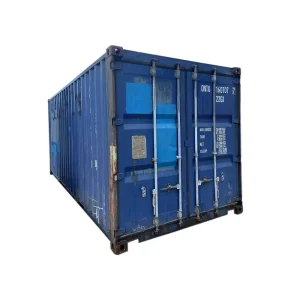
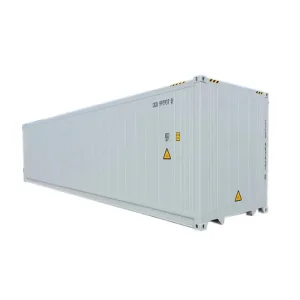
| Standard Dry Cargo (20ft/40ft) | Corten-A (SPA-H) Structural Steel | Passive Venting / Optional Polyurethane | 33.2 m³ (20ft) / 67.7 m³ (40ft) | Mining tools, raw industrial materials, logistics depots |
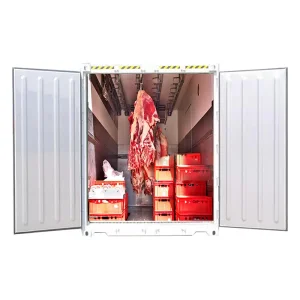
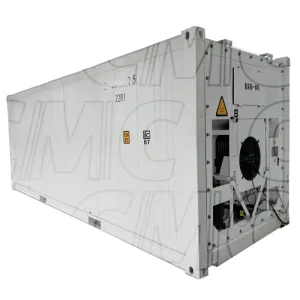
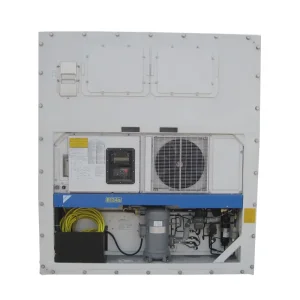
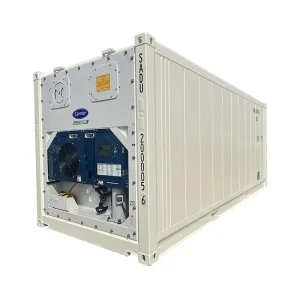
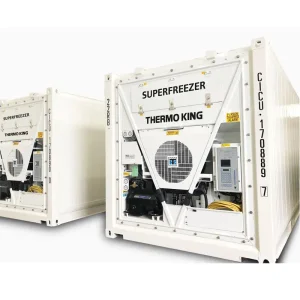
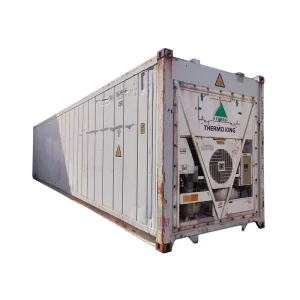
| Refrigerated Storage (Active Reefer) | Stainless Steel 304 Inner / Muffler Outer | High-Pressure Foamed Cyclopentane PUR | 28.3 m³ (20ft) / 67.5 m³ (40ft HC) | Biomedical actives, frozen meat imports, chemical stabilization |
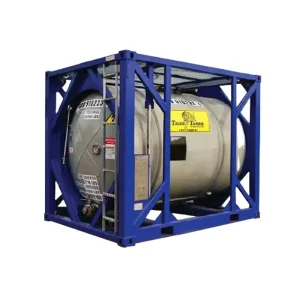
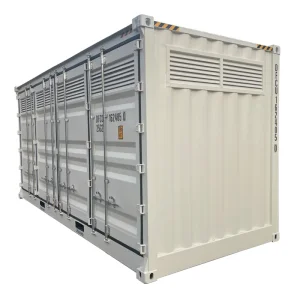
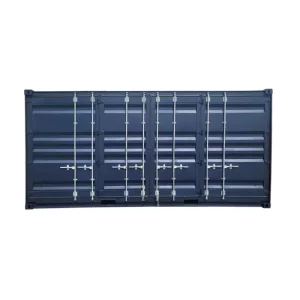
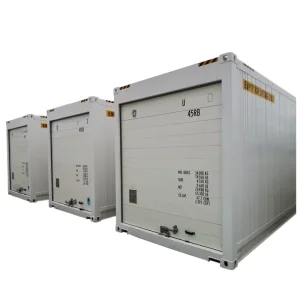
| Hazardous Goods (Side-Door DG) | Reinforced Channel Steel + Bund Floor | Flame Retardant A1 Composite Rockwool | Custom Internal Bunding Systems | Paints, battery bank units, flammable class storage |
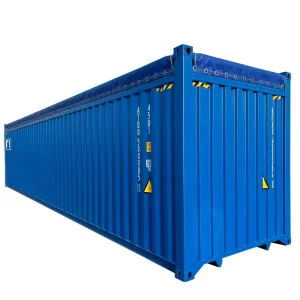
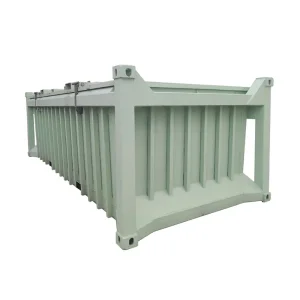
| Offshore Module (DNV Certified) | High-Yield Micro-Alloyed Carbon Steel | Marine Spray Applied Polyurea Barrier | Configured to dynamic marine hook payloads | Rig supply consolidation, deep-sea mining extractions |
Addressing structural requirements across distinct macroeconomic industrial sectors.
Challenge: Critical tool shrinkage, harsh job-site theft, and constant weather degradation on remote sites.
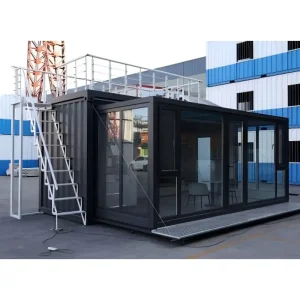
Solution: 20ft and 40ft dry containers upgraded with high-security puck-lock shrouds, integrated racking systems, and personnel access doors.
Challenge: Sudden cold-chain disruptions leading to inventory spoilage in biological pharmaceuticals or fresh agricultural yield.
Solution: Active high-cube reefer containers equipped with Carrier, Daikin, or Thermo King machinery, maintaining down to -40°C stability.
Challenge: Marine acceleration stress, saline rust deterioration, and catastrophic rigging drop-hazards.
Solution: Purpose-built offshore containers manufactured under DNV-GL 2.7-1 / EN 12079 structural tolerances with multi-leg certified lifting sling sets.
Ensuring cross-border compliance through accredited certifications and stringent factory quality control protocols.
Purchasing shipping containers for domestic conversion or cross-border logistics requires compliance with various structural and regional requirements. Failure to align container metallurgy and engineering specs with regional zoning and transport codes can lead to port impoundments, structural failure, or civil rejection.
Each container series manufactured within our Tianjin and Suzhou production footprints undergoes continuous metallurgical destruct tests, racking deflection examinations, and corner casting ultrasound testing directly audited by Bureau Veritas.
Every manufacturing step—from continuous submerged arc welding of side-wall sheet corrugation to the robotic application of epoxy zinc-rich primer and polyurethane topcoats—is governed by tracked ERP fabrication routes.
Units destined for ongoing multimodal maritime transport are stamped with verified International Convention for Safe Containers (CSC) plates, securing valid intermodal stackability and seamless port handling clearance globally.
Pioneering advancements in low-emission production, telemetry integration, and next-generation composite structures.
Implementation of factory-integrated LoRaWAN and satellite-enabled telemetry sensors tracking interior relative humidity, volatile compound levels, and structural displacement in real time.
Transitioning from thick legacy polyurethane foams to thin, fire-safe aerogel composite internal lining, providing high R-values without sacrificing usable interior cubic space.
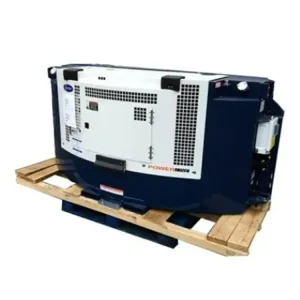
Integration of low-profile photovoltaic roof-mount panels linked directly to variable-speed DC compressors, enabling off-grid cold-room storage without reliance on diesel gensets.
Adoption of 100% renewably sourced electric arc furnace (EAF) Corten alloys, significantly lowering the embodied carbon footprint per TEU deployed into the static storage market.
Detailed engineering, delivery, and specification queries addressed by our technical team.
Converting a standard dry ISO shipping container into dedicated static on-site storage requires targeted upgrades depending on climate and materials stored. Crucial baseline modifications include retrofitting lock-boxes (shrouded padlock housings) to resist torch and grinder attacks, incorporating mechanical passive or louvered cross-flow vents to eliminate condensation (sweating), and treating or overlaying the apitong/keruing tropical hardwood flooring with chemical-resistant epoxy sealants to prevent fluid absorption.
Corten-A (SPA-H under JIS G3125 standards) is an alloy formulated with copper, chromium, nickel, and phosphorus. When exposed to alternating wet and dry environmental cycles, it produces a dense, protective amorphous patina layer. Unlike standard structural mild steel, which flakes away and promotes deep micro-fissure pitting, the Corten oxidation layer seals the inner core, limiting oxygen and moisture transmission and extending asset longevity up to 25+ years in harsh, coastal static storage conditions.
Active reefer containers integrate electrical compressor machinery (Carrier, Daikin, Thermo King) to reliably drop or hold temperatures between -30°C and +30°C, making them essential for volatile biologics, vaccines, and frozen perishables. However, they require continuous three-phase 380V/460V power supplies and periodic service checkups. Passive insulated containers rely exclusively on high-density cyclopentane-foamed polyurethane or vacuum panels with no dynamic mechanical systems. They prevent extreme thermal shifts over 24- to 72-hour operational windows without any power input, significantly lowering operational costs and maintenance overhead.
Because shipping containers utilize self-supporting monocoque structural architecture, their entire load transfers down via the four bottom ISO corner castings. Consequently, full solid concrete slab pours are typically unnecessary. For permanent installations, four leveled reinforced concrete pier pads located precisely beneath each corner casting are sufficient. For semi-permanent deployment, compacted gravel aggregate beds with heavy-duty hardwood dunnage or treated structural crane mats provide adequate ground support while preventing pooling ground moisture from reaching the Corten bottom rails.
Yes, removing the corrugated steel side panels removes the primary lateral shear plane of the container. To preserve stacking capability (e.g., stacking containers 2 to 3 units high on job sites), our manufacturing facilities install structural hollow structural section (HSS) box headers and reinforced lintels around all side-aperture openings. For non-stacking ground-level static storage, lighter header profiles can be installed, saving procurement expenditure while preserving structural squareness.
Custom-fabricated offshore, bulk containment, hazardous materials, and specialized intermodal equipment.