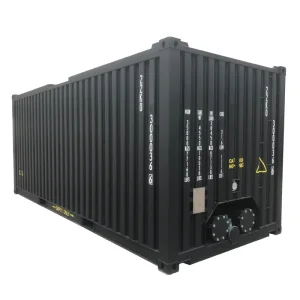
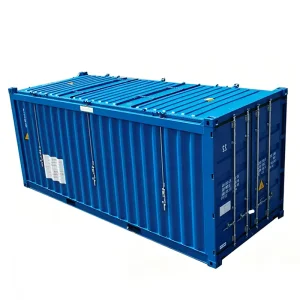
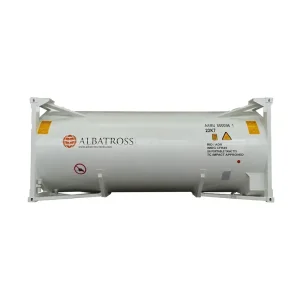
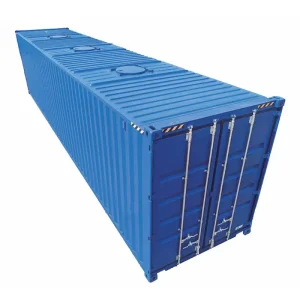
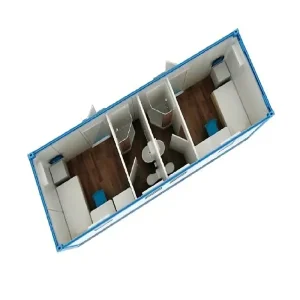
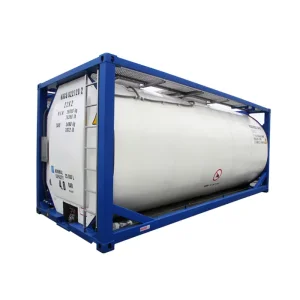
Built upon high-yield Corten SPA-H structural steel frames, our certified ISO and offshore enclosures undergo 100% full-penetration welding and advanced multi-layer zinc-rich epoxy coatings.
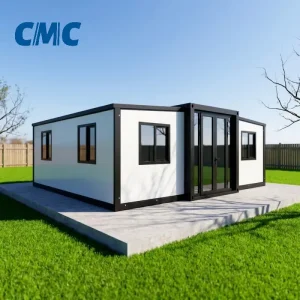
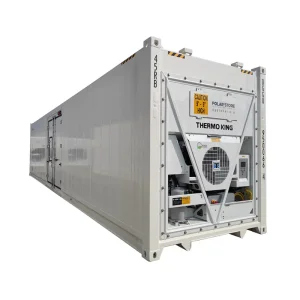
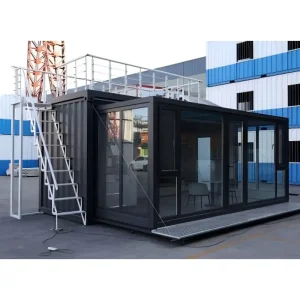
Beyond standard dry boxes, an Original Design Manufacturer (ODM) shipping container frame constitutes the mission-critical skeletal backbone for offshore energy cabins, high-density battery energy storage systems (BESS), mobile hyperscale data centers, and advanced architectural projects.
Standard mild steel frames succumb rapidly to oxidative pitting in aggressive chloride environments. Our ODM container chassis utilize certified JIS G3125 SPA-H corten steel. This formulation forms an impermeable patina layer when exposed to coastal atmospheres, restricting corrosion rates to under 0.012 mm per annum while maintaining a minimum yield strength of 345 MPa.
Every corner fitting undergoes automated magnetic particle inspection (MPI) and Charpy V-notch impact testing at -40°C. Engineered with SCW480 cast steel, these nodes endure dynamic transverse racking loads exceeding 150 kN and vertical stack forces of 840 kN per post, enabling safe 9-tier fully laden vessel stowage under harsh open-sea swells.
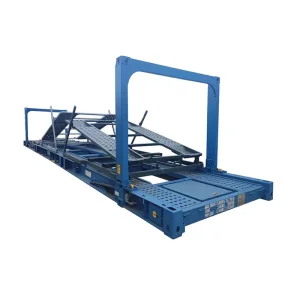
Standard 28mm marine plywood floor configurations fail to support static equipment loads typical of electrical substations or battery banks. Our custom engineering provisions include heavy-duty C-channel and I-beam floor transverse crossmembers spaced at 150mm intervals, elevating floor concentrated point-load thresholds up to 9,500 kg per axle.
Utilizing 6-axis robotic welding cells with pulse-controlled Gas Metal Arc Welding (GMAW), we eliminate human error, burn-through, and excessive slag inclusions. All longitudinal side-rail and corner-post welds achieve continuous AWS D1.1 structural compliance with ultrasonic testing verifying internal soundness across 100% of critical stress zones.
Surface preparation starts with automated grit blasting to SA 2.5 profile depth (40-75 microns). Structural members then receive a tri-layer marine protective matrix: 60μm zinc-rich epoxy primer, 100μm high-build epoxy intermediate coat, and 50μm aliphatic polyurethane topcoat, certified for 15+ years service lifetime in extreme C5-M offshore conditions.
Before physical steel fabrication begins, bespoke container structures pass comprehensive CAD-FEA simulations to isolate nodal bending moments, shear stress concentrations, and thermal expansion distortions. Custom cutouts for HVAC penetrations and side rollup panels are reinforced via integrated stiffener collars without compromising foundational load path lines.
How structural frame modularization is revolutionizing commercial, clean tech, and maritime infrastructure across key global continents.
| Global Region | Dominant Application Demand | Standard Compliance Mandatory | Structural Frame Customization Focus | Logistics Sourcing Strategy |
|---|---|---|---|---|
| North America (US & Canada) | Grid BESS Enclosures, Modular Prefab Homes, Data Edge Hubs | UL 9540A / IBC / CSC | Roof-load reinforcement for dual fire-suppression tanks, high-load joists | One-way loaded repositioning into LA/Long Beach, Oakland, and Savannah |
| European Union (Nordics & CE) | Biomethane Plants, Hydrogen Electrolyzers, Acoustic Power Packs | EN 1090-2 / CE / DNV | Thermal bridging elimination, insulated subfloor framing, high-alloy stainless steels | Direct container vessel dispatch to Rotterdam, Hamburg, and Antwerp |
| Australia & Oceania | Remote Mining Camps, Heavy Heavy-Duty Ore Slag Transporters | AS/NZS 1170 / CSC / Lloyd's | Cyclone-resistant structural bracing, half-height high-payload bottom rails | Direct routes to Port Hedland, Fremantle, and Brisbane with heavy lift rigging |
| Middle East & North Africa | Solar Farm Inverter Cabins, Mobile Water Desalination Units | ISO 1496 / SASO / Bureau Veritas | High ambient sandstorm air louvers, double-walled thermal barrier frames | Direct high-cube shipments to Jebel Ali, Dammam, and Khalifa ports |
| Latin America | Agricultural Cold-Chain Logistics, Agro-Chemical Intermediate Tanks | ISO TC104 / ASME VIII | Corten corrosion resistance against extreme rainforest and coastal humidity | Direct delivery to Santos, San Antonio, and Veracruz deep-water berths |
The exponential surge in utility-scale solar and wind projects has redefined container frame requirements. No longer simple storage boxes, modern BESS container shells require structural floor channels capable of holding 30 to 45 metric tons of lithium-iron-phosphate battery packs while enduring stringent dynamic seismic vibration loads (Zone 4 seismic criteria).
Escalating on-site construction costs across Europe and North America have accelerated the plug-and-play movement. Industrial pump stations, hydrogen compressors, and medical clinics are now pre-assembled into specialized ISO frames inside factory cleanrooms in China, slashing final project commissioning schedules by over 60%.
How geographical aggregation, fully integrated upstream steel metallurgy, and coastal port proximities synthesize unmatched industrial throughput.
Proximity to premier state steel mills (such as Baosteel and Ansteel) guarantees continuous direct shipments of custom-width Corten coils. Unlike Western fabricators who pay massive spot premiums and endure 16-week lead times for SPA-H alloys, our manufacturing cells hold steady rolling schedules with mill test certificates (MTC) trace-coded down to individual heat numbers.
Equipped with 12-meter CNC hydraulic press brakes exceeding 1,200 tons of bending capacity, our production corridors bend single-piece corrugated wall panels and extended vertical structural pillars. Eliminating intermediate spliced seams substantially reduces stress concentration risk points while elevating torsional resistance across the entire perimeter frame.
Positioned less than 100 kilometers from Tianjin Xingang and Shanghai/Taicang ports, finished structures move directly to dockside terminals without arduous overland permits. Furthermore, client orders benefit from "SOC" (Shipper Owned Container) certifications, permitting frames to be packed with client cargo or stacked as empty revenue runs, saving thousands in dead-freight expenses.
How international technical directors, EPC contractors, and procurement heads successfully configure, validate, and execute customized container chassis orders.
Begin by establishing gross maximum operating weight (Rating: R), tare weight budgets (Tare: T), and net payload capacities (Payload: P). Specify whether internal static machinery imposes eccentric (off-center) weight distributions. This determines whether our engineers deploy standard symmetrical crossmembers or asymmetrical double-web structural box girders.
Select the mandated marine certification framework: standard maritime dry cargo builds fall under ISO 1496-1 / CSC (Convention for Safe Containers), approved by Bureau Veritas (BV), ABS, or CCS. If intended for open-ocean supply vessel transit or platform hoisting, DNVGL-ST-E271 (DNV 2.7-1) / EN 12079 compliance is mandatory, requiring specialized pad-eyes, dynamic sling sets, and material batch Charpy impact verification.
Our technical engineering department translates client equipment schemes into SolidWorks and STEP mechanical models. Structural stress-concentration heatmaps isolate deflections under full payload, 30-degree tilt, and vertical acceleration scenarios. Physical pilot prototype units undergo hydraulic test-rig crush simulations (2x gross load stacking tests) prior to mass fabrication rollouts.
Prior to port transport, clients receive a comprehensive digital Quality Assurance Dossier. This package comprises raw material mill certificates (MTC), non-destructive testing (NDT/UT) records of major weld points, dry film thickness (DFT) paint reports, airtightness pressure certificates, and verified classification society CSC safety approval plates.
Authoritative answers addressing structural tolerances, custom engineering thresholds, certification cycles, and intermodal freight logistics.
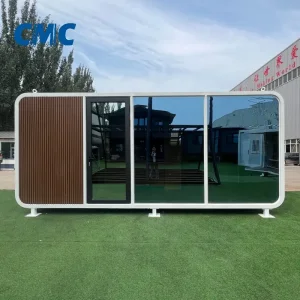
Browse our high-capacity modular houses, temperature-controlled freezers, and specialized liquid/asphalt shipping solutions ready for global deployment.