Precision-fabricated at port-adjacent manufacturing hubs in Tianjin and Suzhou. Designed in full compliance with BV, ISO 1496-1, DNV 2.7-1, and international multimodal transport protocols.




The global intermodal transportation ecosystem has undergone a monumental shift toward hyper-specialization. Modern maritime shipping lines, national railway networks, remote mining concessionaires, and chemical producers no longer rely solely on commoditized dry-freight boxes. High-value cargo demands customized load-bearing envelopes, strict thermal integrity, and specialized mechanical interfaces. Original Design Manufacturing (ODM) transit containers fulfill this technical gap, bridging bespoke structural engineering with standardized ISO intermodal handling.
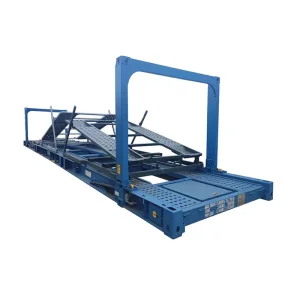
Tianjin Cimic Imp&Exp Co., Ltd. (CIMIC Group), founded in 1983, has led this industrial evolution over four decades. Operating modern manufacturing bases in Tianjin and Suzhou—strategically positioned within 100 kilometers of northern and eastern China’s core sea terminals—CIMIC engineers containers capable of withstanding dynamic racking stresses, extreme hydrostatic forces, and corrosive marine salinity. Our engineering portfolio spans active reefer containers equipped with Carrier, Thermo King, or Daikin units, heavy-duty half-height ore bins, DNV-certified offshore baskets, and intermodal car carriers.
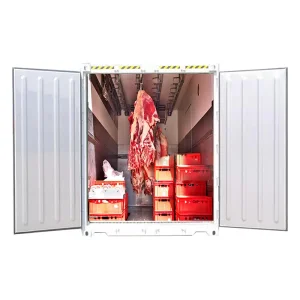
Conventional maritime logistics frequently incurs double-handling penalties when shifting cargo between rail corridors, deep-sea vessels, and regional heavy trucks. ODM transit units integrate standardized corner castings and dual fork pockets alongside cargo-specific interior architectures (e.g., hanging meat rails, internal vehicle racking, or ultra-dense bottom plates). This reduces dockside dwelling time by up to 42% and eliminates costly secondary handling damage.
Utilizing SPA-H atmospheric corrosion-resistant steel with copper-chromium alloying. Forms an adherent patina that resists cyclic salt spray, marine atmospheric moisture, and industrial acid deposition.
High-pressure injected cyclopentane polyurethane foam (density 42-45 kg/m³) paired with stainless steel interior linings (SUS304). Meets strict ATP and USDA requirements for continuous perishables preservation.
Heavy-section hollow profile frames engineered with Charpy V-notch impact-tested structural steel (Q345D/E). Built to absorb dynamic impact forces during open-sea crane hoisting operations in Sea State 6.
Every container engineered at CIMIC undergoes Finite Element Analysis (FEA) to simulate maximum static floor loads, 9-high fully loaded stacking criteria (192,000 kg total corner post burden), and longitudinal dynamic rail shunting impacts up to 2G. Specialized modifications—such as side-door access, removable hard open-tops, or hanging meat ceiling systems—require sophisticated stress transfer trusses to avoid structural deflection under full gross mass.
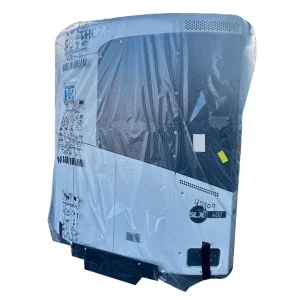
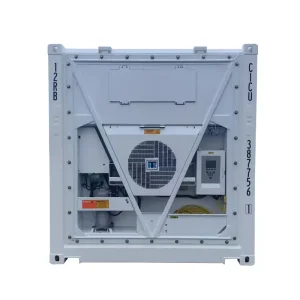
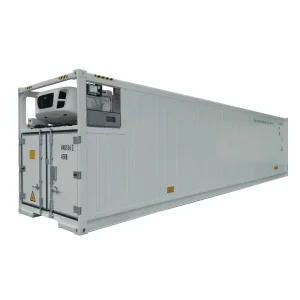
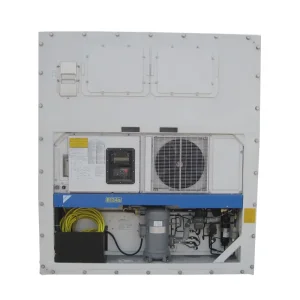
For cold-chain transit containers, energy efficiency is directly governed by heat leakage metrics (K-value). CIMIC’s robotic foaming facilities inject zero-ODP rigid polyurethane insulation, achieving thermal conductivities below 0.38 W/(m²·K). Our active refrigerated fleet interfaces seamlessly with Thermo King Magnum Plus, Daikin LXE10E, and Carrier ThinLINE/PrimeLINE machinery. These units provide micro-processor precision control from -35°C to +30°C, and down to -65°C on deep-freeze blast reefer units, ensuring safe passage across equatorial sea lanes and sub-zero Siberian rail corridors.
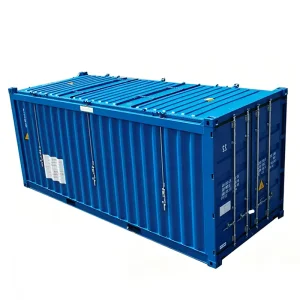
In bulk mineral logistics, conventional 20ft dry containers experience floor deformation due to point loads from high-density ores. Our Half-Height Ore Carriers solve this by adopting high-yield steel floor pans reinforced with inverted hat-section cross-members. For liquid logistics, our 20ft UN Portable T11/T14 ISO Tank Containers feature 316L stainless steel vessels protected by an external Corten frame, insulated with rockwool, and fitted with steam heating channels for viscous chemical transit.
| Transit Category | Structural Metallurgy | Thermal / Mechanical System | Payload / Rating (Max Gross) | Primary Certification |
|---|---|---|---|---|
| ISO Active Reefer (20ft / 40ft HC) | Corten-A (SPA-H) Frame, SUS304 Liners | Carrier / Daikin / Thermo King active units | 30,480 kg – 34,000 kg | BV / ISO 1496-2 / ATP |
| Offshore DNV Basket & Reefer | Charpy Tested Q345D/E Impact Profiles | Integrated Pad Eyes, Marine 3-Coat Paint | 10,000 kg – 25,000 kg | DNV 2.7-1 / EN 12079 |
| Half-Height Ore Carrier | Reinforced High-Yield Carbon Steel | Low Center-of-Gravity, Open / Hard Cover | 32,000 kg – 38,000 kg | CSC / ISO 1496-4 / TIR |
| Intermodal Car Carrier | Lightweight High-Tensile Steel Truss | Internal Mechanical Ramps, Wheel Straps | 30,480 kg (Up to 3-4 SUVs) | CSC / UIC 592 Intermodal |
| ISO Food / Chemical Tank | 316L / 304 Stainless Steel Vessel | Steam/Electric Heating, 50mm Insulation | 36,000 kg (21,000L - 26,000L) | ASME / UN T11 / IMDG |
| Mini Storage Nested Fleet | Corrugated Corten Steel Paneling | Nested Sizing (4ft to 12ft modular fit) | 5,000 kg – 12,000 kg | ISO 9001 / CSC Compliant |
Direct manufacturer pricing based on raw Corten steel spot prices, refrigeration compressors, and specialized bespoke engineering tooling. Below are indicative baseline price brackets for procurement evaluation.
| Equipment Model | Dimensions (L × W × H) | Indicative Price Range (USD)* | Production Lead Time | MOQ / Batch Economics |
|---|---|---|---|---|
| 40ft High Cube Active Reefer (New) | 12,192 × 2,438 × 2,896 mm | $14,500 – $19,800 | 20 – 30 Days | 1 Unit (Volume tiers at 10+) |
| Used 40ft HC Shipping Reefer (Carrier/TK) | 12,192 × 2,438 × 2,896 mm | $4,800 – $7,200 | Immediate Port Stock | 1 Unit (Subject to depot yard) |
| 20ft DNV Offshore Cargo Basket | 6,058 × 2,438 × 1,280 mm | $5,200 – $7,600 | 25 – 35 Days | 2 Units |
| 20ft Half-Height Ore Carrier Container | 6,058 × 2,438 × 1,500 mm | $4,100 – $5,900 | 20 – 25 Days | 4 Units |
| 20ft Special Car Carrier Container | 6,058 × 2,438 × 2,896 mm (HC) | $6,200 – $8,800 | 25 – 30 Days | 2 Units |
| 20ft ISO Stainless Tank Container (T11) | 6,058 × 2,438 × 2,591 mm | $17,500 – $24,000 | 35 – 45 Days | 1 Unit |
| 40ft Side Open Door HC Shipping Box | 12,192 × 2,438 × 2,896 mm | $6,800 – $9,200 | 20 – 30 Days | 2 Units |
| Nested Mini Storage Sets (4ft - 10ft) | Nested Modular Profiles | $3,200 – $5,800 / Set | 15 – 25 Days | 5 Sets |
*Note: Quotations reflect baseline FOB Tianjin or FOB Shanghai parameters. Prices fluctuate according to global steel indices (SPA-H hot-rolled coils), compressor allocations, exchange rates, and bespoke modifications (such as blast air-circulation ducts, remote telemetry sensors, or internal load-locking systems).
When commercial fleet managers evaluate ODM container procurement, the initial purchase price (CapEx) accounts for less than 35% of total lifecycle expenditure. The remaining 65% is dictated by operational costs (OpEx): thermal energy efficiency, marine corrosion resistance, depot repair frequency, and residual salvage value.
High-efficiency scroll compressors combined with tight polyurethane thermal envelopes cut active electrical consumption by 18-24% during long sea journeys, reducing generator fuel usage.
Our shot-blasting process reaches ISO SA 2.5 cleanliness, followed by a 3-layer coating system (total DFT > 200µm). This extends corrosion-free lifespan in offshore environments past 15 years.
Standard Corten-A construction retains certified structural integrity for secondary and tertiary market remarketing, maintaining high scrap and second-hand value across world ports.
From cross-border Eurasian rail bridges to harsh offshore energy platforms, see how CIMIC’s transit solutions maintain cargo integrity under demanding conditions.
The Scenario: Finished vehicles exported across long rail corridors often suffer exterior scratching and weather damage on open auto-racks.
CIMIC ODM Solution: 20ft and 40ft enclosed Car Carrier Containers with internal hydraulic or mechanical mezzanine decking, allowing 2-4 sedans or SUVs to travel in a sealed, dust-free environment.
The Scenario: Copper concentrate, bauxite, and iron ore point-loads rupture standard container timber flooring.
CIMIC ODM Solution: Half-Height Heavy Duty Ore Carriers featuring reinforced corrugated steel floors, low centers of gravity for ship stability, and tippler-compatible top frames for rapid discharge.
The Scenario: Open-ocean crane hoists generate dynamic vertical and rotational shock loads that can buckle standard boxes.
CIMIC ODM Solution: Certified DNV 2.7-1 / EN 12079 Offshore Baskets and reefers equipped with four-point certified wire-rope slings, safety shackles, and low-temperature impact steel profiles.
The Scenario: 10,000 km freight rail transit through -40°C Siberian winters, where power cuts threaten sensitive goods.
CIMIC ODM Solution: 40ft HC and 45ft specialized "Belt and Road" railway refrigerated units paired with oversized 800L diesel generator tanks and dual redundant heating and cooling circuits.
The Scenario: Transporting fresh carcasses without floor-stacking pressure damage or bacterial contamination.
CIMIC ODM Solution: Food-grade hanging meat reefer containers equipped with stainless steel roof beam tracks, anti-sway meat hooks, and hygienic easy-drain slotted aluminum T-flooring.
The Scenario: Logistics yards and remote construction camps requiring space-efficient storage boxes.
CIMIC ODM Solution: Nested cargo shipping containers ranging from 4ft to 12ft, designed to nest inside standard 40ft HC containers for ocean shipping, drastically reducing ocean freight overhead.
International transit containers operate under rigid maritime safety regimes. Non-compliant container structures risk immediate impoundment by port state control officers, customs authorities, or vessel masters. CIMIC integrates quality control into each stage of fabrication, guaranteeing seamless clearance through customs and terminal operations worldwide.
Complete manufacturing line inspection, welding procedure qualification (WPS/PQR), and destructive/non-destructive weld joint testing verified by BV maritime surveyors.
Each unit leaves our yard with an embossed International Convention for Safe Containers (CSC) data plate, certifying maximum gross weight, allowable stacking weight, and transverse racking test values.
Offshore units adhere strictly to DNV 2.7-1 / BS EN 12079 criteria, with materials certified down to -20°C design temperatures for open-ocean service.
A common pitfall in international equipment sourcing is securing replacement parts after deployment. CIMIC eliminates this risk by building around global component standards. Our reefer units utilize universal machinery from Carrier, Thermo King, and Daikin, giving operators immediate access to certified technicians and genuine components in more than 120 countries. Structural components—such as EPDM dual-lip door gaskets, zinc-plated locking assemblies, and ISO cast steel corner pieces—follow standardized dimensions for quick dockside turnaround.
CIMIC's research and development focuses on digitizing transit containers and reducing fleet emissions. As logistics operators face tightening sustainability regulations, container fleets are evolving from passive metal structures into intelligent, connected mobile nodes.
Solar-powered GPS/GSM monitoring arrays provide real-time updates on internal container temperatures, relative humidity, door-opening alerts, battery charge states, and G-force impacts.
Transitions to R-452A and next-generation R-1234yf refrigerants help fleet operators meet Kigali Amendment and European F-Gas regulatory compliance while maintaining cooling efficiency.
High-strength fiber-reinforced composites applied in sub-flooring and side walls reduce tare weight by up to 14%, increasing allowable payload capacities across axle-limited highways.
Review our second production group of custom transit equipment, available for global dispatch from Chinese main port depots or customized per order specifications.




Direct answers from our senior container design team and export engineers, covering dimensions, certifications, modifications, and logistics delivery.
Standard ISO dry containers are designed as uniform general-cargo boxes. An ODM (Original Design Manufacturing) transit container is custom-engineered to meet specific cargo stresses, loading dimensions, or thermal requirements. Examples include reinforced steel floors for dense mineral ores, ceiling-mounted tracks for fresh meat transportation, multi-tier car-carrying mezzanine racks, or DNV-certified structural profiles for offshore hoisting.
We integrate tier-one global refrigeration units based on our buyers' regional servicing preferences: Thermo King (Magnum Plus / SLXi), Carrier Transicold (PrimeLINE / ThinLINE), and Daikin (LXE10E). All active units come factory-tested, pre-charged with eco-compliant refrigerants, and supported by global warranty programs.
Every production run is surveyed by international classification societies. Standard maritime units receive Bureau Veritas (BV) certificates and CSC safety approval plates. Offshore containers comply with DNV 2.7-1 / EN 12079 criteria, and ISO tank containers carry full ASME, IMDG, and UN portable tank approvals.
Our facilities in Tianjin and Suzhou sit roughly 100 km from major sea terminals. To optimize freight costs, we coordinate "one-way cargo use" arrangements with shipping lines, allowing new units to carry dry cargo on their maiden voyage. For smaller containers (such as 4ft through 10ft units), we utilize nested configurations to load multiple units inside a single 40ft HC slot.
For standard sizes with custom paint, logos, or minor door alterations, the MOQ is 1 unit. For non-standard structural chassis designs requiring custom stamping dies and dedicated jig setup (e.g., custom half-height containers or custom platform frames), our engineering team recommends production runs of 2 to 4 units to optimize tooling and setup costs.
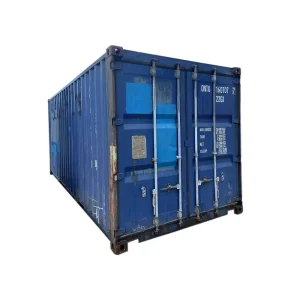
Yes. CIMIC maintains stock of 20ft and 40ft High Cube dry and refrigerated used containers across major Chinese port hubs (Tianjin, Qingdao, Shanghai, Ningbo, and Shenzhen). Each used unit is surveyed under IICL-5 standards to confirm wind-and-water tight (WWT) integrity and comes with a certified CSC plate for international sea shipping.
