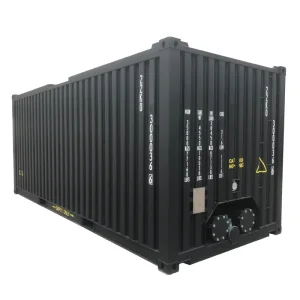
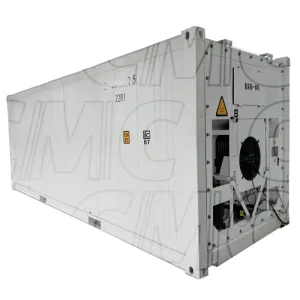
Modern containerized ocean shipping involves far more than standardized ISO corrugated steel boxes. From dynamic offshore payload stresses governed by DNV 2.7-1 / EN 12079 to high-precision reefer thermodynamics powered by Thermo King, Daikin, and Carrier active units, enterprise procurement requires an analytical understanding of total lifecycle cost, structural longevity, and manufacturing provenance.
Enterprise procurement executives today navigate complex ocean shipping volatility, evolving IMO decarbonization mandates (CII/EEXI), and strict cold-chain food security standards. Container selection directly influences operational fuel burn, thermal leakage penalties, tare-weight freight surcharges, and intermodal dwell periods. Our OEM Container In The Sea portfolio balances structural Corten-A metallurgical integrity with localized thermal optimization to lower long-term cost per cubic payload.
Precision-engineered marine units built according to Bureau Veritas, ISO, and DNV dynamic lifting standards. Inspect specifications and access factory quotes directly below.
Leveraging dual automated production mega-bases in Tianjin and Suzhou, our manufacturing framework delivers unmatched scalability, tight tolerance robotic fabrication, and rapid direct port-dispatch.
Continuous robotic submerged-arc welding prevents micro-fissures and stress corrosion cracking along critical sill and corner-casting junctions. Every structural weld conforms to ISO 1496-1 marine racking criteria.
Automated shot-blasting to SA 2.5 profile standards followed by high-build epoxy zinc-rich primer and polyurethane topcoats (180μm-220μm DFT), guaranteeing 15+ years of C5-M marine atmospheric protection.
Located within 100 kilometers of the ports of Tianjin and Shanghai/Taicang, factory-to-quay transit is cut to under 24 hours, eliminating inland drayage surcharges and streamlining charter vessel loading schedules.
Compare mechanical properties, dynamic ratings, and insulation performance across the entire intermodal sea container fleet.
| Container Classification | Primary Cargo Application | Structural Metallurgy / Lining | Thermal / Dynamic Cert | Payload Capacity (MGW) | Status |
|---|---|---|---|---|---|
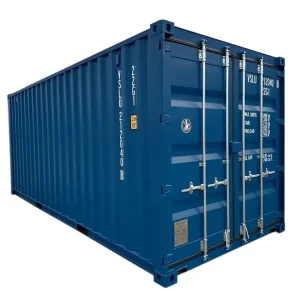
| Standard Dry Cargo (20GP / 40HC) | Consumer goods, raw materials, heavy palletized freight | SPA-H Corten Steel, 28mm Apitong Marine Plywood | ISO 1496-1, CSC, TIR, UIC | 30,480 kg – 32,500 kg | Global In-Stock |
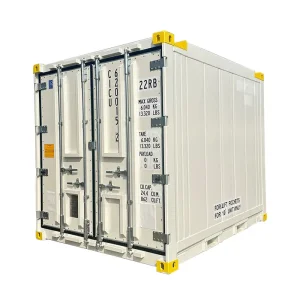
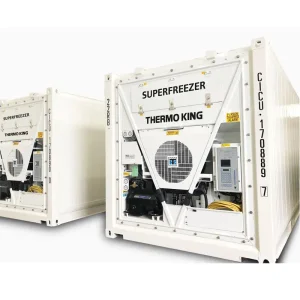
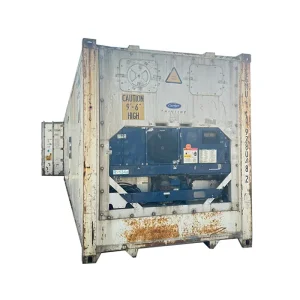
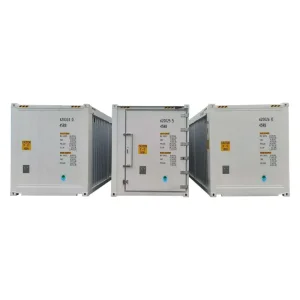
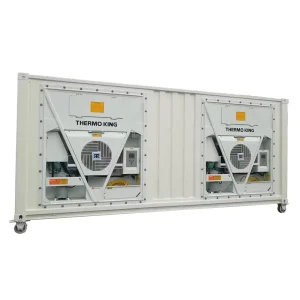
| Cold-Chain Active Reefer (10ft–40HC) | Pharmaceuticals, fresh meat, precision produce | Stainless 304 interior, Cyclopentane PU Foam | ATP Class FRC, ISO 1496-2, BV, CE | 27,200 kg – 34,000 kg | Precision Built |
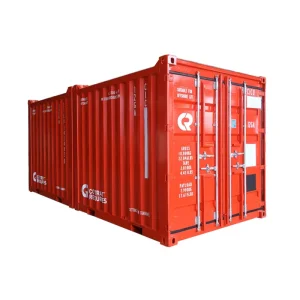
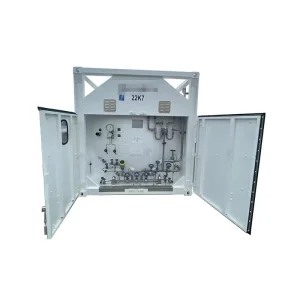
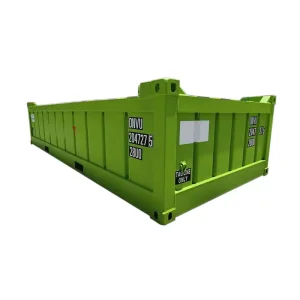
| Offshore Module (DNV 2.7-1 / EN 12079) | Rig maintenance, drill supplies, ocean engineering | Charpy V-Notch impact-tested steel at -20°C | DNV GL Certified, Marine Sling Set | 10,000 kg – 25,000 kg | Extreme Duty |
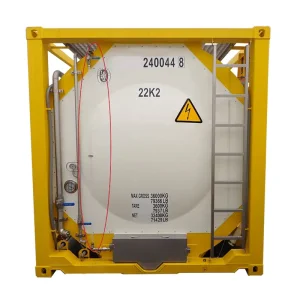
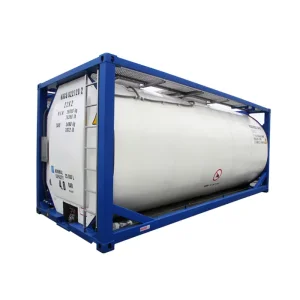
| ISO Tank Container (T11 / T75) | Bulk chemicals, food-grade alcohol, cryogenic gas | 316L Stainless Steel Vessel, Q345 Frame | IMDG, ASME Section VIII, ADR/RID | 36,000 kg Max Gross | Hazmat Tested |
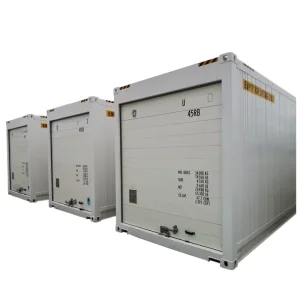
| Passive Thickened Foam Insulated | Medium routes, dairy, sensitive chemicals without power | High-density closed-cell polyurethane matrix | ISO 1496-2 Passive Marine Class | 30,480 kg | Cost Efficient |
How CIMIC is pioneering intelligent maritime logistics through edge computing, eco-refrigerants, and lightweight composite alloys designed to meet IMO 2030 decarbonization goals.
Integrated GPS/BLE beacons and door-tamper sensors provide minute-by-minute visibility into interior temperatures, humidity levels, O2/CO2 levels, and geographic coordinates via low-orbit satellite mesh while underway in mid-ocean.
Rooftop-integrated marine-grade thin-film solar arrays coupled with DC variable-frequency scroll compressors cut auxiliary vessel genset power reliance by up to 28%, significantly trimming Scope 3 shipping emissions.
Pioneering R-452A and CO2 (R-744) natural refrigerant active platforms with Daikin and Thermo King configurations, delivering zero ozone depletion potential and staying well ahead of F-Gas European phase-down schedules.
Every container shipped from our yards carries verifiable, international third-party certification ensuring seamless acceptance by ocean lines, rail networks, port authorities, and offshore inspectors worldwide.
Full CSC (International Convention for Safe Containers) safety approval plates, verified for high-stacking load integrity on deep-sea vessels.
Rigorous dynamic drop tests, non-destructive weld examinations, and marine pad-eye tensile certifications for offshore energy platforms.
Standardized end-to-end quality and environmental tracking spanning raw steel intake, primer immersion, cold foam curing, and functional sign-off.
Reefer machinery backed by factory warranties and authorized repair depots across 130+ nations through Carrier, Daikin, and Thermo King.
Understanding the real variables behind container pricing enables procurement teams to capture structural discounts and eliminate middleman markups.
Container pricing correlates closely with hot-rolled atmospheric corrosion-resistant steel indices. CIMIC secures bulk coil allocations up to six months ahead, insulating volume buyers from raw material spikes.
By utilizing "One-Way Cargo Load" shipping arrangements from Tianjin, Shanghai, or Ningbo directly to European and American hubs, enterprise clients often offset 60%–90% of positioning ocean freight charges.
Avoid costly field retrofits. Our internal engineering staff produces full 3D CAD/SolidWorks models, finite-element analyses (FEA), and custom internal cargo track drawings before tooling production begins.
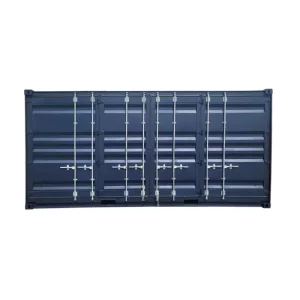
Specialty chemical tank containers, cryogenic equipment, heated asphalt carriers, and tailored double/side door systems engineered for specialized maritime logistics routes.
Clear, practical answers addressing common procurement questions regarding ocean container pricing, structural certifications, and custom builds.
Base container quotes primarily depend on hot-rolled Corten-A steel spot indices, insulation thickness (polyurethane density), choice of refrigeration units (e.g., Daikin, Thermo King, Carrier), and specific classification requirements (such as standard CSC/BV versus high-impact DNV 2.7-1 offshore criteria).
Standard ISO containers are designed for stack-lifting via twistlocks inside vessel cellular guides under static conditions. DNV 2.7-1 / EN 12079 offshore units feature reinforced primary structures, pad-eyes rated for open-sea dynamic wave impact, and Charpy impact-tested steel designed to perform safely down to -20°C.
Our active reefers are engineered for an operational service life of 15 to 20 years. Stainless steel interior linings and hot-dip galvanized base rails resist corrosion from washing and condensation, while active refrigeration units require routine multi-point pre-trip inspections (PTI) every 180 to 360 days.
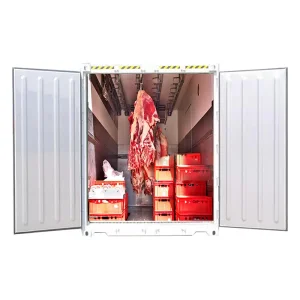
Yes. CIMIC provides comprehensive OEM and ODM support. Custom modifications include full-side bi-fold doors, rolling architectural shutters, butcher meat hanging rails, explosion-proof internal electrical installations, and double-ended cargo access designs.
Every shipment includes an original CSC safety certificate, third-party classification society approvals (BV/DNV/LR), mill test certificates (MTC) verifying steel chemistry, paint film thickness reports, and PTI reefer diagnostic logs.
New units can be booked as "Shipper Owned Containers" (SOC) with one-way freight contracts. This allows your outbound dry or frozen cargo to travel inside the newly purchased units, largely offsetting transoceanic relocation charges.