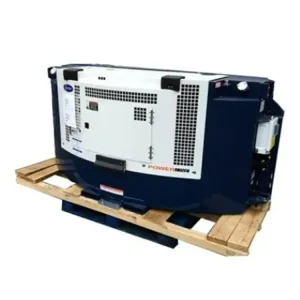
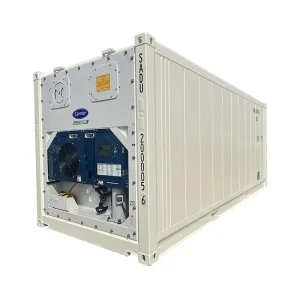
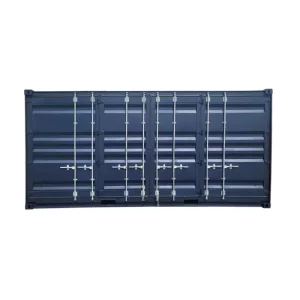
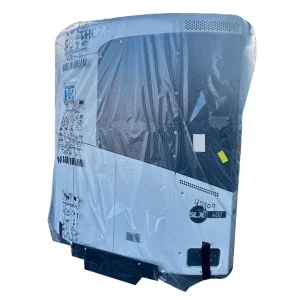
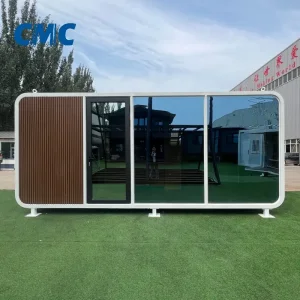
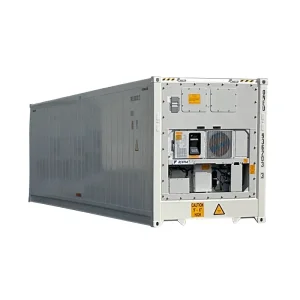
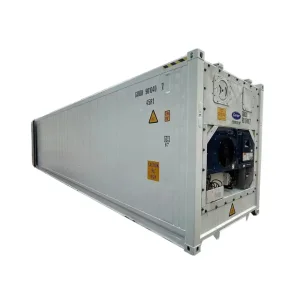
Explore our premium grade high cube, insulated, reefer, offshore, and modular units engineered to international seaworthy standards with certified dimensional rigor.
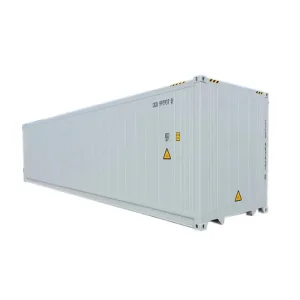
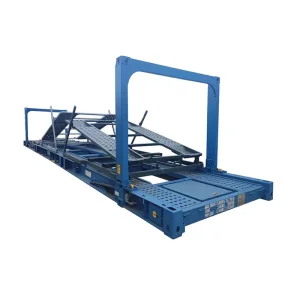
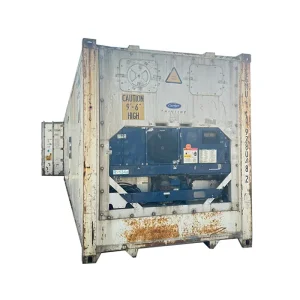
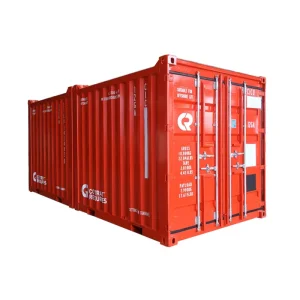

A comprehensive technical breakdown across 20ft HC, 40ft HC, and 45ft HC intermodal configurations for precision naval architecture and inland drayage calculations.
| Dimensional Metric | 20ft High Cube (20HC) | 40ft High Cube (40HC) | 45ft High Cube Pallet Wide (45HCPW) | Engineering Tolerance |
|---|---|---|---|---|
| External Length | 19' 10.5" (6,058 mm) | 40' 0.0" (12,192 mm) | 45' 0.0" (13,716 mm) | +0, -6 mm (ISO 668) |
| External Width | 8' 0.0" (2,438 mm) | 8' 0.0" (2,438 mm) | 8' 2.4" (2,500 mm / Pallet Wide) | +0, -5 mm |
| External Height | 9' 6.0" (2,896 mm) | 9' 6.0" (2,896 mm) | 9' 6.0" (2,896 mm) | +0, -5 mm |
| Internal Length | 19' 4.2" (5,898 mm) | 39' 5.7" (12,032 mm) | 44' 5.7" (13,556 mm) | ±5 mm Nominal |
| Internal Width | 7' 8.6" (2,352 mm) | 7' 8.6" (2,352 mm) | 7' 11.2" (2,426 mm) | ±5 mm Nominal |
| Internal Height | 8' 10.2" (2,698 mm) | 8' 10.2" (2,698 mm) | 8' 10.2" (2,698 mm) | ±5 mm Nominal |
| Door Opening Width | 7' 8.1" (2,340 mm) | 7' 8.1" (2,340 mm) | 7' 10.5" (2,400 mm) | Min. Clear Clearance |
| Door Opening Height | 8' 5.7" (2,585 mm) | 8' 5.7" (2,585 mm) | 8' 5.7" (2,585 mm) | Min. Clear Clearance |
| Cubic Capacity | 1,322 cu ft (37.4 m³) | 2,698 cu ft (76.4 m³) | 3,040 cu ft (86.1 m³) | Theoretical Net Volume |
| Tare Weight | 5,180 lbs (2,350 kg) | 8,598 lbs (3,900 kg) | 10,580 lbs (4,800 kg) | ±2% Alloy Variance |
| Max Gross Weight (Rating) | 67,200 lbs (30,480 kg) | 71,650 lbs (32,500 kg) | 74,950 lbs (34,000 kg) | CSC Approved Max Load |
| Max Net Payload | 62,020 lbs (28,130 kg) | 63,052 lbs (28,600 kg) | 64,370 lbs (29,200 kg) | Payload Optimized |
In global multimodal trade, the architectural distinction of a High Cube (HC) container lies squarely in its additional 1 foot (12 inches / 305 mm) of vertical clearance relative to standard General Purpose (GP) containers. While standard ISO containers remain restricted to an exterior height of 8 feet 6 inches (2,591 mm), high cubes provide an exterior stature of 9 feet 6 inches (2,896 mm). This volumetric escalation translates to an approximately 12.2% expansion in internal displacement, making high cube units the unrivaled standard for volumetric freight, light machinery, e-commerce consolidating distribution, and mission-critical engineering enclosures such as Battery Energy Storage Systems (BESS), mobile server nodes, and field hospital installations.
Understanding these dimensional configurations is critical when calculating axle weight allowances for domestic drayage across North American DOT interstate highway corridors, European Directive 96/53/EC axle load standards, and maritime container vessel cell guide constraints. When calculating stowage schemas, naval architects and third-party logistics specialists must factor in both gross internal clearance and interior gooseneck tunnel intrusions found standard on 40ft and 45ft high cube chassis profiles.
Elevating container durability, longevity, and thermal insulation through advanced metallurgy, automated welding robotics, and low-VOC nano-ceramic coatings.
The core framework leverages cold-rolled atmospheric corrosion resistant SPA-H / Corten-A steel, engineered specifically to resist oceanic salt fog spray and severe meteorological extremes.
Eliminating micro-voids, porosity, and localized rust vectors. Computer numerical control (CNC) automated weld systems ensure complete penetration across top/bottom side rails.
Every raw unit undergoes automatic centrifugal grit shot blasting to ISO Sa 2.5 profile before immediate multi-stage automated paint line application.
Integrated telemetry options enable real-time parameter tracking for intelligent fleet management across international trade hubs.
Designed for insulated dry boxes and active reefers, utilizing high-density cyclopentane-blown polyurethane foam and non-conductive structural composites.
Transitioning from tropical hardwood apitong plywood to sustainably harvested bamboo composite or galvannealed checkered steel floor systems.
How specialized high cube dimensional configurations resolve logistical bottlenecks across maritime routes, cold chain logistics, green energy, and construction.
1. Multimodal Rail & Ocean Synergy: The structural integration of standard ISO corner castings positioned precisely to ISO 1161 specifications allows 40ft and 45ft high cube containers to interface smoothly with container ship cell guides, port quay cranes, rail well cars (such as double-stack intermodal rail platforms across North America and Eurasian corridors), and highway skeletal chassis. Despite their added height, specialized tunnel recesses in the understructure allow the forward frame to sit flush on tractor gooseneck trailers, guaranteeing that overall highway clearances conform to bridge and underpass limits worldwide.
2. Cold Chain Security & Controlled Atmosphere Logistics: For agricultural, pharmaceutical, and biological perishables, internal cubic volume is directly correlated with air circulation effectiveness. In high cube reefer units, the additional vertical ceiling height allows cold air to travel uninterrupted from the bottom T-floor, upward through packed cargo pallets, and cycle effortlessly across the return air plenum back into the refrigeration evaporator. Equipped with top-tier Carrier, Daikin, or Thermo King cooling units, our 40ft high cube reefers sustain consistent microclimates within ±0.25°C tolerances across journeys lasting over 45 days at sea.
3. Battery Energy Storage Systems (BESS) Enclosures: The global transition to renewable grid stabilization has created massive OEM demand for custom high cube shells. Standard 20ft and 40ft high cube designs provide the crucial interior height required to install dual-rack lithium iron phosphate (LiFePO4) battery cabinets, overhead liquid-cooling piping manifolds, aerosol fire suppression systems, and step-up power converters. Heavy-duty crossmembers and floor reinforcement deliver payload capacities up to 36,000 kg, supporting high-density industrial energy deployment safely.
State-of-the-art intelligent manufacturing from our Tianjin and Suzhou industrial complexes, positioned less than 100 km from major seaports for rapid worldwide export.
From automated slitting lines for raw steel coils to computerized press braking for corrugation panels, our production lines achieve total quality oversight across all components.
Every batch is subjected to comprehensive testing in compliance with ISO 1496 specifications, including stacking tests up to 216,000 kg (9-high laden stacking).
Strategically situated within 100 km of Tianjin Port (North China gateway) and Shanghai/Taicang ports (East China hub), ensuring minimized drayage costs and expedited vessel berthing.
Rigorous conformance with maritime, railroad, and highway transportation laws across the Americas, Europe, Asia, and Australasia.
Procuring intermodal equipment demands uncompromising compliance with international treaties and classifications. Every high cube container fabricated in our facilities is certified with an official CSC (International Convention for Safe Containers) safety approval plate, guaranteeing approval by port state control, customs officers, and maritime insurers worldwide.
Specifies structural testing requirements for series 1 freight containers suitable for international carriage by land and sea, covering bottom lifting, top lifting, longitudinal restraint, racking, and weatherproof seal integrity.
For demanding offshore oil, gas, and marine operations, units are engineered with high-impact material toughness certified at -20°C, offshore certified pad-eyes, lifting slings, and secondary safety retention hardware.
Equipped with customs security sealing provisions, locking bar handles with anti-tamper rivets, and continuous hinge welds to fulfill Customs Convention on the International Transport of Goods under Cover of TIR Carnets.
From custom dimensional alterations to specialised sub-assembly integration, we convert technical drawings into certified, industrial-grade reality.
| Procurement Phase | Actionable Technical Deliverable | Quality Checkpoint | Standard Timeline |
|---|---|---|---|
| Phase 1: Design Specification | Detailed 2D CAD & 3D SolidWorks blueprints, dimensional tolerance mapping | FEA (Finite Element Analysis) stress simulation & load calculation | 3–5 Business Days |
| Phase 2: Prototype Fabrication | Pilot unit fabrication, custom door opening assemblies, insulation inserts | Third-party surveyor pre-inspection (BV, LR, or ABS) | 10–14 Business Days |
| Phase 3: Serial Assembly | Automated production, robotic welding, high-efficiency primer & topcoat lines | In-line dimensional auditing, 100% weather seal hydro-testing | 15–20 Days per 100 TEU |
| Phase 4: Export & Certification | CSC safety plates stamped, factory acceptance test (FAT) certs issued | Customs export filing, SOC documentation, vessel booking confirmation | Within 48h of signoff |
Authoritative answers covering measurements, tare-payload dynamics, SOC operations, and custom modification parameters.
Standard GP (General Purpose) containers possess an exterior height of 8 feet 6 inches (2,591 mm), whereas High Cube containers stand at 9 feet 6 inches (2,896 mm). This provides exactly 12 inches (305 mm / 1 foot) of additional internal headroom, increasing cubic capacity from 67.7 m³ to 76.4 m³ on a standard 40ft footprint.
Not necessarily. Maximum Gross Weight (Rating) for modern ISO containers is typically unified at 30,480 kg or 32,500 kg. Because a High Cube has a slightly higher tare weight due to additional structural steel corrugation, its net maximum payload may be slightly lower (by approximately 150–250 kg) than a standard GP, but it accommodates vastly greater cargo volume.
The gooseneck tunnel is a specialized recessed indentation on the underside front section of 40ft and 45ft high cube containers. Measuring approximately 120 mm deep and 1,029 mm wide, it allows the container to sit lower on dedicated gooseneck chassis trailers, keeping the total haulage height compliant with highway bridge regulations.
SOC stands for Shipper Owned Container. Instead of leasing containers from shipping lines (COC) and risking severe demurrage or detention charges at destination ports, buyers purchase containers directly from the manufacturer, load them with export cargo, and retain full asset ownership for permanent site storage, resale, or modular integration.
Yes. We engineer complete OEM/ODM configurations including full-side open bi-fold doors, motorized insulated roll-up shutters, double-end access doors, and custom partition bulkheads, all with finite-element verified structural headers to ensure full stackability and CSC seaworthiness.
We supply factory-new and certified remanufactured reefer assemblies with Carrier Transicold (ThinLINE, PrimeLINE), Daikin (Zestia), and Thermo King (Magnum Plus) units, supported by global warranty networks, programmable dataloggers, and dual-zone temperature control capabilities down to -35°C (or -60°C for ultra-low blast freezers).
Review additional customized intermodal equipment engineered to tight dimensional tolerances for power generation, heavy minerals, bulk fluids, and special logistics.