Pre-engineered container assets meeting stringent class standards (DNVGL-ST-E271, EN 12079, CSC, and ISO 1496), optimized for multi-modal European river, rail, and deep-sea routes.



Switzerland presents a distinct, highly sophisticated market within global offshore and specialized container logistics. While geographically landlocked within Central Europe, Switzerland operates one of the highest-density hubs of ocean trade governance, commodity brokerage, and marine engineering finance anywhere in the world. Headquartered primarily along the Geneva-Zug-Lugano axis, Swiss trading powerhouses manage vast fleets of specialized vessels, deep-water drilling rigs, and cross-continental supply lines spanning the North Sea, the Gulf of Guinea, and the Indo-Pacific offshore basins.
Furthermore, Switzerland’s domestic heavy chemical sectors (Basel-Stadt), specialized high-precision tunnel construction infrastructure, and pharmaceutical manufacturing clusters mandate absolute adherence to DNV 2.7-1 / ISO 10855 standards for hazardous and heavy payloads. For Swiss procurement executives, buying offshore containers is an exercise in extreme risk mitigation, structural durability, and lifecycle compliance.
Key demand pillars driving procurement decisions among Swiss multinational EPCs and logistics consortia:
The convergence of energy transition initiatives, deep-water offshore wind development, and stringent safety engineering has reshaped containerized asset engineering.
Modern European operators demand DNVGL-ST-E271, EN 12079, and ATEX certified modules that balance dynamic lifting safety with lighter, ultra-high-strength micro-alloyed steels (such as Q345E or Corten structural steels), reducing deadweight and lifecycle transport emissions across European rail networks.
Swiss enterprises operating from Zürich, Basel, and Lugano require containers that seamlessly alternate between international container vessels, North Sea supply ships (PSVs), and internal Swiss SBB Cargo rail infrastructure, calling for strict compliance with both offshore standards and ISO corner casting dimensions.
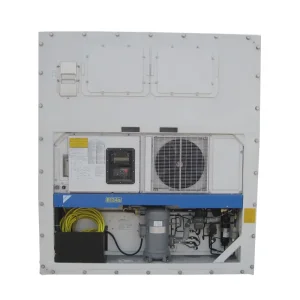
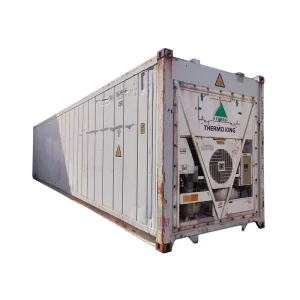
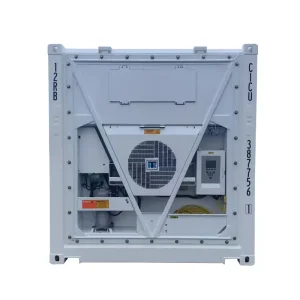
With Basel being a global pharmaceutical and specialty fine-chemical epicentre, the demand for dual-certified offshore reefer units and ASME VIII/DNV offshore tank containers has accelerated, requiring active remote telematics, explosion-proof components, and high insulation integrity.
Combining state-of-the-art robotic production lines in Tianjin and Suzhou with uncompromising European engineering standards.
Our Tier-1 manufacturing facilities utilize intelligent multi-axis fiber laser cutting and synchronized robotic welding cells. This eliminates structural micro-defects at primary stress-junctions (such as padeye-to-header structural welds), ensuring that dynamic loading factors (often 2.5x to 3.0x payload) under rough marine seas or heavy rail transit are effortlessly absorbed.
Every offshore container undergoes exhaustive non-destructive testing (NDT), including Magnetic Particle Inspection (MPI) and Ultrasonic Testing (UT), backed by Bureau Veritas or DNV class surveyor sign-offs before port dispatch.
Alpine salt-melt environments and harsh marine atmospheres require superior corrosion control. Our automated blast booths apply SA 2.5 near-white metal grit profiling followed by automated zinc-rich epoxy primers, intermediate polyamides, and aliphatic polyurethane topcoats exceeding ISO 12944 C5-M extreme marine durability metrics.
This end-to-end process affords Swiss buyers total total cost of ownership (TCO) efficiency, extending maintenance lifecycles to 15+ years in harsh operational theatres.
Delivering high-reliability modular assets capable of performing across alpine sub-zero climates, multi-modal Rhine barges, and high-salinity oceanic platforms.
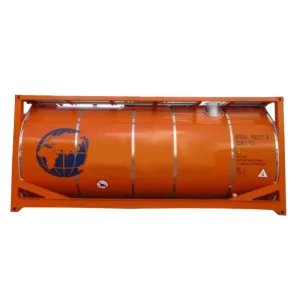
Deploying 10ft & 20ft DNV offshore tank containers equipped with 316L stainless-steel electro-polished vessels, PTFE-lined relief valves, and electrical heating jackets to move pharmaceutical precursors through Basel port terminals across European inland waterways safely.
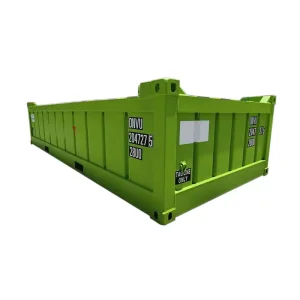
Half-height open top containers and reinforced ore carriers utilized in high-density aggregate transport during trans-European railway expansion projects, engineered to withstand aggressive excavator impact and rough crane hoists.
Long-frame offshore baskets engineered with specialized internal tie-downs, certified sling sets, and heavy-duty load spreader bars, chartered directly by Swiss offshore engineering desks managing subsea umbilical installations across the North Sea.
Comprehensive technical and commercial answers tailored for Swiss sourcing managers and logistics directors.
Standard ISO containers are designed primarily for static stacking and balanced vertical lifting via corner castings. DNV 2.7-1 / EN 12079 offshore containers are engineered for dynamic impact loads in open-sea conditions where vessel roll and wave surge occur. They feature reinforced structural frames, Charpy impact-tested materials at -20°C or -40°C, and dedicated rated pad eyes with tested four-legged lifting sling sets.
Orders are dispatched from our production bases in Tianjin and Suzhou via direct deep-sea carrier to main European hub ports—predominantly Rotterdam, Antwerp, or Hamburg. Cargo is then barged along the Rhine directly to the Port of Switzerland (Schweizerische Rheinhäfen in Basel) or transported via intermodal block trains to inland container terminals in Aarau, Rekingen, or Frenkendorf.
Yes. Our dedicated OEM/ODM engineering department models all CAD/3D assemblies to comply with localized directives (including SUVA requirements, Swiss pressure vessel legislation, and ATEX zone-rated electrical equipment for hazardous goods storage).
Every delivered unit is accompanied by a full comprehensive Manufacturer's Data Report (MDR), including Class Inspection Certificates (DNV/BV), Mill Material Test Certificates (EN 10204 3.1), NDT inspection records (MPI/UT), paint DFT blast profile reports, and sling proof-load test certification.
Engineered for global deployment across chemical, temperature-controlled, bulk material, and offshore operational environments.