
ISO Certified
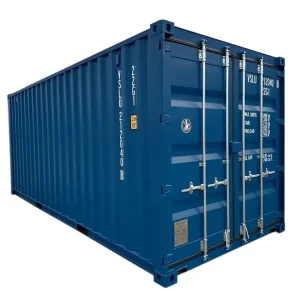
Double Door Dry Freight
Factory-direct, certified intermodal containers optimized for maritime trade, Indian Railways freight corridors, and heavy-duty industrial storage.
India's ambitious target to cross $1 trillion in annual merchandise exports by 2030 has fundamentally altered the demand dynamics for dry cargo containers. While major infrastructure developments like the Sagarmala port modernization project and the Dedicated Freight Corridors (Western and Eastern DFC) drive inland logistics velocity, a persistent structural deficit in domestic container manufacturing creates critical supply challenges for Indian logistics managers, freight forwarders, and industrial exporters.
India's premier maritime gateways—including Jawaharlal Nehru Port Authority (JNPA/Nhava Sheva), Adani Ports Mundra, Pipavav, Chennai, and Cochin—handle tens of millions of TEUs annually. Despite deep-water expansion, Indian exporters face chronic equipment imbalances. The mismatch between inbound dry cargo containers and the heavy outward velocity of engineered goods, agricultural commodities, and textiles creates acute localized container shortages, leading to inflated spot container purchase costs.
The operational commissioning of Indian Railways' Dedicated Freight Corridors has transformed inland logistics. Running heavy-haul, double-stack container trains from the industrial belts of Haryana, Rajasthan, and Uttar Pradesh straight into Mundra and Pipavav requires higher payload structural rigidity. Standard used containers often fail under dynamic rail shocks, demanding high-tensile, newly fabricated ISO dry boxes compliant with strict UIC and Indian Railway standards.
While the Indian Government has promoted domestic container manufacturing clusters in Bhavnagar (Gujarat) and Tamil Nadu under the Atmanirbhar Bharat initiative, local producers face steep headwinds. Challenges include limited domestic capacity for specialized Corten steel (SPA-H grade), high localized power tariffs, lack of high-speed robotic assembly automation, and uncompetitive pricing compared to scaled industrial plants, compelling top Indian enterprises to source certified containers via resilient cross-border partnerships.
Standard boxes cannot withstand India's harsh multimodal conditions—extreme summer thermal loading exceeding 48°C, monsoon humidity, high-speed rail dynamic buffeting, and heavy axle cargo loading. We engineer tailored variants specifically configured to solve these industrial operational hurdles.
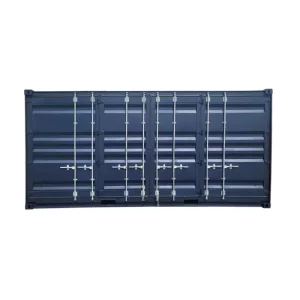
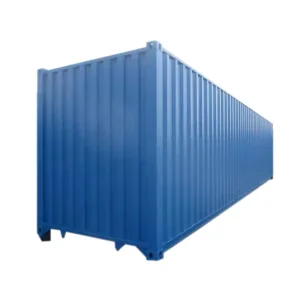
Automotive clusters in Chennai, Pune-Chakan, and the Delhi-NCR belt require maximum cubic capacity and side-door rapid access for palletized engine blocks, stamped metal panels, and electric vehicle (EV) battery packs. Our 40ft High-Cube and 20ft Side-Door dry units offer reinforced steel tie-down lashing rings (rated to 2,000 kg each), preventing cargo shifting during violent humping on Indian freight corridors.
India is a powerhouse in exporting non-basmati rice, spices, oilseeds, sugar, and tea from hinterland states like Punjab, Haryana, Madhya Pradesh, and Andhra Pradesh. Transporting organic bulk goods under high tropical humidity invites catastrophic condensation ("container rain"). Our specialized dry containers feature pressure-compensating labyrinth ventilators and food-grade epoxy inner liners.
With massive chemical complexes across Dahej, Hazira, and Visakhapatnam, plus rapid solar farm installations across Rajasthan and Karnataka, specialized dry containers play an essential containment and transport role. Heavy polymer drums and delicate solar PV wafers require precise dimensional stability, non-sparking zinc-rich primers, and heavy floor loading capacity.
While domestic container manufacturing in India scales gradually, international procurement executives and tier-1 Indian logistics operators rely on our dual intelligent manufacturing bases in Tianjin and Suzhou. We provide immediate volume scale, uncompromised metallurgy, and guaranteed delivery directly into major Asian trade routes.
Our Tianjin and Suzhou production centers deploy multi-axis laser welding gantries, automated shot-blasting halls, and electrostatic powder coating systems that produce an ISO-certified dry container every few minutes. Every unit is constructed from authentic SPA-H Corten atmospheric corrosion-resistant steel, providing an oxidation lifespan exceeding 25 years in harsh maritime environments.
Strategically situated within 100 kilometers of Tianjin and Shanghai/Taicang maritime ports, our facilities resolve the primary cost bottleneck of empty container repositioning. We coordinate with global container shipping lines and freight forwarders to load brand-new dry containers with commercial one-way cargo bound directly for Mumbai (JNPT), Mundra, Cochin, or Chennai.
Connect with our senior logistics engineering team to coordinate volume delivery, SOC one-way freight schedules, and technical certification packages.
The intermodal industry is shifting rapidly from passive steel boxes toward dynamic data-producing assets. As supply chain volatility challenges multinational conglomerates operating across South Asia, next-generation dry container engineering integrates digital intelligence directly into the structural frame.
Gone are the days when dry containers were "blind" during transport. Our latest production runs offer optional flush-mounted IoT transceivers embedded into the header corrugation. Equipped with 10-year solar-assisted battery backups, these sensors monitor real-time GPS location, door open/close status, internal humidity, and sudden G-force shock impacts along rough railway switching yards.
Meeting Scope 3 supply chain decarbonization targets requires structural material reform. In partnership with advanced metallurgy mills, we utilize electric arc furnace (EAF) recycled Corten steel with high scrap fractions, reducing the embedded carbon footprint per TEU by up to 38% compared to blast-furnace alternatives, backed by verifiable Life Cycle Assessment (LCA) declarations.
India's coastal monsoon corridors represent one of the world's most corrosive logistics environments (ISO 12944 Category C5-M). By utilizing nano-ceramic zinc silicate barrier primers alongside polyurethane topcoats, our dry containers achieve salt-spray test endurance exceeding 1,500 hours, drastically extending refurbishment intervals for container leasing firms.
Standardized engineering data formulated to assist procurement directors, technical marine surveyors, and fleet asset managers in calculating payload limits, tare weight trade-offs, and internal cubic capacities.
| Model Parameter | 20ft General Purpose (GP) | 20ft Double Door (DD) | 40ft General Purpose (GP) | 40ft High Cube (HC) | Side Open Door (20ft) |
|---|---|---|---|---|---|
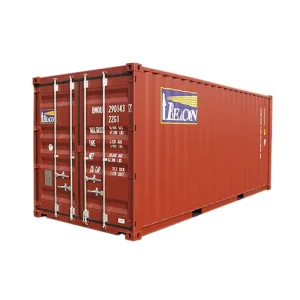
| External Dimensions (L×W×H) | 6,058 × 2,438 × 2,591 mm (20'0" × 8'0" × 8'6") |
6,058 × 2,438 × 2,591 mm (20'0" × 8'0" × 8'6") |
12,192 × 2,438 × 2,591 mm (40'0" × 8'0" × 8'6") |
12,192 × 2,438 × 2,896 mm (40'0" × 8'0" × 9'6") |
6,058 × 2,438 × 2,591 mm (20'0" × 8'0" × 8'6") |
| Internal Dimensions (L×W×H) | 5,898 × 2,352 × 2,393 mm | 5,844 × 2,352 × 2,393 mm | 12,032 × 2,352 × 2,393 mm | 12,032 × 2,352 × 2,698 mm | 5,898 × 2,286 × 2,302 mm |
| Internal Volume / Capacity | 33.2 m³ (1,172 cu.ft) | 32.8 m³ (1,158 cu.ft) | 67.7 m³ (2,390 cu.ft) | 76.4 m³ (2,700 cu.ft) | 31.0 m³ (1,095 cu.ft) |
| Tare Weight (Empty Box) | 2,200 kg (4,850 lbs) | 2,360 kg (5,200 lbs) | 3,730 kg (8,220 lbs) | 3,900 kg (8,600 lbs) | 2,950 kg (6,500 lbs) |
| Max Payload (Cargo Weight) | 28,280 kg (62,350 lbs) | 28,120 kg (62,000 lbs) | 26,750 kg (58,980 lbs) | 26,580 kg (58,600 lbs) | 27,530 kg (60,700 lbs) |
| Max Gross Weight (M.G.W) | 30,480 kg (67,200 lbs) | 30,480 kg (67,200 lbs) | 30,480 kg (67,200 lbs) | 30,480 kg (67,200 lbs) | 30,480 kg (67,200 lbs) |
| Door Opening Clearances | 2,340 mm (W) × 2,280 mm (H) | Both ends: 2,340 × 2,280 mm | 2,340 mm (W) × 2,280 mm (H) | 2,340 mm (W) × 2,585 mm (H) | Full Side: 5,820 × 2,150 mm |
| Core Applications in India | Heavy Minerals / Steel | Fast Drive-Through Loading | General Intermodal | Textiles / Electronics | Automotive / Over-Length |
Every container entering international or domestic Indian supply chains must comply with rigorous statutory safety criteria. Failure to maintain verifiable certification exposes asset owners to port detentions, customs fines under Indian Central Board of Indirect Taxes and Customs (CBIC), and severe maritime insurance liabilities.
Every dry container delivered leaves our plant fitted with a high-grade stainless steel International Convention for Safe Containers (CSC) safety plate. Stamped with Bureau Veritas (BV), ABS, or DNV classification approvals, each plate certifies dynamic corner-casting stackability (up to 9-high laden stacking), transverse racking resistance, and end-wall deflection tests.
For buyers deploying container fleets into domestic coastal shipping corridors under relaxed Indian Cabotage directives (Merchant Shipping Act provisions), we provide technical documentation cross-accepted by the Indian Register of Shipping (IRS) and the Directorate General of Shipping, ensuring frictionless transit between domestic hubs like Kandla, Cochin, and Paradip.
All timber flooring installed in our dry containers undergoes accredited heat treatment or eco-friendly chemical pressure treatment certified to Timber Treatment (TCT) standards. This guarantees biosecurity protection against wood-boring pests, completely eliminating border fumigation delays when Indian export cargoes arrive in Oceania or European ports.
Navigating global container acquisition requires balancing capital expenditure, maintenance overheads, depreciation horizons, and repositioning economics. Below is an engineering and financial comparison designed to clarify procurement pathways for Indian corporate sourcing teams.
Shipper Owned Containers (SOC) provide absolute autonomy from steamship line demurrage and detention (D&D) penalties—a primary cost trap at congested Indian ports. Direct capital acquisition is ideal for industrial corporations operating fixed triangular trade lanes, on-site industrial storage yards, or specialized freight operations.
Carrier-Owned Containers (COC) eliminate initial capital outlays and shift empty repositioning responsibilities back to ocean carriers. However, for Indian inland exporters operating far from coastal ports (e.g., Ludhiana, Indore, Hyderabad), shipping line container availability is frequently inconsistent, causing catastrophic shipping delays.
Authoritative guidance on specifications, Indian import duties, structural certifications, and intermodal transport capabilities.
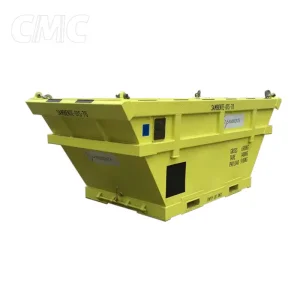
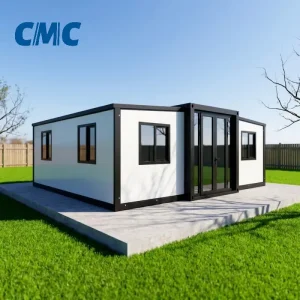
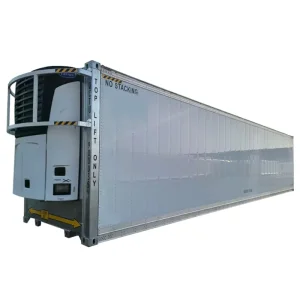
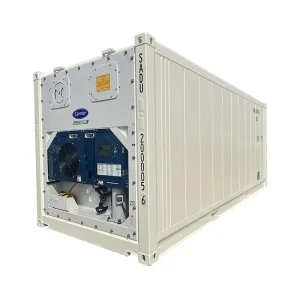
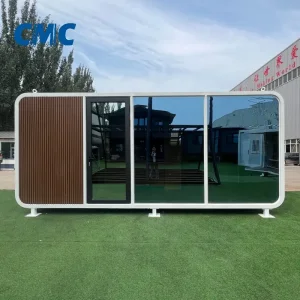
Expanding beyond standard dry cargo: explore our certified offshore baskets, thermal insulated units, precision cold-chain reefers, liquid tank containers, and rapid-deployment modular building structures.
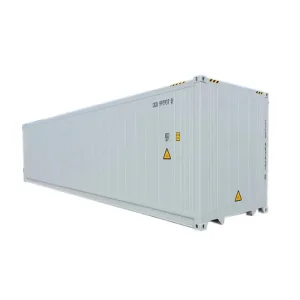


Whether you require 20ft double-door dry containers for DFC rail freight, 40ft High Cubes for port export, or specialized ISO equipment, our sales engineers provide technical drawings, pricing, and shipping schedules within 24 hours.