
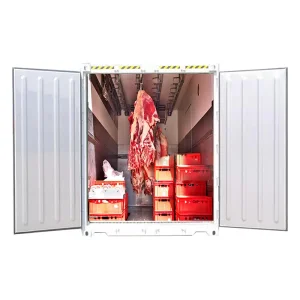
Korean Route OEM Meat Hanging Reefer Container for Low Temp Fresh Logistics
Reinforced roof-beam hanging rail system engineered specifically for beef and pork carcass transit with continuous airflow circulation.
View Korean SpecificationsHeavy-duty refrigerated hanging meat units and certified maritime modules configured for Republic of Korea import terminals and intermodal logistics.
Reinforced roof-beam hanging rail system engineered specifically for beef and pork carcass transit with continuous airflow circulation.
View Korean Specifications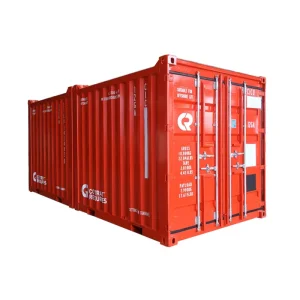
Built to extreme DNV 2.7-1 / EN 12079 dynamic lifting standards for Korean offshore platform supply and marine shipyards in Ulsan and Geoje.
View Offshore Pricelist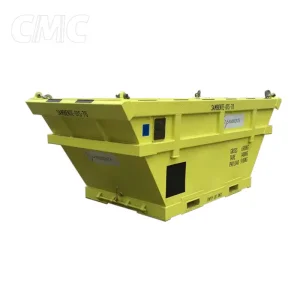
Ruggedized marine-grade steel construction for subsea sediment and drilling mud handling along Korea's southern offshore exploration belts.
Technical Drawings & Specs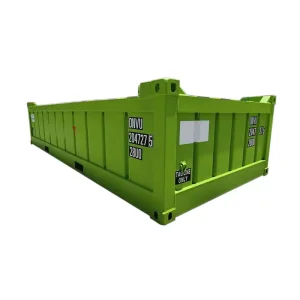
Low center-of-gravity design with removable tarpaulins, engineered for dense industrial equipment, castings, and offshore supply chain logistics.
Request Factory QuotationStrategic modernization of Korea's red meat cold chain driven by high consumer demand for chilled imports and stringent MFDS biosecurity regulations.
The South Korean red meat market has undergone a structural transformation over the past decade. Traditional frozen boxed imports—which undergo significant drip loss and cellular rupture during thawing—are steadily being superseded by high-value chilled hanging carcasses (quarter-beef, hog sides, and whole ovine carcasses). Major logistics corridors passing through the Port of Busan (Gamcheon and New Port cold complexes), Incheon Port, and Gwangyang demand specialized intermodal equipment that preserves organoleptic freshness, marbling structure, and microbiological stability without interruption.
Under regulations enforced by the Ministry of Food and Drug Safety (MFDS - 식품의약품안전처) and the National Livestock Products Quality Assessment Service (KAPE), hanging meat imports must maintain uninterrupted core carcass temperatures between -1.5°C and +2.0°C. Any accumulation of moisture, ceiling condensate dripping onto exposed muscle, or mechanical contact between hanging quarters leads to instant cargo quarantine or market devaluation at wholesale centers such as Seoul’s Majang-dong Livestock Market (마장축산물시장).
Over 74% of South Korea's hanging carcass imports clear customs through Busan's dedicated refrigerated container terminals before immediate transshipment via the Gyeongbu Expressway corridor to inland cold-distribution facilities in Gyeonggi-do and Chungcheongnam-do. Unlike standard floor-stowed reefers, hanging meat containers subject chassis and container superstructure to continuous dynamic pendulum oscillation during truck hauling. Purchasing engineers must specify high-tensile Corten-steel side wall corrugations and transverse ceiling stiffeners to prevent resonance failure during highway transit.
How state-of-the-art hanging reefer containers overcome thermodynamic stratification, structural deflection, and bacterial colony amplification.
Suspending up to 24,000 kg of beef sides from the ceiling of an ISO shipping container introduces extreme physical stress vectors that dry freight or standard reefer boxes never encounter. While static weights are high, dynamic G-forces during rough open-ocean voyages (pitching, rolling, and heaving in the Tsushima Strait and Sea of Japan) multiply the downward tensile load by up to 2.4 times.
| Engineering Attribute | Standard ISO Reefer Container | CIMIC Korean-Spec Meat Hanging Reefer (40ft HC) | Operational Benefit for Korean Importers |
|---|---|---|---|
| Roof Structure | 0.8mm - 1.2mm SUS/Steel pressed panels | High-tensile roof beams + 4.0mm heavy lateral web brackets | Prevents roof sag under 24t dynamic carcass pendulum loads |
| Overhead Rail Setup | None (Floor or pallet loading only) | 4 or 5 longitudinal aluminum/stainless overhead tracks | Allows 180–220 hog carcasses or 80–110 beef quarters |
| Air Distribution Path | Standard bottom-up T-floor delivery | High-velocity T-floor + Ducted ceiling extraction plenum | Eliminates thermal dead zones between suspended carcasses |
| Interior Lining | Standard 0.7mm food-grade stainless | 1.0mm Food-Safe SUS 304 / ISO 22000 certified seamless | Withstands harsh chemical CIP washdown & salt brine exposure |
| Sanitation & Drains | Standard 4-point condensation drains | Dual-valve oversized siphon drains with vermin baffles | Rapid discharge of sanitizing agents without vacuum loss |
In meat hanging transport, airflow velocity is a critical double-edged sword. Insufficient air movement creates micro-climates where heat from deep muscle tissue cannot dissipate, accelerating anaerobic bacterial proliferation and surface slime (Pseudomonas species). Conversely, excessive direct air velocity causes moisture desiccation, resulting in weight loss ("shrinkage") and discoloration of the fat cap.
Our units deploy variable-frequency evaporator blowers that modulate static air pressure. By coordinating with Daikin LXE10E or Carrier PrimeLINE micro-controllers, the relative humidity (RH) is strictly maintained between 85% and 90%. This precise threshold suppresses microbial germination while preserving critical carcass weight—saving meat distributors thousands of dollars per 40ft container payload.
Roof trusses tied directly into corner castings and side top rails to redirect dynamic vertical loads safely down into the container's corner posts.
Extruded alloy overhead tracking equipped with anti-jump lock pins to keep meat hooks locked securely during turbulent ocean shipping.
Hot gas defrost cycles executed rapidly to prevent internal container temperature spikes exceeding the strict MFDS-mandated 2.0°C chilled ceiling.
Full-perimeter concave floor-to-wall transitions ensuring blood drip and sanitizers channel straight into sealed sanitization drain valves.
Comprehensive FOB Tianjin/Qingdao to CIF Busan/Incheon benchmark pricing for new build, customized OEM, and certified second-hand inventory.
| Equipment Type / Model | Cooling Machinery | Overhead Rail Type | FOB Port (China) | CIF Busan / Incheon | Lead Time |
|---|---|---|---|---|---|
| 20ft Standard Meat Hanging Reefer | Carrier PrimeLINE / Thermo King Magnum | 3 Stainless Overhead Rails (Capacity ~8t) | $16,500 – $19,800 | $17,300 – $20,800 | 15–20 Days |
| 40ft High-Cube Hanging Meat Reefer (Standard) | Carrier PrimeLINE / Daikin LXE10E | 4 Aluminum Hook Rails (Capacity ~18t) | $22,400 – $26,800 | $23,500 – $28,000 | 20–25 Days |
| 40ft High-Cube Heavy Duty Carcass Reefer | Thermo King SuperFreezer / Carrier ThinLINE | 5 Heavy-Duty Dual Rails (Capacity ~24t) | $25,200 – $29,900 | $26,400 – $31,200 | 25–30 Days |
| 40ft Ultra-Low Blast Freeze Reefer | Thermo King Deep Freeze (-60°C to +30°C) | Ceiling Reinforced Pallet/Hook Hybrid | $38,000 – $44,500 | $39,500 – $46,200 | 30–40 Days |
| Clip-on Diesel Generator Set (Genset) | Yanmar / Perkins Diesel (Tier 4 / Stage V) | Side/Pin Mount for Chassis Logistics | $7,800 – $9,500 | $8,400 – $10,200 | In Stock / 10 Days |
| Refurbished / 90% New 40ft HC Hanging Reefer | Carrier / Daikin (Fully Overhauled) | Factory Inspect & Retrofitted Rails | $11,800 – $14,200 | $12,700 – $15,300 | Immediate Dispatch |
When budgeting for meat hanging reefer acquisitions, Korean procurement managers must evaluate several operational and geopolitical expense categories beyond basic equipment purchase:
Navigating MFDS sanitary codes, electrical equipment compliance, and dock-to-dock warranty maintenance across the Korean peninsula.
The Ministry of Food and Drug Safety imposes uncompromising requirements on containers carrying unboxed, exposed meat carcasses. Direct contact surfaces—specifically meat hanging rails, sliding rollers, beef hooks, and side kick-plates—must be manufactured from inert, non-corrosive, non-absorbent materials certified free of lead, cadmium, and toxic sealant plasticizers. Our production bases strictly utilize AISI 304 food-grade stainless steel with electro-polished finishes (surface roughness Ra < 0.8 µm), completely preventing bacterial biofilm entrapment.
Refrigerated containers docking at Korean maritime terminals (such as Busan Port Authority - BPA facilities) or regional agricultural logistics depots require standardized 4-pin 32A CEE-form plugs rated to IP67 water ingress protection. Our factory installations integrate complete KC-compliant (Korea Certification) electrical switchgear, circuit breakers, and internal thermal relays designed to protect against voltage fluctuations during switchover to trailer diesel generator sets.
We maintain regional field engineering partnerships covering Busan, Incheon, Pyeongtaek, and Seoul. All reefer machinery (Carrier, Thermo King, Daikin) carries full international warranty support, enabling immediate on-site diagnostics, controller recalibration, and certified OEM compressor spare parts dispatch within 4 to 12 hours of technical notification.
Engineered deployment models tailored to regional red meat distribution, maritime imports, and specialized domestic livestock handling.
Direct discharge from trans-Pacific container vessels. Carcasses stay hooked inside the container under shore power, bypassing intermediate warehouse staging and eliminating handling damage.
Seamless highway intermodal transit to central Seoul. Containers function as mobile cold stores at high-density distribution yards where physical cold room expansion is constrained.
Specialized clip-on gensets power meat hanging reefers across coastal Ro-Ro ferry routes connecting Jeju Island to Mokpo and Yeosu, safeguarding premium Black Pork quality.
Equipped with micro-precision temperature/humidity profiling (+1.0°C / 85% RH) to facilitate in-transit dry aging of premium domestic beef cuts during multi-depot redistribution.
Integrating artificial intelligence, real-time telemetry, natural refrigerants, and automated overhead transfer mechanisms.
Modern cold-chain operators can no longer rely on manual data downloads after cargo delivery. Our upcoming generation of hanging meat containers incorporates cloud-linked cellular/satellite transceivers. Multi-point sensor nodes continuously transmit air supply temperature, return air temperature, relative humidity, door openings, and compressor operational parameters directly to our clients' enterprise ERP systems. In the event of a micro-fluctuation, Korean importers receive automated alerts before cargo integrity is compromised.
In alignment with South Korea's Carbon Neutrality 2050 framework and the global phasedown of HFCs under the Kigali Amendment, CIMIC is actively deploying next-generation reefer architectures utilizing R744 (transcritical carbon dioxide) and R290 refrigerants. With a Global Warming Potential (GWP) of just 1, these units dramatically slash carbon footprints while providing superior thermodynamic COP (Coefficient of Performance) in low-temperature frozen applications.
Manual transfer of heavy beef sides from container rail to slaughterhouse processing line presents significant occupational safety risks. Our engineering division is partnering with Korean automated slaughterhouse developers to introduce pneumatic-dock self-aligning ceiling rail bridges. When the container backs into the loading dock, an optical sensor guides an automated bridge link, enabling carcasses to roll smoothly from container to warehouse rail conveyor without human intervention.
Why leading Korean protein importers and global cold-chain fleets partner with CIMIC’s Tianjin and Suzhou manufacturing clusters.
While European and North American reefer manufacturers produce high-quality units, their extended delivery timelines (often 12–20 weeks) and substantial trans-oceanic repositioning costs place Korean buyers at a commercial disadvantage. CIMIC operates modern container manufacturing and testing facilities in Tianjin and Suzhou, located merely 100 kilometers from primary deepwater container ports.
This proximity provides unmatched strategic advantages for Korean cold chain procurement:
Explore our extended catalog of modular housing, certified offshore equipment, ultra-low freezers, and versatile intermodal units.

Compact footprint designed for localized cold storage at Korean food distribution hubs and boutique retail cold rooms.
View 10ft Specifications
Equipped with heavy-duty roller-shutter doors for rapid, frictionless pallet and parcel access in high-turnover logistics parks.
Explore Roll-Up Models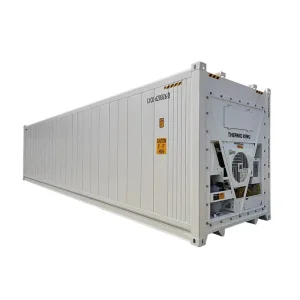
Flagship intermodal ocean reefer engineered with industry-leading thermal insulation value (K-factor) and precise digital micro-controllers.
Request 40ft HC Quotation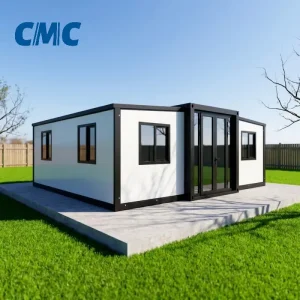
High-performance thermal polyurethane insulation engineered to withstand harsh Korean winters on construction and offshore work sites.
Modular Solutions Pricelist
High-capacity secondary evaporator coils capable of deep core pull-down to -40°C for seafood processing and blast meat freezing.
Blast Freezer Specs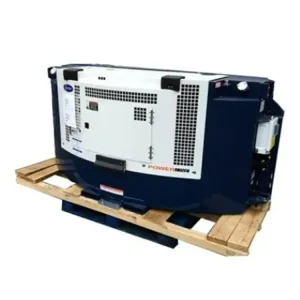
Uninterrupted autonomous electrical power output for refrigerated containers moving on flatbed chassis across Korean expressways.
Genset Technical Data
Sanitary SUS 304 food-contact hook tracks and heavy-gauge floor troughs designed for rigorous hygienic slaughterhouse compliance.
Direct Manufacturer Quote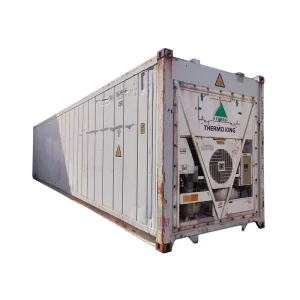
Engineered for commercial cold storage operations, bulk frozen protein storage, and intermodal transshipment across maritime routes.
View Full PricingComprehensive answers regarding technical specifications, sanitation standards, customs procedures, and operational load limits.
Connect directly with our senior container engineers. Request a detailed engineering drawing, comprehensive Korean port CIF pricelist, or customized technical consultation for your fleet within 24 hours.
Send Inquiry Now