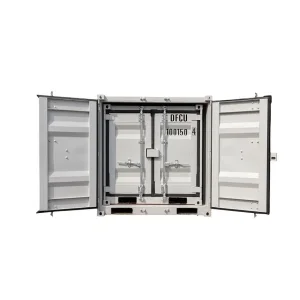
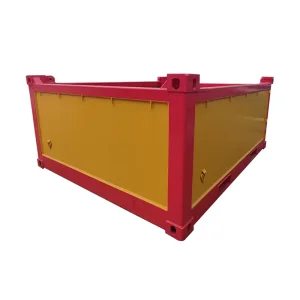
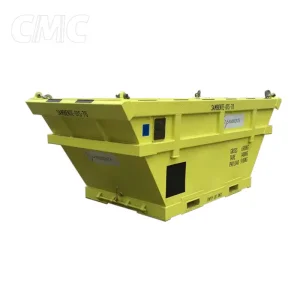
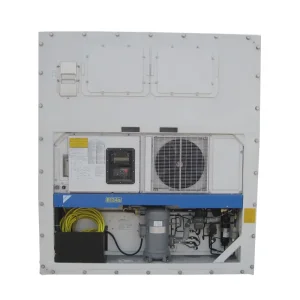
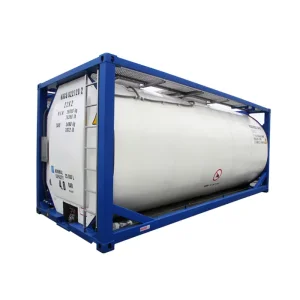
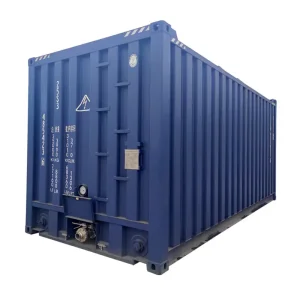
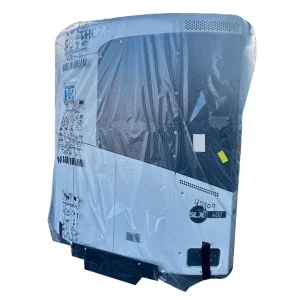
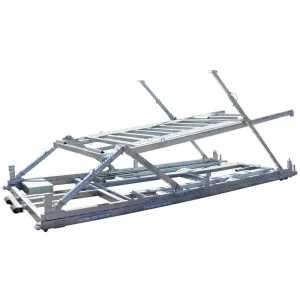
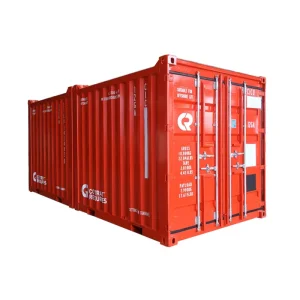
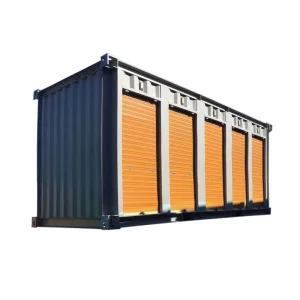
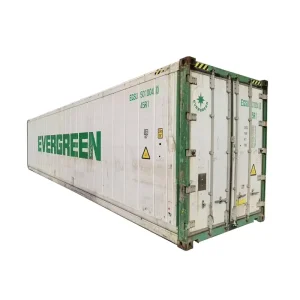
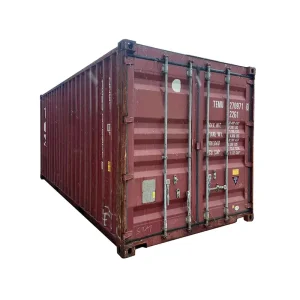
Featured multi-size nested containers, subsea baskets, and industrial reefer machinery custom-built for rapid deployment through Port of Seattle marine gateways.
In-depth technical analysis examining self-storage urbanization, Port of Seattle supply corridors, and the technological evolution of modular containment.
The metropolitan region of Seattle, encompassing King, Pierce, and Snohomish counties, has undergone an unprecedented demographic and industrial transformation over the past decade. Bound geographically by Puget Sound to the west and Lake Washington and the Cascade foothills to the east, land availability for traditional horizontal warehousing and industrial yards has hit historical lows. This geographic compression, combined with strict municipal zoning under the Washington State Growth Management Act (GMA), has catalyzed exorbitant industrial land lease rates across key logistical hubs like the Duwamish Industrial Valley, Kent Valley, and South Seattle.
Consequently, traditional mini storage developers and commercial logistics third-party providers (3PLs) are forced to optimize volumetric yield per square foot. The standardized 20ft and 40ft ISO dry containers, while foundational for maritime line-haul cargo arriving at Terminal 5 and Terminal 18, exhibit severe physical footprints when applied to constricted urban infill projects, retail overflow lots, and dense micro-hub facilities. To address this structural mismatch, regional procurement directors have aggressively pivoted toward engineered Mini Storage Containers ranging from 4ft to 12ft lengths.
These specialized sub-scale units solve three critical PNW operational bottlenecks: first, they permit hyper-flexible site layout configurations along irregular urban perimeters; second, nested container designs dramatically reduce drayage repositioning tariffs across Interstate 5 and Interstate 405; third, their high-tensile structural load-bearing parameters allow vertical stacking up to three units high on reinforced concrete aprons without triggering complex permanent building permit cycles.
Operating advanced automated fabrication hubs in Tianjin and Suzhou located roughly 100 kilometers from deepwater berths, our modern plants feature robotic fiber laser cutting tables, automated continuous seam welding rigs, and semi-automated zinc-epoxy shot-blasting halls. By substituting conventional manual manufacturing with synchronized Industry 4.0 production scheduling, we achieve dimensional tolerances within ±1.0mm, completely mitigating corner-casting misalignment and latch-rod distortion.
Seattle's microclimate is characterized by pervasive ambient relative humidity, relentless salt-fog intrusion from Elliott Bay, and persistent precipitation averaging over 150 wet days per annum. Standard low-specification commercial units rapidly develop galvanic rust at panel joints. Our export-grade production employs heavy-gauge SPA-H Corten steel treated with a three-layer marine fluorocarbon coating (epoxy zinc-rich primer, polyurethane intermediate, and acrylic topcoat) providing 1,500+ hours of continuous salt-spray resistance.
The global intermodal equipment sector is undergoing a rapid paradigm shift from passive structural shells to connected, telematics-enabled industrial modules. For Seattle-bound enterprise buyers, our continuous R&D pipeline integrates modular components engineered for next-decade utility:
| Hardware Pillar | Engineering Specification | Seattle Commercial Benefit |
|---|---|---|
| Ultra-Thin Vacuum Insulation | Microporous silica cores clad in impermeable metal films (R-value > 35/in). | Maximizes interior cubic capacity for temperature-sensitive biotech storage without active compressors. |
| Smart Telemetry Mesh | Solar-harvesting low-profile NB-IoT / LoRaWAN environmental gateways. | Real-time vibration, internal dew-point, and unsealed door alerts across remote yards. |
| Bi-Directional Roller Interlocks | Heavy-duty 4.0mm cold-formed track systems with stainless sealed bearings. | Eliminates door swing clearances on narrow urban building setbacks and alley loading docks. |
| Eco-Friendly Bio-Composite Floors | Thermoplastic reinforced continuous bamboo fiber decking (FSC certified). | Zero VOC off-gassing, 100% insect/fungal immunity, fully compliant with WA Department of Ecology standards. |
Managing procurement cycles across international waters requires uncompromising adherence to ISO 9001:2015 quality verification systems, Bureau Veritas (BV) type approvals, and rigorous supply chain risk governance. For infrastructure contractors in the Pacific Northwest, ocean freight volatility and terminal container turnaround times can severely impact project viability.
Our manufacturing model incorporates direct factory-to-ship loading via Tianjin Xingang and Shanghai ports, with dedicated bulk consolidation arrangements. By utilizing proprietary Nested Packing Architecture (such as inserting 4ft, 6ft, 8ft, and 10ft units progressively within a primary parent shell), regional importers realize freight savings of up to 68% per cubic meter compared to shipping standalone small containers. Every production batch undergoes comprehensive weld radiographic testing, dimensional squareness checks, and high-pressure hose water testing (0.2 MPa at 1.5m nozzle distance) to guarantee 100% weather-tight integrity prior to bill of lading issuance.
Exclusively engineered for intermodal rail corridors, heavy civil operations, maritime chemical transit, and scalable dry storage.
Expert clarifications regarding import tariffs, ISO certifications, cold-weather resilience, and factory customization timelines.