High-Quality Meat Hanging Reefer Container Manufacturers & Factories for the New York market
Precision-engineered, heavy-duty overhead meat rail hanging refrigeration containers tailored for the Tri-State commercial ecosystem, Hunts Point distribution terminals, and intermodal East Coast food networks.
Primary Cold-Chain Inventory
Specialized Meat Hanging & Cold Chain Logistics Units
Engineered to meet stringent USDA FSIS standards and New York heavy-carcass intermodal transit requirements.
New York Food Logistics Spec
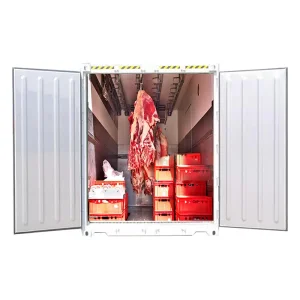
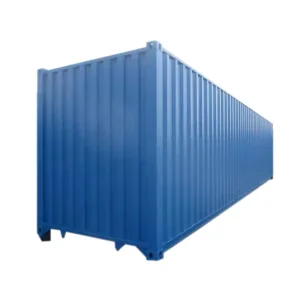
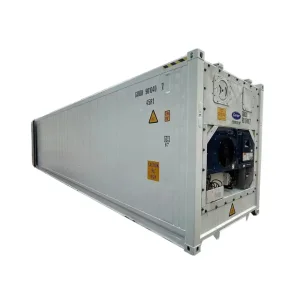
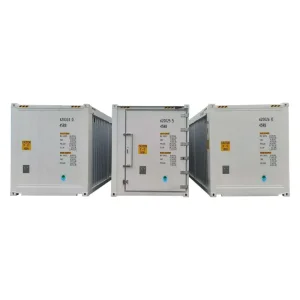
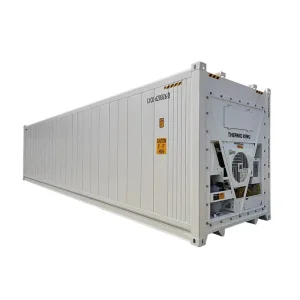
OEM Brand New Hanging Meat Container for Low Temperature Fresh Transportation
Reinforced stainless-steel hook roof tracks designed for continuous carcass refrigeration across New York distribution routes.
Analyzing the operational challenges, cold-chain bottlenecks, and structural demands across the greater New York metropolitan and Tri-State distribution hubs.
The New York metropolitan area represents the highest-density protein consumption market in North America. Anchored by the historic Hunts Point Cooperative Market in the Bronx—which handles over 210 million pounds of meat annually—the regional cold supply chain operates under extraordinary pressure regarding food safety, temperature integrity, space limitations, and real-time regulatory compliance.
Unlike standard palletized refrigerated freight, suspended meat logistics presents complex hydrodynamic and mechanical demands. Quartered beef carcasses, lamb, and swine transported from feedlots in the Midwest, Pennsylvania, or maritime entries via the Port of New York and New Jersey require active biosecurity, continuous convective airflow, and robust overhead kinetic stability. The sheer kinetic energy generated by hanging loads during heavy stop-and-go metro transit across the George Washington Bridge, the Cross Bronx Expressway, and the Long Island Expressway requires specialized reefer structural engineering.
Hunts Point Market Density
Over 80 wholesale purveyors operate within restricted physical footprints. Hanging reefer containers function both as intermodal transport modules and auxiliary zero-footprint cold aging rooms on constrained loading docks.
FSMA & USDA-FSIS Oversight
Title 9 CFR § 416 mandates strict micro-climate maintenance without condensation drippage. Antimicrobial electro-polished 304/316 stainless overhead rails eliminate particulate contamination from carcass contact points.
NYS DEC Emissions Standards
New York State's Climate Leadership and Community Protection Act (CLCPA) enforces tight emissions caps. Fleets require electric standby architectures and low-GWP refrigerants (R-452A, R-513A) to operate lawfully inside the urban perimeter.
Kinetic Center of Gravity & Structural Load Engineering
Standard ISO refrigerated containers are engineered for uniform floor weight distribution via bottom T-bar floor extrusions. In contrast, a 40-foot meat hanging container transfers between 18,000 kg and 24,000 kg of payload entirely to the roof superstructure and top side rails. When a heavy tractor maneuvers through tight turns in Queens or Brooklyn, the pendulum motion of hanging beef carcasses induces severe lateral harmonic oscillation.
To withstand these dynamic stresses without structural buckling or catastrophic roof rupture, our manufacturing processes integrate reinforced Corten-A steel corner posts, high-tensile longitudinal overhead stringers, and structural cross-members welded with precision robotic continuity. The overhead tubular or bi-rail hook guide networks are anchored via cold-bridge breaking thermal isolators, maintaining structural yield strength while preventing thermal bridging that causes localized ice formation.
28,000 kg
Maximum Static Roof Load
±0.25 °C
Micro-Climate Accuracy
AISI 316
Food-Grade Rail Alloys
100% FSMA
FDA/USDA Compliance
Regional Deployment Models
Engineered Use Cases Across the New York Regional Grid
How leading protein purveyors, processing cooperatives, and regional distributors employ hanging reefer technology across specialized sub-markets.
Kosher & Halal Whole-Carcass Logistics
Serving large demographic communities across Brooklyn, Queens, and North Jersey. Strict adherence to religious dietary guidelines requires continuous unstacked suspension of whole lambs, goats, and beef quarters from regional abattoirs in upstate NY and Pennsylvania directly to borough butcheries.
Pasture-to-Plate Hudson Valley Corridors
Boutique, regenerative beef and heritage pork producers throughout Dutchess and Columbia counties rely on 20ft and 40ft mobile hanging units to transport aged sides into Manhattan’s Michelin-starred restaurant supply networks without moisture loss or handling abrasions.
Port of NY/NJ Buffer Cold Warehousing
Deep-sea transshipment at Maher and APM Terminals frequently encounters off-dock drayage bottlenecks. On-chassis hanging reefers with independent generator sets bridge customs clearance intervals while maintaining continuous dry-chilling verification logs.
Technical Specification & Structural Matrix
Below is the comparative engineering matrix illustrating the structural and thermodynamic divergence between baseline refrigerated containers and specialized meat-hanging architectures designed for high-density logistics.
Engineering Attribute
Standard Marine Reefer
Heavy-Duty Meat Hanging Container (CIMIC NY Spec)
Roof Load Bearing
450 kg/m² (Distributed snow/handling limit)
2,400 kg/m run (Reinforced Corten-A box-beam lattice)
Overhead Rail Setup
None (Smooth or corrugated ceiling panel)
4 to 5 Longitudinal Stainless 304/316 Rails with switch gears
Dynamic Sway Arrestors
Not applicable
Integrated lateral anti-sway lock bars every 1.5 meters
Air Circulation Dynamics
Bottom-up floor T-bar delivery (Palletized)
Dual-duct reverse cycle airflow preventing meat case condensation
Internal Floor Incline & Drains
Flat T-floor, standard scupper valves
Self-draining grease scuppers with antimicrobial ball valves
Refrigeration Units
Standard Carrier / Thermo King / Daikin
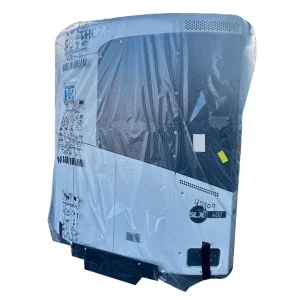
High-Dehumidification capacity units (Carrier Primeline / TK Magnum+)
Tare Weight Variance
~4,480 kg (40ft High Cube)
~5,650 kg to 5,900 kg (Includes structural overhead gantry)
Industrial Excellence
China Factory Precision & Supply Chain Resilience
Combining world-class metallurgy, automated robotic fabrication, and direct East Coast maritime shipping logistics to deliver unmatched CapEx efficiency.
Tianjin Cimic Imp&Exp Co., Ltd. leverages over 40 years of continuous manufacturing heritage from our integrated production bases in Tianjin and Suzhou. Our direct geographic proximity—under 100 kilometers to northern China’s primary deep-water container berths—allows us to build, inspect, certify, and stage custom meat hanging reefers straight onto direct container services to the Port of New York and New Jersey.
The economic model for American meat processors and logistics providers has fundamentally changed. Domestic custom fabrication of hanging meat refrigerated trailers or custom containers incurs massive capital expenditure, often exceeding $110,000 to $140,000 per finished unit with lead times extending past 36 to 48 weeks. By optimizing specialized production lines in our ISO 9001 and Bureau Veritas-certified facilities, CIMIC delivers complete, turn-key, DNV/CSC-certified meat hanging reefers at a 35% to 50% capital efficiency advantage, reducing production lead times to under 30–45 days.
Precision Metallurgy
Automated plasma laser cutting of Corten-A weathering steel, certified high-tensile crossbeams, and food-grade stainless hook tracks.
Continuous PU Injection
High-pressure cycloisopentane-blown polyurethane foam insulation ensuring zero thermal voids and a K-factor below 0.33 W/m²K.
Unit Integration & PTI
Direct installation of Tier-1 Carrier, Thermo King, or Daikin digital systems followed by a 24-hour Pre-Trip Inspection (PTI) cycle.
Port of NY/NJ Vessel Routing
Direct sea carriage to East Coast deep-water marine terminals with complete CSC, BV, and USDA clearance documentation packs.
Macro Cold-Chain Trends
Global Cold Logistics & Technological Roadmap
Tracing macro shifts across transcontinental protein transport and evaluating the technological horizon of smart hanging reefers through 2030.
Worldwide, chilled carcass transport is shifting from air-freight and localized domestic boxcars toward intermodal maritime containers. High-value beef movements from Oceania (Australia and New Zealand) to North America, along with expanding Mercosur chilled exports to Europe and the Middle East, have proven that active micro-climate regulation can maintain quartered beef in prime dry-aging state for up to 60 days without chemical preservatives or vacuum barrier deterioration.
As global logistics modernizes, our engineering department continues to execute a rigorous technical roadmap focused on operational autonomy, telematics, and emissions reduction:
IoT Dynamic Strain Telematics
Next-generation meat reefers integrate strain sensors along the overhead gantry. Real-time accelerometers measure harmonic carcass sway, alerting truck dispatchers to abrupt driver maneuvers that risk container balance or meat bruising.
Atmosphere & Ethylene Management
Active ozone sanitation cycles combined with controlled humidity injection maintain relative humidity between 85% and 90%. This minimizes carcass shrinkage while preventing mold, yielding substantial margin gains on prime beef.
Dual-Fuel & Hybrid Battery Systems
To align with New York City’s strict non-idling regulations, our designs feature integrated 460V 3-phase shore-power plugs alongside smart DC lithium-iron-phosphate battery buffers for 6 to 12 hours of silent zero-emission yard dwell.
Risk Mitigation & Standards
Regulatory Compliance & Engineering Assurances
Ensuring complete peace of mind across federal, maritime, and highway regulatory agencies for every container shipped to the New York region.
CSC & ISO 1496-2 Verification
Every hanging meat reefer leaves our factory with an active International Convention for Safe Containers (CSC) safety plate, verifying stacking limits up to 9-high and full rail dynamic impact resistance.
FDA FSMA Rule 204 Traceability
Digital temperature datalogging systems compatible with standard cloud telematics networks allow uninterrupted supply chain temperature reporting from the slaughterhouse dock to retail delivery.
Global OEM Component Warranty
Refrigeration machinery is backed by factory warranties with access to Thermo King, Carrier, and Daikin authorized warranty repair networks throughout New York, New Jersey, and Pennsylvania.
Buyer Knowledge Base
Frequently Asked Questions for US & NY Procurement
Essential considerations for importing, operating, and maintaining hanging meat reefer equipment.
How does overhead carcass hanging affect legal road weight limits in New York State?
Under New York Department of Transportation (NYSDOT) and Federal Highway Administration (FHWA) regulations, standard gross vehicle weight (GVW) is capped at 80,000 lbs on interstate corridors without special overweight permits. Because the tare weight of a specialized 40ft High Cube meat hanging reefer is slightly higher (~5,700 kg / 12,560 lbs) due to reinforced roof lattices, payload planning typically targets 38,000 to 42,000 lbs of suspended meat. Our engineers calculate the exact longitudinal hook distribution to ensure compliant drive-axle and tandem-axle weight distribution across standard tri-axle chassis.
Can the internal stainless hanging rail systems be customized for different hook styles?
Yes. We offer fully customizable rail designs, including circular tubular overhead rails, bi-rail systems with nylon sliders, and flat stainless bar systems. Our engineering team matches rail track dimensions, switch gear tolerances, and transfer locks to integrate directly with your slaughterhouse, abattoir, or cold storage facility’s internal overhead transfer rails.
What is the lead time for delivery to the Port of New York and New Jersey?
Standard production runs for customized hanging reefer containers range between 25 and 35 calendar days following drawing sign-off. Maritime transit from our port terminals in Tianjin or Shanghai to the Port of New York and New Jersey (via the Panama Canal or Suez route depending on carrier schedules) typically requires 28 to 35 days on direct ocean sailings.
How do you prevent structural roof deflection when fully loaded with hanging beef quarters?
Unlike standard dry boxes or conventional reefers that rely on corrugated lightweight roof sheets, our meat hanging models feature heavy Corten-A top box beams (4.5mm to 6.0mm wall thickness) combined with transversal high-tensile hollow structural steel (HSS) cross-bearers. This internal skeleton is designed to withstand dynamic shock forces exceeding 2.5G vertical and 1.5G lateral acceleration with less than 3mm center-span deflection at maximum rated gross payload.
Are replacement components and refrigeration service technicians readily available in New York?
Yes. We integrate only world-standard industrial cooling machinery from Carrier Transicold (Primeline series), Thermo King (Magnum Plus series), and Daikin. These units have extensive parts inventories and certified field technicians throughout the Elizabeth, Newark, Hunts Point, and Long Island logistics belts, ensuring round-the-clock maintenance accessibility.
Complete Fleet Portfolio
Versatile Specialized Container Solutions
Explore our full range of certified intermodal equipment, offshore tanks, customized reefers, and heavy bulk freight containers.
Certified Secondary Cold Storage
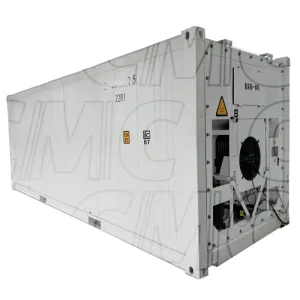
ODM Ninety Percent New Used 40ft HC Carrier Refrigerated Container
Pre-inspected near-new Carrier units offering cost-effective temperature-controlled holding capacity for regional processors.
Ready to Upgrade Your New York Cold Logistics Fleet?
Connect with our technical container engineering team to review structural drawings, custom hook load profiles, and volume manufacturing schedules delivered straight to the Port of New York and New Jersey.