Pre-configured with variable-frequency DC inverters, photovoltaic integration, and severe weather thermal barriers optimized for Scandinavian cold-chain logistics.
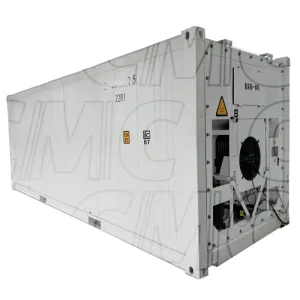
Ultra-low starting current, high COP DC inverter refrigeration unit powered by rooftop monocrystalline PV & dual-input AC grid.
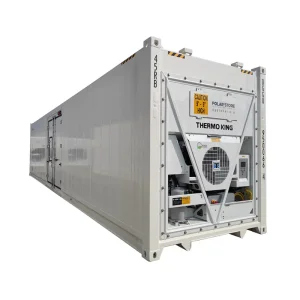
Full lateral opening for rapid palletized loading, high-grade cyclopentane insulation, and precision dual-zone thermal control.
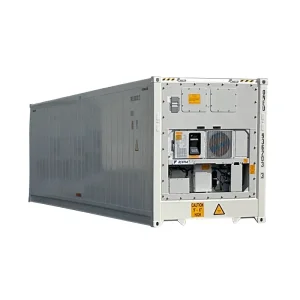
Equipped with reliable Daikin active cooling units, delivering micro-fluctuation thermal stability for fish processing and meat storage.
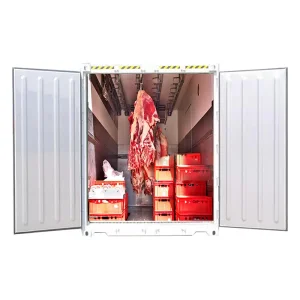
Integrated stainless-steel overhead rail suspension system, seamless washdown lining, and specialized airflow distribution.
In the contemporary landscape of European cold-chain engineering, Finland presents a uniquely challenging operational ecosystem. Characterized by expansive Arctic and sub-Arctic geography, extensive archipelago networks, and stringent municipal carbon-neutrality targets (such as Finland’s ambitious legally binding goal to attain net-zero emissions by 2035), traditional energy-intensive, diesel-dependent refrigerated logistics are undergoing a radical structural shift. The convergence of high seasonal electricity spot pricing, dispersed agrarian production across regions such as South Ostrobothnia, Kainuu, and Lapland, and the imperative for decentralized food sovereignty has precipitated unprecedented market demand for High-Quality Solar-Powered Single-Phase Refrigerated Containers.
Historically, industrial refrigeration containers (reefers) have been rigidly standardized around three-phase 380V/460V alternating current (AC) power feeds. While well-suited for high-density container terminals such as Vuosaari Harbour in Helsinki or the Port of Kotka, this architecture creates acute operational friction when deploying temporary or decentralized cold storage across Finland’s vast periphery. Rural agricultural packing sheds, remote wild berry gathering hubs in Lapland, offshore aquaculture landing docks in the Turku Archipelago (Saaristomeri) and Åland, and seasonal agritourism hubs frequently lack three-phase high-voltage drops. Retooling rural transformer substations to deliver heavy three-phase power often incurs capital expenditures exceeding €25,000 to €60,000 per location, accompanied by protracted lead times from local distribution system operators (DSOs) such as Caruna or Elenia.
Direct plug-and-play operation with Finland’s universal 230V single-phase 50Hz infrastructure eliminates costly industrial substation upgrades and heavy-load penalty tariffs.
Tailored bifacial N-type TOPCon solar panel arrays engineered to harness Finland’s continuous 20-to-24-hour summer daylight (Midnight Sun) and high snow-albedo reflection.
Dual-compound cyclopentane-injected high-density polyurethane insulation cores yielding thermal conductivity as low as 0.021 W/(m·K), functional down to -45°C ambient temperatures.
Finland’s economic landscape is characterized by heavily specialized bioeconomy sectors: forest products, high-grade dairy farming, Arctic wild berry harvesting (lingonberries, cloudberries, and bilberries), Baltic salmon and rainbow trout aquaculture, and pharmaceutical research clusters around the Helsinki-Uusimaa, Tampere, and Turku bio-corridors. Each of these industrial verticals faces rigorous regulatory scrutiny under both EU standards (Directive 2010/31/EU on Energy Performance of Buildings and the revised F-Gas Regulation EU 2024/573) and local Finnish climate legislation.
A primary bottleneck in Finland's agricultural and fisheries harvest logistics is post-harvest field heat removal. For instance, northern cloudberries and bilberries have an exceptionally short peak harvest window (typically mid-July through late August). When harvested in Lapland or Kainuu, core temperature must be brought down from field ambient (+18°C to +25°C) to storage setpoint (+2°C to +4°C) within hours to prevent enzymatic degradation and mold proliferation. Relying on centralized cold storage facilities located in major regional cities like Oulu or Rovaniemi introduces transport transit lags of 6 to 12 hours over logging roads, incurring product shrinkage rates as high as 14%. By positioning 20ft and 40ft High-Cube Solar-Powered Single-Phase Refrigerated Containers directly at collection points, forestry cooperatives and commercial fruit packers establish an agile, zero-emission pre-cooling perimeter.
Similarly, Finland's coastal fishing fleet operating throughout the Bothnian Sea and Gulf of Finland faces volatile landing schedules. Traditional shore-based ice houses and refrigerated lockers require massive grid infrastructure. The deployment of decentralized, containerized cold-storage units capable of running on standard 220V/230V 16A/32A shore connections—subsidized during daylight hours by integrated high-output solar arrays—enables fish processing hubs to preserve freshly caught Baltic herring and trout at precise temperatures (-2°C to +2°C) without overloading local maritime port microgrids.
A common misconception in Nordic solar engineering is that northern regions lack adequate solar irradiance. During Finland’s primary agricultural, berry harvesting, and construction season (May to August), daily daylight duration spans between 19 and 24 hours. Because solar photovoltaic panels operate at significantly higher thermodynamic efficiency in cool ambient conditions—avoiding the severe thermal derating (-0.4%/°C above 25°C) that impairs performance in tropical markets—a 6.4 kWp containerized solar array in Central Finland yields an exceptional cumulative energy harvest, directly aligning peak cooling demand with peak photovoltaic production.
The primary barrier that historically restricted refrigerated containers to three-phase utility grids was the enormous inductive inrush current of fixed-speed hermetic scroll or reciprocating compressors. A standard 15-horsepower fixed-speed reefer compressor running on standard grid power can draw a starting Locked Rotor Amperage (LRA) exceeding 75A to 110A. On a standard European single-phase 230V supply protected by a 16A or 32A Type C/D circuit breaker, attempting to start a conventional compressor causes immediate voltage sag and breaker trips.
Our specialized export fleet circumvented this mechanical bottleneck by deploying DC Inverter Variable-Speed Scroll Compressors integrated with advanced Active Power Factor Correction (APFC) drives. The engineering architecture features several critical thermodynamic and electrical breakthroughs:
| Technical Parameter | Standard Conventional Reefer | CIMIC Solar Single-Phase Inverter Reefer | Operational Benefit in Finland |
|---|---|---|---|
| Electrical Input Requirement | 380V/460V 3-Phase AC (32A 4P) | 220V–240V 1-Phase AC (16A/32A) | Operates across 99% of Finnish rural, farm, & island sockets |
| Peak Inrush Current (LRA) | 65A – 110A Inductive Spike | < 8A Smooth Digital Soft-Start | No grid voltage sag, compatible with small gensets/solar inverters |
| Seasonal Energy Source | 100% Grid or Diesel Genset | Integrated PV + Smart Grid Blending | Up to 68% energy cost reduction during Finnish midnight sun peak |
| Compressor Architecture | Fixed-Speed Scroll / Reciprocating | DC Inverter Twin-Rotary / Variable Scroll | Precision capacity modulation (10% to 100%), higher COP |
| Cold Weather Rating | -25°C Ambient Minimum | -45°C Arctic Package with Heat Trace | Guaranteed reliable defrost and heating during Lappish winters |
| Insulation Thermal Core | Standard PU Foam (65mm) | Cyclopentane High-Density PU (75–85mm) | U-value < 0.28 W/(m²·K), minimal thermal bridging |
The versatility of solar-driven, single-phase reefer containers enables strategic deployment across diverse commercial, industrial, and humanitarian vectors throughout Finland and the broader Fennoscandian territory:
Finland’s non-wood forest sector harvests tens of thousands of metric tons of bilberries and lingonberries annually, heavily reliant on field collection points located deep within Taiga forest zones. Traditional stationary cold storage requires lengthy secondary transport over unpaved logging roads. By deploying mobile 20ft Solar-Powered Single-Phase Reefers with custom high-strength forklift pockets and corner castings, aggregators place pre-cooling and frozen staging hubs directly at the logging road depot. Units can run during peak daylight hours purely off modular photovoltaic fold-out arrays, locking in product weight, color, and antioxidant profiles right at source.
The Finnish archipelago represents one of the largest archipelagos in the world by island count. Transporting heavy diesel generator units across seasonal ice roads or car ferries to service seasonal salmon and whitefish operations is economically inefficient and environmentally hazardous. Our compact single-phase reefers can be effortlessly loaded onto inter-island barges, connected to modest 230V shore boxes at small fishing harbors (e.g., Korpo, Pargas, Nagu), and augmented by rooftop solar arrays to preserve fresh catch until scheduled mainland ferry transshipment.
Under Finnish Emergency Supply Agency (Huoltovarmuuskeskus - NESA) guidelines, critical municipal hospital hubs, national blood reserves, and temperature-sensitive biologicals require decentralized fail-safe cold storage. In the event of grid disturbances or regional blackouts, our solar-rechargeable single-phase units switch dynamically to autonomous battery and solar operation, maintaining critical +2°C to +8°C vaccine thresholds without human intervention.
Get custom CAD engineering drawings, thermal efficiency calculations, and rapid DDP/CIF delivery quotes to Helsinki, Kotka, Turku, Rauma, or Oulu.
As the European cold chain accelerates toward full electrification, our factory research and development facilities (located adjacent to prime seaport shipping hubs in Tianjin and Suzhou) are pioneering several transformative technological integration paths dedicated to northern European environmental profiles:
Detailed technical, compliance, and logistics answers compiled by our international trade and refrigeration engineering teams.
Manufactured to rigorous international standards, available for rapid export to Finland, the Nordic region, and global terminals.
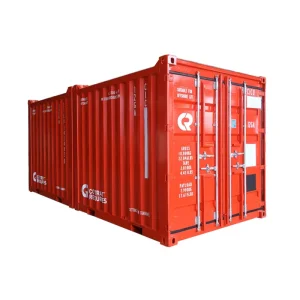
Built to DNV 2.7-1 / EN 12079 criteria with heavy-duty lifting pad eyes for offshore rig servicing and extreme maritime transfers.
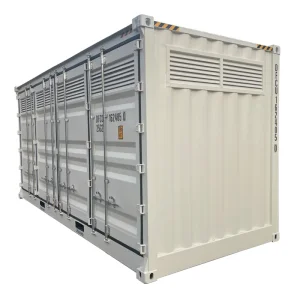
Full side opening, spark-resistant aluminum grating, spillage containment bund, and engineered ventilation louvers.
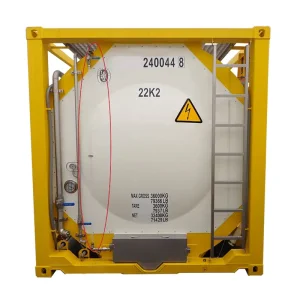
Food-grade 316L stainless-steel pressure vessel with high-efficiency thermal insulation and ground-level discharge valves.
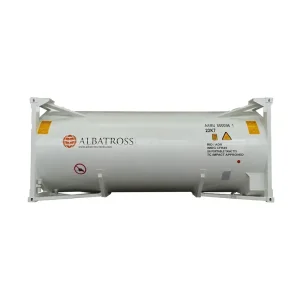
Precision pressure vessel certified for safe multi-modal storage and conveyance of liquefied industrial and energy gases.
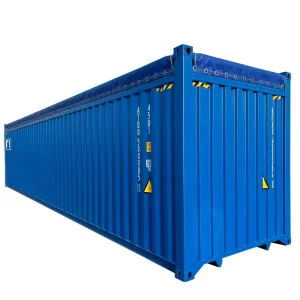
Removable roof bows and heavy-duty waterproof tarpaulin for top-loading heavy machinery, timber, and oversized Finnish industrial cargo.
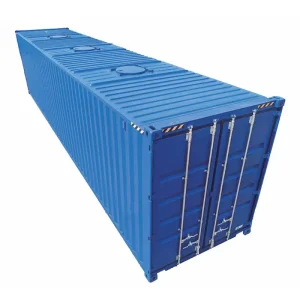
Equipped with top loading hatches and lower front discharge door, optimized for grain, minerals, chemicals, and pelletized feed.
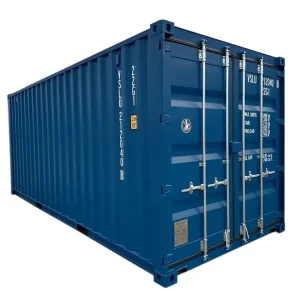
Full double doors at both ends, facilitating rapid roll-in/roll-out cargo loading and efficient dual-side operational logistics.
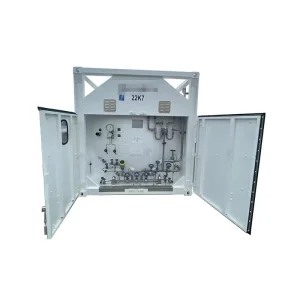
High-vacuum multi-layer super insulation for LNG, liquid nitrogen, oxygen, and argon transport with ultra-low boil-off rates.
Contact our senior application engineers today to discuss single-phase electrical layouts, photovoltaic sizing for high-latitude applications, and bespoke dimensions for your fleet.
Send Inquiry Now