Precision-engineered offsite prefabricated volumetric units manufactured in ISO-certified fabrication plants, optimized for multimodal transport to Felixstowe, Southampton, London Gateway, and Liverpool.
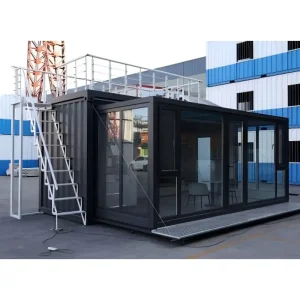
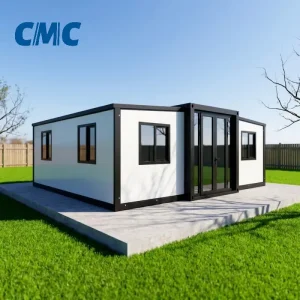
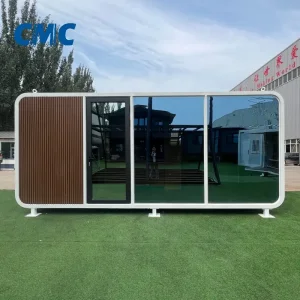
Understanding the macroeconomic market forces driving the adoption of industrial volumetric steel containers across England, Scotland, Wales, and Northern Ireland.
The United Kingdom construction landscape is undergoing a structural paradigm shift. Faced with acute trades shortages, aggressive decarbonization mandates under the UK Net Zero Strategy 2050, and statutory pressures to deliver both infrastructure and housing stock faster, tier-one developers and industrial procurers have turned decisively toward Modern Methods of Construction (MMC) Category 1 (Pre-manufactured 3D primary structural systems). Standardized and customized modular container products provide an engineered solution to these systemic challenges, transforming how British civil engineering, commercial storage, and temporary workforce hubs are deployed.
In major regional transport and industrial corridors—from the Thames Estuary and the Midlands Engine to the Northern Powerhouse and Scottish offshore green energy hubs (such as Aberdeen and the Moray Firth)—traditional on-site wet trades present prohibitive delays, elevated health and safety exposures, and vulnerability to unpredictable UK weather disruptions. Factory-built modular container structures transfer upwards of 80% to 90% of construction man-hours into controlled indoor fabrication environments. This fundamental reorganization ensures rigorous dimensional tolerances (±2mm), zero wet-trade curing latency, and instantaneous plug-and-play commissioning upon arrival at British project locations.
Furthermore, major British civil mega-projects, including HS2 railway infrastructure work packages, nuclear new builds such as Sizewell C and Hinkley Point C, and port modernizations associated with Freeports (e.g., Teesside, Solent, and Liverpool2), have necessitated vast fleets of high-specification worker welfare facilities, blast-resistant utility pods, secure on-site equipment shelters, and specialized cold storage units. Modular steel shipping containers engineered to maritime standard ISO 1496-1 provide the inherent structural shear resistance and high stacking capacity (up to 8 to 9 units vertical laden) that timber or light-gauge cold-rolled cassette frameworks cannot match in rigorous industrial environments.
Thermal envelope engineering featuring non-combustible PIR and stone mineral wool infill yielding composite wall U-values down to 0.16 W/m²K, satisfying SAP and SBEM energy rating requirements across England and devolved authorities.
Manufactured utilizing Euroclass A1 and A2-s1,d0 certified boundary insulation and intumescent-treated internal linings, safeguarding life safety and fulfilling the stringent non-combustibility thresholds post-Hackitt Review.
Factory-installed electrical wiring harnesses, consumer units, RCBO protection, and zero-halogen containment fully compliant with British Standard 7671:2018+A2:2022, ready for direct NICEIC sign-off upon domestic landing.
Systematic technical and commercial comparison illustrating why global logistics supply chains and UK developers specify heavy Corten-steel containerised architectures over site-intensive alternatives.
On a global scale, the shipping container has evolved far past its origins as a maritime transport vessel defined by Malcolm McLean in 1956. Today, the industrial volumetric container represents one of humanity's most refined standardized modular building blocks. With uniform international external dimensions regulated by ISO 668 and corner castings built to ISO 1161, these structures seamlessly interface with standard road chassis, freight rail flatcars, automated harbor gantry cranes, and offshore lifting spreaders.
When applied to UK commercial, logistics, and residential sectors, factory pre-engineered volumetric units decouple project timelines from foundational groundworks. While civil engineers excavate and pour low-carbon concrete slab or screw-pile pad footings across British project sites, modular container production lines operate in parallel under tightly monitored factory environments in China's prime manufacturing belts. The resultant synergy eliminates project critical-path bottlenecks.
| Engineering Attribute | CIMIC Modular Steel Container Pods | Light-Gauge Steel Frame (LGSF) | Traditional UK Brick & Blockwork |
|---|---|---|---|
| Primary Structural Steel | SPA-H Corten steel (Yield strength ≥ 345 MPa) with anti-corrosion oxide layer | Cold-rolled DX51D galvanized strip steel (1.2–2.0mm) | Unreinforced masonry & precast concrete lintels |
| Structural Rigidity & Stacking | Self-supporting volumetric monocoque; stacks 8-9 units high without external frame | Requires structural bracing; limited vertical load-bearing capacity without hot-rolled frame | Load-bearing walls; vertical additions require major underpinning |
| Weather Resistance & C5-M Coating | Zinc-rich primer + epoxy intermediate + polyurethane finish (Total DFT ≥ 180 μm) | Internal corrosion-resistant galvanization; relies entirely on external rainscreen | Susceptible to freeze-thaw spalling, mortar degradation, and water ingress |
| On-Site Assembly Schedule | 100–300 m² floor space fully enclosed and watertight within 48–72 hours | 2 to 4 weeks depending on crane schedules and weather windows | 3 to 6 months subject to UK rain, frost, and bricklayer availability |
| Embodied Carbon & Circularity | 100% recyclable steel; easily demountable, relocatable, or repurposed (Asset retainable) | Recyclable steel but complex non-destructive dismantling | Demolition downcycling to crushed aggregate; high landfill mass |
Beyond civil speed, modular containers address the strict Insurance & Warranty Gateways prevalent in the United Kingdom. Systems engineered by leading Chinese original equipment manufacturers (OEMs) work in coordination with warranty assessors like Premier Guarantee, LABC, and Checkmate to align structural calculation packs to Eurocode 3 (Design of steel structures) and the SCI (Steel Construction Institute) Protocol P301 for container-based buildings.
From Tier-1 construction site accommodation in London to offshore renewable subsea bases in the North Sea, examine how our industrial containers solve mission-critical operational challenges.
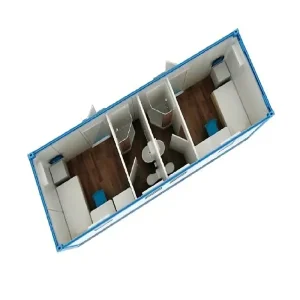
Compliant with Health and Safety Executive (HSE) Construction (Design and Management) CDM 2015 Regulations. Heavy-duty stackable 20ft and 40ft welfare blocks comprising canteen, drying rooms, clean-down showers, and male/female sanitary pods deployed along national rail lines and highway upgrade schemes.
Rapid-turnaround transitional housing pods assisting British Local Authorities and Housing Associations facing acute temporary accommodation shortfalls. High-thermal, acoustic-dampened modular apartments engineered with high acoustic rating (Approved Document E: airborne sound resistance >45 dB).
Hygienic, anti-microbial lined mobile diagnostic laboratories, negative-pressure isolation wards, and emergency surgical preparation suites configured for hospital trusts requiring immediate spatial expansion without disrupting patient wards.
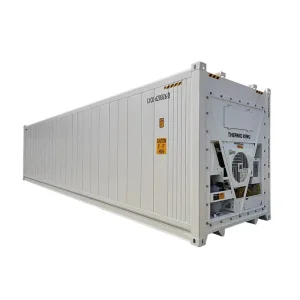
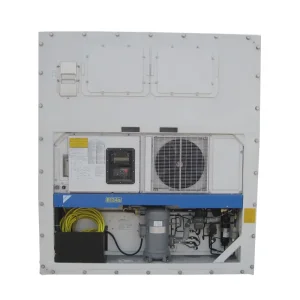
High-Cube Reefer Containers featuring digital precision controllers (±0.25°C variance), hermetic stainless-steel interior cladding, and T-bar aluminium airflow flooring designed to satisfy British BRCGS Food Safety and MHRA Good Distribution Practice (GDP) pharmaceutical standards.
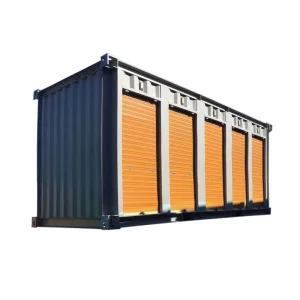
Standard and split 20ft/40ft roll-up door containers optimized for self-storage facility operators across the UK. Factory-installed corrosion-resistant roller shutters, master-keyed locking security shrouds, and anti-condensation marine ceilings for high-turnover rental revenue.
DNV 2.7-1 / BS EN 12079 certified offshore container modules fabricated for brutal wave impact, dynamic lifting from service operation vessels (SOVs), and explosive offshore atmosphere (ATEX Zone 1/2 compliance available for oil & gas and green hydrogen generation plants).
Mitigating regulatory cross-border risk through rigorous factory testing protocols, internationally recognized certification schemes, and direct technical liaison with UK building authorities.
Navigating post-Brexit trade, conformity assessment regimes, and the evolving UK statutory landscape is paramount when importing high-value modular structures. Our production plants in Tianjin and Suzhou operate under comprehensive quality management protocols verified by international third-party notified bodies including Bureau Veritas (BV), Lloyd's Register (LR), and Det Norske Veritas (DNV).
Every volumetric container and modular housing sub-assembly manufactured for British client delivery is built to meet or exceed:
Certified to BS EN 1090-1 / BS EN 1090-2 (Execution Class EXC2/EXC3) with full Factory Production Control (FPC). Welders are qualified to ISO 9606-1, with mandatory Non-Destructive Testing (NDT)—incorporating 100% Visual (VT), Ultrasonic (UT), and Magnetic Particle (MT) inspection on critical structural corner casting welds.
Steel surfaces undergo automated centrifugal wheel shot-blasting to standard ISO 8501-1 Sa 2.5 to strip all mill scale. Coated with high-build zinc primer and marine epoxy intermediate, yielding extreme resistance to high-salinity British coastal environments in accordance with ISO 12944 C5-M high-durability classifications.
Turnkey accommodation and bathroom pods are plumbed with materials certified to the Water Regulations Advisory Scheme (WRAS). Pressure-tested cross-linked polyethylene (PEX) or copper pipework ensures full compliance with the Water Supply (Water Fittings) Regulations 1999.
Electrical apparatus, emergency panic exit hardware, fire door assemblies, and glazing systems are supplied with Declaration of Performance (DoP) dossiers carrying genuine UKCA (UK Conformity Assessed) and CE marks, guaranteeing swift local building control inspection without costly retrofits.
Pioneering the next decade of advanced volumetric production through computational design, robotic fabrication cells, and lifecycle embodied carbon audits.
The next horizon in modular container engineering merges Building Information Modelling (BIM Level 2 / ISO 19650) workflows with AI-assisted parametric design. Prior to laser cutting a single steel section, full digital twins of UK modular developments are generated in Autodesk Revit and Tekla Structures. This allows structural clash detection, HVAC ventilation simulation, and automated thermal bridging analysis down to fractions of a millimeter.
Connect directly with our senior structural and mechanical engineering division. From initial architectural layout review and British regulatory verification to turnkey CIF shipping quotations into all major UK ports.
Send Inquiry NowCritical statutory, logistics, and material engineering answers for British civil contractors, architects, and procurement teams.
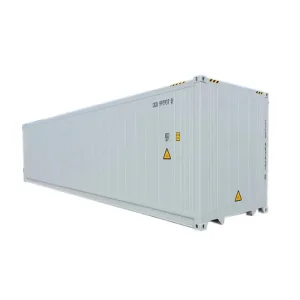
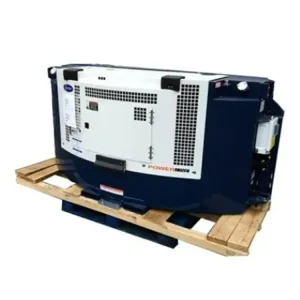
Full range of certified refrigerated reefers, cryogenic liquid ISO tanks, power generation systems, and specialized intermodal containers available for direct factory export to the UK.