Built under strict ISO 1496-2 and CSC maritime specifications. Fully optimized for American Class I intermodal rail double-stacking and long-haul refrigerated logistics.
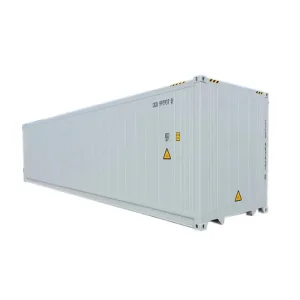

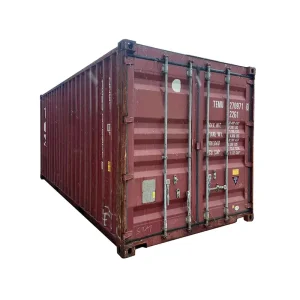

Why U.S. logistics giants, agricultural conglomerates, and pharmaceutical distributors are transitioning from mechanical reefers to advanced ODM passive insulated containers.
The FDA’s Food Safety Modernization Act (FSMA 204) enforces strict Critical Tracking Events (CTEs) across domestic temperature profiles. Standard dry vans fail to maintain thermal stability in coast-to-coast freight, while reefer fuel burn causes steep carbon penalties.
The California Air Resources Board (CARB) has phased out older diesel Transport Refrigeration Units (TRUs). Fleets operating through Long Beach and Oakland require low-emission or completely passive thermal alternatives to dodge regulatory port fines.
Class I intermodal operations (BNSF, Union Pacific, Norfolk Southern) frequently subject cargo to multi-day yard dwell times where reefer gensets run out of diesel. High-performance passive foam containers bridge the gap safely without auxiliary power.
Thermal loss in standard maritime insulated boxes primarily stems from micro-bridging and cell degradation. Our ODM process isolates thermal leaks via proprietary structural chemistry.
We utilize fourth-generation eco-friendly blowing agents with closed-cell ratios exceeding 95%. Automated robotic injection ensures high-density microcellular distribution (48–52 kg/m³) without voids, air channels, or cold pockets.
Conventional containers bleed heat via steel-to-interior mechanical rivets. Our factories incorporate non-conductive FRP (Fiberglass Reinforced Polymer) thermal decouplers and extruded PVC barriers between structural corrugations and interior skin.
Door perimeters represent up to 35% of thermal loss. We build custom molded quadruple-lip vulcanized EPDM gaskets that retain full flexibility down to -40°C, providing an absolute airtight seal against atmospheric drafts during high-speed transit.
Combining automated heavy metallurgy with coastal shipping access. How our manufacturing infrastructure delivers scale, repeatability, and immediate port dispatch for U.S. bulk procurement.
Structural integrity begins with mill-certified SPA-H atmospheric corrosion-resistant Corten steel. High-precision laser blanking and 6-axis robotic welding gantries guarantee uniform bead penetration and dimensional tolerances within ±1.0mm.
U.S. coastal routes and salted northern intermodal highways demand extreme paint protection. Our fully automated multi-stage shot blasting (SA 2.5) is immediately followed by high-build epoxy zinc priming and water-based aliphatic polyurethane topcoats.
Our plants are located under 100 kilometers from Tianjin Xingang and Shanghai/Taicang container terminals. Finished builds are inspected by BV/ABS surveyors and immediately loaded with export cargo or stacked for direct vessel sailing to Los Angeles, Long Beach, Seattle, or Houston.
Real-world application vectors showing how thermal inertia passive containers tackle extreme climate variances across the United States.
Safeguarding berries, tree nuts, and wine through summer desert temperatures exceeding 105°F during regional cross-docking.
Preventing pharmaceuticals, liquid chemicals, and water-based paints from freezing solid during sub-zero (-30°F) Chicago winter shunts.
Serving Boston-to-Raleigh biologics pipelines with high-integrity insulated boxes equipped with multi-sensor IoT telematics.
Resisting high humidity, sea salt spray, and extreme solar heat gain on temporary chemical and specialty catalyst tank/box setups.
Comprehensive engineering comparison across our core 20ft and 40ft insulated variants built for international shippers and domestic U.S. fleets.
| Performance Dimension | 20ft ISO Heavy Insulated | 40ft High Cube Thick-Foam | Custom Multi-Door Thermal Box |
|---|---|---|---|
| External Dimensions (L x W x H) | 20' x 8' x 8'6" (6,058 x 2,438 x 2,591 mm) | 40' x 8' x 9'6" (12,192 x 2,438 x 2,896 mm) | Engineered to Project Specs (Up to 45ft) |
| Internal Capacity (Volume) | ~28.3 m³ (999 cu.ft) | ~67.8 m³ (2,394 cu.ft) | Customized per Interior Layout |
| Core Insulation Material | Cyclopentane High-Density PU (50 mm) | Thickened Closed-Cell PU (75–100 mm) | VIP (Vacuum Panels) + Composite PU Core |
| Thermal Heat Transfer Coeff. (K-Value) | ≤ 0.40 W/(m²·K) | ≤ 0.32 W/(m²·K) | ≤ 0.22 W/(m²·K) (Ultra-High Retention) |
| Max Gross Weight (MGW) | 30,480 kg (67,200 lbs) | 34,000 kg (74,950 lbs) | Up to 36,000 kg (Custom Heavy-Rail) |
| Interior Wall Lining | Food-Grade Stainless (SUS304) or FRP | Ribbed Stainless Steel (Airflow Optimized) | Seamless Washdown Antimicrobial Composite |
| Floor Construction | Extruded Aluminum T-Floor or Chequered | Heavy-Duty T-Floor (Forklift Rated 7,260kg) | Flat Non-Slip Grip or Roller-Track Embedded |
| Compliance & Certifications | ISO 1496-2, CSC, TIR, UIC, BV, ABS | ISO 1496-2, CSC, TIR, AAR Class I Approved | DNV 2.7-1 / EN 12079 / ISO 1496-2 / BV |
Immediate answers regarding technical standards, lead times, customization capabilities, and transpacific logistics handling.
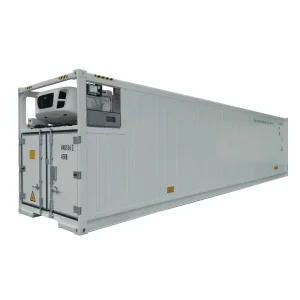
An insulated container is a passive thermal unit featuring continuous high-density polyurethane insulation without an active mechanical refrigeration motor. It maintains temperature via pre-cooling and insulation density, eliminating fuel costs, generator maintenance, and mechanical failure risks. Active reefer containers include electrical cooling compressors (e.g., Carrier, Thermo King, Daikin) requiring continuous external power.
Yes. Every container is manufactured in compliance with ISO 668, ISO 1496-2 (thermal containers), and the International Convention for Safe Containers (CSC). Units carry valid Bureau Veritas (BV) or American Bureau of Shipping (ABS) safety approval plates, certifying them for rail double-stacking (AAR compliance) and transpacific ocean voyages.
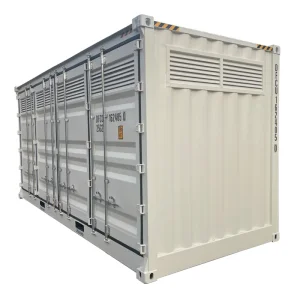
We provide full bespoke engineering: wall insulation thickness (50mm, 75mm, 100mm, or VIP hybrid), interior lining (food-grade SUS304 stainless, aluminum, or FRP), door types (standard cargo, roll-up shutter, or full side-opening), airflow T-bar flooring, internal partition bulkheads, integrated E-track lashing, and factory-applied corporate fleet colors.
Our units leverage closed-cell polyurethane foam with extremely low thermal conductivity (≤ 0.024 W/m·K) and hermetic EPDM sealing. When loaded with pre-cooled cargo and optional phase change materials (PCM) or dry ice trays, internal temperature fluctuations are restricted to less than 0.25°C to 0.5°C per 24-hour period under standard ambient transit conditions.
For standard ISO dimensions (20ft and 40ft HC), our production run time is typically 3 to 4 weeks after technical drawing approval. Our minimum order quantity for custom ODM runs is highly flexible (from 2 to 4 units for project prototypes up to full fleet batches of 50–500+ units).
Containers are shipped directly from Tianjin Xingang or Shanghai/Taicang ports. We can position them as "Shipper Owned Containers" (SOC) with one-way cargo loading to reduce repositioning freight costs, or arrange direct vessel transport directly to major U.S. ports including Los Angeles, Long Beach, Oakland, Houston, Savannah, and Norfolk.
Explore our certified intermodal solutions manufactured for global shippers, industrial energy operators, and high-spec storage projects.
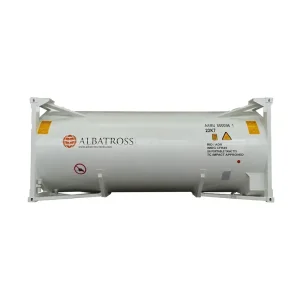
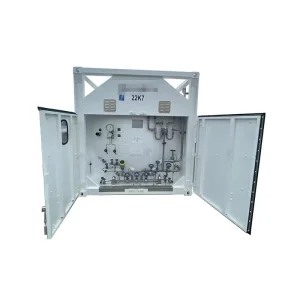

Direct communication with our senior container design engineers. Receive comprehensive CAD schematics, thermal retention finite element analysis (FEA), and bulk FOB/CIF pricing within 24 hours.
