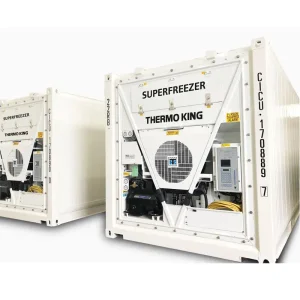
Fully pre-trip inspected (PTI), pressure-tested, and thermally re-foamed refrigerated units ready for deployment across Houston terminals, Pasadena chemical storage yards, and Texas Triangle distribution hubs.
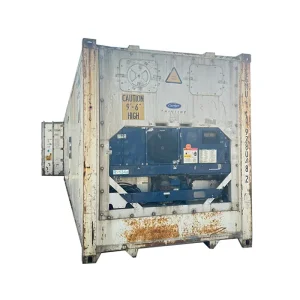
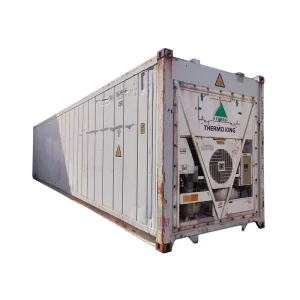
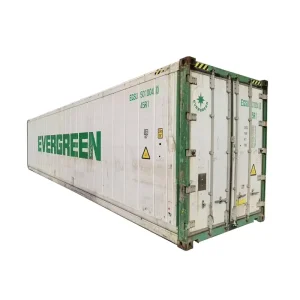
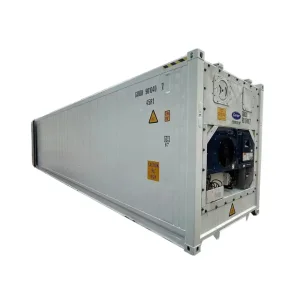
Houston, Texas, serves as the indisputable trade epicenter of the U.S. Gulf Coast. Anchored by Port Houston—encompassing the bustling container terminals at Barbours Cut and Bayport—the region handles massive intermodal throughput connecting oceanic freight with rail and highway arteries spanning Interstate 10, I-45, and I-69.
The climatic reality of Houston presents an unforgiving operating theater for refrigerated assets. Subtropical ambient summer temperatures frequently surpass 100°F (37.8°C) paired with 85%+ relative humidity and airborne salt particulates from Galveston Bay. Under these conditions, sub-standard second-hand reefers suffer catastrophic compressor burnout, rapid thermal insulation degradation, and severe corrosion along the bottom side rails and crossmembers.
For procurement directors in petrochemical processing, pharmaceutical distribution across the Texas Medical Center (TMC), and commercial cold-storage warehousing around Harris County, sourcing factory-certified ODM used reefer containers is no longer merely an asset acquisition—it is an exercise in operational risk mitigation.
Reefer containers deployed in the Houston Ship Channel and Gulf petrochemical corridor must withstand extreme thermodynamic loads:
The global commercial transition toward circular asset models has propelled used refrigerated containers from temporary storage alternatives into mission-critical, enterprise-grade temperature infrastructure.
Modern buyers in North America mandate cloud-connected telematics. Factory-refurbished ODM units are increasingly upgraded with satellite and cellular modems, allowing real-time monitoring of supply/return air temperatures, defrost cycles, humidity levels, and remote PTI diagnostics straight to enterprise ERP dashboards.
With escalating EPA regulations under the AIM Act across Texas and the US, legacy refrigerants are phasing down. Top-tier used units are rigorously serviced, vacuum-purged, and retrofitted for eco-compliant hydrofluoroolefins (HFOs) and low-GWP blends such as R-452A and R-513A without sacrificing baseline cooling coefficient of performance (COP).
Purchasing decisions are no longer determined merely by container age. Tier-1 buyers demand empirical verification of insulation performance. Ultrasonic wall thickness scanning and thermal decay test reports demonstrate that polyurethane micro-cells remain intact, preventing compressor over-cycling in hot Texas summers.
Procuring a poorly inspected second-hand reefer unit from unauthorized scrap auctions often results in a 40% higher 3-year operating cost due to repetitive scroll compressor replacements, refrigerant leakage, and excessive kWh consumption. Certified ODM refurbishment processes at our Chinese smart manufacturing hubs replace aging condenser coils, rebuild door triple-gasket seals, and restore factory-spec air circulation before export to Houston.
How our dual-base automated manufacturing and refurbishment infrastructure in Tianjin and Suzhou delivers unmatched cost efficiency, metallurgical precision, and rapid ocean dispatch to the Port of Houston.
At our Tianjin and Suzhou production plants—situated within 100 kilometers of deep-water port loading docks—refurbishment is elevated to an automated science. Unlike artisanal repair yards, our facility operates automated blasting, robotic panel straightening, and computerized high-pressure polyurethane foam injection cells.
Strategically situated near primary northern Chinese international shipping lines, CIMIC provides synchronized ocean bookings directly to the Gulf Coast of North America:
Tailored engineering configurations designed to solve specific thermal-preservation challenges across diverse regional industries.
The Houston Ship Channel and Baytown petrochemical complex produces advanced polymers, resins, and organic peroxides requiring tightly bounded temperature stabilization (+2°C to +8°C) to prevent exothermic reactions or degradation. Our explosion-proof retrofits and digital data logging guarantee OSHA and safety compliance in refinery storage buffer yards.
Serving the largest medical center in the world, Houston cold storage logistics operators utilize deep-freeze (-30°C to -60°C) certified containers for vaccines, biological reagents, and clinical trials. Dual-redundant cooling units and automated GSM temperature alerting ensure zero payload loss during grid interruptions.
From Galveston Bay shrimp distributors to produce haulers importing Mexican citrus via Laredo and McAllen, Houston is the staging ground. Heavy-duty extruded aluminum T-bar floors provide optimum bottom-up air circulation, preserving crisp produce and sub-zero blast-frozen seafood freshness.
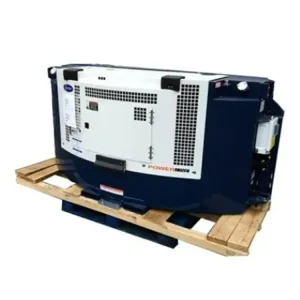
Strategically placed in logistics yards around northwest Houston and along the Grand Parkway (SH 99), clip-on diesel generator sets (gensets) power these 40ft HC reefers seamlessly during long drayage journeys to Dallas-Fort Worth, San Antonio, and Austin.
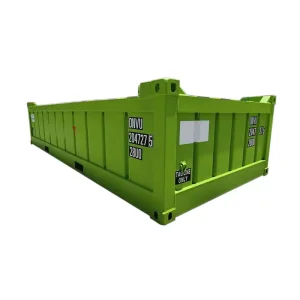
Gulf of Mexico drilling rigs and supply vessels operating out of Houston and Sabine Pass require DNV-certified and ruggedized reefers capable of dynamic crane lifts in stormy waters. Units feature heavy padeyes, stainless internal paneling, and marine-protective electrical harnesses.
Houston food retailers, poultry processors, and grocery logistics chains frequently encounter acute capacity crunches during holiday peaks. Placed directly on loading docks with roll-up doors or standard double-swing doors, reefer containers function as plug-and-play modular cold vaults at 30% of brick-and-mortar capex.
Compare standardized factory engineering specifications for 20ft and 40ft High-Cube refrigerated shipping units certified for Gulf Coast operation.
| Engineering Parameter | 40ft High Cube (Carrier PrimELINE) | 40ft High Cube (Thermo King Magnum+) | 20ft Standard (Daikin LXE10E) | ODM Custom Refurbished Spec |
|---|---|---|---|---|
| External Dimensions (L x W x H) | 12,192 x 2,438 x 2,896 mm (40' x 8' x 9'6") | 12,192 x 2,438 x 2,896 mm (40' x 8' x 9'6") | 6,058 x 2,438 x 2,591 mm (20' x 8' x 8'6") | Engineered per client requirement / HC or Std |
| Internal Capacity (Cu.m / Cu.ft) | 67.9 m³ (2,398 cu.ft) | 67.7 m³ (2,391 cu.ft) | 28.3 m³ (1,000 cu.ft) | Maximized airflow duct design (up to 68.2 m³) |
| Temperature Range (°C / °F) | -30°C to +30°C (-22°F to +86°F) | -35°C to +30°C (-31°F to +86°F) | -30°C to +30°C (-22°F to +86°F) | Ultra-Low options down to -60°C (-76°F) |
| Refrigerant Charge | R-134a / R-513A Drop-in | R-404A / R-452A Eco | R-134a Zero-ODP | EPA AIM Act Compliant Low-GWP blends |
| Power Consumption (Avg kW at 0°C) | 3.2 – 4.6 kW/h | 3.0 – 4.4 kW/h | 2.4 – 3.8 kW/h | Variable frequency inverter drives (30% savings) |
| Insulation Foam Core | Cyclopentane Polyurethane 70mm | Cyclopentane Polyurethane 70mm | Thickened PU 65mm | High-pressure injected microcellular foam |
| Floor Profile & Capacity | Heavy-Duty Extruded Al T-bar 7,260kg | Extruded Al T-bar 7,260kg (16,000 lbs) | Extruded Al T-bar 5,440kg | Flat anti-slip aluminum or reinforced T-floor |
| Pre-Shipment Inspection Protocol | Automated 4-hr PTI + Log Download | 4-hr PTI + Sensor Calibration | Bureau Veritas PTI Sign-off | Dual-cycle stress test under 45°C ambient sim |
Authoritative answers to critical engineering, logistics, voltage, and certification queries asked by North American importers and fleet directors.
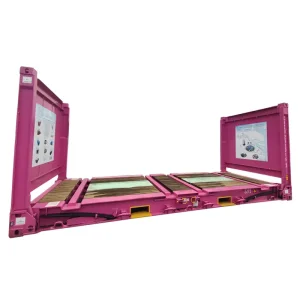
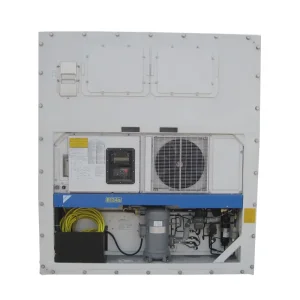
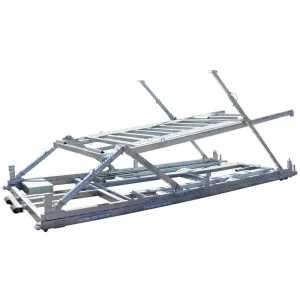
Full range of ISO platform frames, reefer refrigeration equipment, offshore half-height containers, and generator units supporting Houston industrial and port infrastructure.
Connect directly with CIMIC container engineering specialists. Secure certified PTI test logs, technical drawings, Houston landed CIF cost breakdowns, and custom ODM production slots.
