Engineered for seamless transit through Hai Phong Port, ICD My Dinh, and cross-border express channels connecting southern Chinese manufacturing clusters directly to Hanoi.
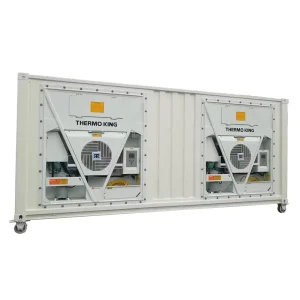
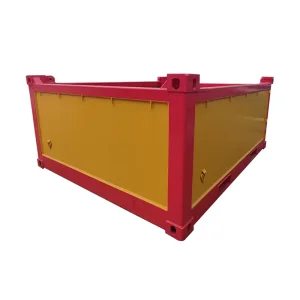
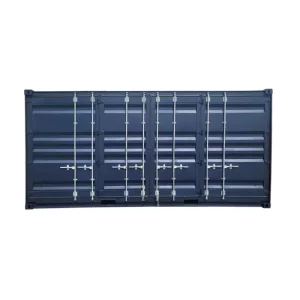
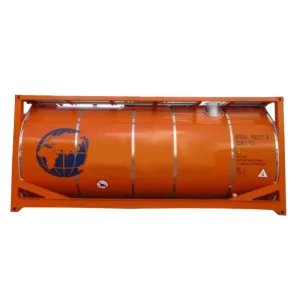
Strategic logistics dynamics, high-ambient tropical humidity challenges, and industrial cold-chain infrastructure driving modern blast freezing requirements in Northern Vietnam.
Operating cold chain assets in Hanoi presents unique thermodynamic challenges. With summer temperatures frequently eclipsing 39°C accompanied by relative humidity levels persistently above 85%, standard reefer units engineered for temperate maritime corridors experience massive thermal degradation, excessive compressor run-times, and rapid evaporator coil iced-up conditions.
Blast reefer containers deployed across Hanoi dry ports (such as ICD My Dinh, ICD Gia Lam, and the burgeoning inland logistics parks along National Route 5) require specialized multi-stage vapor compression loops, heavy-gauge polyurethane insulation foaming with thermal conductivity (λ) ≤ 0.018 W/(m·K), and airtight sealing configurations that prevent ambient moisture infiltration during cross-docking operations.
The modern Hanoi freight corridor functions as an intermodal funnel. High-value marine aquaculture from Quang Ninh and Hai Phong enters Hanoi for immediate value-added processing and blast-freezing before redistribution to European and East Asian export destinations.
Simultaneously, seasonal agricultural yields (such as Bac Giang lychees and Son La mangoes) require flash-freezing to inhibit enzymatic decomposition without forming macro-crystal ice cellular damage. Standard -20°C reefer equipment fails to prevent drip loss; our OEM industrial blast reefers provide the -40°C to -60°C rapid freezing envelope mandated by premier overseas distributors.
Cryogenic cascade refrigeration capable of reaching ultra-low threshold
Rapid cell preservation preventing intracellular crystallization
High-pressure T-floor air delivery minimizing micro-pockets
Direct ex-factory dispatch from coastal China production facilities
From perishable export processing in Hanoi suburbs to cleanroom pharmaceutical storage in high-tech industrial parks.
Tropical fruits like lychees, longans, and dragon fruit experience severe senescence if not chilled immediately post-harvest. Our blast reefers deployed directly in peri-urban consolidation hubs provide high-velocity airflow that extracts latent field heat within minutes, allowing export compliance with strict USDA, EU, and Japanese phytosanitary standards.
North Vietnam hosts premier electronics campuses in Bac Ninh and Thai Nguyen. Manufacturing processes rely on temperature-sensitive epoxy mold compounds, specialty photoresists, and conductive pastes requiring continuous storage at -40°C with automated failover and cloud-based IoT telemetry. CIMIC custom blast units serve as standalone clean-room-ready cold stores.
Serving the major medical research centers and central hospitals of Hanoi, our units comply with WHO Good Distribution Practice (GDP) and Vietnam Ministry of Health cold chain mandates. Equipped with dual independent refrigeration systems, automated failover triggers, and multi-point calibrated PT100 temperature loggers.
| Engineering Attribute | Standard Shipping Reefer Container | CIMIC Industrial Blast Reefer Container | Operational Benefit for Hanoi Operators |
|---|---|---|---|
| Operating Temperature | -25°C to +25°C | -40°C to -60°C Deep Cryogenic | Preserves cell membrane integrity; eliminates drip loss |
| Compressor Architecture | Single scroll or reciprocating unit | Dual semi-hermetic screw / 2-stage compound | High compression ratio under 40°C tropical ambient loads |
| Evaporator Air Flow | 4,500 – 5,500 m³/h | 11,500 – 16,000 m³/h High Static Pressure | Penetrates densely stacked palletized cargo core uniformly |
| Defrosting Mechanism | Electric heater rods (timed cycle) | Smart Demand Hot Gas Bypass + Dynamic Defrost | Minimizes temperature spikes during defrosting to < 1.5°C |
| Wall Polyurethane Density | 38 – 42 kg/m³ | 50 – 55 kg/m³ Cyclopentane High-Pressure Foam | Drastically limits heat leakage; cuts generator load by 28% |
| Interior Lining | Standard SUS 304 food-grade panel | Reinforced 1.2mm SUS 304 / 316L mirror/checker | Immune to chemical sanitizers and corrosive brine contact |
Aligning intermodal engineering with decarbonization, Kigali Amendment mandates, and edge-computing predictive automation.
Complete transition to low-GWP drop-in synthetic and hydrocarbon blends, reducing greenhouse footprint while preserving high-discharge volumetric cooling capacity under severe 45°C ambient temperatures.
Satellite, 4G/5G, and GPS telemetry transmitting real-time core temperatures, power consumption metrics, vibration data, and door-access event security across the entire cross-border transit journey.
Machine learning models monitoring evaporator coil frost accumulation dynamically through differential pressure sensing, avoiding unnecessary heating cycles and saving up to 32% energy.
Pioneering ultra-low emission transcritical CO2 blast cycle architecture for large-scale container fleets, achieving zero ozone depletion potential (ODP) and GWP=1 for carbon-neutral trade lanes.
When seafood or meat products undergo traditional slow freezing (-18°C to -20°C standard cold room), water molecules inside the cellular protoplasm slowly coalesce into jagged, macroscopic ice crystals. These needle-like structures puncture cellular walls. Upon thawing, the product suffers significant drip loss (losing up to 9% by weight in high-value nutritional moisture, vitamins, and protein juices).
CIMIC blast reefer containers rapidly force the temperature of the cargo through the "zone of maximum crystal formation" (-1°C to -5°C) within minutes. Microscopic, uniform ice crystals are produced without rupturing internal cell membranes. When thawed at consumer distribution points in Hanoi or exported globally, cellular elasticity, color saturation, and culinary texture remain indistinguishable from freshly caught or slaughtered inventory.
For cold storage operators in Gia Lam and Bac Ninh, fixed brick-and-mortar cold storage facilities incur massive upfront CAPEX, rigid land leasing terms, and protracted construction timelines spanning 12 to 24 months.
An OEM modular blast container solution delivers turnkey deployment within days of delivery. Units can be daisy-chained, relocated across temporary agro-harvest locations, or redeployed to coastal marine hubs depending on seasonal commodity shifts—protecting working capital while delivering institutional-grade cryogenic capacity.
Leveraging Tianjin and Suzhou industrial clusters for speed, precision automation, and unbeatable supply chain responsiveness.
With manufacturing facilities strategically situated in Tianjin and Suzhou—both within 100 kilometers of deep-water container shipping ports—CIMIC eliminates internal domestic transshipment overheads. Units roll straight from automated robotic welding lines to maritime export berths.
We maintain long-term partnerships with leading refrigeration compressor producers (Carrier, Daikin, Thermo King, Bitzer, Dorin) and steel mills supplying atmospheric corrosion-resistant Corten A steel (SPA-H). Our direct supply access ensures stable production cadences without component bottlenecking.
From Tianjin and Shanghai ports, frequent container liner departures provide transit to Hai Phong port in just 4 to 6 days. For urgent project demands, cross-border direct intermodal flatbed trucking connects our plants directly to Hanoi customs checkpoints via Pingxiang/Youyi Guan within 72 hours.
Consult directly with CIMIC senior refrigeration engineers to configure blast reefer dimensions, evaporator airflow velocity, T-floor designs, and dual-system backup configurations optimized for Hanoi's industrial corridors.
Delivering classification society accreditations, customs compliance documentation, and rapid regional field maintenance.
Every blast reefer container engineered by CIMIC is subjected to full-scale prototype testing and production-run surveys by globally recognized classification societies, including Bureau Veritas (BV), Lloyd's Register (LR), and China Classification Society (CCS), with offshore units strictly built to DNV 2.7-1 / EN 12079 structural design standards.
For operators in Hanoi and Haiphong, units arrive with pre-cleared CSC safety plates (International Convention for Safe Containers) and ATP certifications (Agreement on the International Carriage of Perishable Foodstuffs), assuring swift customs clearance at Hai Phong Customs Department and seamless transit across Vietnamese national highways in full compliance with Vietnam Standard TCVN 5451 for refrigerated transport containers.
Rigorous pre-trip inspection run-tested for 12 hours
End-to-end traced steel, welding, and foam density control
Unplanned downtime in cold storage operations immediately imperils perishable inventory. CIMIC equips buyers in Hanoi with turnkey aftersales networks:
Comprehensive engineering, operational, and regulatory insights compiled by our export logistics specialists.
Explore our complete catalog of certified ISO shipping containers, custom multi-temperature storage rooms, offshore skips, and bulk liquid transport units.
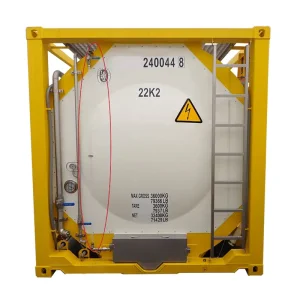
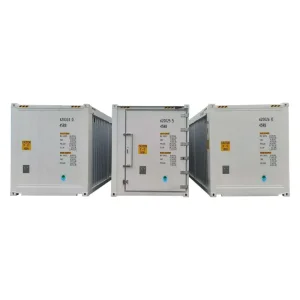
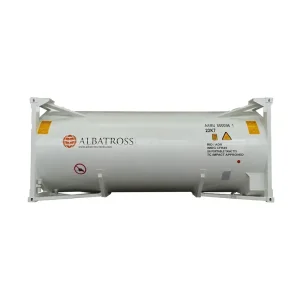
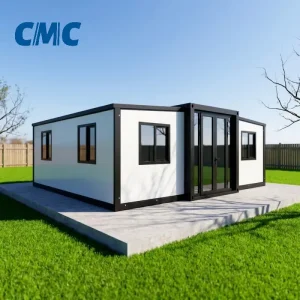
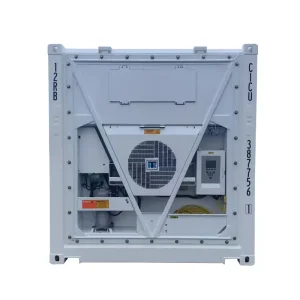
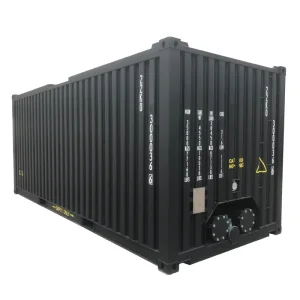
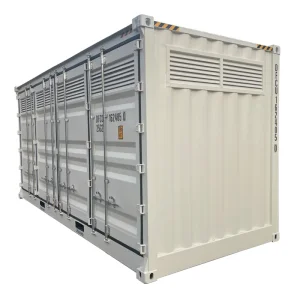
From single prototype validation to multi-hundred unit fleet deployments across Hai Phong, Hanoi, and northern cross-border trade gates. Submit your design specifications or cold chain cooling load requirements directly to our factory team.
Send Inquiry Now