Direct factory configurations engineered for offshore dynamic lifts, deep ocean thermal equilibrium, and harsh atmospheric environments serving Canadian energy reserves.
An authoritative breakdown of offshore cold chain requirements, structural resilience standards, and regulatory frameworks governing marine trade routes.
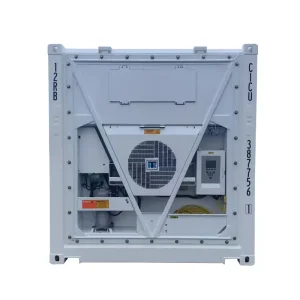
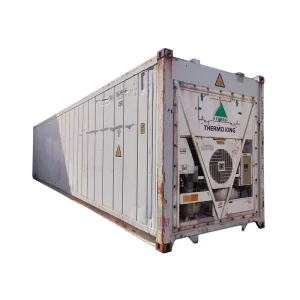
Offshore operations along the Grand Banks, Hibernia, Hebron, and the Arctic Northwest Passage require reefer containers to withstand dynamic wave impact forces, low-temperature brittle fracture thresholds (Charpy V-Notch impact tests at -40°C), and saltwater fog corrosion. CIMIC designs container envelopes using high-grade Corten steel paired with zinc-rich epoxy multi-coat paint systems.
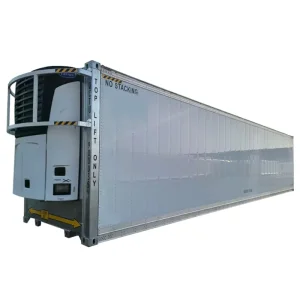
Worldwide demand for offshore logistics equipment is shifting towards modularity and low Global Warming Potential (GWP) refrigerants. Driven by international environmental directives, the adoption of R-513A, R-452A, and CO2 (R-744) units is reshaping offshore catering, deep-sea research, and offshore chemical processing logistics across Europe, APAC, and North American territorial waters.
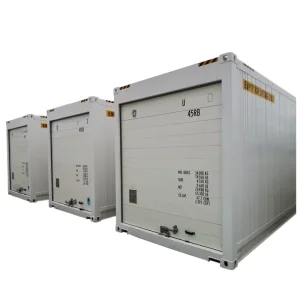
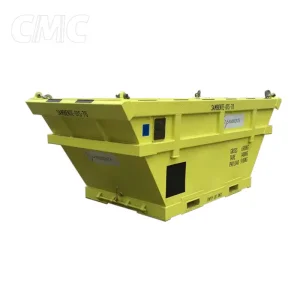
Unlike standard ISO shipping boxes, offshore containers deployed in Canada must strictly adhere to dynamic lifting regulations. Our engineering incorporates certified structural pad-eyes, non-destructive testing (NDT), specialized sling sets with master links, and internal fail-safe micro-climate monitoring to guarantee zero structural integrity loss during open-sea crane loading.
Engineered for precise vertical deployment in high-stakes cold supply chains.
Stationed in offshore Newfoundland and Labrador basins. Our containers provide uninterrupted catering sustenance, fresh provisions, temperature-controlled drilling chemistry, and temperature-stabilized core sample preservation without risk of thermal leakage during gale-force conditions.
Crucial for Canadian maritime export hubs in Nova Scotia, British Columbia, and Prince Edward Island. Rapid flash-freezing to -35°C safeguards the cell matrix of premium lobster, Atlantic salmon, and king crab, preventing protein degradation before international air or sea freight.
Deployed throughout Nunavut and the Northwest Territories. Units run independently on smart hybrid power plants or gensets, preserving perishable biospecimens, critical pharmaceuticals, and high-purity industrial compounds during prolonged blizzards.
Bridging thermodynamic engineering with edge-computing IoT solutions.
Real-time edge micro-controllers transmitting GPS position, internal cargo temperatures, compressor RPM, and refrigerant pressure through Iridium/Starlink satellite uplinks for Canadian marine fleets operating beyond 4G/5G cellular coverage.
Deploying advanced hydrophobic aerogel and VIP panel layering inside the floor and sidewall bulkheads. This cuts thermal bridge losses by 42% compared to standard polyurethane foam, reducing generator fuel consumption dramatically.
Developing robust transcritical CO2 cooling systems tailored for maritime shocks. With an Ultra-low GWP of 1, these systems insulate Canadian operations against future environmental carbon taxes and global hydrofluorocarbon phase-outs.
Direct factory supply, comprehensive design verification, ABS/BV/DNV class certificates, and turnkey delivery to Halifax, Vancouver, Montreal, and St. John's ports.
Send Inquiry NowEngineered for diverse intermodal applications, offshore marine platforms, bulk liquids, and heavy industrial site logistics.
Direct technical clarifications for procurement teams, offshore fleet managers, and cold-chain compliance officers serving Canada.
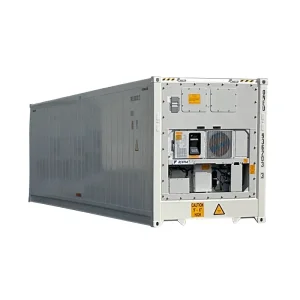
Standard ISO reefers are designed solely for static stacking and horizontal rail/containership transport. DNV 2.7-1 / EN 12079 reefers feature heavy-duty structural skeletons, certified primary lifting pad-eyes, low-temperature impact-tested steel, specialized welded sling sets, and severe dynamic loading resistance to prevent failure during ship-to-platform open-ocean crane lifts.
Units are engineered with an integrated dual-heating and cooling system. When ambient temperatures plunge to -40°C in Northern Canada, high-capacity electric heating circuits engage automatically to keep food stores or critical chemical cargo above their freezing thresholds, preventing thermal shock.
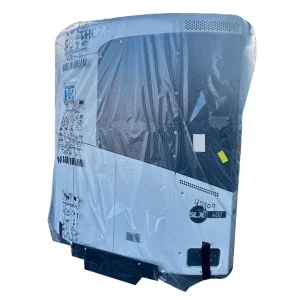
Yes. As an OEM/ODM manufacturer, we integrate Carrier Transicold, Thermo King, and Daikin machinery based on the buyer's regional servicing infrastructure in Canadian ports like Halifax, Montreal, or Vancouver. This ensures readily available replacement components, filters, and local technical support.
Every offshore container is delivered with complete Lloyd's Register, BV, or DNV classification certificates, Mill Test Reports (MTR) confirming steel metallurgy, Non-Destructive Testing (NDT) reports for structural welds, insulation foam density analysis, and comprehensive pre-trip inspection (PTI) operational sign-offs.
