DNV 2.7-1 / EN 12079 / ISO 10855 Engineering

Offshore Reefer Container Pricelist & Manufacturers in the Norway Market

A comprehensive engineering dossier on procurement valuations, sub-zero thermodynamic performance, and certified cold chain assets tailored for the Norwegian Continental Shelf & Arctic North Sea.

Offshore Thermal Fleet

High-Priority Offshore Cold-Chain Units for Norway Operations

Direct supply of specialized temperature-controlled and reinforced logistics modules engineered for immediate North Sea mobilization.

Industrial Dynamics

Commercial Status of Offshore Refrigeration in the Norwegian Market

The convergence of strict regulatory frameworks, harsh Arctic operating conditions, and the growth of high-value marine protein extraction.

Norwegian Continental Shelf (NCS) Demands

The NCS features some of the world's most unforgiving marine logistics sectors. Offshore supply vessels (OSVs) shuttling between mainland supply bases like Mongstad, Dusavik, and Kristiansund demand extreme structural compliance under DNV 2.7-1 / ISO 10855. Temperature-controlled catering modules and sub-zero chemical storage assets operate 24/7 under dynamic heave and severe salt spray loading, making structural integrity critical.
Aquaculture & Pelagic Blue Economy

Norway's salmon farming and pelagic fisheries are moving further offshore into exposed waters. Maintaining ultra-low temperature biological samples, specialty feed supplements, and freshly harvested Atlantic salmon at harvest nodes necessitates mobile, autonomous reefer units capable of maintaining consistent internal envelopes down to -30°C despite sudden external Arctic ambient temperature shifts down to -40°C.

Electrification & Low-GWP Regulations

Driven by Norway's strict environmental policies and EU F-Gas phase-downs, traditional high-GWP refrigerants (R404A) are being systematically eliminated from the Norwegian shelf. Modern procurement demands integrated hybrid power drives, low-GWP refrigerants like R452A or CO2 (R744), and advanced micro-channel condenser loops that maximize energy efficiency while reducing thermal and carbon footprints on platform grids.

CapEx Analysis

Offshore Reefer Container Pricelist & Sourcing Matrix (Norway Market)

Indicative manufacturing valuations, standard baseline configurations, and key engineering variables influencing total landed cost (CIF Stavanger / Bergen / Oslo).

Equipment Model & Specification Certification Standards Primary Machinery Brands Design Temp Range Estimated Price (USD / Unit)
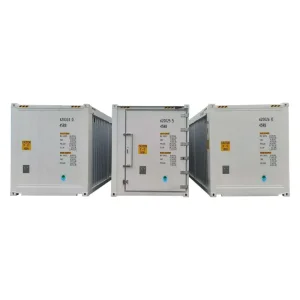
10ft DNV Offshore Reefer
Compact platform layout
DNV 2.7-1 / EN 12079 / ISO 10855 Carrier Transicold / Thermo King -30°C to +30°C (TD -20°C) $22,000 - $28,500
20ft DNV Offshore Reefer Standard
Standard North Sea offshore build
DNV 2.7-1 / EN 12079 / ASME IX Welded Thermo King Magnum Plus / Daikin -35°C to +30°C (TD -40°C) $29,500 - $38,000
20ft High-Cube Zone 2 Explosion-Proof
ATEX / IECEx hazardous zone
ATEX Cat 3G / DNV 2.7-1 / Zone 2 Compliant Explosion-Proof Certified Built Loop -25°C to +25°C $55,000 - $78,000
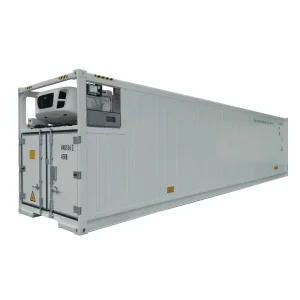
40ft High-Cube Marine Intermodal Reefer
Aquaculture bulk transport
ISO 1496-2 / BV / Lloyd's Register Certified Thermo King / Carrier PrimeLINE -30°C to +30°C $16,500 - $22,000
DNV Certified 4-Legged Wire Rope Sling
Load tested with shackles
DNV 2.7-1 / EN 12079 Pad Eyes Matching Galvanized high-tensile wire rope Arctic rated to -40°C $1,400 - $2,200
Request Project-Specific Tender Quotation
Macro Sourcing

Engineering Solutions for EPC Contractors & Supply Chain Directors

Addressing supply chain friction, structural metallurgy, and mechanical uptime under extreme maritime volatility.

Charpy V-Notch Tested Low-Temp Steel

Standard containers crack under sudden dynamic impact at North Sea temperatures. Our offshore reefer frames are fabricated from fine-grained structural steels (EN 10025-S355NL or normalized equivalent) subjected to Charpy V-Notch impact testing at -20°C or -40°C. Pad-eyes, corner castings, and primary structural elements are certified to absorb massive shock loads without ductile-to-brittle failure transitions.

C5-M Marine Coating Preservation

Offshore installations represent the world's most corrosive operational atmosphere. Every unit receives shot-blasting to ISO 8501-1 Sa 2.5, followed by multi-coat epoxy primer and polyurethane finish meeting ISO 12944 C5-M extreme marine durability levels. Internal refrigeration cavities utilize corrosion-resistant 304/316 stainless steel linings, preventing structural wall degradation caused by wet, salty catches or caustic decontamination routines.

Redundant Dual-Machinery Systems

For high-value deepwater chemicals, sensitive subsea compounds, or critical catering supplies on remote floating production units (FPSOs), unmonitored power loss is unacceptable. We engineer redundant dual refrigeration circuits with automatic cross-over controllers, ensuring that if one compressor circuit faults, the secondary backup initiates immediately to maintain steady thermal regulation.

Regulatory Shield

Norwegian Shelf Localization & Compliance Assurance

Bridging Chinese manufacturing capacity with rigorous Scandinavian offshore regulatory enforcement.

NORSOK Standard Integration

Beyond baseline DNV certification, units targeted for Equinor, Aker BP, or Vår Energi operations often require strict adherence to NORSOK standards (such as Z-015 for temporary equipment and M-501 for protective coating systems). CIMIC provides complete material traceability packs, EN 10204 3.1 certification for structural steels, and WPS/PQR certified welding data packages ready for third-party auditing.

Rigorous Factory Acceptance Testing (FAT)

Every offshore container undergoes full dynamic load testing, 2.5x Max Gross Weight structural proof tests, drop testing, and 2-point/4-point dynamic lift validations overseen by DNV or Bureau Veritas surveyors at our production bases in Tianjin and Suzhou. Refrigeration machinery undergoes complete pull-down validation cycles and electrical dielectric strength diagnostics before export packing.

Port Hub Delivery (Stavanger, Bergen, Tromsø)

Positioned just 100km from major sea hubs in China, our specialized flat-rack or direct liner routes provide direct shipping connections into key Norwegian offshore cluster hubs: Stavanger (Dusavik/Tananger), Bergen (Ågotnes/Mongstad), Kristiansund (Vestbase), and northern service bases such as Tromsø and Hammerfest, delivering smooth customs clearance and verified DNV sling assemblies.

Future Engineering

Offshore Cold Chain Technology Roadmap (2025–2030)

Pioneering the next generation of smart, electrified, and zero-carbon offshore thermal logistics modules.

Satellite-Linked IoT & Predictive Telematics

Integrating Iridium satellite transceivers and internal sensor arrays to provide uninterrupted offshore real-time tracking across unpopulated high-latitude North Sea regions. Asset managers gain real-time visibility into internal cargo temperatures, compressor vibration signatures, door-opening telemetry, power consumption metrics, and predictive component fault warnings directly via secure cloud APIs.

Phase Change Material (PCM) Thermal Buffering

Addressing short-duration crane lifts, deck staging, and vessel transfers during stormy weather when main umbilical power is disconnected. Novel hybrid containers integrate custom Phase Change Material (PCM) wall cassettes that absorb and release thermal energy latently, keeping cold cargo strictly within safety bands for up to 18 hours without drawing any electrical grid current.

Natural Refrigerants (CO2 / R290 Transitions)

Anticipating total regulatory phase-outs of fluorinated greenhouse gases by Scandinavian port authorities, our R&D roadmap focuses on commercializing industrial Transcritical CO2 (R744) marine container condensing machinery. Delivering GWP=1 alongside high sub-zero thermodynamic output, these eco-aligned architectures future-proof asset portfolios against 2030 Nordic environmental tax penalties.

Technical FAQ

Frequently Answered Engineering & Sourcing Queries

Essential guidance covering international marine certifications, customs clearance in Norway, and sub-zero equipment care.

What is the explicit legal difference between standard ISO reefers and DNV 2.7-1 offshore reefers?

Standard ISO 1496-2 reefer containers are intended exclusively for static stacking on ocean container vessels or flat-bed road chassis. Under Norwegian maritime authority and PSA rules, they are strictly prohibited from offshore vessel-to-rig dynamic crane operations. DNV 2.7-1 (and EN 12079 / ISO 10855) containers are specifically engineered and structurally verified to withstand dynamic acceleration shock loads (dynamic snatch loading) encountered in open sea states, featuring high-toughness steels, integrated lifting pad-eyes, and specialized certified four-leg wire rope sling sets.

How do you guarantee machinery reliability in extreme Arctic maritime climates down to -40°C?

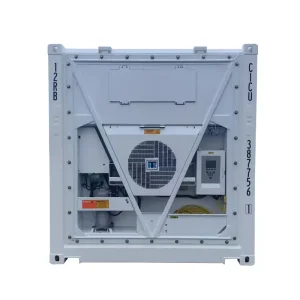
Our Arctic-grade offshore reefer units feature comprehensive low-temperature engineering packages: compressor crankcase electrical sump warmers, silicone synthetic lubricants rated for sub-zero viscosity, motorized louvers preventing snow drift ingestion, heat tracing on condensate drain troughs, and heavy-gauge silicone door gasketing that retains high sealing elasticity under sub-zero ambient conditions without cracking.

What documentation package is provided for Norwegian customs and third-party rig audits?

Every offshore container delivered to Norway comes with a comprehensive, fully certified documentation docket containing: DNV/BV Certificate of Compliance, DNV 2.7-1 Design Verification Report (DVR), EN 10204 Type 3.1 mill test certificates for all load-bearing structural steels, NDT (Non-Destructive Testing) reports (MPI and ultrasonic examinations), sling and shackle proof test certificates, and complete protective coating application inspection reports (dry film thickness and holiday testing records).

Can units be customized to meet ATEX Zone 1 or Zone 2 hazardous area specifications?

Yes. For placement on offshore drilling rigs and production platforms near wellheads, shale shakers, or hydrocarbon process decks, we build ATEX-certified Zone 2 (Category 3G, IIB T3) explosion-proof reefer units. Modifications include intrinsically safe electrical control loops, Ex-rated fan motors, explosion-proof compressor enclosures, stainless steel junction housings, and comprehensive gas-detection shutdown interlocking systems.

Initiate Your Offshore Container Procurement Project

Whether you require standard 10ft/20ft DNV 2.7-1 offshore reefer units or customized ATEX certified modular cold rooms for the Norwegian Continental Shelf, our engineering team in Tianjin and Suzhou delivers certified quality, verified compliance, and direct delivery to your home port.

Send Inquiry Now