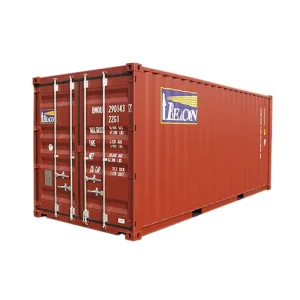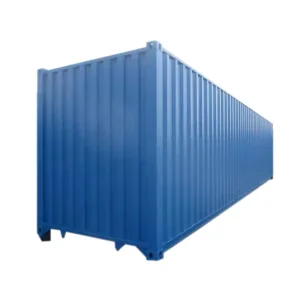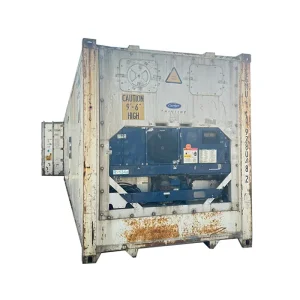
Pre-trip inspected (PTI Passed), structural seaworthiness certified, and optimized for high-demand Chilean maritime corridors including Valparaíso, San Antonio, and Puerto Montt.
From the arid hyper-saline conditions of the Atacama mining corridor to the humid fjords of Los Lagos and the intensive agro-valleys of O'Higgins, Chile’s supply chain presents extreme thermal and mechanical demands.
Chile's fruit export window represents a multi-billion dollar rush concentrated between November and February. A single delayed or fluctuating temperature threshold inside a reefer box destroys premium fruit destined for Shanghai, Rotterdam, or Long Beach. Controlled Atmosphere (CA) capability and structural thermal barrier reliability in used reefers prevent cellular degradation in delicate crops.
Centered in Region X (Los Lagos) and Region XI (Aysén), processing facilities handle over 1 million tons of Atlantic salmon and trout annually. Units deployed here operate in high-humidity, marine-salt environments requiring Corten-A high-tensile steel frames, Marine grade stainless steel (SUS 304/316) interiors, and heavy-duty compressors capable of sustaining continuous -25°C to -30°C freezing thresholds.
Northern Chile's copper and lithium operations (Antofagasta, Calama) require rugged cold boxes for biological testing reagents, camp dining provisions, and specialized chemical catalysts. Reefers in these regions must withstand daily ambient temperature swings from -5°C at night to +38°C under direct solar radiation at elevations exceeding 3,000 meters.
Enterprises operating in Latin America are turning to high-grade re-certified used reefer containers to overcome extreme capital expenditure barriers without sacrificing cargo preservation integrity.
Brand new 40ft HC reefers place a severe strain on working capital, especially during seasonal surges. Our factory-overhauled used reefers provide identical thermal dissipation factors (U-value ≤ 0.38 W/m²·K) at less than half the acquisition cost, accelerating payback periods for Chilean exporters.
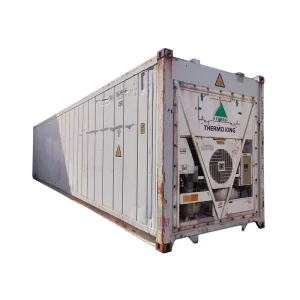
We standardize builds with globally recognized refrigeration platforms: Carrier Transicold (ThinLINE & PrimeLINE), Thermo King (Magnum PLUS), and Daikin (Zestia). This ensures Chilean field technicians in San Antonio or Puerto Montt can immediately source spare parts and microprocessors locally without proprietary bottlenecks.
Chilean agricultural growers are utilizing our structurally certified used reefers as permanent, decentralized field precoolers. Rather than constructing permanent concrete facilities requiring costly civil permits, our containers serve as modular cold rooms that can be redeployed across harvesting regions.
Every reefer container dispatched from our manufacturing yard undergoes a rigorous 4-stage refurbishment cycle to guarantee compliance with Bureau Veritas (BV), ISO 1496-2, and Chilean SAG sanitary criteria.
Full dimensional inspection of corner castings, side walls, and roof panels to ensure ISO alignment. Complete removal of surface oxidation, high-pressure grit blasting to SA 2.5, and multi-layer marine zinc-epoxy anti-corrosion coating application.
Thermal infrared imaging scans across polyurethane foam insulation panels to detect internal condensation pockets or thermal bridges. Replacement of degraded door gaskets with double-lip EPDM seals ensures strict airtight enclosure.
Complete mechanical overhaul of scroll/reciprocating compressors, evaporator coils, condenser fans, and expansion valves. Mandatory 24-hour automated Pre-Trip Inspection (PTI) validating rapid pulldown capability from +20°C to -20°C.
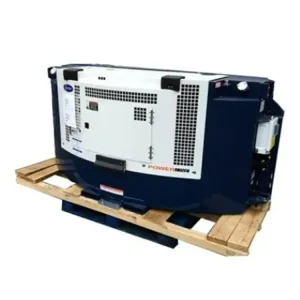
Electrical configuration tested for 380V/440V 3-phase 50/60Hz standard grid and clip-on diesel generator systems, matching Chilean industrial rural electrical feeds and regional intermodal chassis requirements.
The convergence of IoT telemetry, low-GWP refrigerants, and intelligent energy management is reshaping Latin American refrigerated logistics.
Retrofitting second-hand reefers with wireless IoT telemetry modules allows real-time cloud monitoring of supply air, return air, humidity levels, and defrost cycles while shipments transit the remote Pan-American Highway (Ruta 5) or long Pacific maritime corridors.
In accordance with the Kigali Amendment ratified by Chile, we support retrofitting units to operate with environmentally sustainable drop-in refrigerants such as R-452A and R-513A, preventing regulatory phase-out risks while maintaining high volumetric refrigeration capacity.
Next-generation remanufacturing incorporates variable-speed compressor retrofits that match cooling output directly to instantaneous heat loads. This reduces operational diesel generator and grid electricity consumption across Chilean facilities by up to 35%.
Essential guidance covering technical specifications, customs compliance, and port delivery procedures.
Every container shipped to Valparaíso, San Antonio, or Iquique arrives with valid CSC (International Convention for Safe Containers) safety approval plates, official Pre-Trip Inspection (PTI) performance certificates, Bureau Veritas or equivalent structural surveys, and formal Bill of Lading documentation compliant with Chilean Customs (Servicio Nacional de Aduanas).
We execute calibrated vacuum decay tests and non-destructive thermal imaging on all walls, ceilings, and flooring. If polyurethane core delamination or thermal degradation is discovered, panels are re-injected with high-density polyurethane (40-42 kg/m³) to maintain rigid ISO-compliant insulation coefficients.
Yes. All units feature standardized electrical receptacles and dual-voltage auto-transformers (380V/460V 3-phase) designed to connect directly to standard clip-on or underslung diesel generators (gensets) during long-haul highway transport on Route 5.
Direct ocean freight from Tianjin or Shanghai to Valparaíso or San Antonio typically requires 28 to 35 transit days. Containers are shipped either as Cargo Worthy (CW) shipper-owned units carrying dry export goods, or directly as dedicated empty reefer repositioning slots.
Explore our complete export catalog engineered for intermodal transport, bulk mining operations, offshore installations, and industrial cold-chain projects.