Engineered to international classification society standards (BV, ISO, DNV, ASME). Select certified stock manufactured in direct port-adjacent facilities.
Navigating structural shifts in chemical shipping, hazardous material protocols, food-grade integrity, and cryogenic LNG energy corridors.
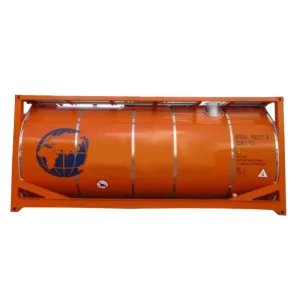
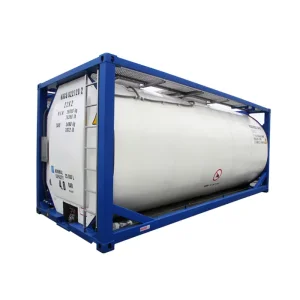
Traditional chemical transport relied heavily on intermediate bulk containers (IBCs) and steel drums, which suffer from elevated handling risks and container un-stuffing overheads. Modern enterprise procurement has standardized on 20-foot ISO tank containers, reducing intermodal transfer loss across road, rail, and deep-sea vessels to virtually zero.
Whether moving industrial petrochemicals, hazardous acids, or high-purity food oils, vessel integrity relies on high-grade stainless steel like 316L, optionally lined with PTFE or rubber. Direct sourcing from Tier-1 manufacturers guarantees fully traceable mill test certificates and X-ray inspected weld seams.
As industrial clusters shift toward decarbonized power, the global market for T75 cryogenic tank containers is accelerating. These specialized multi-layer vacuum-insulated units transport liquid natural gas (LNG), liquid argon, and nitrogen safely without boil-off losses over extended transoceanic transit times.
Direct manufacturer capabilities encompass custom pressure ratings, thermodynamic modeling, safety relief systems, and certified intermodal frame construction.
| ISO Tank Classification | Primary Cargo Media | Vessel Material & Shell | Working Pressure (Bar) | Thermal & Discharge Config |
|---|---|---|---|---|
| T11 ISO Tank | Non-hazardous liquids, food grade, low-hazard chemicals | Stainless Steel 316L, 4.4mm+ Shell Thickness | 1.75 - 2.65 Bar | Bottom discharge, steam heating panels, PU insulation |
| T14 ISO Tank | Hazardous chemicals, strong corrosives, hydrochloric acid | Carbon steel / SS316 with Rubber/PTFE lining | 2.65 - 4.0 Bar | Top discharge only, hermetically sealed, rupture discs |
| T50 Gas Container | LPG, ammonia, pressurized liquefied gasses | High-tensile carbon steel (normalized treatment) | 15.0 - 27.5 Bar | Heavy-duty safety valves, pneumatic emergency shut-off |
| T75 Cryogenic Container | Cryogenic liquids (LNG, LOX, LIN, LAR, LCO2) | Austenitic SS inner vessel / Carbon steel outer jacket | 8.0 - 16.0 Bar | Multi-layer vacuum super-insulation, vaporizers |
| Potable Water / Food Tank | Drinking water, fruit juices, dairy, edible oils | Food-grade mirror finish SS304/SS316 (Ra < 0.4µm) | 1.0 - 2.0 Bar | CIP cleaning heads, sanitary valves, sterile vent filters |
Tianjin & Suzhou production hubs sit within 100km of primary deepwater sea terminals, slashing overland drayage costs and lead times.
Each unit leaves the plant backed by Bureau Veritas (BV), ISO 9001, and DNV offshore certificates where applicable. Pressure vessels satisfy IMDG, ADR/RID, USDOT, and ASME Section VIII directives for hassle-free port clearance worldwide.
Precision submerged arc welding (SAW) combined with non-destructive testing (NDT), hydrostatic pressure verification, and 100% X-ray radiographic checks eliminate structural micro-porosities across all pressure boundary seams.
Equipped with globally standardized valves and couplings (Fort Vale, Perolo), ensuring that replacement gaskets, bursting discs, and ball valves can be maintained by local depot technicians across 120+ maritime nations.
Evaluating capital expenditures, asset lifecycle, and customization vectors for fleet managers and industrial end-users.
Engineered for corrosive chemical processing, specialized mining slurry, or specialized heating needs (glycol circulation or electric heating blankets). Custom drawings, wall thickness adjustments, and shell modifications are certified upfront.
The premier path for expanding dedicated liquid carrier fleets. New 20ft T11 containers offer a 20+ year economic lifespan, zero prior cargo contamination risks, and maximum residual resale value on secondary international container markets.
Positioned directly at major Chinese port hubs (Tianjin, Qingdao, Shanghai), vetted second-hand and overrun units deliver immediate dispatch for seasonal storage, construction water reservoirs, and cost-capped commercial projects.
Authoritative guidance for international procurement officers, logistics operators, and technical engineers.
A properly maintained stainless steel 316L tank container possesses an operational lifespan exceeding 20 to 25 years. Mandatory statutory periodic inspections (2.5-year intermediate leak test and 5-year full hydrostatic pressure test) ensure continual structural safety.
T11 tanks are fitted with bottom discharge valve systems and are suitable for non-hazardous liquids and moderate hazard classes. T14 tanks mandate a top-discharge system without lower shell penetrations, typically combined with internal anti-corrosion linings for aggressive acids.
Yes. We offer steam heating coils (effective heating area between 8.0 m² and 10.5 m²), longitudinal electrical trace heating systems with smart digital thermostats, or warm-water circulatory jackets for food waxes and crude oils.
Every unit ships with an official Classification Society Certificate (Bureau Veritas, Lloyd's Register, or CCS), CSC Safety Approval Plate, ASME Stamp documentation (where requested), Initial Cleanliness Inspection Certificate, and Material Mill Test Reports.
Browse additional commercial units, offshore equipment, dry cargo solutions, and modular housings available for immediate deployment.