Reefer · Rapid Dock Access
View Specifications
Factory-direct intermodal assets engineered to strict ISO 1496-1 dimensional and structural load tolerances, available with active refrigeration systems, hazardous fluid pressure envelopes, and high-cube dry cargo profiles.
Industrial Manufacturing Founded
9-High ISO Stacking Test Load
40ft HC Volumetric Capacity
Port Proximity (Tianjin & Suzhou)
Understanding the metallurgical, mechanical, and logistical shifts driving global procurement of high-cube Corten-A steel containers across maritime, rail, and land corridors.
Standard commercial steel quickly succumbs to electrochemical degradation when subjected to oceanic salt spray and atmospheric chlorides. Precision 40ft containers engineered by Tianjin Cimic Imp&Exp Co., Ltd. utilize genuine JIS G3125 SPA-H atmospheric corrosion-resisting steel (Corten-A alloy).
The deliberate inclusion of copper, chromium, and nickel within the iron matrix fosters a dense, self-regenerating oxide barrier (patina). This metallurgical property decreases the atmospheric corrosion velocity to less than 0.01 mm per annum, ensuring that 40ft chassis maintain structural racking resistance across 25+ years of active service.
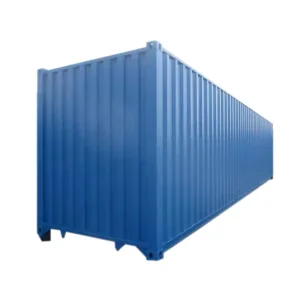
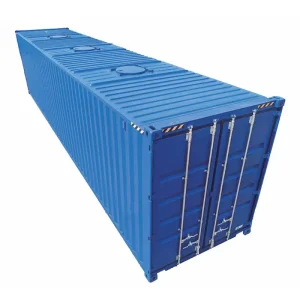
The migration from standard 8ft 6in profiles to 9ft 6in High Cube (HC) formats represents the defining logistical shift in intermodal freight. Adding 305 mm of vertical clearance augments total interior cube volume from 67.7 m³ to 76.4 m³—an immediate 12.8% volumetric increase with nominal tare weight penalty.
For e-commerce packaging, electronics, textiles, and oversized crated machinery, this dimensional advantage allows enterprise shippers to pack second-tier euro-pallets or maximize cubing efficiency without exceeding maximum gross weight limits of 32,500 kg to 34,000 kg.
Modern 40ft container fleets are shifting from passive steel enclosures into active telemetry nodes. High-value cargo lanes require integration of low-power satellite and cellular IoT transceivers.
Our manufacturing protocols support pre-drilled composite sensor pockets, door-closure contact arrays, wireless cargo mesh nodes, and kinetic energy harvesting axles. These allow logistics managers to monitor real-time acceleration (3-axis shock detection), interior humidity thresholds, and unauthorized door breaches across intermodal transitions.
Empirical structural and volumetric data compiled by CIMIC senior engineers to assist corporate procurement teams, port operators, and shipping consortia in choosing structural configurations.
| Engineering Parameter | 40ft Dry Standard (GP) | 40ft High Cube (HC) Dry | 40ft High Cube Reefer | 40ft Offshore DNV-GL Open Top |
|---|---|---|---|---|
| External Dimensions (L×W×H) | 12,192 × 2,438 × 2,591 mm | 12,192 × 2,438 × 2,896 mm | 12,192 × 2,438 × 2,896 mm | 12,192 × 2,438 × 1,600 - 2,896 mm |
| Internal Dimensions (L×W×H) | 12,032 × 2,352 × 2,393 mm | 12,032 × 2,352 × 2,698 mm | 11,583 × 2,290 × 2,544 mm | Project Specific / Reinforced Bed |
| Internal Usable Volume | 67.7 m³ (2,390 cu.ft) | 76.4 m³ (2,700 cu.ft) | 67.5 m³ (2,384 cu.ft) | 32.0 - 64.0 m³ (High Mass Density) |
| Tare Weight (Nominal) | 3,740 kg (8,245 lbs) | 3,900 kg (8,598 lbs) | 4,480 kg (9,876 lbs with unit) | 5,800 - 7,200 kg (Reinforced) |
| Max Gross Weight (MGW) | 32,500 kg (71,650 lbs) | 32,500 - 34,000 kg | 34,000 kg (74,950 lbs) | 30,480 - 35,000 kg Dynamic Rating |
| Flooring System | 28mm Apitong Marine Plywood | 28mm Bamboo / Hardwood Composite | Extruded Aluminum T-Bar Airflow | 4.5mm - 6.0mm Heavy Checkered Steel |
| Structural Standards Compliance | ISO 1496-1, CSC, UIC 592 | ISO 1496-1, CSC, TIR, TCT | ISO 1496-2, ATP, TIR, USDA Cold | DNV 2.7-1, EN 12079, IMO MSC/Circ.860 |
| Primary Application Segments | Standard general breakbulk, rail corridors | High-cube consumer goods, furniture | Pharma, seafood, fresh fruit exports | Offshore oil & gas, subsea tooling |
The transverse crossmembers of our 40ft chassis are pressed into cold-formed C-channels (4.0mm to 4.5mm thickness) stamped from high-yield Corten steel. Engineered at precise pitch centers of 305mm or 250mm, they prevent floor deflection when subjected to heavy 5,460 kg front-axle forklift loads under ISO 1496-1 testing.
Corner fittings manufactured to ISO 1161 from cast steel (SCW480 or equal) undergo rigorous non-destructive magnetic particle inspection (MPI) to eradicate sub-surface porosity before welding into vertical corner posts.
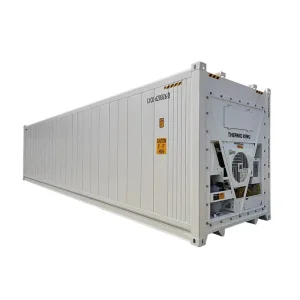
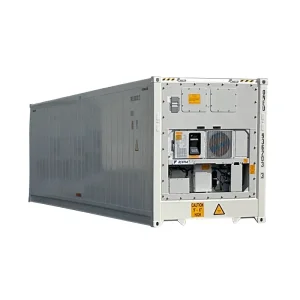
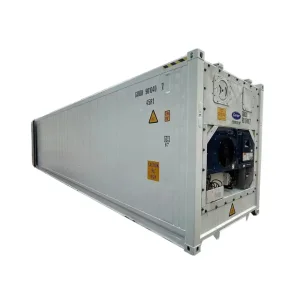
Reefer containers incorporate high-pressure foamed-in-place polyurethane (PU) walls with zero Ozone Depletion Potential (ODP). Wall cores utilize closed-cell density of 40–45 kg/m³, achieving heat transfer coefficients (K-values) below 0.38 W/m²·K.
Interior linings are fabricated with food-grade SUS 304 2B stainless steel or high-strength thermoplastic resin panels, resistant to organic acids and high-pressure caustic sanitization routines.
How specialized structural variations of 40ft container envelopes resolve operational bottlenecks in transcontinental rail, maritime cold chains, mobile energy storage, and extraction sites.
Renewable power deployment demands turnkey enclosure solutions. CIMIC adapts standard 40ft High Cube profiles into reinforced, modular BESS shelters. These feature integrated structural unistruts, fire-resistant rockwool or ceramic fiber thermal insulation (NFPA 855 / UL 9540A compliant), automated Novec 1230 / aerosol fire suppression ducts, explosion relief roof venting hatches, and IP55/IP66 dust-tight HVAC louvers.
Floor framing is structurally bolstered to support massive lithium iron phosphate (LFP) rack arrays reaching static weights upwards of 28,000 kg.
Intermodal rail crossing Northern and Central Asia requires equipment capable of withstanding ambient thermal swings from -40°C in winter permafrost to +45°C in arid deserts.
Our 40ft dry models incorporate specialized low-temperature impact tested structural steels (Charpy V-Notch >27 Joules at -40°C), double-lip synthetic EPDM door gaskets that preserve flexibility at extreme freezing points, and reinforced end-wall panels engineered to sustain extreme shunting decelerations during multi-gauge rail bogie transfers.
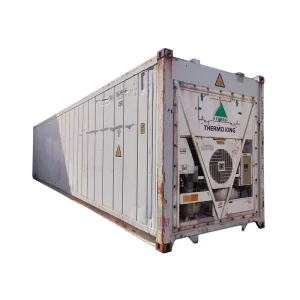
Temperature deviations of 0.5°C can compromise multi-million dollar pharmaceutical shipments or fresh agricultural exports. Combining our high-cube insulated envelopes with world-class chilling powerplants—including Thermo King Magnum PLUS, Carrier PrimeLINE, and Daikin LXE—we provide micro-controlled atmospheric circulation.
Equipped with digital modulation compressors and electronic expansion valves, these systems guarantee steady setpoint custody from -35°C deep-freeze up to +30°C tropical ambient pull-down.
Harsh open-sea operations cannot tolerate standard shipping containers due to dynamic wave-slamming, offshore supply vessel crane swinging, and salt-mist immersion.
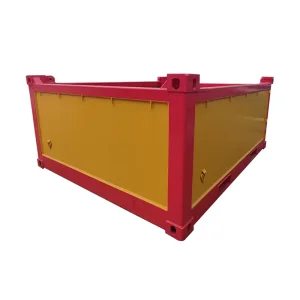
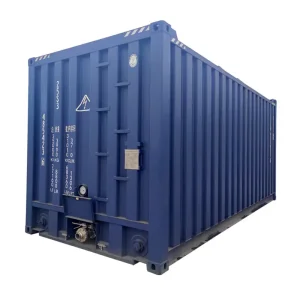
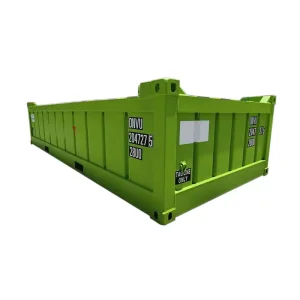
CIMIC engineers DNV 2.7-1 / EN 12079 certified offshore baskets, half-height open tops, and high-cube workshop modules. These builds utilize high-grade structural hollow sections, pad-eyes welded directly into structural corner nodes, full magnetic particle and ultrasonic weld inspection, and certified four-part offshore wire rope slings.
How Tianjin Cimic Imp&Exp Co., Ltd. leverages ISO 9001 certified manufacturing, Bureau Veritas audits, and prime geographic positioning to minimize delivery times and mitigate risks for international importers.
Corrosion failure starts with improper steel preparation. At CIMIC production lines, steel sheets undergo automated centrifugal shot blasting to SA 2.5 near-white metal standard, removing all mill scale and oxidation.
Immediately following surface preparation, our robotic spray booths apply a zinc-rich epoxy primer (minimum 30 μm dry film thickness), an intermediate epoxy build coat (minimum 40 μm), and an ultra-durable aliphatic acrylic polyurethane topcoat (minimum 40–50 μm). Total dry film thickness (DFT) exceeds 110–130 μm, qualified to survive over 3,000 hours of continuous salt-spray fog chamber exposure without bubbling, flaking, or under-film creeping.
Every production batch manufactured in our facilities is certified under continuous inspection protocols verified by major international classification societies, including Bureau Veritas (BV), Det Norske Veritas (DNV), and the American Bureau of Shipping (ABS).
Structural sampling runs verify full compliance with CSC (International Convention for Safe Containers) safety approval plates, TIR customs security compliance, and ISO 668 external dimensional accuracy. Physical load testing encompasses transverse racking (150 kN), roof longitudinal bending strength, wall stiffness tests, and floor forklift drive-over tests.
Geographic proximity directly determines delivery lead time and inland transit expense. CIMIC's core production facilities are strategically located in Tianjin and Suzhou, situated approximately 100 kilometers from Northern and Eastern China's primary deep-water berths.
This positioning enables flexible dispatch: buyers can opt for "One-Way Cargo Shipped" (SOC - Shipper Owned Container) routes where containers are loaded with export merchandise to eliminate empty positioning costs, or batch container vessel dispatch via breakbulk crane loading directly onto international transport vessels.
Anticipating shifts in container manufacturing automation, circular metallurgy, and integrated IoT platforms to optimize total cost of ownership (TCO) for global intermodal fleet operators.
Transitioning from manual gas-metal arc welding (GMAW) to multi-axis automated fiber-laser robotic welding gantries. This engineering shift increases structural seam penetration consistency by 35%, eliminates localized slag inclusion risks, and reduces total thermal distortion across 40ft side corrugated wall panels, yielding flatter mounting profiles for conversions.
Aligning with IMO greenhouse gas targets, CIMIC is qualifying high-grade recycled steel melted in electric arc furnaces (EAF) powered by renewable energy. This reduces embodied carbon per 40ft container box from ~6.2 tonnes CO2e to below 3.5 tonnes CO2e, enabling enterprise shipping companies to comply with Scope 3 supply chain carbon disclosures.
Implementing embedded RFID chassis identifiers and low-power bluetooth sensors connected to cloud-based digital twin models. Operating lifespans are dynamically calculated based on actual accumulated sea voyages, mechanical shock spikes during harbor loading, and salt-mist exposure, allowing proactive rust spot recoating and floor maintenance prior to structural failure.
Clear, definitive answers directly from CIMIC’s engineering team regarding material selection, certification, customized builds, logistics coordination, and procurement best practices.
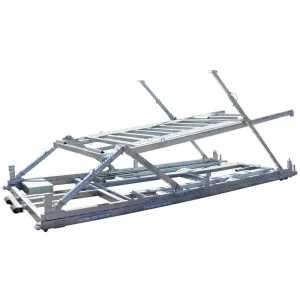
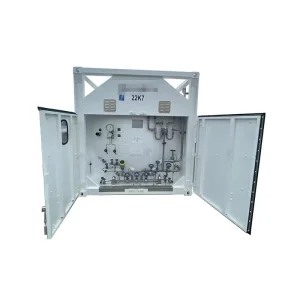
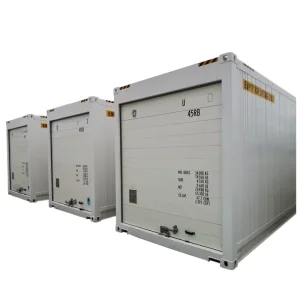
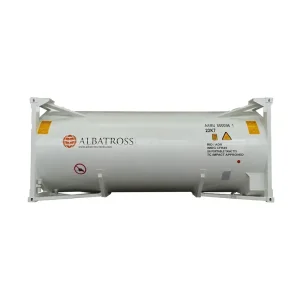
Complete your logistical asset allocation with certified dry freight high-cubes, nested mini-storage boxes, offshore baskets, cryogenic gas transport vessels, and vehicle transport racks.