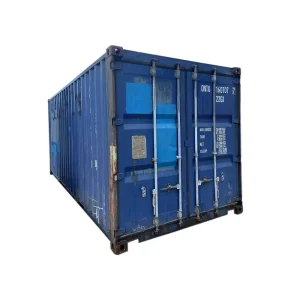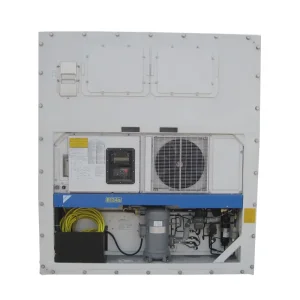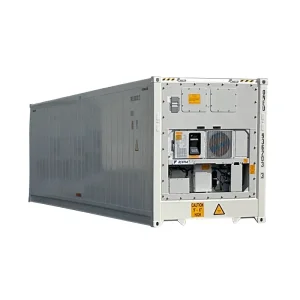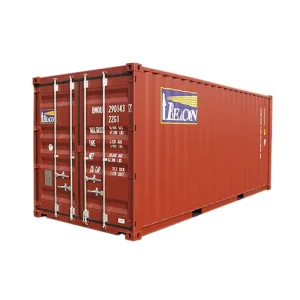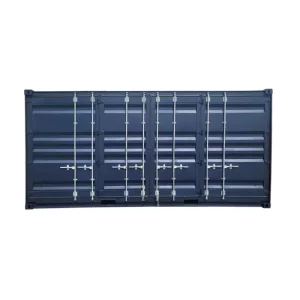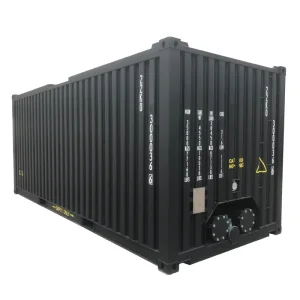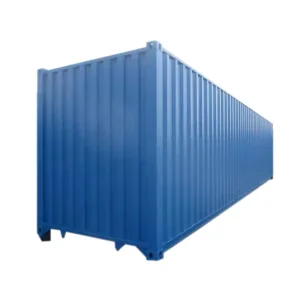
Explore standard ISO 20ft and 40ft units ready for export deployment, modular conversions, integrated cold-chain systems, and multi-modal logistics from our Tianjin & Suzhou manufacturing bases.

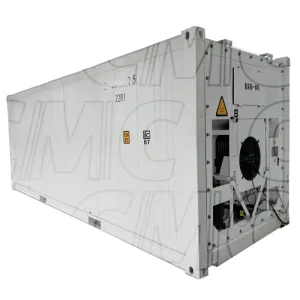
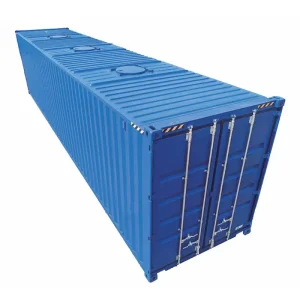

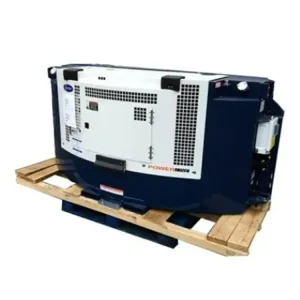
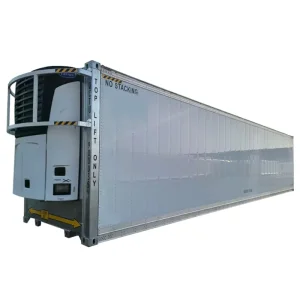

In international intermodal logistics, precision defines profitability. Standardized under ISO 668 (Series 1 freight containers — Classification, dimensions and ratings) and tested to ISO 1496-1, the nominal twenty-foot equivalent unit (1 TEU) represents the foundational physical benchmark for maritime vessels, gantry systems, railway wagons, and highway chassis worldwide.
| Dimensional Metric | Standard 20ft Dry Cargo (20GP / 1CC) | 20ft High-Cube (20HC / 1CCC) | 20ft ISO Reefer (Refrigerated) | 20ft Open Top / Side Door |
|---|---|---|---|---|
| External Length | 19' 10.5" (6,058 mm) [-6mm, +0mm] | 19' 10.5" (6,058 mm) | 19' 10.5" (6,058 mm) | 19' 10.5" (6,058 mm) |
| External Width | 8' 0.0" (2,438 mm) [-5mm, +0mm] | 8' 0.0" (2,438 mm) | 8' 0.0" (2,438 mm) | 8' 0.0" (2,438 mm) |
| External Height | 8' 6.0" (2,591 mm) [-5mm, +0mm] | 9' 6.0" (2,896 mm) | 8' 6.0" (2,591 mm) | 8' 6.0" (2,591 mm) |
| Internal Length | 19' 4.2" (5,898 mm) | 19' 4.2" (5,898 mm) | 17' 11.9" (5,480 mm) | 19' 3.8" (5,888 mm) |
| Internal Width | 7' 8.6" (2,352 mm) | 7' 8.6" (2,352 mm) | 7' 6.0" (2,286 mm) | 7' 8.0" (2,336 mm) |
| Internal Height | 7' 10.3" (2,393 mm) | 8' 10.3" (2,698 mm) | 7' 4.9" (2,258 mm) | 7' 8.2" (2,342 mm) |
| Door Opening Width | 7' 8.1" (2,340 mm) | 7' 8.1" (2,340 mm) | 7' 6.0" (2,286 mm) | Full Side or Rear 2,340 mm |
| Door Opening Height | 7' 5.7" (2,280 mm) | 8' 5.7" (2,585 mm) | 7' 2.8" (2,205 mm) | 7' 3.5" (2,222 mm) |
| Cubic Capacity | 33.2 m³ (1,172 cu.ft) | 37.4 m³ (1,320 cu.ft) | 28.3 m³ (1,000 cu.ft) | 31.8 m³ (1,123 cu.ft) |
| Tare Weight (Empty) | 2,200 kg (4,850 lbs) ±2% | 2,400 kg (5,291 lbs) | 3,080 kg (6,790 lbs) | 2,650 kg (5,842 lbs) |
| Max Payload Capacity | 28,280 kg (62,346 lbs) | 28,080 kg (61,905 lbs) | 27,400 kg (60,406 lbs) | 27,830 kg (61,354 lbs) |
| Max Gross Weight (MGM) | 30,480 kg (67,200 lbs) | 30,480 kg (67,200 lbs) | 30,480 kg (67,200 lbs) | 30,480 kg (67,200 lbs) |
Manufactured with high-strength structural atmospheric corrosion-resistant Corten steel. Side panels utilize 1.6mm corrugation profiles with cold-rolled 2.0mm roof pressings, engineered to withstand aggressive saline marine boundary layers without oxidation propagation.
Equipped with 28mm certified hardwood marine-grade plywood or sustainable high-density bamboo composites, pressure-treated for Australian Quarantine (DAFF) compliance. Supported by C-channel structural steel cross-members resisting up to 7,260 kg axle loads.
Corner castings forged according to ISO 1161 standards from low-temperature normalized carbon steel (SCW480). Certified corner posts endure dynamic stacking compression equivalent to nine fully laden tiers at 216,000 kg gross vertical loading.
Sealed along door flanges with co-extruded dual-lip EPDM (Ethylene Propylene Diene Monomer) compression gaskets. Impermeable against persistent maritime monsoons, wind-driven salt spray, and extreme operational thermal swings (-40°C to +80°C).
Sourcing shipping containers across continents requires rigorous regulatory harmonization. Tianjin Cimic maintains verifiable quality management systems and factory certifications conforming with every tier of international intermodal law.
Every 20ft container leaves the production plant with an internationally recognized CSC Safety Plate (International Convention for Safe Containers 1972) issued by major classification societies (Bureau Veritas, Lloyd’s Register, or ABS), verifying structural integrity under maximum load.
Integrated customs sealing provisions compliant with the Customs Convention on the International Transport of Goods (TIR) and International Union of Railways (UIC 592) standards, ensuring seamless bonded transshipment without intrusive border delays.
For extreme offshore energy environments, our offshore specialized containers undergo Charpy V-notch impact testing at -20°C, equipped with certified pad-eyes and DNV-GL certified wire rope lifting sling assemblies for vessel-to-rig dynamic transfer.
Flooring materials adhere strictly to Australia DAFF fumigation and preservation regulations. Steel primers use zinc-rich, ultra-low VOC waterborne epoxy coatings meeting European REACH chemical standards and CARB emissions mandates.
China manufactures over 90% of the world's intermodal shipping container supply. Tianjin Cimic leverages an optimized regional manufacturing nexus centered in Tianjin and Suzhou, delivering decisive commercial advantages to international buyers.
Direct mill sourcing agreements with state steel enterprises (Baosteel, Angang) guarantee batch-level metallurgical traceability for SPA-H Corten alloy steel, mitigating raw material inflation risks and preventing lead-time bottlenecks.
Continuous automated submerged-arc and multi-axis GMAW robotic welding bays ensure zero defect joint penetration along corner posts, floor side rails, and roof sills, delivering uniform structural integrity unattainable via manual fabrication.
Located within ~100 km of Tianjin Port (Northern China's prime maritime gateway) and Shanghai/Ningbo corridors, our yards eliminate exorbitant repositioning tolls, enabling buyers to execute "One-Way Free Use" or FOB ocean bookings instantly.
Unlike rigid multi-million-unit mass producers, Tianjin Cimic offers bespoke engineering pipelines—from roll-up doors and extra side apertures to BESS energy housings—accommodating batch sizes from 5 to 5,000 units with rapid prototyping.
Corporate procurement teams, equipment leasing managers, and EPC project directors require strategic consistency, strict asset durability, and structured financing when acquiring 20ft intermodal container assets.
Equipment investors seek standardized ISO 20GP containers with high resale residual values, custom prefixes, BIC registry integration, and durable 3-coat paint schemes to withstand rigorous 15-to-20 year multi-carrier ocean service rotations.
Refrigerated cargo handlers procure 20ft active reefer containers outfitted with industry-leading machinery from Carrier, Thermo King, or Daikin, maintaining accurate setpoints from -30°C to +30°C across agricultural, meat, and biomedical supply lines.
Engineering procurement contractors in Western Australia, North America, and Sub-Saharan Africa demand heavy-duty open-top or half-height bulk containers capable of transporting dense minerals, aggregate ores, and industrial project equipment.
Commercial self-storage developers leverage brand-new 20ft units configured with roll-up doors, side multi-compartment dividers, and anti-condensation thermal linings, establishing low-capex storage parks with high ROI turnaround.
The traditional shipping container is undergoing an unprecedented technological evolution. Driven by decarbonization goals, IoT connectivity, and the clean energy transition, the 20ft footprint is redefining intermodal utility.
Factory-embedded autonomous sensors track real-time GPS positioning, door open/close events, internal temperature, shock impact (G-force), and acoustic resonance, streaming telemetry over low-power satellite and 5G cellular arrays directly to enterprise ERPs.
Custom-reinforced 20ft enclosures are now the global standard for Battery Energy Storage Systems (BESS). Engineered with fire-rated rockwool cores, explosion vent panels, and liquid cooling channels to house utility-scale lithium-ion and flow batteries.
In response to European F-Gas regulations and Kigali Amendment ratifications, next-gen 20ft reefer machinery integrates zero-ODP, ultra-low GWP refrigerants such as CO2 (R-744) and R-452A, dramatically lowering life-cycle greenhouse emissions.
Tianjin Cimic actively aligns with low-carbon blast furnace practices, utilizing scrap-recycled steel and zinc-silicate primers to lower the embodied carbon footprint per TEU while expanding secondary structural repurposing capabilities.
Beyond oceanic freight transport, the structural rigidity and standardized geometry of 20-foot shipping containers make them the indispensable baseline structure across critical onshore industries.
Serving as structural building blocks for worker accommodations, tactical command posts, and rapid emergency clinics. Multiple 20ft modules interlock through twist locks to form expansive, cyclone-resistant multi-story installations.
Outfitted with fire suppression systems, thermal acoustic insulation, and redundant cooling to safeguard localized AI edge compute servers, 5G base station switching gear, and sensitive remote instrumentation.
Modified with internal bunded spill flooring, spark-proof flame ventilation louvers, and automatic deluge systems to store diesel reserves, lubricants, paints, and lithium chemicals on industrial project sites in compliance with OSHA standards.
Pre-packed with emergency medical reserves, water purification machinery, and power generators. Maintained in port holding depots for rapid maritime or rail dispatch to global catastrophe zones on 24-hour notice.
Key parameters, procurement strategies, structural limits, and delivery conditions addressed directly by Tianjin Cimic's lead container engineering team.
Browse our extended lineup of certified used and brand-new container solutions, including specialized heated bitutainers, side-door access systems, and precision marine refrigeration units.