Engineered for global multi-modal deployment. Rigorously verified under Bureau Veritas (BV), ISO, and CSC certifications for extreme logistical stability.

Evaluating structural unitization, weight-to-volume ratio dynamics, and supply chain security across high-density intermodal transit corridors.
While the 40-foot container dominates low-density volumetric freight, the 20 ft standard dry container (1 TEU) remains the ultimate global benchmark for dense industrial cargo. Mineral concentrates, base metals, heavy machinery, bulk raw agricultural commodities, and chemical derivatives reach axle load limitations long before exhausting cubic volume. A dedicated China 20 ft dry container exporter supplies equipment designed specifically to safely maximize TEU structural gross ratings up to 30,480 kg (67,200 lbs).
Global logistics infrastructure is inherently biased toward 20-foot footprints on constrained multi-modal routes. Short line rail systems, inland waterway feeder barges (Rhine, Yangtze, Mississippi), and restricted regional roadways throughout Africa, Latin America, and Southeast Asia experience severe geometric limitations. A robust 20 ft dry box manufactured from high-yield SPA-H Corten steel mitigates multi-modal transfer strain during frequent reach-stacker and spreader transitions.
Maritime salt fog, open rail exposures, and dynamic wave impact create extreme stress. High-grade atmospheric corrosion-resisting steel forms an adherent passive rust layer that retards electrochemical oxidation. When coupled with automated zinc-rich epoxy primers and polyurethane exterior coats, exporters provide fleet owners with a targeted service lifespan exceeding 15 to 20 years, drastically minimizing lifecycle Total Cost of Ownership (TCO).
Adhering to sovereign industrial codes, international sea transport pacts, and comprehensive pre-shipment validation protocols.
Every TEU manufactured for export conforms strictly to the International Convention for Safe Containers (CSC). Certified under Bureau Veritas (BV), ABS, LR, or DNV, units undergo intense structural type-testing: 9-high stacking load tests (up to 216,000 kg on corner posts), transverse racking, longitudinal restraint, floor strength deflection tests (utilizing 5,460 kg axle loads), and weather-tightness water jet trials.
Flooring compliance represents a critical regulatory hurdle in maritime customs clearance. All 28mm architectural-grade plywood flooring elements are treated with non-leaching, environmentally stable timber preservation treatments complying fully with the Australian Department of Agriculture, Fisheries and Forestry (DAFF) quarantine criteria, guarding against bio-security trade interruptions.
Situated within 100 kilometers of the world-scale seaports of Tianjin and Shanghai/Taicang, factory direct manufacturing lines reduce overland drayage costs. Exporters offer "One-Way Transit / Caboche" programs or outright FCL export shipping, providing zero-friction customs documentation (EUR.1, Form E, Certificate of Origin) for seamless cross-border tariff relief.
Expanding beyond simple ocean freight: how engineering adaptations serve global industrial transformation.
Modified 20 ft dry shipping shells serve as the primary containment vessels for Battery Energy Storage Systems (BESS). With structural reinforcements, specialized ceiling ventilation, and fire suppression raceways, they host lithium-iron-phosphate (LFP) racks for utility-scale solar and wind fields globally.
Decentralized AI edge-computing, cryptographic data nodes, and telecommunication switches deploy heavy-duty Corten steel 20 ft frames. Their modular, ISO-standard corner casting geometry facilitates rapid placement via standardized cranes in extreme desert or arctic settings.
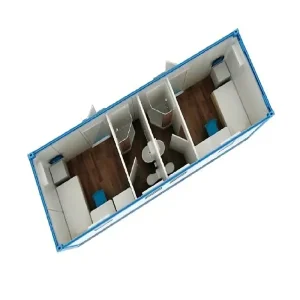
Rapid-deployment mobile field clinics, surgical modules, command headquarters, and emergency water purification facilities depend on standard 20 ft dry freight dimensions, enabling universal compatibility with C-130 Hercules air transports, tactical flatbeds, and commercial ships.
Deep-pit exploration in Western Australia, Latin America, and Sub-Saharan Africa requires rugged storage that repels dust intrusion, corrosive runoff, and mechanical stress. Double-door and open-top 20-foot configurations streamline loading of drill bits, slurry pump assemblies, and high-density gear sets.
Driving structural longevity and carbon lifecycle decarbonization through high-tech manufacturing upgrades.
In full alignment with international environmental regulations, leading exporters utilize advanced waterborne paint application lines. This reduces Volatile Organic Compound (VOC) emissions by upwards of 70% during blast-cleaning and finishing processes while enhancing salt-spray chamber resistance beyond the 1,500-hour milestone.
The conventional dry container is transitioning into an intelligent edge device. Next-generation 20 ft builds integrate low-profile solar tracking nodes directly into the roof corrugation recess, monitoring internal door tampering, internal atmospheric humidity, thermal cycling, and geo-location tracking via 5G satellite-cellular handoff.
To counter hardwood depletion and meet ESG directives, R&D roadmaps focus on reinforced bamboo composites and recycled sandwich polymers. These engineered panels exhibit superior load-bearing flexural modulus, near-zero moisture absorption, and full insect resistance without toxic chemical impregnation.
Detailed answers to critical procurement, inspection, and structural queries faced by international shipping equipment buyers.
Corten-A (SPA-H) steel includes specific alloying elements—primarily copper, chromium, and nickel. When exposed to alternating wet and dry oceanic environments, it develops an impermeable patina barrier that prevents deep atmospheric oxidation, maintaining structural tensile margins and extending container operational life by 200–300% compared to basic mild steels.
A standard 20 ft dry container has a maximum gross mass of 30,480 kg, with a tare weight hovering around 2,200 kg to 2,300 kg, leaving an effective payload capacity of roughly 28,180 kg. While a 40 ft container offers double the cubic space (approx. 67.7 CBM vs 33.2 CBM), its maximum allowable gross mass remains identical under standard international roadway and rail regulations (30,480 kg or 32,500 kg for high-capacity variants), making the 20ft container the only financially viable option for dense, heavy freight.
Yes. However, altering the side walls removes the monocoque tension-web strength designed into standard corrugations. To maintain CSC maritime stacking approval, custom models (such as full side-open doors or heavy-duty roll-ups) utilize enlarged structural top headers, heavy bottom sills, and reinforced vertical posts tested and re-stamped by certification societies like BV or DNV.
A "One-Trip" container is manufactured pristine in China, loaded once with non-hazardous cargo to offset repositioning costs, and sold upon arrival at the destination port with zero structural fatigue, mint paint, and an untouched floor. Cargo-worthy (CW) second-hand units have operated within commercial shipping pools for 10-15 years, possessing aesthetic abrasions and patches, but retaining validated structural integrity and watertight seals suitable for storage or lower-tier shipping.
Thermal swings induce condensation cycles ("container rain") inside sealed dry boxes. Standard 20 ft containers are manufactured with baffled labyrinth air vents (minimum 2 to 4 vents per unit) allowing equalized air pressure while preventing water jet entry. High-value cargo transit incorporates calcium chloride desiccant poles and optional thermal insulating liners fitted directly onto internal lash rings.
Tianjin and Suzhou manufacturing hubs lie in close proximity to major industrial container terminals (Tianjin Port and Shanghai/Taicang Port). This spatial distribution minimizes pre-carriage dwell time, eliminates transshipment rail delays, and guarantees access to high-frequency liner schedules for direct ocean transit across trans-Pacific, trans-Atlantic, and Afro-Eurasian trade lanes.
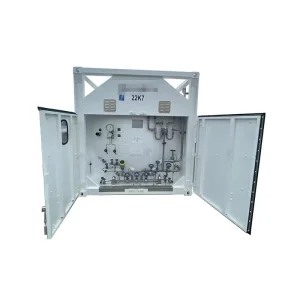
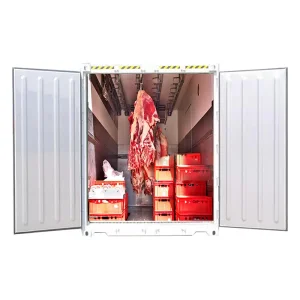
Engineered for cold-chain, hazardous liquid bulk, automotive transit, and specialized mission-critical cargo transport.