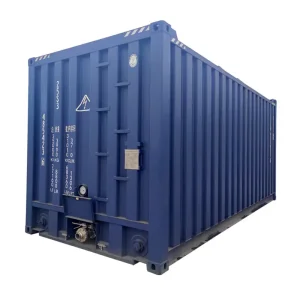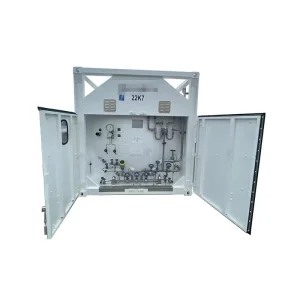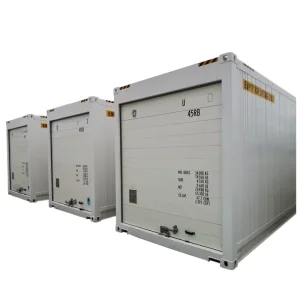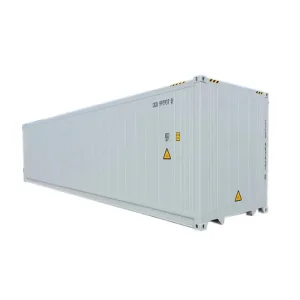
Precision-Engineered 9ft 6in Intermodal Solutions: Maximizing Cubic Payload, Structural Integrity, and Global Supply Resiliency for Heavy-Density Logistics.
Engineered for international multimodal logistics corridors, providing optimized headroom, enhanced volume capacity, and tested structural endurance under Bureau Veritas quality standards.
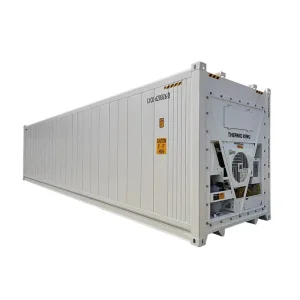
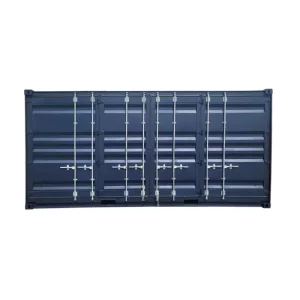
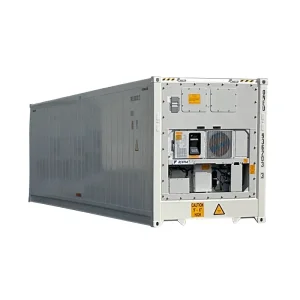



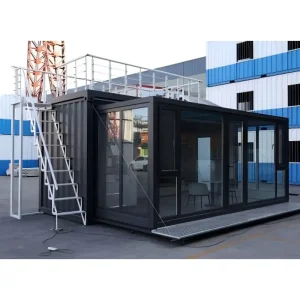
In modern multimodal supply chain operations, volumetric efficiency dictates bottom-line profitability. While standard ISO 20ft containers offer an external height of 8ft 6in (2,591 mm), the 20ft High Cube variant expands this envelope to 9ft 6in (2,896 mm). This additional foot of vertical displacement unlocks 12% to 15% more internal cubic capacity—scaling usable volume up to approximately 37.4 m³ (1,320 cu ft)—without expanding the vessel footprint or terminal ground slot.
Global freight rates place a premium on volumetric optimization. High Cube 20ft units eliminate the penalty of "cubing out" before "weighing out," allowing industrial shippers of e-commerce payloads, consumer durables, and light machinery to dramatically lower their unit shipping expenses.
Navigating inner-city arterial bridges, low-clearance rail tunnels, and narrow offloading docks requires compact platforms. The 20ft footprint delivers maneuverability that 40ft units cannot match, especially within Europe's intermodal rail or the congested ports of Southeast Asia.
The standard 8ft 6in ceiling restricts architectural conversions due to overhead ducting and insulation losses. The 9ft 6in 20ft HC format has become the undisputed global standard for modular BESS housing, mobile data centers, and advanced offshore engineering modules.
Manufactured strictly according to ISO 668, ISO 1496-1, and certified under Bureau Veritas (BV) and DNV safety protocols. The structural composition is optimized for dynamic marine loads and harsh weathering.
| Dimensional & Mechanical Criteria | 20ft High Cube (9ft 6in) | Standard 20ft Dry Box (8ft 6in) | Engineering Tolerance & Standard |
|---|---|---|---|
| External Dimensions (L × W × H) | 6,058 × 2,438 × 2,896 mm (20' × 8' × 9'6") | 6,058 × 2,438 × 2,591 mm (20' × 8' × 8'6") | ISO 668 Series 1 Classification (+0, -5 mm) |
| Internal Dimensions (L × W × H) | 5,898 × 2,352 × 2,698 mm | 5,898 × 2,352 × 2,393 mm | Maximizes internal clearance for equipment |
| Door Opening Clearances (W × H) | 2,340 × 2,585 mm | 2,340 × 2,280 mm | Permits direct overhead forklift palletization |
| Internal Cubic Capacity | 37.4 m³ (1,320 cu ft) | 33.2 m³ (1,172 cu ft) | +12.6% Net Cubic Gain |
| Max Gross Weight (Rating) | 30,480 kg (67,200 lbs) / Opt. 32,500 kg | 30,480 kg (67,200 lbs) | Full CSC safety approval certification |
| Tare Weight | 2,380 kg (5,247 lbs) | 2,180 kg (4,806 lbs) | SPA-H Cor-Ten Structural Steel Fabricated |
| Max Payload Capacity | 28,100 kg (61,953 lbs) | 28,300 kg (62,394 lbs) | Tested for concentrated heavy axle loadings |
| Corner Casting & Stacking Rating | 192,000 kg (9-high laden stack verified) | 192,000 kg | ISO 1161 compliant cast alloy construction |
The specialized vertical clearance of China High Cube 20 Foot Containers resolves distinct operational challenges across global regions, modern industrial automation, and decentralized infrastructure projects.
Utility-scale Battery Energy Storage Systems demand elevated headspace to accommodate heavy lithium iron phosphate (LiFePO4) racks alongside top-mounted liquid-cooling piping and NFPA 855-compliant fire suppression headers. Standard units fail internal clearance tests; our 20ft HC serves as the worldwide chassis of choice.
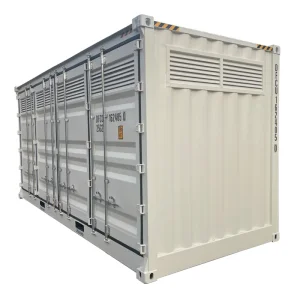
Equipped with full-side aperture doors and high/low louvers, our hazardous cargo (DG) configurations ensure compliance with local EPA and IMDG storage mandates. The extra 305 mm vertical room allows double-stacked chemical containment totes (IBCs) with integral spill containment flooring.
Used widely across mining extraction hubs in Western Australia and remote energy outposts in Northern Canada. Once interior subflooring, acoustic ceilings, and R-30 thermal batting are installed, the 20ft HC continues to provide a spacious finished ceiling height exceeding 2.4 meters.
Operating manufacturing and assembly campuses within 100 kilometers of the deepwater ports of Tianjin and Suzhou, CIMIC offers unparalleled agility from initial steel coil slitting to international vessel loading.
Immediate upstream linkages with major domestic steel producers provide certified SPA-H weathering steel coils, ensuring superior corrosion resistance and consistent structural integrity.
Our Tianjin and Suzhou hubs reduce inland drayage expenses and eliminate bottlenecks, supporting rapid vessel gate-in for regular liner services and chartered breakbulk vessels.
Continuous submerged arc welding lines and automated robotic arm cell tooling guarantee dimensional squareness, leak-proof perimeter seams, and reliable stacking corner post alignment.
State-of-the-art multi-stage shot blasting combined with waterborne zinc-rich primer and heavy acrylic topcoats delivers salt-spray endurance exceeding 1,000 continuous hours.
Years of Industrial Heritage (Since 1983)
BV & ISO Quality Compliance Inspected
Factory Proximity to Major Deepwater Berths
Active Export Reach Across Key Freight Corridors
The container industry is undergoing substantial transformation, transitioning from passive steel boxes to intelligent, data-driven, and decarbonized intermodal infrastructure assets.
Autonomous monitoring packages integrate shock sensors, door opening micro-switches, and interior volume LiDAR scanning into corner castings. Shippers receive live updates regarding container acceleration, security tampering, and available cubic headroom.
Through the integration of blast-furnace slag recycled alloys and solvent-free thermal powder coatings, each CIMIC container incorporates digital product passports (DPPs) tracking the exact lifecycle carbon footprint across production and service lifetimes.
Engineering new corner geometries and high-yield longitudinal floor rails allows modular drop-in battery packs, plug-and-play side assemblies, and collapsible top trusses without sacrificing the 9-high container stack rating.
Securing cross-border equipment financing and maintaining global operational readiness requires strict adherence to international maritime safety codes and statutory manufacturing standards.
Every newly fabricated 20ft HC unit carries an official Convention for Safe Containers (CSC) data plate verified by Bureau Veritas, documenting maximum permissible gross weight, stacking loads, and racking test compliance values.
For rough marine handling on oil platforms and floating facilities, we supply specialized offshore containers constructed to withstand dynamic 4-point bridle sling lifting tests and harsh sub-zero impact challenges.
From CAD mockups to finite element analysis (FEA) structural validation, our engineering team tailors floor pan gauges (bamboo composite, steel chequer, or spill grating), access door layouts, and corporate pantone color finishing.
Clear, direct guidance from our Tianjin export desk regarding dimensions, logistics delivery modes, ordering lead times, and structural options.
A standard 20-foot dry ISO box measures 8ft 6in (2,591 mm) in total height, while a 20ft High Cube measures 9ft 6in (2,896 mm). This precise 1-foot (305 mm) vertical expansion yields approximately 4.2 additional cubic meters of internal loading space, taking your total usable volume to ~37.4 m³.
Yes. The twistlock corner casting points adhere to uniform ISO 1161 spatial geometry. However, on intermodal container vessels or high-density rail wells, cellular guides and lashings are planned around uniform stack heights, so High Cube slots are carefully grouped to preserve deck balance.
We provide two shipping pathways: One-Way Shipper Owned Container (SOC) arrangements, where the container carries non-hazardous dry cargo to your discharge destination, or empty positioning via flat-rack stacks or breakbulk dry loading directly from Tianjin or Shanghai port facilities.
Standard color and single-door configurations are maintained in recurring rolling production batches, allowing dispatch in 7–14 days. For customized units featuring full side doors, bespoke HVAC cutouts, or internal structural modifications, average production spans 25 to 35 business days following technical drawing sign-off.
All finished units are inspected under Bureau Veritas (BV) classification society surveillance with official CSC safety decals affixed. On-demand options include DNV certification for offshore designs, Lloyd's Register testing, and comprehensive container factory inspection logs with mill test certificates (MTC).
Standard dry freight units are fitted with 28mm marine-grade hardwood or composite bamboo plywood treated against Australian quarantine wood-boring pests. For industrial battery rooms or dangerous chemical handling, we engineer welded steel chequer plates with anti-skid treatments or heavy-gauge galvanized safety grating.
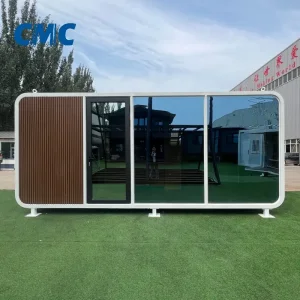
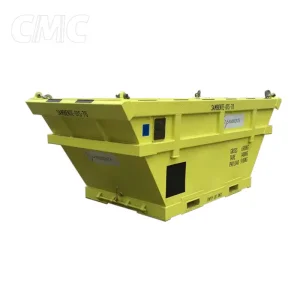
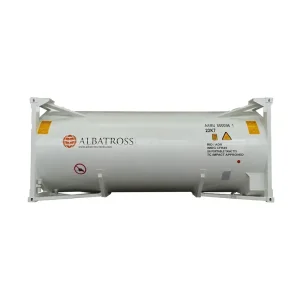
Explore our specialized intermodal catalog: from ISO chemical and gas tank containers to rapid-deployment modular living pods and open platform structures.